

Kirjahaku
Etsi kirjoja tekijän nimen, kirjan nimen tai ISBN:n perusteella.
1000 tulosta hakusanalla Joan L Robison

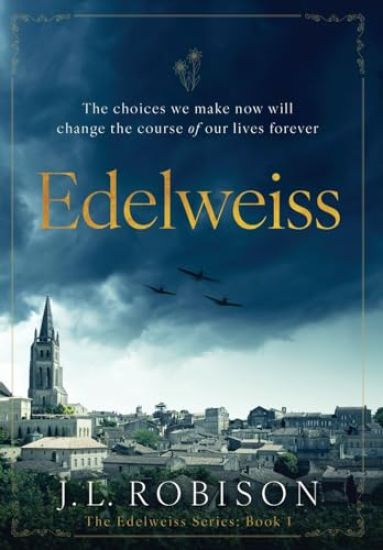
Eva Abrams fled France to what could be an even more dangerous place-Germany. The last thing she expected was to be pulled into the Berlin underground.While the small resistance struggles to fight against the might of Germany, Eva soon learns the harsh truth of what that means. She helps with an attack...that involves none other than SS Obersturmbannf hrer Bauer, but that act will alter her life and what she thought she knew. She saves Bauer and is forced to view him as something other than only an enemy soldier. Eva has no choice but to see through her blind prejudices when she finds herself in a situation only he can help her out of.As she navigates through this uncertain situation and the dangers of being in the resistance, Eva struggles to stay true to herself and to the love she feels for Gerhardt von Schults...Caught between two opposing forces, Eva must decide who is more of a threat, the resistance she thought was her ally or the German she was sure was her enemy.
Eva Abrams is thrown into the past to a time of violence and chaos- revealing the hidden ugliness of war, allowing her eyes to see things she never thought they would. But she is unable to escape mainland Europe before the invasion, and her greatest fear materializes when she witnesses the arrival of the German army in the town square. All she wants is to return home to her mundane life, but she doesn't know if that will ever happen now.She stumbles into an unexpected friendship with the person she should keep firmly at a distance, one that opens her mind to the understanding that people are not always as they seem-good or bad, which gives rise to the events that put everything else into motion.Her life takes a drastic turn when the Germans become suspicious, putting her in unimaginable danger and leaving the path in front of her treacherous and murky at best. Eva is now tangled in the grim realities imposed by war as the walls close in. She must choose between the life she knew and the past she now feels drawn to.
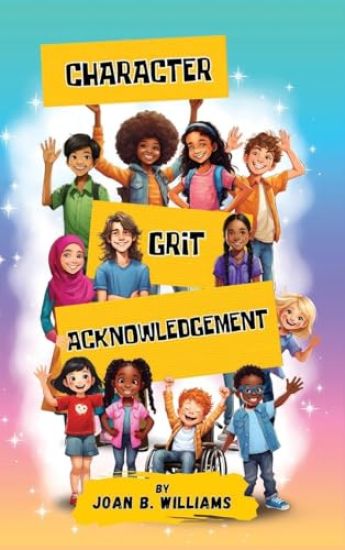
Character Grit Acknowledgement
Joan B Williams; Kabrena L Robinson
Eva-Michelle Family Publishing
2024
sidottu
Character Grit Acknowledgement is a vibrant collection of poems designed to EMPOWER and INSPIRE children of ALL AGES. This book aims to cultivate essential character-building skills while celebrating the beauty of inclusivity and diversity. Each poem is a beacon of encouragement, urging readers to embrace many positive themes such as resilience, compassion and the power of individuality.Each poem in this book tells a story. It can serve as a valuable handbook for character building in schools. Students who have faced stigma and have experienced trauma can find hope through reading and discussing these poems. Teachers can utilize these poems to promote equity and inclusion for all students. Parents can also use the poems to raise awareness in their children, as they themselves become more aware of certain issues within our systems. System leaders can employ these poems to build capacity and as a point of reflection.The poems in this book are intended to inspire and can benefit nearly anyone. Be creative in how you use them. You may read them for your own meditation and inspiration, speak them aloud, or even sing them as songs. However you choose to engage with them, seek meaning and maintain an open mindset for change.PRAISES FOR "CHARACTER GRIT ACKNOWLEDGEMENT""It's truly a joyful read " -Errol Lee, Author, Singer, Songwriter"Equity and inclusion resonate throughout the poems." -Debi Lavine, Retired Elementary Principal"A major game-changer in assisting school guidance counsellors and others engaged in stimulating the mental health of children." -Dr. Balfour Spence, Professor"A catalyst for positive change...for anyone committed to personal and social excellence." -Pauline Christian, President of Educational Foundation for Children's Care Canada
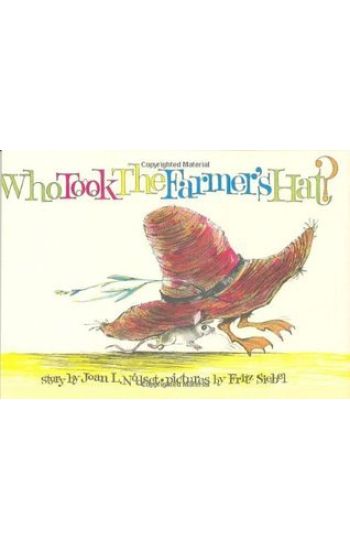
The farmer had a hat, an old brown hat.Oh, how her liked that old brown hat But then the wind came, and blew the hat away. And as fast as the farmer ran, the wind raced even faster. So the farmer went looking. Neither squirrel, nor Mouse, nor Duck, nor any of the other animals has seen the hat--though they had seen some pretty strange things. Would the farmer ever find his favorite hat?

Read along with your favorite I Can Read Book characters I Can Read Books are the premier line of beginning readers encouraging children to learn--and love--to read. Featuring award-winning authors and illustrators, I Can Read Books offer a full spectrum of entertaining stories for every stage of a child's reading development.Now the beloved characters and adventures from this popular line of books come to life with I Can Read Book and CDs. Each package includes a best-selling beginning-reader storybook and a lively audio recording featuring: Word-for-word narrationMusic and sound effectsOne version with turn-the-page signalsOne version of uninterrupted readingDog be gone In Go Away, Dog, the big old dog wants to play. Can the little boy make him go away?
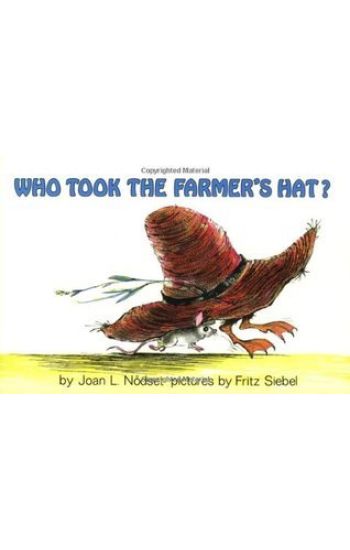
The farmer had a hat, an old brown hat.Oh, how her liked that old brown hat But then the wind came, and blew the hat away. And as fast as the farmer ran, the wind raced even faster. So the farmer went looking. Neither squirrel, nor Mouse, nor Duck, nor any of the other animals has seen the hat--though they had seen some pretty strange things. Would the farmer ever find his favorite hat?

Activists in the earliest Black antebellum reform endeavors contested and deprecated the concept of race. Attacks on the logic and ethics of dividing, grouping, and ranking humans into races became commonplace facets of activism in anti-colonization and emigration campaigns, suffrage and civil rights initiatives, moral reform projects, abolitionist struggles, independent church development, and confrontations with scientific thought on human origins. Denunciations persisted even as later generations of reformers felt compelled by theories of progress and American custom to promote race as a basis of a Black collective consciousness. Reluctant Race Men traces a history of the disparate challenges Black American reformers lodged against race across the long nineteenth century. It factors their opposition into the nation's history of race and reconstructs a reform tradition largely ignored in accounts of Black activism. Black-controlled newspapers, societies, churches, and conventions provided the principal loci and resources for questioning race. In these contexts, people of African descent generated a lexicon for refuting race, debated its logic, and, ultimately, reinterpreted it. Reformers' challenges call into question the notion that race is a self-evident site of identity among Black people. Their ideas instead spotlight legal, political, religious, social, and scientific practices that configured human difference, sameness, hierarchy, and consciousness. They show how a diverse set of actions constituted multi-faceted American phenomena dubbed "race."
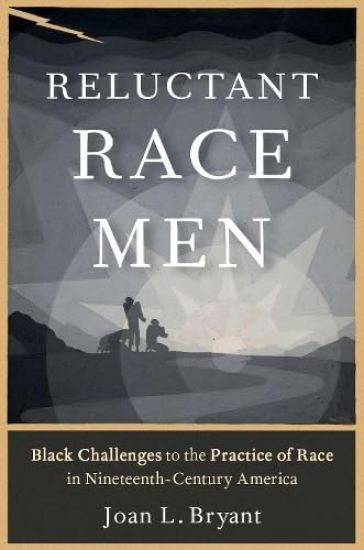
Activists in the earliest Black antebellum reform endeavors contested and deprecated the concept of race. Attacks on the logic and ethics of dividing, grouping, and ranking humans into races became commonplace facets of activism in anti-colonization and emigration campaigns, suffrage and civil rights initiatives, moral reform projects, abolitionist struggles, independent church development, and confrontations with scientific thought on human origins. Denunciations persisted even as later generations of reformers felt compelled by theories of progress and American custom to promote race as a basis of a Black collective consciousness. Reluctant Race Men traces a history of the disparate challenges Black American reformers lodged against race across the long nineteenth century. It factors their opposition into the nation's history of race and reconstructs a reform tradition largely ignored in accounts of Black activism. Black-controlled newspapers, societies, churches, and conventions provided the principal loci and resources for questioning race. In these contexts, people of African descent generated a lexicon for refuting race, debated its logic, and, ultimately, reinterpreted it. Reformers' challenges call into question the notion that race is a self-evident site of identity among Black people. Their ideas instead spotlight legal, political, religious, social, and scientific practices that configured human difference, sameness, hierarchy, and consciousness. They show how a diverse set of actions constituted multi-faceted American phenomena dubbed "race."
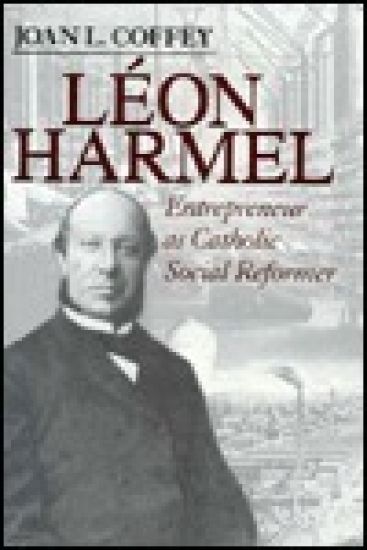
Léon Harmel is a penetrating study of the French industrialist who from 1870 to 1914 advanced social Catholic and Christian democratic movements by improving factory conditions and empowering workers. Joan Coffey's fascinating new book represents the first major study of Léon Harmel in English. Harmel's model factory at Val-des-Bois demonstrated that mutual accord and respect were possible between labor and management. Harmel turned his profitable spinning mill into a Christian corporation. His ethical business practices captured the attention of Pope Leo XIII and inspired his encyclical Rerum Novarum. Harmel also encouraged his workers to make pilgrimages to Rome. The collaboration of Pope Leo XIII and Léon Harmel laid the foundation of enterprises that collectively became known as Christian democracy. Drawing on extensive archival sources, including the Vatican Archives, Joan Coffey's work skillfully analyzes the personal relationship between Pope Leo XIII and Léon Harmel. Léon Harmel also offers a timely reminder of the power of personal ethics and provides a refreshing antidote to today's business climate.
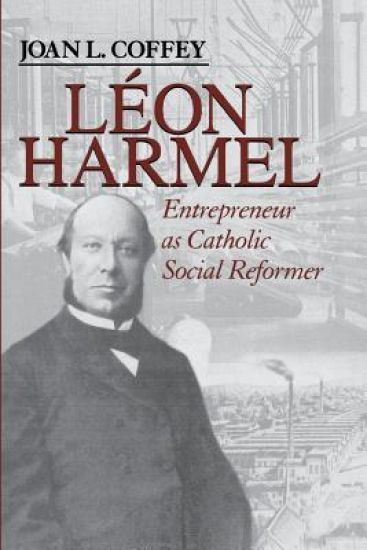
Léon Harmel is a penetrating study of the French industrialist who from 1870 to 1914 advanced social Catholic and Christian democratic movements by improving factory conditions and empowering workers. Joan Coffey's fascinating new book represents the first major study of Léon Harmel in English. Harmel's model factory at Val-des-Bois demonstrated that mutual accord and respect were possible between labor and management. Harmel turned his profitable spinning mill into a Christian corporation. His ethical business practices captured the attention of Pope Leo XIII and inspired his encyclical Rerum Novarum. Harmel also encouraged his workers to make pilgrimages to Rome. The collaboration of Pope Leo XIII and Léon Harmel laid the foundation of enterprises that collectively became known as Christian democracy. Drawing on extensive archival sources, including the Vatican Archives, Joan Coffey's work skillfully analyzes the personal relationship between Pope Leo XIII and Léon Harmel. Léon Harmel also offers a timely reminder of the power of personal ethics and provides a refreshing antidote to today's business climate.
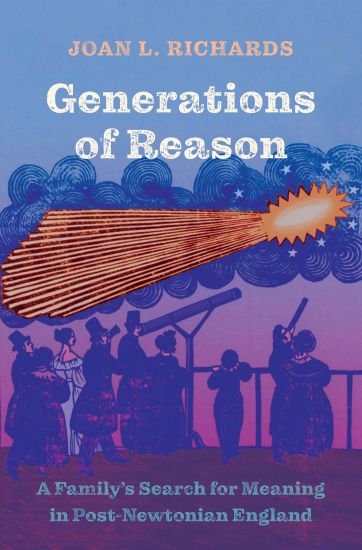
An intimate, accessible history of British intellectual development across the eighteenth and nineteenth centuries, through the story of one family This book recounts the story of three Cambridge-educated Englishmen and the women with whom they chose to share their commitment to reason in all parts of their lives. The reason this family embraced was an essentially human power with the potential to generate true insight into all aspects of the world. In exploring the ways reason permeated three generations of English experience, this book casts new light on key developments in English cultural and political history, from the religious conformism of the eighteenth century through the Napoleonic era into the Industrial Revolution and prosperity of the Victorian age. At the same time, it restores the rich world of the essentially meditative, rational sciences of theology, astronomy, mathematics, and logic to their proper place in the English intellectual landscape. Following the development of their views over the course of an eventful one hundred years of English history illuminates the fine structure of ways reason still operates in our world.

Henry V is a complex and challenging Shakespearean play that rewards detailed study. While few critics count it among Shakespeare's greatest works, the play is almost always successful in the theater. Compared to some of Shakespeare's more critically esteemed works, Henry V is more accessible to students, who find it easier to grasp as a text inviting lively discussion. In the early 1990's its popularity surged with the release of Kenneth Branagh's film version (1989), a hit with audiences on both sides of the Atlantic. This reference book is a comprehensive introductory guide to virtually all aspects of the play.The volume begins with a full overview of the textual history of the play and its historical and cultural contexts, with special emphasis on how it contributed to the debate on kingship and authority in the late sixteenth century. The book then concentrates extensively on the play's dramatic structure, its plots, its patterns of language, and its development of characters. Central to this discussion is the ambiguous presentation of Henry V, a public figure who may be interpreted as both a heroic king and a Machiavellian leader. The next chapter examines the play's significant themes: order and chaos, war, and kingship. The volume then evaluates different critical approaches to the play, so that the reader may understand how critics have responded to it over time. The final chapter carefully analyzes several theatrical, film, and video productions of Henry V. A closing bibliographical essay outlines the most important critical works on this enduring and provocative drama.

One of Shakespeare's four major tragedies, Othello has captivated audiences for centuries. In its treatment of jealousy and racial tension, it offers an enduring study of universal themes. Part of the Greenwood Guides to Shakespeare, this reference book provides students with a comprehensive overview of the play. The early chapters discuss significant differences between Quarto and Folio texts of Othello and explore the play's sources and historical contexts—in particular, how Othello contributes to early seventeenth century discourses on racial otherness and the role of women. The book then analyzes the dramatic structure of the play, including its settings, action, and patterns of language.The play hinges on Shakespeare's characters, and the volume discusses his complex presentation of Desdemona, Iago, and Othello. It then examines the tragedy's significant themes: the outsider in society, the gap between empirical evidence and intuitive faith, and the monsters and demons of sexual jealousy and the human imagination. This discussion is followed by a review of the critical response to Othello from the early seventeenth century to the present. A final chapter covers the play in performance, with special attention to versions available on film and videotape. Included are photographs from several major productions. The volume concludes with a bibliographical essay.

In Antony and Cleopatra, Shakespeare dramatizes the classical love story of the Roman general and the Egyptian queen, their fatal romance, and the power struggle that leads to the triumph of Octavius Caesar. While the play has much to offer, it is also one of Shakespeare's least accessible tragedies. It can baffle readers with its difuseness and multiple perspectives, or intimidate directors eager to do justice to its huge canvass without overwhelming the audience. This reference provides a thorough overview of the play, its background, and its critical and dramatic legacy.The early chapters examine the original text of Antony and Cleopatra and the play's contexts and sources. In particular, the book considers how Shakespeare's dramatic presentation of a powerful female ruler might reflect political attitudes in Renaissance England, and how he drew from North's Plutarch. The volume then analyzes the dramatic structure of the play--its settings, patterns of language, genre, and characters. Later chapters explore the tragedy's major themes and critical reception and discuss its performance history. A bibliographical essay then reviews the most important general works for further reading.

With a raging bear, the figure of Time, and a statue that turns out to be a living woman, The Winter's Tale is one of Shakespeare's most unusual dramas. This book conveniently overviews the play and its contexts. The guide begins with a discussion of the play's textual history and its relation to early 17th-century political, social, and agrarian developments. It then examines Shakespeare's dramatic art, characters, and themes. The final chapters review the critical and scholarly response to Shakespeare's work and its performance history.

Striking a perfect balance, the Fifth Edition helps instructors convey exciting research in this rapidly evolving field while also motivating students to learn the fundamentals amid an overwhelming amount of information. Engaging examples, abundant eye-catching figures, updated genetics and genomics content by new coauthor Erik Zinser, an updated Smartwork5 course, and new active learning resources provide flexible options for high-quality assessment in and outside of class.

Most people have no clue how to defend themselves against a physical attack; they just hope it never happens to them. With Teaching Self-Defense in Secondary Physical Education, you can equip your students with the knowledge and skills to minimize their chances of being the victims of violence and handle an attacker with minimal confrontation. Even if you have no knowledge of self-defense strategies, with this book you can teach your students personal safety, conflict-resolution techniques, and self-defense tactics. Joan Neide, a physical education teacher with a seventh-degree black belt in Uechi-ryu karate, has created an easy-to-use resource that will help you increase your students' awareness and avoidance abilities and learn the basic physical skills they need in order to defend themselves.Teaching Self-Defense in Secondary Physical Education is an ideal match for California physical education content standards, but it's equally effective for use in any state. With it you can help students- think critically and make sound decisions about their homes and personal safety,- learn the motor skills and movement patterns they need in order to defend themselves,- develop poise and confidence to react effectively in dangerous situations, and- define their own limitations as they apply to self-defense.Neide supplies 19 detailed lesson plans that cover up to 20 days for a two- or four-week unit. These plans are designed for coed classes in 50- to 60-minute periods, but Neide provides practical strategies to adapt the plans for any class size and setting. This flexibility makes it easy for you to use these plans within your own curriculum. The book also offers in-depth safety guidelines and suggestions that will enable you to create a safe and nonthreatening learning environment. Further, the plans are well illustrated and easy to follow, and they include all the handouts, overheads, and assessments you need for teaching a self-defense unit.Neide includes a detailed description of each self-defense skill and release in a simple, structured format. You are shown step by step how to perform each stance, step, technique, and release. Teaching cues and class organization are also included. Finally, Neide includes activities that focus on home and personal safety. Teaching Self-Defense in Secondary Physical Education contains clear-cut, well-organized, and flexible lesson plans that allow you to teach self-defense and leave your students prepared and poised to defend themselves.