Kirjojen hintavertailu. Mukana 11 244 527 kirjaa ja 12 kauppaa.

Kirjahaku

Etsi kirjoja tekijän nimen, kirjan nimen tai ISBN:n perusteella.

1000 tulosta hakusanalla Joan Robins

Joan Robinson

Joan Robinson

James Cicarelli; Julianne Cicarelli

Greenwood Press
1996
sidottu
Among the most imaginative and controversial economists of the 20th century, Joan Robinson is one of the intellectual giants of modern economics. This book pays homage to her and extends the knowledge of her contributions to a new generation of economists. It begins with a chronological history of her life. A biographical sketch follows, giving in-depth analysis of her major writings and her many conflicts with mainstream economists, particularly the bastard Keynesians of the United States. The book includes two annotated bibliographies of works by Robinson and works about her and her economic theories. The index makes the book readily accessible. One of the most imaginative and controversial economists of the 20th century, Joan Robinson clearly deserved the Nobel Prize in economics, although she never received it. This book intends to correct that oversight by paying homage to one of the intellectual giants of modern economics, and thus extending the knowledge of Robinson's contributions to a new generation of economists who may be unfamiliar with her work or influence. The book begins with a chronological history of Joan Robinson's life. A biographical sketch follows, giving in-depth analysis of her major writings and her many conflicts with mainstream economists, particularly the bastard Keynesians of the United States. This is followed by annotated bibliographies of works by Robinson and works about her and her economic theories. The index makes the contents of this user-friendly book readily accessible to the new economist and seasoned professional alike.
Joan Robinson
A passionate theorist and socialist, Joan Robinson made major contributions to the field of economics during her lifetime. Active in the profession for fifty years, she worked through a number of major upheavals to the received orthodoxy of economics and, in many cases, was at the forefront of the controversies. Her style was provocative and challenged the leaders in the field. This collection gathers together outstanding material which not only illustrates Robinson's intellectual path but, in doing so, documents the major debates in economic theory.
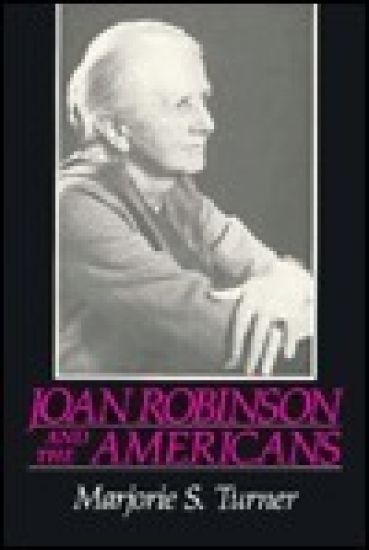
Joan Robinson and the Americans

Joan Robinson and the Americans

Marjorie Shepherd Turner

M.E. Sharpe
1989
sidottu
Employees with valuable skills and a sense of their own worth can make their jobs, pay, perks, and career opportunities different from those of their coworkers in subtle and not-so-subtle ways. This book shows how such individual arrangements can be made fair and acceptable to coworkers, and beneficial to both the employee and the employer.
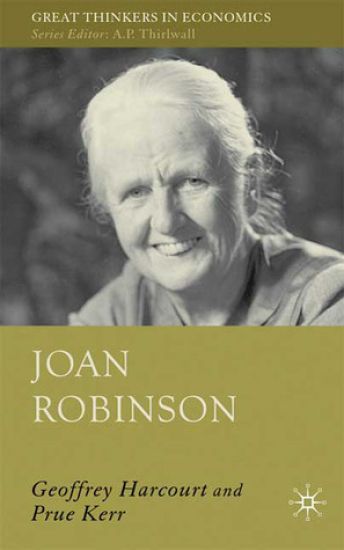
Joan Robinson

Joan Robinson

G. Harcourt; P. Kerr

Palgrave Macmillan
2009
sidottu
Joan Robinson is widely considered to be amongst the greatest economists of the 20th Century. This book provides a comprehensive study of her life and work, examining her role in the making of The General Theory, her critical interest in Marxian economics, her contributions to Labour Party policy and her writings on development, especially China.
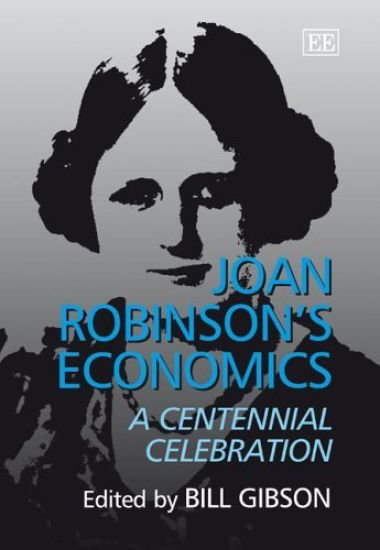
Joan Robinson’s Economics

Joan Robinson’s Economics

Edward Elgar Publishing Ltd
2005
sidottu
On the 100th anniversary of the birth of one of the 20th century's most accomplished and controversial economists, scholars from around the world reflect on the legacy of Joan Robinson's work. Addressing Robinsonian themes in growth, money, trade and methodology, their essays provide fresh perspectives on old questions. Joan Robinson's first priority was not theoretical perfection or abstract rigor. The arcane debates of the profession had little practical relevance and became increasingly tedious to her. Ironically, much of current economic theory embraces the realism she was striving toward. Indeed, as the essays in this volume show, she was in many ways ahead of her time. The volume begins by tracing the intellectual contours of her work and discussing the people and events that shaped her thinking. The succeeding chapters address her theories on accumulation, capital, and equilibrium, her interpretation of Marx, as well as the influence of Piero Sraffa. Several chapters analyze and extend her theory of growth, illustrating the wide applicability of her approach. A compelling exploration of Joan Robinson's contributions, this volume will be of great interest to scholars interested in growth, income distribution, post-Keynesian economics, macroeconomics, history of thought, money, capital theory, international trade and finance.
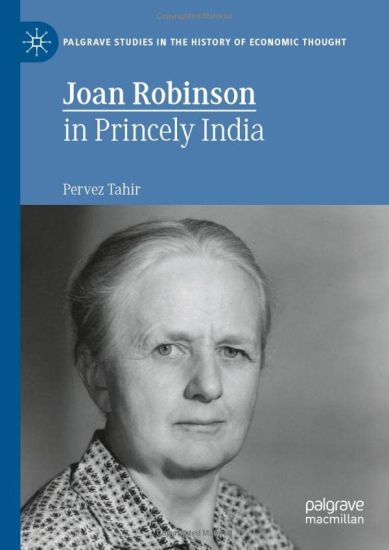
Joan Robinson in Princely India

Joan Robinson in Princely India

Pervez Tahir

Springer International Publishing AG
2022
sidottu
This book explores the early work and activities of Joan Robinson that focused on economic development within underdeveloped countries, in particular India before independence. By analysing the style of Robinson’s thinking and economic analysis, and based on the works of Indian contemporaries, parts of The British Crown and the Indian States previously unattributed to her are seen to exhibit her preoccupation with poverty, backwardness, unemployment, the population problem, international trade, and the role of the state. Through keeping in mind Robinson’s later work, the development of her ideas can be reflected upon, alongside critical perspectives. It also reveals the beginnings of her role as a public intellectual. This book aims to shed new light on Joan Robinson’s work on development and to provide insight to an overlooked part of her research. It will be relevant to students and researchers interested in the history of economic thought, development economics and economic history.
Joan Robinson in Princely India

Joan Robinson in Princely India

Pervez Tahir

Springer International Publishing AG
2023
nidottu
This book explores the early work and activities of Joan Robinson that focused on economic development within underdeveloped countries, in particular India before independence. By analysing the style of Robinson’s thinking and economic analysis, and based on the works of Indian contemporaries, parts of The British Crown and the Indian States previously unattributed to her are seen to exhibit her preoccupation with poverty, backwardness, unemployment, the population problem, international trade, and the role of the state. Through keeping in mind Robinson’s later work, the development of her ideas can be reflected upon, alongside critical perspectives. It also reveals the beginnings of her role as a public intellectual. This book aims to shed new light on Joan Robinson’s work on development and to provide insight to an overlooked part of her research. It will be relevant to students and researchers interested in the history of economic thought, development economics and economic history.
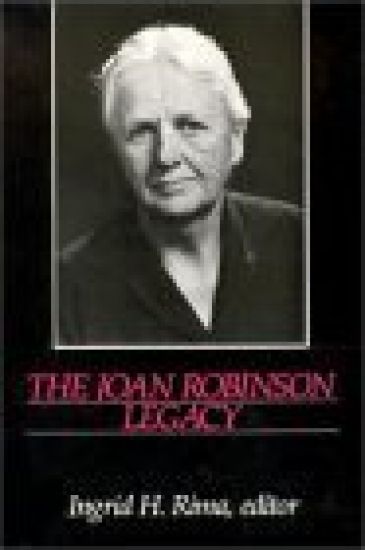
The Joan Robinson Legacy

The Joan Robinson Legacy

Ingrid H. Rima

M.E. Sharpe
1991
sidottu
First Published in 1991. The undertakings within this book are testimony to the professional legacy Joan Robinson left behind. The contributors discuss her irreverence for established theory, her seemingly unquenchable zest for intellectual argument, doggedly pursued on the conviction that she was at least morally right, the sharpness of her wit, along with her occasionally unconventional mode of dress and her enjoyment of nature. This includes a biographical memoir and concludes with a bibliography of the writings of Robinson.
The Economics of Joan Robinson
Joan Robinson is widely regarded as the greatest female economist and the most important figure in the post-Keynesian tradition. In this volume a distinguished, international team of scholars analyses her extraordinary wide ranging contribution to economics. Various contributions address: * her work on the economics of the short period and her critique of Pigou * her contribution to the development of the Keynesian tradition at Cambridge * her response to Marx and Sraffa * her analysis of growth, development and dynamics * her comments on technical innovation and capital theory * her preference for 'history' rather than equilibrium as a basis for methodology. Her published work spanned six decades, and the volume includes a bibliography of her work including some 450 items which will be a major resource for students of the development of modern economic analysis.
The Economics of Joan Robinson
Joan Robinson is widely regarded as the greatest female economist and the most important figure in the post-Keynesian tradition. In this volume a distinguished, international team of scholars analyses her extraordinary wide ranging contribution to economics. Various contributions address: * her work on the economics of the short period and her critique of Pigou * her contribution to the development of the Keynesian tradition at Cambridge * her response to Marx and Sraffa * her analysis of growth, development and dynamics * her comments on technical innovation and capital theory * her preference for 'history' rather than equilibrium as a basis for methodology. Her published work spanned six decades, and the volume includes a bibliography of her work including some 450 items which will be a major resource for students of the development of modern economic analysis.
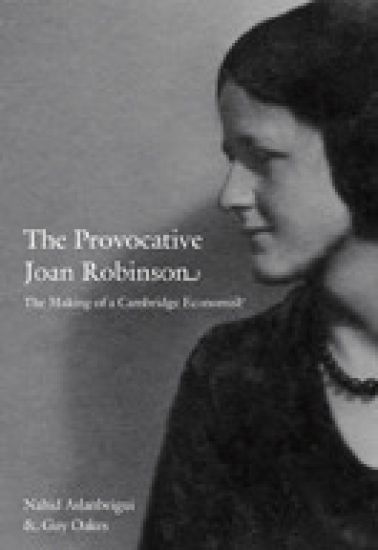
The Provocative Joan Robinson

The Provocative Joan Robinson

Nahid Aslanbeigui; Guy Oakes

Duke University Press
2009
sidottu
One of the most original and prolific economists of the twentieth century, Joan Robinson (1903–83) is widely regarded as the most important woman in the history of economic thought. Robinson studied economics at Cambridge University, where she made a career that lasted some fifty years. She was an unlikely candidate for success at Cambridge. A young woman in 1930 in a university dominated by men, she succeeded despite not having a remarkable academic record, a college fellowship, significant publications, or a powerful patron. In The Provocative Joan Robinson, Nahid Aslanbeigui and Guy Oakes trace the strategies and tactics Robinson used to create her professional identity as a Cambridge economist in the 1930s, examining how she recruited mentors and advocates, carefully defined her objectives, and deftly pursued and exploited opportunities.Aslanbeigui and Oakes demonstrate that Robinson’s professional identity was thoroughly embedded in a local scientific culture in which the Cambridge economists A. C. Pigou, John Maynard Keynes, Dennis Robertson, Piero Sraffa, Richard Kahn (Robinson’s closest friend on the Cambridge faculty), and her husband Austin Robinson were important figures. Although the economists Joan Robinson most admired-Pigou, Keynes, and their mentor Alfred Marshall-had discovered ideas of singular greatness, she was convinced that each had failed to grasp the essential theoretical significance of his own work. She made it her mission to recast their work both to illuminate their major contributions and to redefine a Cambridge tradition of economic thought. Based on the extensive correspondence of Robinson and her colleagues, The Provocative Joan Robinson is the story of a remarkable woman, the intellectual and social world of a legendary group of economists, and the interplay between ideas, ambitions, and disciplinary communities.
The Provocative Joan Robinson

The Provocative Joan Robinson

Nahid Aslanbeigui; Guy Oakes

Duke University Press
2009
pokkari
One of the most original and prolific economists of the twentieth century, Joan Robinson (1903–83) is widely regarded as the most important woman in the history of economic thought. Robinson studied economics at Cambridge University, where she made a career that lasted some fifty years. She was an unlikely candidate for success at Cambridge. A young woman in 1930 in a university dominated by men, she succeeded despite not having a remarkable academic record, a college fellowship, significant publications, or a powerful patron. In The Provocative Joan Robinson, Nahid Aslanbeigui and Guy Oakes trace the strategies and tactics Robinson used to create her professional identity as a Cambridge economist in the 1930s, examining how she recruited mentors and advocates, carefully defined her objectives, and deftly pursued and exploited opportunities.Aslanbeigui and Oakes demonstrate that Robinson’s professional identity was thoroughly embedded in a local scientific culture in which the Cambridge economists A. C. Pigou, John Maynard Keynes, Dennis Robertson, Piero Sraffa, Richard Kahn (Robinson’s closest friend on the Cambridge faculty), and her husband Austin Robinson were important figures. Although the economists Joan Robinson most admired-Pigou, Keynes, and their mentor Alfred Marshall-had discovered ideas of singular greatness, she was convinced that each had failed to grasp the essential theoretical significance of his own work. She made it her mission to recast their work both to illuminate their major contributions and to redefine a Cambridge tradition of economic thought. Based on the extensive correspondence of Robinson and her colleagues, The Provocative Joan Robinson is the story of a remarkable woman, the intellectual and social world of a legendary group of economists, and the interplay between ideas, ambitions, and disciplinary communities.
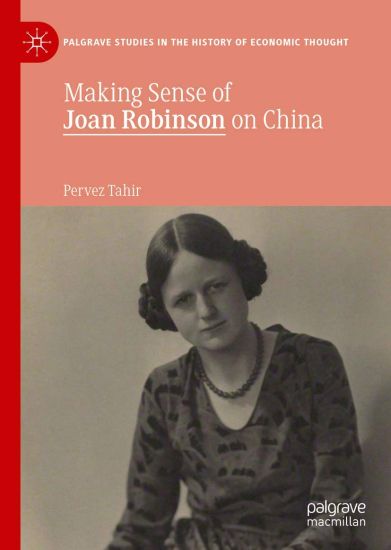
Making Sense of Joan Robinson on China

Making Sense of Joan Robinson on China

Pervez Tahir

Springer Nature Switzerland AG
2020
sidottu
Joan Robinson was a member of the famous Keynes Circus of young economists at Cambridge in the 1930's. She was a theorist par excellence, making outstanding contributions to the understanding of competition, aggregate demand and capital. At the same time, she developed an interest in underdeveloped economies and alternatives to capitalism that eventually produced a long list of writings on China between the 1950's to the 1970's. These writings were neither theoretical nor empirical, but a series of opinion pieces and reports. Yet it is these writings that arguably cost Joan Robinson the Nobel Memorial Prize in economics. This short book reviews those writings and comments on what has happened since with regard to China’s development, Joan Robinson's interpretation and predictions, and how her 1950's lectures in China match up to China’s policies since Mao.This book will be of interest to students and scholars interested in how the history of economic thoughtcan inform and progress development economics.
Making Sense of Joan Robinson on China

Making Sense of Joan Robinson on China

Pervez Tahir

Springer Nature Switzerland AG
2021
nidottu
Joan Robinson was a member of the famous Keynes Circus of young economists at Cambridge in the 1930's. She was a theorist par excellence, making outstanding contributions to the understanding of competition, aggregate demand and capital. At the same time, she developed an interest in underdeveloped economies and alternatives to capitalism that eventually produced a long list of writings on China between the 1950's to the 1970's. These writings were neither theoretical nor empirical, but a series of opinion pieces and reports. Yet it is these writings that arguably cost Joan Robinson the Nobel Memorial Prize in economics. This short book reviews those writings and comments on what has happened since with regard to China’s development, Joan Robinson's interpretation and predictions, and how her 1950's lectures in China match up to China’s policies since Mao.This book will be of interest to students and scholars interested in how the history of economic thoughtcan inform and progress development economics.
Addie's Bad Day

Addie's Bad Day

Joan Robins

Harpercollins
1994
nidottu
Addie really wants to go to Max's birthday party, but it is a BAD day. Addie won't take her hat off. And she won't tell Max why. Can Max convince his best pal to throw off her cap and join the party?