Kirjojen hintavertailu. Mukana 11 244 527 kirjaa ja 12 kauppaa.

Kirjahaku

Etsi kirjoja tekijän nimen, kirjan nimen tai ISBN:n perusteella.

1000 tulosta hakusanalla Joe Holland

Postmodern Ecological Spirituality: Catholic-Christian Hope for the Dawn of a Postmodern Ecological Civilization Rising from Within the Spiritual Dark
THE CURRENT FAILURE of so many religious institutions, along with the spiritual emptiness pervading late-modern industrial societies, can't be blamed just on "secularization." So many sincere people thirst for spiritual meaning, yet they don't find it in failing religious institutions. At the same time, so many sincere people are spiritually despairing over the refusal by hyper-masculine global elites of Modern Industrial Civilization to turn away from profitable but anti-ecological systems, which are so rapidly devastating the creative communion of life across our loving Creator's beloved planet Earth.In this ground-breaking book, eco-philosopher and Catholic theologian Joe Holland links those two challenges. Principal author of the widely read text Social Analysis: Linking Faith and Justice and ghostwriter for two highly praised Appalachian Pastoral Letters, he insightfully explores the late-modern breakdowns of both civilization and spirituality. He correlates the social and ecological breakdown of Modern Industrial Civilization with the deeper cultural breakdown of Modern Psychological Spirituality, which is found in both Catholic and Protestant forms, as well as in other religious forms. At the same time, he explores the seminal emergence of Postmodern Ecological Spirituality, which is already planting regenerative seeds for a future Postmodern Ecological Civilization.This challenging book provides essential background for: 1) understanding at the deep level the interwoven late-modern global devastation of ecological, societal, and spiritual life; and 2) seeking at the deep level the holistic postmodern global regeneration of ecological, social, and spiritual life, which Pope Francis has called "integral ecology." JOE HOLLAND is Emeritus Professor of Philosophy & Religion at Saint Thomas University in Miami Gardens, Florida, as well as President of Pax Romana / Catholic Movement for Intellectual & Cultural Affairs USA, which is based in Washington DC. He holds a Ph.D. from the University of Chicago.
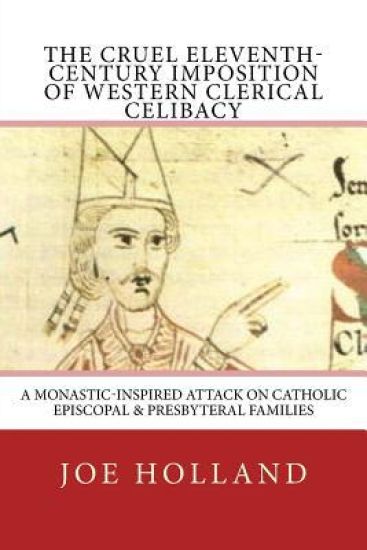
The Cruel Eleventh-Century Imposition of Western Clerical Celibacy: A Monastic-Inspired Attack on Catholic Episcopal & Presbyteral Families
THIS BOOK TELLS THE SAD STORY of how the eleventh-century papal "Gregorian Reform" forcibly imposed "clerical celibacy" on traditionally married Western Catholic bishops and priests (presbyters). The Gregorian popes forced many bishops' and priests' wives into homelessness, prostitution, and suicide. They forced other wives and their children into slavery. Driven in part by a vicious spiritual misogyny infecting some medieval networks of Benedictine monasticism, the popes of the "Gregorian Reform" tried to destroy in the Western Church the thousand-year-old apostolic tradition of married bishops and presbyters - a tradition rooted in the New Testament. They did that in order to construct a papal theocracy supported by a celibate cadre with no allegiance to family. At the time, their attacks precipitated a tragic fraternal battle between heterosexual and homosexual "clerics" - tragic because the two sides were brothers equally beloved by God. The book outlines a three-stage historical construction of non-evangelical clericalism: 1) the fourth-century Imperial Church's fabrication of the "clerical state;" 2) the eleventh-century papal imposition of "clerical celibacy;" and 3) the sixteenth-century Council of Trent's mandate of "clerical seminaries." Finally, the book proposes that, while the modern Western Catholic male "clerical-celibate-seminary" system is breaking down, the Holy Spirit is inspiring a lay-centered "New Evangelization" energized by postmodern feminine spiritual regeneration. JOE HOLLAND is Emeritus Professor of Philosophy & Religion at Saint Thomas University in Miami Gardens, Florida. The author of 17 other books, he is also President of Pax Romana / Catholic Movement for Intellectual & Cultural Affairs USA.
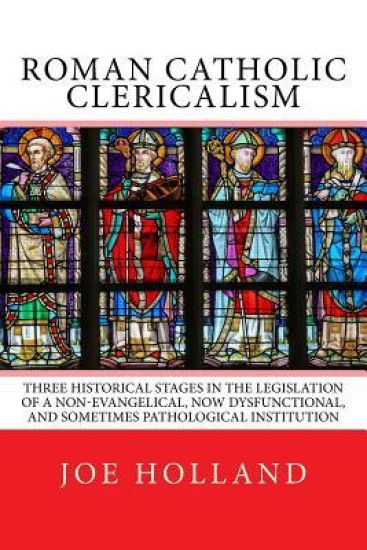
Roman Catholic Clericalism: Three Historical Stages in the Legislation of a Non-Evangelical, Now Dysfunctional, and Sometimes Pathological Institution
THE CLERICAL SCANDAL OF SEXUAL-ABUSE and coverups, caused by a significant minority of the episcopacy and presbyterate of the Roman Catholic Church, has precipitated a strategic intellectual debate. On one side, the so-called 'conservative' intellectual diagnosis blames what some see as a broad presence within the contemporary Western Roman Catholic clergy of persons with homosexual tendencies. On the other side, the so-called 'progressive' intellectual diagnosis blames "Clericalism," which it sees only as a problematic psychological attitude, or an authoritarian, non-transparent, and unaccountable organizational culture, or both. This small book has not been written to defend either side of that debate, but rather to understand how Roman Catholic Clericalism is a systemic institution. Even so, it is important to state that any 'conservative' scapegoating of persons with a homosexual orientation for the clerical sexual-abuse and coverup scandals, as if homosexuality itself were the cause, blasphemes the image of God in those among us with a homosexual orientation. All human persons, regardless of sexual orientation, carry the beauty and dignity of our loving Creator's sacred image. It is also important to state that, while the 'progressive' diagnosis is correct at the surface level, it nonetheless fails to unveil the deep root of Clericalism as an historically legislated and non-evangelical institution, which inevitably regenerates problems and even pathologies for each successive clerical generation. The 'progressive' diagnosis also fails to explore how the non-evangelical institution of Roman Catholic Clericalism was historically constructed by imperial, papal, and conciliar legislation over more than a millennium and a half, and how it is now undermining the Western Catholic evangelization. Deepening the analysis of Clericalism to its foundational and tenacious institutional level is the purpose of this small book ...... JOE HOLLAND is Emeritus Professor of Philosophy & Religion from Saint Thomas University in Miami Gardens, Florida. He is also President of Pax Romana / Catholic Movement for Intellectual & Cultural Affairs USA, based in Washington DC. The author of 17 other books, he holds a PhD, from the University of Chicago. ([email protected] / [email protected])
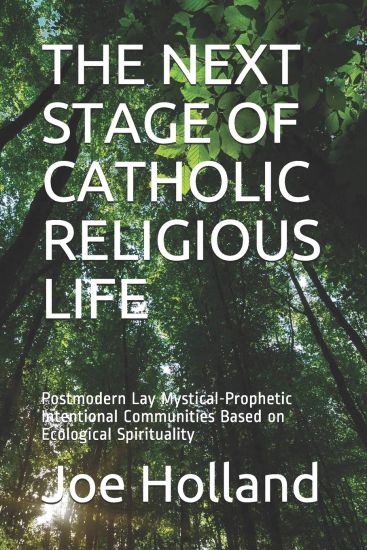
The Next Stage of Catholic Religious Life: Postmodern Lay Mystical-Prophetic Intentional Communities Based on Ecological Spirituality
THIS BOOK TRACES THE HISTORY OF CATHOLIC RELIGIOUS LIFE, but it prefers to describe "Religious Life" as "Catholic mystical-prophetic intentional communities." That history has its roots in the foundational early church, which was entirely lay in character, just as Jesus was a Jewish lay teacher. The book shows how both the "clerical state in life" and the "religious state in life" were later legal-cultural additions to Catholic Christianity. Today, at a time when the modern "apostolic" stage of "religious life" is in decline, at least in the 'advanced' industrialized regions, the book argues that a new and postmodern historical stage of Catholic mystical-prophetic intentional communities is now emerging, and that this new stage is both lay and ecological. The book then offers proposals for how declining modern forms of Catholic "religious life" can find new life and growth by sponsoring or engaging with emerging lay-ecological intentional communities, including ecovillages, and by drinking from the living and renewing waters of ecological spirituality. JOE HOLLAND, an eco-social philosopher and Catholic theologian, holds a Ph.D. from the University of Chicago. He is Emeritus Professor of Philosophy & Religion at St. Thomas University in Miami Gardens, Florida, as well as a member of the International Association for Catholic Social Thought at the Catholic University of Leuven in Belgium. He was the consultant-writer for the 1975 and 1995 pastoral letters of the Catholic bishops of Appalachia, This Land is Home to Me, and At Home in the Web of Life. He is also author of 18 other books, including Modern Catholic Social Teaching and Postmodern Ecological Spirituality.
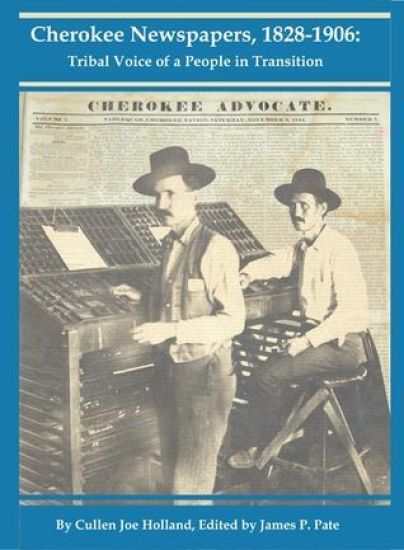
Cherokee Newspapers, 1828-1906

Cherokee Newspapers, 1828-1906

Cullen Joe Holland

Cherokee Heritage Press
2014
sidottu
Indian journalism began at New Echota, Georgia, with the publication of the first issue of the "Cherokee Phoenix "on February 21, 1828. Amid the dynamic backdrop of increasing U.S. efforts to force American Indian tribes west, the "Phoenix "became the voice of the Cherokee people. Its editor, Elias Boudinot, insisted that the paper meet the highest standards and saw its purpose as a defender of Indian rights. To allow for the broadest possible readership, the "Cherokee Phoenix "was printed in both Cherokee and English. Facing the challenges of running a frontier newspaper, Boudinot consistently produced a quality publication. In "Cherokee Newspapers, 1828-1906, "Cullen Joe Holland skillfully covers the growth of the "Phoenix," explains how the Cherokee font was acquired, and discusses problems the paper faced internally until its confiscation by the Georgia militia in 1834. He then picks up the story ten years later, after the Cherokees have lost their battle to remain in the east and have endured the forced migration to the newly established Cherokee Nation in the west. There, on September 26, 1844, the newspaper was reborn as the "Cherokee Advocate." Like the "Phoenix," it was again a voice for the Cherokee people. The "Advocate" was printed from 1844 to 1853 and from 1870 until it closed in 1906. This remarkable history of Indian journalism includes photographs of many of the editors and printers of the" Cherokee Phoenix" and the "Cherokee Advocate." Together these two groundbreaking newspapers covered most of the issues the Cherokees faced during the nineteenth century--including removal, reconstruction, allotment, and Oklahoma statehood.
Varieties of Postmodern Theology

Varieties of Postmodern Theology

David Ray Griffin; William A. Beardslee; Joe Holland

State University of New York Press
1989
pokkari
Sorts out the confusion created by the use of the term "postmodern" in relation to widely divergent theological positions.This book sorts out the confusion created by the use of the term "postmodern" in relation to widely divergent theological positions. Four different types of postmodern theology are distinguished in the preface: constructive, deconstructive, liberationist, and conservative. Two forms of each type are discussed in the book.Writing from a constructive, postmodern perspective, the authors enter into dialogue with the deconstructive postmodernism of Mark C. Taylor and Jean-François Lyotard, with the liberationist postmodernism of Harvey Cox and Cornel West, and with the conservative postmodernism of George William Rutler and John Paul II.
Modern Psychedelics

Modern Psychedelics

Joe Dolce; Julie Holland

Running Press,U.S.
2025
pokkari
Modern Psychedelics is a judgment-free handbook that compiles contemporary research and ancient knowledge to guide adult readers who are interested in the mindful exploration of these misunderstood, extraordinary, powerful substances.We are currently in the midst of a massive psychedelic resurgence. Medical and academic research teams all over the world have launched studies into the effective use of psychedelics to treat illnesses which modern medicine can't always effectively address, including PTSD, addiction and depression. At the same time, a growing number of adults are interested in experiencing the potentially life-changing insight and perspective that psychedelics reputably provide. But those searching for reliable information for how to take and make meaning from these profound experiences have found little available, until now. Modern Psychedelics covers the history, research, myths, and use of the most popular psychedelics including MDMA, Magic Mushrooms, Ketamine, DMT/5-MeO-DMT, Ayahuasca, LSD, Mescaline/Payote/Huachuma, and Ibogaine/Iboga. In addition, it offers essential information on how to set an intentional journey, the potential benefits of microdosing, how couples can use psychedelics to enhance intimacy and connection, and recommendations for responsible use when working with these extraordinary substances. Accessibly written, and filled with wisdom from many trusted sources, no other book offers the depth of information to mindfully guide you into these amazing alternative experiences.
A Moment in the Making of U.S. Race Relations

A Moment in the Making of U.S. Race Relations

Dorothy C. Holland; Margaret Eisenhart; Joe R. Harding; J. Michael Livesay

The University of North Carolina Press
1978
nidottu
In the fall of 1975 through the spring of 1977, as Grandin, an urban, public school in North Carolina, was desegregating, anthropologists Dorothy Holland, Margaret Eisenhart, Joe Harding, and Michael Livesay carried out an ethnographic study of the fifth and sixth grade classes. Their purpose was to understand how the students, teachers, administrators, parents, and other community members dealt with the requirement to desegregate their school. Originally published in 1978, their research relied on close-up methods that highlighted the interactional, cultural, and institutional processes of making race and race relations in the school. The book used the term ""social race"" to emphasize that race is a process. In today's expanded terminology, persons are raced (identified as racial) in social interactions and representations through positioning and discourse. Similarly race relations are made in day-to-day processes of interaction and meaning making.As a specific historical case, the context at Grandin cannot be generalized to contemporary educational settings. Much about public schools has changed since the 1970s. Nonetheless, forty years later, the barriers to more positive race relations are strikingly similar: fraught interactions across differences in interpersonal styles; symbolic encounters that mean different things to different groups; provocative, hurtful terminologies; a veneer of harmony that masks serious difficulties with conflict resolution; and a virtual lack of opportunity and skills for frank discussions about experiences of racism.
Joe

Joe

Guy Hallowes

Omne Publishing
2021
pokkari
Young JOE WACHEERA lives on a small idyllic plot in rural Kenya with his loving parents. The area, however, is fraught with violence, and his father is gruesomely murdered before his eyes. Joe and his mother flee for their lives to Kibera, a large Nairobi slum, where his mother is forced into prostitution by an apparent pillar of the church, REVEREND MWELELI.Determined to escape this horrifying situation, Joe does whatever he can to improve their lot. He puts together a gang of toughs, sets up an operation selling bhang (marijuana) to the community, and organises private tutoring. When Mweleli intervenes in a dispute between Joe and a local shopkeeper, Joe ends up working for him on a casual basis, serving tea to visiting business guests.Joe overhears meetings between the reverend, a GENERAL KARIUKI, a British businessman SIR OSWALD HIGGINBOTHAM and others, who conspire to set up a people smuggling operation. Joe 'befriends' Kariuki and uncomfortably agrees to trade sexual favours in return for tutoring in banking finance and accounting. Unbeknownst to Kariuki, using his new found skills Joe regularly steals portions of Kariuki's ill-gotten wealth, hiding it away in London bank accounts. Joe is now sixteen; he and his gang of toughs negotiate their way into joining the people smuggling operation, acting as assistants taking people to Juba in South Sudan. His mother marries and moves out of the slums. But then Kariuki discovers Joe's theft.He confronts and tries to throttle Joe, who, almost by accident, kills him. Joe flees Nairobi and he and his gang join a smuggling operation taking refugees from Juba to Libya; part of the way through the journey Joe takes over the operation. Once in Libya, he and his gang are engaged by British security to rescue a kidnapped agent, which they do in the hope of gaining British citizenship.Joe smuggles himself into London, illegally acquires a British identity and is employed as a messenger at Sir Oswald Higginbotham's financial advisory firm, though Higginbotham does not see or recognise him. With Joe's financial knowledge, and partly through stealing confidential information from Higginbotham's, Joe gradually sets up his own financial advisory business. It's then he meets Isabel Anderson, a kindred spirit with whom he has a passionate love affair. They dream of a future together but must first obtain a legal identity for Joe.Before they can approach MI5 and what turns out to be the agent Joe rescued, however, he is accused of murder - committed by the British man whose identity Joe illegally assumed. He is jailed. Isabel employs a lawyer and Joe is freed. He then exchanges his knowledge of people smuggling for legal citizenship and a guarantee against prosecution for past misdeeds. Joe and Isabel marry, set up a jointly run firm, including Joe's advisory business. Joe's mother dies, and they return to Kenya to see if Joe can reclaim the land stolen from his family years earlier. While in Kenya, MI5 requests he acts as a part-time agent to assist in prosecutions of all the people smuggling conspirators, including Mweleli in Kenya and Sir Oswald Higginbotham in Britain.After a final confrontation with Kenyan security services over Kariuki's death, Joe is exonerated, is tempted but decides against a takeover of Higginbotham's, and regains possession of his family's land. He and Isabel set up a school for girls, in Nairobi, dedicated to Joe's mother.
Joe

Joe

Jonathan Rubinstein

Globe Pequot Press
2012
pokkari
This fresh new release is a beautiful, hip guide to the world of coffee brought to you by New York City's popular connoisseur coffee chain, Joe. Written from the point of view of owners (and siblings) Jonathan and Gabrielle Rubinstein, the reader is welcomed into the tight-knit international specialty coffee community of committed growers, buyers, roasters, entrepreneurs, baristas, and drinkers. Their mission: to source, purchase, roast, serve, and drink the world's finest coffees.