Kirjojen hintavertailu. Mukana 11 244 527 kirjaa ja 12 kauppaa.

Kirjahaku

Etsi kirjoja tekijän nimen, kirjan nimen tai ISBN:n perusteella.

1000 tulosta hakusanalla Joel Best

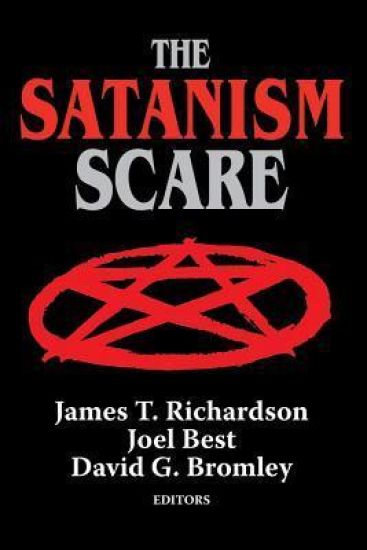
The Satanism Scare

The Satanism Scare

Joel Best

AldineTransaction
1991
sidottu
Although there is growing concern over Satanism as a threat to American life, the topic has received surprisingly little serious attention. Recognizing this, the editors of this volume have selected papers from a wide variety of disciplines, broadly covering contemporary aspects of Satanism from the vantage points of studies in folklore, cults, religion, deviance, rock music, rumor, and the mass media.All contributors are skeptical of claims that a large, powerful satanic conspiracy can be substantiated. Their research focuses instead on claims about Satanism and on the question of whose interests are served by such claims. Several papers consider the impact of anti-Satanism campaigns on public opinion, law enforcement and civil litigation, child protection services, and other sectors of American society.The constructionist perspective adopted by the editors does not deny the existence of some activities by 'real' Satanists, and two papers describe the workins of satanic groups. Whatever the basis of the claims examined and analyzed, there is growing evidence that belief in the satanic menace will have real social consequences in the years ahead.
The Satanism Scare

The Satanism Scare

Joel Best

AldineTransaction
1991
nidottu
Although there is growing concern over Satanism as a threat to American life, the topic has received surprisingly little serious attention. Recognizing this, the editors of this volume have selected papers from a wide variety of disciplines, broadly covering contemporary aspects of Satanism from the vantage points of studies in folklore, cults, religion, deviance, rock music, rumor, and the mass media.All contributors are skeptical of claims that a large, powerful satanic conspiracy can be substantiated. Their research focuses instead on claims about Satanism and on the question of whose interests are served by such claims. Several papers consider the impact of anti-Satanism campaigns on public opinion, law enforcement and civil litigation, child protection services, and other sectors of American society.The constructionist perspective adopted by the editors does not deny the existence of some activities by 'real' Satanists, and two papers describe the workins of satanic groups. Whatever the basis of the claims examined and analyzed, there is growing evidence that belief in the satanic menace will have real social consequences in the years ahead.
Troubling Children

Troubling Children

Joel Best

AldineTransaction
1994
sidottu
Increasingly, sociologists have turned their attention to the social problems of children– in particular, of younger children. This collection reflects those recent interest. While most researchers have focused on social problems involving adolescents, this volume offers instead original case studies of problems concerning preadolescent children.The papers that Best has gathered here represent different theoretical and methodological approaches. They report on social issues in Albania, Kenya, and Japan as well as in the United States. The range of social problems they address is a wide one, from broad societal crises to decision-making within families. Topics include the effects of economic and social crises in Africa and Eastern Europe; concerns about crack use and other forms of fetal endangerment; parental decisions about spanking, toy choices, and letting children listen to rock music; schooling in day care and elementary and junior high schools; and children's perceptions of environmental crises.Troubling Children adds a new dimension to courses in social problems. It also offers a different set of perspectives for those concerned with sociology of preadolescent children and their discontents.
Troubling Children

Troubling Children

Joel Best

AldineTransaction
1994
nidottu
Increasingly, sociologists have turned their attention to the social problems of children– in particular, of younger children. This collection reflects those recent interest. While most researchers have focused on social problems involving adolescents, this volume offers instead original case studies of problems concerning preadolescent children.The papers that Best has gathered here represent different theoretical and methodological approaches. They report on social issues in Albania, Kenya, and Japan as well as in the United States. The range of social problems they address is a wide one, from broad societal crises to decision-making within families. Topics include the effects of economic and social crises in Africa and Eastern Europe; concerns about crack use and other forms of fetal endangerment; parental decisions about spanking, toy choices, and letting children listen to rock music; schooling in day care and elementary and junior high schools; and children's perceptions of environmental crises.Troubling Children adds a new dimension to courses in social problems. It also offers a different set of perspectives for those concerned with sociology of preadolescent children and their discontents.
Threatened Children

Threatened Children

Joel Best

University of Chicago Press
1993
nidottu
Child abuse, incest, child molestation, Halloween sadism, child pornography: although clearly not new problems, they have attracted more attention than ever before. Threatened Children asks why. Joel Best analyzes the rhetorical tools used by child advocates when making claims aimed at raising public anxiety and examines the media's role in transmitting reformers' claims and the public's response to the frightening statistics, compelling examples, and expanding definitions it confronts. Drawing on a wide range of sources, from criminal justice records to news stories, from urban legends to public opinion surveys, Best reveals how the cultural construction of social problems evolves.
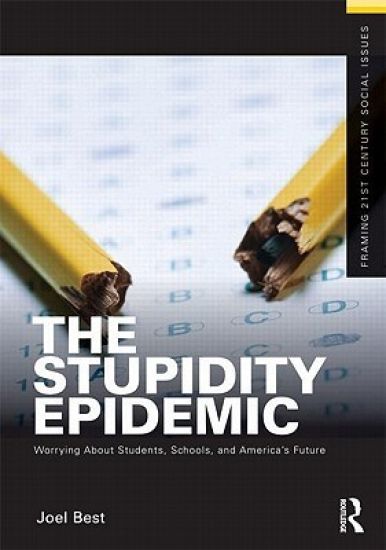
The Stupidity Epidemic

The Stupidity Epidemic

Joel Best

Routledge
2010
nidottu
Critics often warn that American schools are failing, and that our students are ill-prepared for the challenges the future holds, and may even be "the dumbest generation." We can think of these claims as warning about a Stupidity Epidemic. This essay begins by tracing the history of the idea of that American students, teachers, and schools are somehow getting worse; the record shows that critics have been issuing such warnings for more than 150 years. It then examines four sets of data that speak to whether educational deterioration is taking place. First, data on educational attainment show a clear trend: more students are getting more education. Second, standardized test scores suggest that American students are performing somewhat better; certainly most test scores do not indicate that students are getting worse. Third, measures of popular knowledge also show evidence of improvement. Fourth, there is clear evidence that IQ scores have been rising. In other words, the best available evidence fails to support claims about a Stupidity Epidemic. The essay then turns to exploring several reasons why belief in educational decline is so common, and concludes by suggesting some more useful ways to think about educational problems.The goal of this new, unique Series is to offer readable, teachable "thinking frames" on today’s social problems and social issues by leading scholars, all in short 60 page or shorter formats, and available for view on http://routledge.customgateway.com/routledge-social-issues.html For instructors teaching a wide range of courses in the social sciences, the Routledge Social Issues Collection now offers the best of both worlds: originally written short texts that provide "overviews" to important social issues as well as teachable excerpts from larger works previously published by Routledge and other presses.
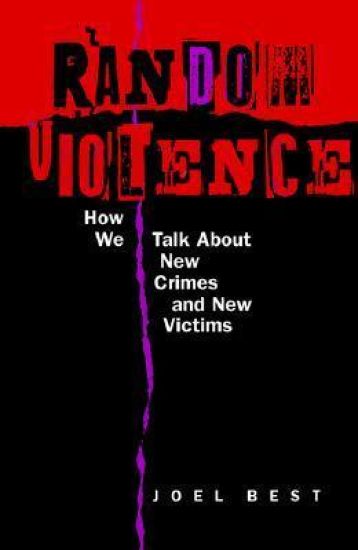
Random Violence

Random Violence

Joel Best

University of California Press
1999
pokkari
"Random Violence" is a deft and thought-provoking exploration of the ways we talk about - and why we worry about - new crimes and new forms of victimization. Focusing on so-called random crimes such as freeway shootings, gang violence, hate crimes, stalking, and wilding, Joel Best shows how new crime problems emerge and how some quickly fade from public attention while others spread and become enduring subjects of concern. Best's original and incisive argument illuminates the fact that while these crimes are in actuality neither new, nor epidemic, nor random, the language used to describe them nonetheless shapes both private fears and public policies. Best scrutinizes the melodramatic quality of the American public's attitudes toward crime, exposing the cultural context for the popularity of 'random violence' as a catch-all phrase to describe contemporary crime, and the fallacious belief that violence is steadily rising. He points out that the age, race, and sex of homicide victims reveal that violence is highly patterned. Best also details the contemporary ideology of victimization, as well as the social arrangements that create and support a victim industry that can label large numbers of victims. He demonstrates why it has become commonplace to 'declare war' on social problems, including drugs, crime, poverty, and cancer, and outlines the complementary influence of media, activists, officials, and experts in institutionalizing crime problems. Intrinsic to all these concerns is the way in which policy choices and outcomes are affected by the language used to describe social problems.
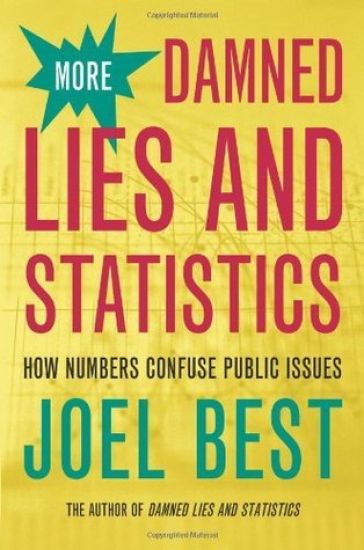
More Damned Lies and Statistics

More Damned Lies and Statistics

Joel Best

University of California Press
2004
sidottu
In this sequel to the acclaimed "Damned Lies and Statistics", which the "Boston Globe" said 'deserves a place next to the dictionary on every school, media, and home-office desk', Joel Best continues his straightforward, lively, and humorous account of how statistics are produced, used, and misused by everyone from researchers to journalists. Underlining the importance of critical thinking in all matters numerical, Best illustrates his points with examples of good and bad statistics about such contemporary concerns as school shootings, fatal hospital errors, bullying, teen suicides, deaths at the World Trade Center, college ratings, the risks of divorce, racial profiling, and fatalities caused by falling coconuts. "More Damned Lies and Statistics" encourages all of us to think in a more sophisticated and skeptical manner about how statistics are used to promote causes, create fear, and advance particular points of view. Best identifies different sorts of numbers that shape how we think about public issues: missing numbers are relevant but overlooked; confusing numbers bewilder when they should inform; scary numbers play to our fears about the present and the future; authoritative numbers demand respect they don't deserve; magical numbers promise unrealistic, simple solutions to complex problems; and contentious numbers become the focus of data duels and stat wars. The author's use of pertinent, socially important examples documents the life-altering consequences of understanding or misunderstanding statistical information. He demystifies statistical measures by explaining in straightforward prose how decisions are made about what to count and what not to count, what assumptions get made, and which figures are brought to our attention. Best identifies different sorts of numbers that shape how we think about public issues. Entertaining, enlightening, and very timely, this book offers a basis for critical thinking about the numbers we encounter and a reminder that when it comes to the news, people count - in more ways than one.
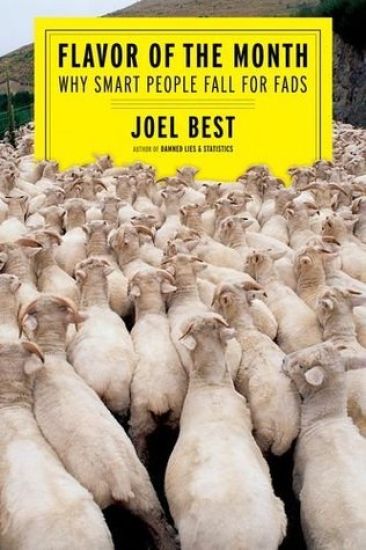
Flavor of the Month

Flavor of the Month

Joel Best

University of California Press
2006
sidottu
While fads such as hula hoops or streaking are usually dismissed as silly enthusiasms, trends in institutions such as education, business, medicine, science, and criminal justice are often taken seriously, even though their popularity and usefulness is sometimes short-lived. Institutional fads such as open classrooms, quality circles, and multiple personality disorder are constantly making the rounds, promising astonishing new developments - novel ways of teaching reading or arithmetic, better methods of managing businesses, or improved treatments for disease. Some of these trends prove to be lasting innovations, but others - after absorbing extraordinary amounts of time and money - are abandoned and forgotten, soon to be replaced by other new schemes. In this pithy, intriguing, and often humorous book, Joel Best - author of the acclaimed "Damned Lies and Statistics" - explores the range of institutional fads, analyzes the features of our culture that foster them, and identifies the major stages of the fad cycle - emerging, surging, and purging. Deconstructing the ways that this system plays into our notions of reinvention, progress, and perfectibility, "Flavors of the Month" examines the causes and consequences of fads and suggests ways of fad-proofing our institutions.
Everyone's a Winner

Everyone's a Winner

Joel Best

University of California Press
2011
sidottu
Every kindergarten soccer player gets a trophy. Many high schools name dozens of seniors as valedictorians - of the same class. Cars sport bumper stickers that read 'USA -Number 1.' Prizes proliferate in every corner of American society, and excellence is trumpeted with ratings that range from 'Academy Award winner!' to 'Best Neighborhood Pizza!' In "Everyone's a Winner", Joel Best - acclaimed author of "Damned Lies" and "Statistics" and many other books - shines a bright light on the increasing abundance of status in our society and considers what it all means. With humor and insight, Best argues that status affluence fosters social worlds and, in the process, helps give meaning to life in a large society.
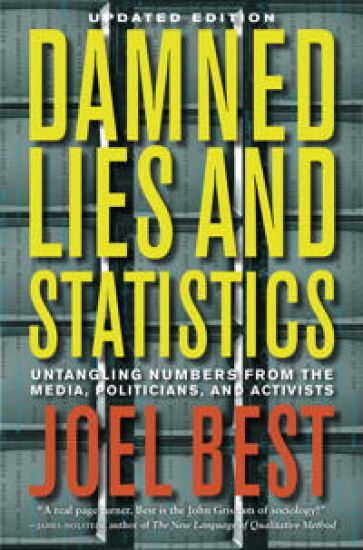
Damned Lies and Statistics

Damned Lies and Statistics

Joel Best

University of California Press
2012
sidottu
Here, by popular demand, is the updated edition to Joel Best's classic guide to understanding how numbers can confuse us. In his new afterword, Best uses examples from recent policy debates to reflect on the challenges to improving statistical literacy. Since its publication ten years ago, Damned Lies and Statistics has emerged as the go-to handbook for spotting bad statistics and learning to think critically about these influential numbers.
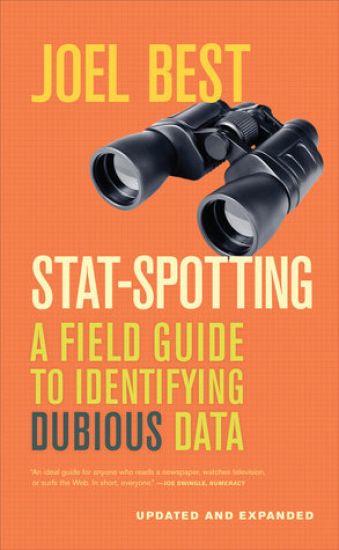
Stat-Spotting

Stat-Spotting

Joel Best

University of California Press
2013
pokkari
Does a young person commit suicide every thirteen minutes in the United States? Are four million women really battered to death by their husbands or boyfriends each year? Is methamphetamine our number one drug problem today? Alarming statistics bombard our daily lives, appearing in the news, on the Web, seemingly everywhere. But all too often, even the most respected publications present numbers that are miscalculated, misinterpreted, hyped, or simply misleading. This new edition contains revised benchmark statistics, updated resources, and a new section on the rhetorical uses of statistics, complete with new problems to be spotted and new examples illustrating those problems. Joel Best's best seller exposes questionable uses of statistics and guides the reader toward becoming a more critical, savvy consumer of news, information, and data. Entertaining, informative, and concise, Stat-Spotting takes a commonsense approach to understanding data and doesn't require advanced math or statistics.
American Nightmares

American Nightmares

Joel Best

University of California Press
2018
sidottu
In an accessible and droll style, best-selling author Joel Best shines a light on how we navigate these anxious, insecure social times. While most of us still strive for the American Dream-to graduate from college, own a home, work toward early retirement-recent generations have been told that the next generation will not be able to achieve these goals, that things are getting-or are on the verge of getting-worse. In American Nightmares, Best addresses the apprehension that we face every day as we are bombarded with threats that the social institutions we count on are imperiled. Our schools are failing to teach our kids. Healthcare may soon be harder to obtain. We can't bank on our retirement plans. And our homes-still the largest chunk of most people's net worth-may lose much of their value. Our very way of life is being threatened! Or is it? With a steady voice and keen focus, Best examines how a culture develops fears and fantasies and how these visions are created and recreated in every generation. By dismantling current ideas about the future, collective memory, and sociology's marginalization in the public square, Best sheds light on how social problems-and our anxiety about them-are socially constructed.
American Nightmares

American Nightmares

Joel Best

University of California Press
2018
pokkari
In an accessible and droll style, best-selling author Joel Best shines a light on how we navigate these anxious, insecure social times. While most of us still strive for the American Dream-to graduate from college, own a home, work toward early retirement-recent generations have been told that the next generation will not be able to achieve these goals, that things are getting-or are on the verge of getting-worse. In American Nightmares, Best addresses the apprehension that we face every day as we are bombarded with threats that the social institutions we count on are imperiled. Our schools are failing to teach our kids. Healthcare may soon be harder to obtain. We can't bank on our retirement plans. And our homes-still the largest chunk of most people's net worth-may lose much of their value. Our very way of life is being threatened! Or is it? With a steady voice and keen focus, Best examines how a culture develops fears and fantasies and how these visions are created and recreated in every generation. By dismantling current ideas about the future, collective memory, and sociology's marginalization in the public square, Best sheds light on how social problems-and our anxiety about them-are socially constructed.
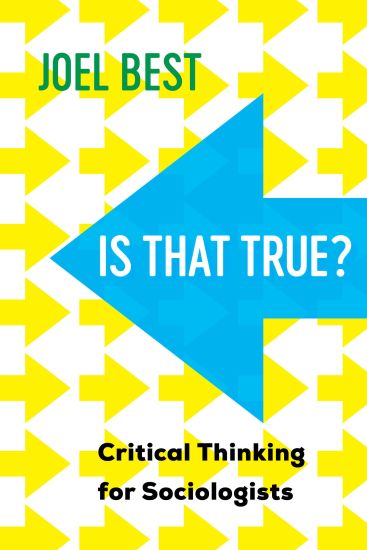
Is That True?

Is That True?

Joel Best

University of California Press
2021
sidottu
Across disciplines, critical thinking is praised, taught, and put into practice. But what does it actually mean to think critically? In this brief volume, sociologist Joel Best examines how to evaluate arguments and the evidence used to support them as he hones in on how to think in the field of sociology and beyond. With inimitable style that melds ethnographic verve with dry humor, Best examines the ways in which sociologists engage in fuzzy thinking through bias, faddish cultural waves, spurious reasoning, and implicit bias. The short chapters cover: A general introduction to critical thinking and logic in the social sciencesSociology as an enterpriseKey issues in thinking critically about sociological researchChallenging questions that confront sociologists and a call for the discipline to meet those challenges. Students across disciplines will learn the building blocks of critical thinking in a sociological context and come away with key concepts to put into practice.
Is That True?

Is That True?

Joel Best

University of California Press
2021
pokkari
Across disciplines, critical thinking is praised, taught, and put into practice. But what does it actually mean to think critically? In this brief volume, sociologist Joel Best examines how to evaluate arguments and the evidence used to support them as he hones in on how to think in the field of sociology and beyond. With inimitable style that melds ethnographic verve with dry humor, Best examines the ways in which sociologists engage in fuzzy thinking through bias, faddish cultural waves, spurious reasoning, and implicit bias. The short chapters cover: A general introduction to critical thinking and logic in the social sciencesSociology as an enterpriseKey issues in thinking critically about sociological researchChallenging questions that confront sociologists and a call for the discipline to meet those challenges. Students across disciplines will learn the building blocks of critical thinking in a sociological context and come away with key concepts to put into practice.
Just the Facts

Just the Facts

Joel Best

University of California Press
2025
sidottu
Why can’t we seem to agree on facts? In this succinct volume, sociologist Joel Best turns his inimitable eye toward the social construction of what we think is true. He evaluates how facts emerge from our social worlds—including our beliefs, values, tastes, and norms—and how they align with those worlds’ standards. He argues that by developing a sociological perspective toward what we think we know, we can better parse the use of facts and untruths around us. This book examines how facts are created and supported through science, government, law, and journalism, revealing that facts are actually claims. These claims are malleable and can change over time through fact-checking, revision, and sometimes rejection. Best guides us through these processes so that we can question our assumptions and understand why disputes happen in the first place. In a time of increasing social and political divide, Just the Facts urges us to resist defensiveness over our facts and approach disputes in critical new ways.
Just the Facts

Just the Facts

Joel Best

University of California Press
2025
pokkari
Why can’t we seem to agree on facts? In this succinct volume, sociologist Joel Best turns his inimitable eye toward the social construction of what we think is true. He evaluates how facts emerge from our social worlds—including our beliefs, values, tastes, and norms—and how they align with those worlds’ standards. He argues that by developing a sociological perspective toward what we think we know, we can better parse the use of facts and untruths around us. This book examines how facts are created and supported through science, government, law, and journalism, revealing that facts are actually claims. These claims are malleable and can change over time through fact-checking, revision, and sometimes rejection. Best guides us through these processes so that we can question our assumptions and understand why disputes happen in the first place. In a time of increasing social and political divide, Just the Facts urges us to resist defensiveness over our facts and approach disputes in critical new ways.
The Stupidity Epidemic

The Stupidity Epidemic

Joel Best

Routledge
2016
sidottu
Critics often warn that American schools are failing, and that our students are ill-prepared for the challenges the future holds, and may even be "the dumbest generation." We can think of these claims as warning about a Stupidity Epidemic. This essay begins by tracing the history of the idea of that American students, teachers, and schools are somehow getting worse; the record shows that critics have been issuing such warnings for more than 150 years. It then examines four sets of data that speak to whether educational deterioration is taking place. First, data on educational attainment show a clear trend: more students are getting more education. Second, standardized test scores suggest that American students are performing somewhat better; certainly most test scores do not indicate that students are getting worse. Third, measures of popular knowledge also show evidence of improvement. Fourth, there is clear evidence that IQ scores have been rising. In other words, the best available evidence fails to support claims about a Stupidity Epidemic. The essay then turns to exploring several reasons why belief in educational decline is so common, and concludes by suggesting some more useful ways to think about educational problems.The goal of this new, unique Series is to offer readable, teachable "thinking frames" on today’s social problems and social issues by leading scholars, all in short 60 page or shorter formats, and available for view on http://routledge.customgateway.com/routledge-social-issues.html For instructors teaching a wide range of courses in the social sciences, the Routledge Social Issues Collection now offers the best of both worlds: originally written short texts that provide "overviews" to important social issues as well as teachable excerpts from larger works previously published by Routledge and other presses.