Kirjojen hintavertailu. Mukana 12 390 323 kirjaa ja 12 kauppaa.

Kirjahaku

Etsi kirjoja tekijän nimen, kirjan nimen tai ISBN:n perusteella.

1000 tulosta hakusanalla Joel Paris

Stepped Care for Borderline Personality Disorder
Synthesizing the latest research and treatment developments, Stepped Care for Borderline Personality Disorder: Making Treatment Brief, Effective, and Accessible aims to make treatment for borderling personality disorder (BPD) more accessible by providing clinicians with innovative brief and targeted intervention methods. Focusing on integrative treatment models, it offers clinicians a vital guide to the management of patients who are difficult to treat. Acknowleding the early developmental roots of BPD, the book includes sections on BPD in adolescence, childhood precursors of the disorder, and a broad range of etiological factors. It looks at the pitfalls clinicians face when trying to treat BPD, and offers a roadmap to avoiding them.
Psychotherapy in An Age of Neuroscience

Psychotherapy in An Age of Neuroscience

Joel Paris

Oxford University Press Inc
2017
nidottu
Psychotherapy In an Age of Neuroscience is a critique of the neuroscience model that dominates contemporary psychiatric practice. It shows that while the neurosciences have made great advances, this line of research has thus far had little application to the care of patients. It criticizes the over-use of psychopharmacological interventions for common mental disorders such as depression, anxiety, and substance use. It examines why many, if not most, psychiatrists are seeing patients for 15-minute "med checks" oriented to current symptoms and DSM criteria, and are not taking the time to become familiar with the lives of their patients. The book shows that effective psychotherapeutic interventions are being under-utilized. It proposes that psychiatric practice include the use of psychotherapies that are brief and evidence-based. While most therapy will need to be carried out by psychologists and other mental health professionals, psychiatrists should take on the most complex and difficult cases that require both medication and therapy. By integrating biological and psychosocial interventions, psychiatrists can regain their reputation for breadth of vision and humanism.
Overdiagnosis in Psychiatry

Overdiagnosis in Psychiatry

Joel Paris

Oxford University Press Inc
2020
nidottu
Dr. Joel Paris' Overdiagnosis in Psychiatry takes a much-needed look at the dangerous epidemic of unnecessary or incorrect treatments in contemporary psychiatry. The last 30 years of psychiatry have seen the development of a system of classification aimed at establishing greater scientific credibility. Unfortunately, the current categories are based entirely on signs and symptoms rather than on causes, which remain unknown. This has inevitably made diagnosis imprecise and uncertain. The result is that well-meaning professionals can have problems separating psychopathology from normality, can be unduly influenced by diagnostic fads, and can ultimately wind up prescribing treatments that do more harm than good. Paris examines prominent examples of overused diagnoses including major depressive disorder, ADHD, bipolar-II disorder, autism spectrum disorders, and PTSD. This new edition expands on Dr. Paris' argument and offers a new section on the link between aggressive psychopharmacology and current diagnostic practices, as well as on transdiagnostic approaches to classification of mental disorders.
Myths of Trauma

Myths of Trauma

Joel Paris

OXFORD UNIVERSITY PRESS INC
2022
nidottu
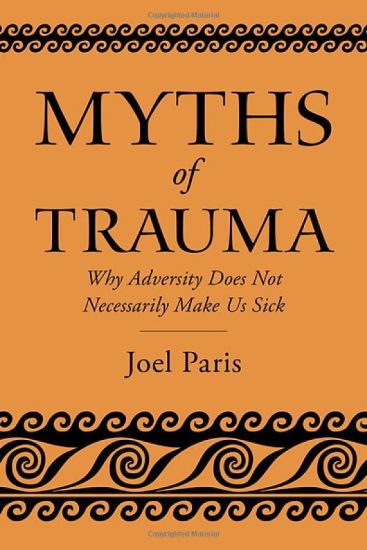
Post-traumatic stress disorder (PTSD) is a serious and sometimes debilitating mental disorder. Yet only about one in ten people who are exposed to significant traumatic events develop PTSD. Since its inclusion in the Diagnostic and Statistical Manual (DSM) in 1980, the definition of PTSD has been controversial. Various changes made to the criteria have gradually widened the diagnostic criteria, which now include experiences that may not involve direct exposure to trauma, which in turn has led to PTSD to be over-diagnosed: clinicians may be tempted to seize on traumatic events in a history as an explanation of mental disorders, while patients may automatically receive the diagnosis if they experienced major trauma in the past. Myths of Trauma is a timely and important book that probes the sensitive, emotional, and often controversial subject of trauma, the difficulties associated with its diagnosis, and the over-diagnosis of PTSD. Trauma has become a catch-all for many kinds of adverse experiences, when in reality, people are significantly resilient to traumatic events. The book also explores how responses to trauma develop in the context of multiple interwoven risk factors, ranging from genetic vulnerability effecting sensitivity to the environment, as well as past adversities; how trauma has become a political issue that interferes with unbiased scientific study of its effects; and how trauma narratives can have a darker side when patients use them to justify feelings of victimhood that interfere with their own agency. Integrating and analysing the vast quantities of scientific literature on the topic, Myths of Trauma teaches us not to think about trauma in isolation or as one thing rather than many different things. The experiences of trauma deserve a place in clinical practice, and it is time for PTSD to be viewed through a more complex and multidimensional lens within the broader biopsychosocial context.
Prescriptions for the Mind

Prescriptions for the Mind

Joel Paris

OXFORD UNIVERSITY PRESS INC
2025
nidottu
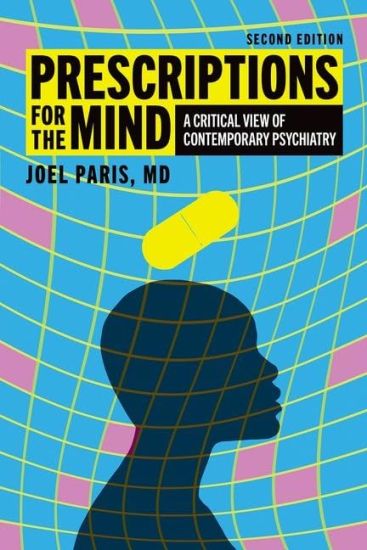
Prescriptions for the Mind has been revised from its first edition in light of new developments in research and practice over the last 15 years. (These updates involve changes of 50% in the text). The book will be a critical assessment of where psychiatry stands today, as a science, and as a method of treatment. While the text acknowledges the triumphs of psychiatry, it takes a critical view of what is known, what is unknown, and what ideas and practices are most likely to stand the test of time. Its conclusions will be rooted in the principles of evidence-based psychiatry. It shows that both drugs and psychotherapy need to be prescribed with their limitations in mind. The book will combine findings from many disciplines to develop an interactive biopsychosocial model of mental disorders. It will show that a purely biological perspective, as well as a purely psychosocial perspective, can lead to bad treatment choices. Its overall message about mental disorders is to think interactively. These principles are then applied to a wide range of categories of psychopathology (psychoses, mood disorders, PTSD, personality disorders), as well as how they can be applied to the practice of psychiatry, in both pharmacological therapies and psychotherapies.
The Intelligent Clinician's Guide to the DSM-5®

The Intelligent Clinician's Guide to the DSM-5®

Joel Paris

Oxford University Press Inc
2015
nidottu
The Intelligent Clinician's Guide to the DSM-5® is the second edition of the widely-read book first published in 2013. This second edition is thoroughly revised, and has several new chapters describing the response to the publication of the new manual, as well as suggestions on its use in clinical practice. The Intelligent Clinician's Guide to the DSM-5®, Second Edition reviews the history of diagnosis in psychiatry, emphasizing the limitations for classification of our current lack of knowledge of the causes of most mental disorders. It emphasizes that, in the absence of biomarkers, current categories can only be considered provisional. It takes a critical look at schema for spectra and dimensionaliztion of diagnosis, examines the borders between normality and psychopathology, and discusses the problem of clinical utility. The book has chapters on all the major diagnoses in psychiatry, in which the main problems of diagnosis are addressed, and in which all changes in DSM-5 are described.
An Evidence-Based Critique of Contemporary Psychoanalysis
An Evidence-Based Critique of Contemporary Psychoanalysis assesses the state of psychoanalysis in the 21st century. Joel Paris examines areas where analysis needs to develop a stronger scientific and clinical base, and to integrate its ideas with modern clinical psychology and psychiatry. While psychoanalysis has declined as an independent discipline, it continues to play a major role in clinical thought. Paris explores the extent to which analysis has gained support from recent empirical research. He argues that it could revive its influence by establishing a stronger relationship to science, whilst looking at the state of current research. For clinical applications, he suggests while convincing evidence is lacking to support long-term treatment, brief psychoanalytic therapy, lasting for a few months, has been shown to be relatively effective for common mental disorders. For theory, Paris reviews changes in the psychoanalytic paradigm, most particularly the shift from a theory based largely on intrapsychic mechanisms to the more interpersonal approach of attachment theory. He also reviews the interfaces between psychoanalysis and other disciplines, ranging from "neuropsychoanalysis" to the incorporation of analytic theory into post-modern models popular in the humanities. An Evidence-Based Critique of Contemporary Psychoanalysis concludes by examining the legacy of psychoanalysis and making recommendations for integration into broader psychological theory and psychotherapy. It will be of great interest to psychoanalysts, psychoanalytic psychotherapists, and scholars and practitioners across the mental health professions interested in the future and influence of the field.
An Evidence-Based Critique of Contemporary Psychoanalysis
An Evidence-Based Critique of Contemporary Psychoanalysis assesses the state of psychoanalysis in the 21st century. Joel Paris examines areas where analysis needs to develop a stronger scientific and clinical base, and to integrate its ideas with modern clinical psychology and psychiatry. While psychoanalysis has declined as an independent discipline, it continues to play a major role in clinical thought. Paris explores the extent to which analysis has gained support from recent empirical research. He argues that it could revive its influence by establishing a stronger relationship to science, whilst looking at the state of current research. For clinical applications, he suggests while convincing evidence is lacking to support long-term treatment, brief psychoanalytic therapy, lasting for a few months, has been shown to be relatively effective for common mental disorders. For theory, Paris reviews changes in the psychoanalytic paradigm, most particularly the shift from a theory based largely on intrapsychic mechanisms to the more interpersonal approach of attachment theory. He also reviews the interfaces between psychoanalysis and other disciplines, ranging from "neuropsychoanalysis" to the incorporation of analytic theory into post-modern models popular in the humanities. An Evidence-Based Critique of Contemporary Psychoanalysis concludes by examining the legacy of psychoanalysis and making recommendations for integration into broader psychological theory and psychotherapy. It will be of great interest to psychoanalysts, psychoanalytic psychotherapists, and scholars and practitioners across the mental health professions interested in the future and influence of the field.
Nature and Nurture in Personality and Psychopathology
Psychiatry and clinical psychology have long been divided about the roles of nature and nurture in the pathways to psychopathology. Some clinicians offer treatment almost entirely based on neuroscience. Some psychologists offer psychotherapies almost entirely based on the impact of environmental stressors. Paris argues for a balanced middle ground between nature and nurture in human development. This book reviews and integrates research showing that the key to understanding the development of mental disorders lies in interactions between genes and environment. It explores why personality is a key determinant of how people respond to stress, functioning as a kind of psychological immune system. This model represents a shift from overly simple and reductionistic constructs, based primarily on biological risks or on psychosocial risks in development. Instead, it offers a complex and multivariate approach that encourages a broader approach to treatment.This book is essential for all mental health clinicians who are interested in understanding the roles of nature and nurture in the development of psychopathology.
Nature and Nurture in Personality and Psychopathology
Psychiatry and clinical psychology have long been divided about the roles of nature and nurture in the pathways to psychopathology. Some clinicians offer treatment almost entirely based on neuroscience. Some psychologists offer psychotherapies almost entirely based on the impact of environmental stressors. Paris argues for a balanced middle ground between nature and nurture in human development. This book reviews and integrates research showing that the key to understanding the development of mental disorders lies in interactions between genes and environment. It explores why personality is a key determinant of how people respond to stress, functioning as a kind of psychological immune system. This model represents a shift from overly simple and reductionistic constructs, based primarily on biological risks or on psychosocial risks in development. Instead, it offers a complex and multivariate approach that encourages a broader approach to treatment.This book is essential for all mental health clinicians who are interested in understanding the roles of nature and nurture in the development of psychopathology.
The Bipolar Spectrum

The Bipolar Spectrum

Joel Paris

Routledge
2012
sidottu
In the 1970s, author Joel Paris was one of the first doctors in his hospital to prescribe lithium to a psychiatric patient. In the wake of the drug’s success, both in that case and countless others, why this book? As Dr. Paris’ historical examination of bipolar diagnosis and critique of the spectrum demonstrates, medicine has often been prone to fads that are assumed correct until proven wrong by science. This book opens discussion about the overdiagnosis of bipolar disorder and the negative impact of this development on clinical care. Dr. Paris explores why patients are being classified as bipolar on dubious grounds and are being prescribed drugs they do not need. He explains the differences between bipolar disorder and depression without mania, personality disorders characterized by unstable mood, and impulsive disorders. A separate chapter discusses the unique issues present in the field of child psychiatry. Fads remain popular as long as they answer elusive and complex questions. Unfortunately, the bipolar spectrum being used to explain a wide variety of psychopathological phenomena has caused classic bipolar disorder to become almost lost in the shuffle. Combining research findings and personal experiences, Dr. Paris documents the damage of overdiagnosis and explores alternative treatments patients could benefit from.
The Use and Misuse of Psychiatric Drugs

The Use and Misuse of Psychiatric Drugs

Joel Paris

John Wiley Sons Inc
2010
nidottu
"Dr. Paris has written an honest, balanced presentation of the ways in which psychiatric drugs are evaluated and prescribed. He highlights the complexity of the task, the limits of what is known and the mixed picture that research often produces. His conclusions are refreshing because they are built from an even-handed, pragmatic assessment of the empirical evidence. The result is a stimulating look at the world of treatments for emotional disorders that acknowledges the usefulness of both biological and psychosocial explanations where appropriate. His recommendations provide helpful roadmaps for patients, practitioners and researchers alike. The book is sure to serve as a welcome catalyst for the continuing debates about which treatments are likely to produce the best outcomes." —Roger P. Greenberg, Ph.D. Distinguished Professor and Head, Psychology Division Dept. of Psychiatry & Behavioral Science SUNY Upstate Medical University, NY, USA The message of this book is that psychiatrists have some very good drugs, but can expect bad results when they are over-used, prescribed outside of evidence-based indications, or given to the wrong patients. While acknowledging that many current agents are highly effective and have revolutionized the treatment of certain disorders, Joel Paris criticizes their use outside of an evidence base. Too many patients are either over-medicated or are misdiagnosed to justify aggressive treatment. Dr. Paris calls for more government funding of clinical trials to establish, without bias, the effectiveness of these agents. He has written this book for practitioners and trainees to show that scientific evidence supports a more cautious and conservative approach to drug therapy. After describing the history of psychopharmacology, including its early successes, Dr. Paris reviews the relationship between psychiatry and the pharmaceutical industry. This problem has received considerable popular attention in recent years and Dr. Paris documents initiatives to increase transparency and decrease the influence of pharmaceutical marketing on diagnosis and prescribing habits. Dr Paris then examines some major controversies. One is the fact that newer drugs have not been shown to be superior to older agents. Another is that while the number of prescriptions for antidepressants has increased dramatically, meta-analyses show that their value is more limited than previously believed. Still another is the widespread prescription of mood stabilizers and antipsychotic drugs for patients, including children and adolescents, who do not have bipolar illness. Polypharmacy is an especially contentious area: very few drug combinations have been tested in clinical trials, yet many patients end up on a cocktail of powerful drugs, each with its own side effects. Dr Paris briefly considers alternatives to pharmacology and again calls for more clinical trials of these approaches. He also discusses the current trend to medicalizing what many would describe as normal distress and states succinctly: Some things in life are worth being upset about.
The Fall of an Icon

The Fall of an Icon

Joel Paris

University of Toronto Press
2005
pokkari
Over the last few decades, academic psychiatry has undergone a revolution. After the Second World War, most department chairs were psychoanalysts who belonged to separate institutes, not subject to the checks and balances of academia, and who did not subscribe to the tenets of scientific medicine. The revolution against psychoanalytic dominance began when a group of psychiatrists developed an evidence-based model that brought psychiatry back into the medical mainstream.In The Fall of an Icon, Joel Paris narrates the history of this transition, placing it in the context of current trends in science and medicine. He illustrates the story using interviews with prominent academic psychiatrists in Canada and the United States, and describes his own experiences as a psychiatrist: how he was caught up in the excitement of the psychoanalytic model, how he became disillusioned with it, and how he came to a new and more scientific view of his discipline. This is an essential work for understanding the recent history of psychiatry.
The Fall of an Icon

The Fall of an Icon

Joel Paris

University of Toronto Press
2005
sidottu
Over the last few decades, academic psychiatry has undergone a revolution. After the Second World War, most department chairs were psychoanalysts who belonged to separate institutes, not subject to the checks and balances of academia, and who did not subscribe to the tenets of scientific medicine. The revolution against psychoanalytic dominance began when a group of psychiatrists developed an evidence-based model that brought psychiatry back into the medical mainstream.In The Fall of an Icon, Joel Paris narrates the history of this transition, placing it in the context of current trends in science and medicine. He illustrates the story using interviews with prominent academic psychiatrists in Canada and the United States, and describes his own experiences as a psychiatrist: how he was caught up in the excitement of the psychoanalytic model, how he became disillusioned with it, and how he came to a new and more scientific view of his discipline. This is an essential work for understanding the recent history of psychiatry.
Myths of Childhood

Myths of Childhood

Joel Paris

Brunner-Mazel Inc
2000
sidottu
Childhood has long been considered the major factor in determining adult life. It sets us on the path toward or away from happiness, shapes our personality, and is a major cause of mental disorders. Or is it? Myths of Childhood strongly challenges these assumptions usually taken for granted in contemporary society and the mental health community. With a healthy dose of scepticism toward clinical impressions and using empirically-based research from areas including behavioral genetics and attachment, Dr. Paris builds a convincing case against the primacy of childhood in the development of adult personality and psychopathology. In its place, he offers an alternative model for development and shows how mental health professionals can apply this model to clinical pracitce. Myths of Childhood represents an important addition to the ongoing debate between mental health professionals regarding nature vs. nurture. For supporters of either side , this book is a valuable resource for further exploration of this controversy.
Borderline Personality Disorder

Borderline Personality Disorder

Joel Paris

American Psychiatric Association Publishing
1994
sidottu
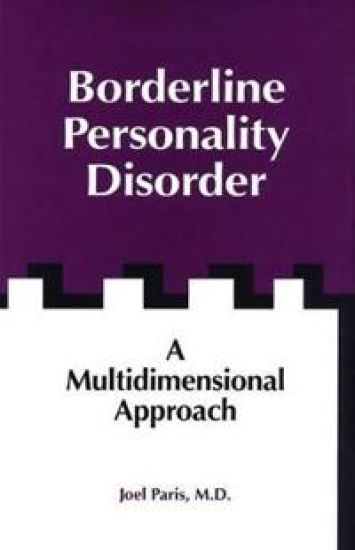
The etiology of borderline personality disorder is essentially unknown. Although many well-known theoretical formulations remain the best possible hypotheses, much of what has been suggested thus far for the management of BPD has proved impractical in a majority of cases. Written by an expert in the field of BPD, Borderline Personality Disorder presents a practical approach to the management of patients with this disorder. Designed for readers who are skeptical of facile explanations, this book provides a broader view of the etiology of BPD than has been presented in previous studies. Readers will not only appreciate the review of the current research but also its theoretical integration into practice. Borderline Personality Disorderhas two goals: • to build a comprehensive theory of etiology which takes into account biological, psychological, and social factors.• to suggest treatment guidelines which are consistent with this theory, and which are based on the findings of clinical trials. Based on the most up-to-date clinical research available, Borderline Personality Disorder shows how these complex disorders are shaped by biological vulnerability, brought on by psychological experiences, and influenced by social conditions.
Fads and Fallacies in Psychiatry

Fads and Fallacies in Psychiatry

Joel Paris

Cambridge University Press
2023
pokkari
This text examines the fads and fallacies, both past and present, that have plagued psychiatric diagnosis, treatments and research. It argues that such practices have led to an over-diagnosis of conditions such as depression, bipolar disorder, ADHD, PTSD and autism. It examines the over-treatment of psychiatric disorders with pharmaceuticals, and asks if neuroscience will actually hold the answers to the biggest questions in the field. Thoroughly updated in light of new research, this new edition addresses some of the more recent developments in psychiatry, including behavioural genetics, genome-wide association studies, and brain imaging. It looks at new advances in psychotherapies and argues for a broad biopsychosocial model. The book will inform psychiatrists, clinical psychologists, other mental health professionals, and medical students of the limits of mental health practice and the importance of adopting cautious conservatism and the principles of evidence-based practice.
Unanswered Questions in Psychiatry

Unanswered Questions in Psychiatry

Joel Paris

Cambridge University Press
2026
pokkari
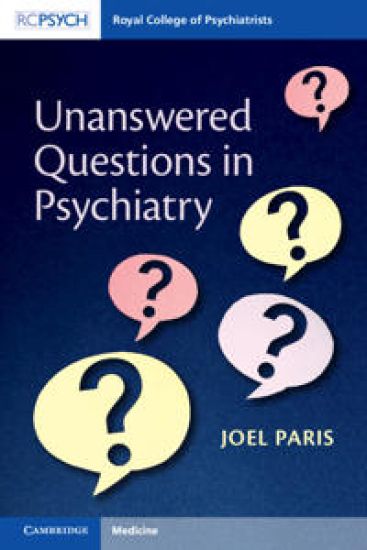
Unanswered Questions in Psychiatry is a critical yet illuminating exploration of the mysteries that still plague mental health care. Renowned psychiatrist Professor Joel Paris examines the biggest unanswered questions in the field-from the evolutionary roots of mental illness to the limitations of our diagnostic systems, the stalled progress in drug development, and the difficulties of suicide prediction and prevention. With clarity and candour, Professor Paris identifies what we still do not know about psychiatry-and why it matters. This thought-provoking read challenges assumptions and invites fresh thinking about the future of psychiatric practice. A must read for mental health professionals at all levels of training.
Half in Love with Death

Half in Love with Death

Joel Paris

TAYLOR FRANCIS LTD
2023
nidottu
The second edition of Half in Love with Death gives therapists new tools to help manage chronically suicidal patients. Clinicians will learn how to tolerate suicidality, understand the inner world of patients, avoid repeated hospitalizations, and focus on life situations that maintain suicidal ideas and behaviors. This new edition includes a number of major updates and a new chapter on the epidemiology of suicidality.Each chapter develops a theoretical perspective based on empirical data, and many are illustrated by clinical examples. Topics addressed throughout the text include: Distinctions among various types of suicidality The inner world of the chronically suicidal patient, with a particular focus on pain, emptiness, and hopelessness The relationship between chronic suicidality and personality disorders, especially the category of borderline personality The effectiveness of psychotherapy and pharmacotherapy for chronically suicidal patients The risks of litigation in managing this patient population This is a crucially important resource for clinicians who treat chronically suicidal patients, one that provides enlightened and evidence-based guidelines.
Half in Love with Death

Half in Love with Death

Joel Paris

TAYLOR FRANCIS LTD
2023
sidottu
The second edition of Half in Love with Death gives therapists new tools to help manage chronically suicidal patients. Clinicians will learn how to tolerate suicidality, understand the inner world of patients, avoid repeated hospitalizations, and focus on life situations that maintain suicidal ideas and behaviors. This new edition includes a number of major updates and a new chapter on the epidemiology of suicidality.Each chapter develops a theoretical perspective based on empirical data, and many are illustrated by clinical examples. Topics addressed throughout the text include: Distinctions among various types of suicidality The inner world of the chronically suicidal patient, with a particular focus on pain, emptiness, and hopelessness The relationship between chronic suicidality and personality disorders, especially the category of borderline personality The effectiveness of psychotherapy and pharmacotherapy for chronically suicidal patients The risks of litigation in managing this patient population This is a crucially important resource for clinicians who treat chronically suicidal patients, one that provides enlightened and evidence-based guidelines.