The 18th century was a wealth of knowledge, exploration and rapidly growing technology and expanding record-keeping made possible by advances in the printing press. In its determination to preserve the century of revolution, Gale initiated a revolution of its own: digitization of epic proportions to preserve these invaluable works in the largest archive of its kind. Now for the first time these high-quality digital copies of original 18th century manuscripts are available in print, making them highly accessible to libraries, undergraduate students, and independent scholars.Medical theory and practice of the 1700s developed rapidly, as is evidenced by the extensive collection, which includes descriptions of diseases, their conditions, and treatments. Books on science and technology, agriculture, military technology, natural philosophy, even cookbooks, are all contained here.++++The below data was compiled from various identification fields in the bibliographic record of this title. This data is provided as an additional tool in helping to insure edition identification: ++++British LibraryT120692With two final leaves of contents. J. R. = Joseph Raphson?.London: printed for D. Midwinter; and W. Taylor, 1724. xvi,300, 4]p., plates; 8
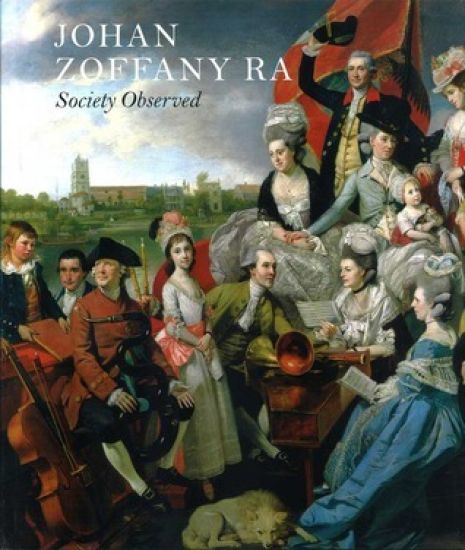
Universally recognized as a brilliant and gifted 18th-century artist, Johan Zoffany (1733-1810) was regarded by Horace Walpole as one of the three greatest painters in England, along with his friends Reynolds and Gainsborough. Yet he has remained without a detailed study of his life and works, owing to the fascinating and complex vicissitudes of his career, now established from widely scattered sources. From being a late-baroque painter at a German princely court to working under the royal patronage of George III and Queen Charlotte, from his serious interest in Indian life and landscape, developed while living near Calcutta, to his attacks on the bloody progress of the French Revolution, Zoffany created pictures that document with incomparable liveliness the worlds and people among whom he moved.Published for the Paul Mellon Centre for Studies in British Art
The 18th-century painter Johan Zoffany (1733–1810) was an astute observer of the many social circles in which he functioned as an artist over the course of his long career. This catalogue investigates his sharp wit, shrewd political appraisal, and perceptive social commentary (including subtle allusions to illicit relationships)—all achieved while presenting his subjects as delightful and sophisticated members of polite society. A skilled networker, Zoffany established himself at the court of George III and Queen Charlotte soon after his arrival in England from his native Germany. At the same time, he befriended the leading actor David Garrick and through him became the foremost portrayer of Georgian theater. His brilliant effects and deft style were well suited to theatricality of all sorts, enabling him to secure patronage in England and on the continent. Following a prolonged visit to Italy he travelled to India, where he quickly became a popular and established member within the circle of Warren Hastings, the governor-general. Zoffany's Indian paintings are among his most spectacular and allowed him to return to England enriched and warmly welcomed. This volume provides a sparkling overview of his finest works.Published for the Yale Center for British Art and the Royal AcademyExhibition Schedule:Yale Center for British Art(10/27/11-02/12/12)Royal Academy(03/10/12-06/10/12)
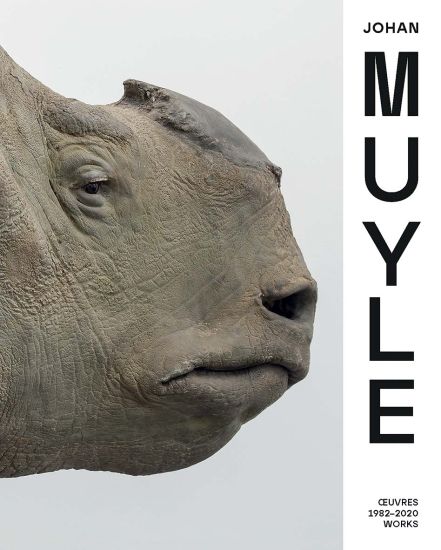
A sweeping overview of the work of a prominent Belgian visual artist This handsome volume traces the work and career of Belgian visual artist Johan Muyle (b. 1956) from his early assemblages of found materials to his monumental paintings and recent motorized sculptures. Considered one of the most significant Belgian artists of his generation, Muyle’s work has been exhibited internationally since the 1980s. In this book, a series of thematic chapters situate Muyle’s oeuvre within the political and artistic context of the past thirty years and analyze the prolific artist’s critical responses to concerns including religious extremism and the disappearance of collective utopias.Distributed for MercatorfondsExhibition Schedule:MAC’s Grand Hornu, MONS, Belgium November 29, 2020–April 18, 2021
Norwegian emigrant traffic through Canada began in earnest after the repeal of the British Navigation Acts (1849) and was precipitated by a lucrative timber trade between Canada and Britain. Norwegian shipowners, many of whom were acting as carriers for the timber industry, quickly discovered that their return voyages to Canada could be more profitable if their ships were filled with immigrants instead of ballast. The time was ripe for interest in immigration to Canada when Schroder decided to embark on his tour. Schroder was well received in his Canadian travels and managed in two months to see more of the country than most Canadians did in a lifetime. But, despite his warm welcome, he decided to settle in the United States and advised others to do the same. Four years after his trip he published Skandinaverne i de Forende Stater og Canada (The Scandinavians in the United States and Canada) in LaCrosse, Wisconsin. Another edition, containing only the chapters on Canada, was published in Christiania, Norway, as was an abbreviated Swedish translation. Schroder's account of Canada, which is now published for the first time in English translation, is the only narrative of travel in Upper and Lower Canada by a Scandinavian and one of the very few descriptions of pre-Confederation Canada written by a traveller from outside the English-speaking world. It not only gives us a view of Canada as it appeared to an educated Scandinavian but also sheds light on the reasons why most European emigrants who entered the port of Quebec located in the United States.
Winner of the 1997 Nobel Prize for Literature, Dario Fo is one of the world's most important contemporary playwrights, forging subversive comedy, clowning, unusual linguistic experimentation, and brilliant playwriting into a comedy of complete originality. In a first-person monologue that bends and mutates language and historical fact, Johan Padan and the Discovery of the Americas is a brilliant, vividly imagined retelling of Christopher Columbus's voyage to America. Told by a last-minute conscript assigned to clean the shipboard pig stalls, who goes on to be adopted by a tribe of Indians and help them fight conquistadors, it posits a riotous alternate history in which the dynamics between native and white, male and female, history and comedy are never what they seem.