In diesem Buch für die Kitteltasche finden sich die wichtigsten Medikamentendosierungen für Perfusoren und Spritzenpumpen für die Versorgung eines Intensivpatienten. Zum Beispiel zur kreislaufstabilisierenden Therapie, zur Analgosedierung, zur Einleitung oder Aufrechterhaltung einer Allgemeinanästhesie oder im Rahmen der Reanimation. Auch auf Indikationen, Kontraindikationen und Nebenwirkungen der verschiedenen Substanzen geht das Werk ein. Zahlreiche Hinweise auf Besonderheiten machen das Werk besonders praxistauglich.
In diesem Buch für die Kitteltasche finden sich die wichtigsten Medikamentendosierungen für Perfusoren und Spritzenpumpen für die Versorgung eines Intensivpatienten. Zum Beispiel zur kreislaufstabilisierenden Therapie, zur Analgosedierung, zur Einleitung oder Aufrechterhaltung einer Allgemeinanästhesie oder im Rahmen der Reanimation. Auch auf Indikationen, Kontraindikationen und Nebenwirkungen der verschiedenen Substanzen geht das Werk ein. Zahlreiche Hinweise auf Besonderheiten machen das Werk besonders praxistauglich. Die 2. Auflage erscheint aktualisiert und um drei neue Substanzen erweitert. Plus: Umrechnungstabellen für Gewichte, Volumina und Zeiteinheiten.
Das vorliegende Werk liefert das Basiswissen für die Versorgung des internistischen Intensivpatienten – systematisch dargestellt, verständlich erklärt und mit vielen konkreten Tipps. Es wendet sich an Assistenzärzte in der Inneren Medizin, die im Rahmen ihrer Facharztweiterbildung auf die Intensivstation rotieren müssen und eine erste Anleitung für die Arbeit auf der Intensivstation benötigen. Dargestellt werden allgemeinen Prinzipien, wie apparative Diagnostik, Ernährung und Gerinnungsmanagement über spezielle Interventionen, wie Gefäßpunktionen, Schrittmacheranlage und Analgosedierung bis hin zum konkreten Vorgehen bei häufigen intensivpflichtigen Krankheitsbildern und Akutsituationen, wie akutes Koronarsyndrom, Herzrhythmusstörungen, ARDS und Intoxikationen. Ein praxisnahes Werk, mit dem der Einstieg in die internistische Intensivmedizin gelingt.
Unver nderter Nachdruck der Originalausgabe von 1855. Der Verlag Anatiposi gibt historische B cher als Nachdruck heraus. Aufgrund ihres Alters k nnen diese B cher fehlende Seiten oder mindere Qualit t aufweisen. Unser Ziel ist es, diese B cher zu erhalten und der ffentlichkeit zug nglich zu machen, damit sie nicht verloren gehen.
Unver nderter Nachdruck der Originalausgabe von 1855. Der Verlag Anatiposi gibt historische B cher als Nachdruck heraus. Aufgrund ihres Alters k nnen diese B cher fehlende Seiten oder mindere Qualit t aufweisen. Unser Ziel ist es, diese B cher zu erhalten und der ffentlichkeit zug nglich zu machen, damit sie nicht verloren gehen.
In this comprehensive volume in the Dogmatic Theology series, the late Bavarian theologian Johann Auer (1910-1989) takes up the challenge of presenting an understanding of the nature of the Church that is relevant for our time. Central to his discussion is the Vatican II concept of the Catholic Church as the universal sacrament of salvation. Auer argues that as such, the Church is a sacrament not only for those who are already known as members of the church, but for all human beings of all times and all places, to saint and sinner alike. Firmly grounding his commentary in scripture and in the history of doctrine, Auer clearly outlines the meaning of the Church's sacramental nature. Emphasising that the Church cannot be understood as a mere social phenomenon, Auer then further examines the sacramental nature of the Church as it is expressed in its life and activity. Here he discusses the beginning of the Church (its founding, basis and genesis); its unique inner constitution, the orders and organisation of the Church in which this hidden structure is manifested, and the origins of the Church's important offices such as those of the pope or the bishops. He also addresses the problems of apostolic succession and the infallibility of the pope. Lastly, Auer considers the Church's tasks in the modern world and it relationship to those important elements in our society - the state, the economy, art, science - that impinge upon our everyday lives.
In this work, the author aims to achieve a deeper understanding of the inner structure of the sacraments and how they determine the structure of Christian existence. It examines the concept and nature of sacrament and discusses the three consecutive elements (sign, reality, origin).
Provides an elegant, succinct description of the injection molding process. By concentrating on a few key parameters, such as pressure, temperature, their rates, and their influence on the properties of moldings, this book provides a clear insight into this technology. The subsequent comprehensive presentation of technical data relating to individual machine components and performance is unique.
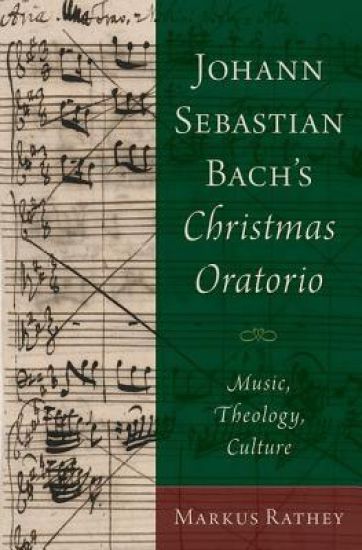
In the last decades of the 17th century, the feast of Christmas in Lutheran Germany underwent a major transformation when theologians and local governments waged an early modern "war on Christmas," discouraging riotous pageants and carnivalesque rituals in favor of more personal and internalized expressions of piety. Christmas rituals, such as the "Heilig Christ" plays and the rocking of the child (Kindelwiegen) were abolished, and Christian devotion focused increasingly on the metaphor of a birth of Christ in the human heart. John Sebastian Bach's Christmas Oratorio, composed in 1734, both reflects this new piety and conveys the composer's experience living through this tumult during his own childhood and early career. Markus Rathey's book is the first thorough study of this popular masterpiece in English. While giving a comprehensive overview of the Christmas Oratorio as a whole, the book focuses on two themes in particular: the cultural and theological understanding of Christmas in Bach's time and the compositional process that led Bach from the earliest concepts to the completed piece. The cultural and religious context of the oratorio provides the backdrop for Rathey's detailed analysis of the composition, in which he explores Bach's compositional practices, for example, his reuse and parodies of movements that had originally been composed for secular cantatas. The book analyzes Bach's original score and sheds new light on the way Bach wrote the piece, how he shaped musical themes, and how he revised his initial ideas into the final composition.
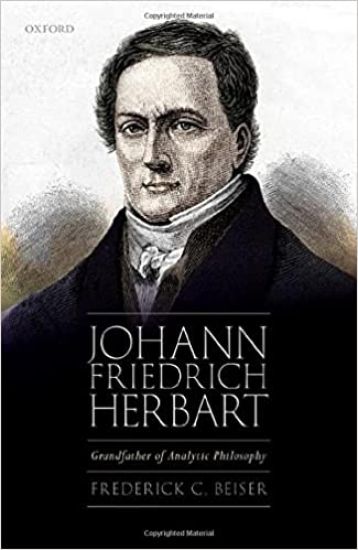
Though little known today, Johann Friedrich Herbart was one of the leading philosophers of his age, the competitor of Schelling and Hegel. Although he was trained by Fichte, Herbart soon became a critic of the idealist tradition and developed a philosophy antithetical to it. His own philosophy was opposed to the idealist tradition in important respects: he defended a dualism between the factual and normative; he was an ontological pluralist rather than monist; and he accepted crucial Kantian dualisms that had been rejected by the idealists. Herbart was also an important forerunner of analytic philosophy, first in breaking with the idealist tradition, and second in insisting that the proper method of philosophy is the analysis of concepts rather than speculation about the universe as a whole. In the first intellectual biography of Herbart in English, Frederick C. Beiser studies the development of one of 19th-century Germany's most important philosophers, from his education in Oldenburg and Jena to his final years in Göttingen.