Kirjojen hintavertailu. Mukana 11 699 587 kirjaa ja 12 kauppaa.

Kirjahaku

Etsi kirjoja tekijän nimen, kirjan nimen tai ISBN:n perusteella.

1000 tulosta hakusanalla Johann Friedrich Gruner

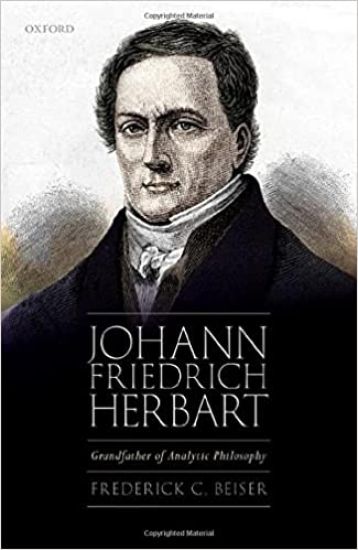
Johann Friedrich Herbart

Johann Friedrich Herbart

Frederick C. Beiser

Oxford University Press
2022
sidottu
Though little known today, Johann Friedrich Herbart was one of the leading philosophers of his age, the competitor of Schelling and Hegel. Although he was trained by Fichte, Herbart soon became a critic of the idealist tradition and developed a philosophy antithetical to it. His own philosophy was opposed to the idealist tradition in important respects: he defended a dualism between the factual and normative; he was an ontological pluralist rather than monist; and he accepted crucial Kantian dualisms that had been rejected by the idealists. Herbart was also an important forerunner of analytic philosophy, first in breaking with the idealist tradition, and second in insisting that the proper method of philosophy is the analysis of concepts rather than speculation about the universe as a whole. In the first intellectual biography of Herbart in English, Frederick C. Beiser studies the development of one of 19th-century Germany's most important philosophers, from his education in Oldenburg and Jena to his final years in Göttingen.
Johann Friedrich Blumenbach
The major significance of the German naturalist-physician Johann Friedrich Blumenbach (1752–1840) as a topic of historical study is the fact that he was one of the first anthropologists to investigate humankind as part of natural history. Moreover, Blumenbach was, and continues to be, a central figure in debates about race and racism.How exactly did Blumenbach define race and races? What were his scientific criteria? And which cultural values did he bring to bear on his scheme? Little historical work has been done on Blumenbach’s fundamental, influential race work. From his own time till today, several different pronouncements have been made by either followers or opponents, some accusing Blumenbach of being the fountainhead of scientific racism. By contrast, across early nineteenth-century Europe, not least in France, Blumenbach was lionized as an anti-racist whose work supported the unity of humankind and the abolition of slavery.This collection of essays considers how, with Blumenbach and those around him, the study of natural history and, by extension, that of science came to dominate the Western discourse of race.