

Kirjahaku
Etsi kirjoja tekijän nimen, kirjan nimen tai ISBN:n perusteella.
1000 tulosta hakusanalla Johann Ranftl
Ludwig Tiecks Genoveva, als romantische Dichtung betrachtet
Johann Ranftl
ALPHA EDITION
2022
pokkari
Ludwig Tiecks Genoveva, als romantische Dichtung betrachtet wurde in der gesamten Menschheitsgeschichte als bedeutendes Werk angesehen, und um sicherzustellen, dass dieses Werk niemals verloren geht, haben wir Schritte unternommen, um seine Erhaltung zu gew hrleisten, indem wir dieses Buch in einem zeitgem en Format f r aktuelle und zuk nftige Generationen neu ver ffentlichen. Dieses gesamte Buch hat wurden neu abgetippt, neu gestaltet und neu formatiert. Da diese B cher nicht aus gescannten Kopien bestehen, ist der Text lesbar und klar.

Ludwig Tiecks Genoveva
Anton Emanuel Schönbach; Johann Ranftl; Bernhard Seuffert
Hansebooks
2017
pokkari
Ludwig Tiecks Genoveva - Als romantische Dichtung betrachtet ist ein unver nderter, hochwertiger Nachdruck der Originalausgabe. Hansebooks ist Herausgeber von Literatur zu unterschiedlichen Themengebieten wie Forschung und Wissenschaft, Reisen und Expeditionen, Kochen und Ern hrung, Medizin und weiteren Genres. Der Schwerpunkt des Verlages liegt auf dem Erhalt historischer Literatur. Viele Werke historischer Schriftsteller und Wissenschaftler sind heute nur noch als Antiquit ten erh ltlich. Hansebooks verlegt diese B cher neu und tr gt damit zum Erhalt selten gewordener Literatur und historischem Wissen auch f r die Zukunft bei.
Napoleon II, Nach Victor Hugo, Und Andere Dichtungen
Enrica Von Handel-mazzetti; Johann (EDT) Ranftl
Kessinger Pub
2009
pokkari

Merkwürdige Lebensgeschichte aller Kardinäle der römischen katholischen Kirche
Johann Herkules Haid; Michael Ranft
Hansebooks
2016
pokkari



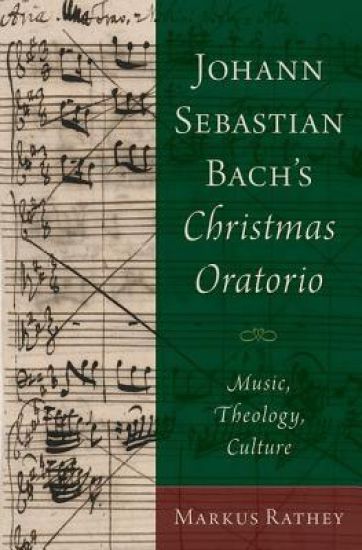
In the last decades of the 17th century, the feast of Christmas in Lutheran Germany underwent a major transformation when theologians and local governments waged an early modern "war on Christmas," discouraging riotous pageants and carnivalesque rituals in favor of more personal and internalized expressions of piety. Christmas rituals, such as the "Heilig Christ" plays and the rocking of the child (Kindelwiegen) were abolished, and Christian devotion focused increasingly on the metaphor of a birth of Christ in the human heart. John Sebastian Bach's Christmas Oratorio, composed in 1734, both reflects this new piety and conveys the composer's experience living through this tumult during his own childhood and early career. Markus Rathey's book is the first thorough study of this popular masterpiece in English. While giving a comprehensive overview of the Christmas Oratorio as a whole, the book focuses on two themes in particular: the cultural and theological understanding of Christmas in Bach's time and the compositional process that led Bach from the earliest concepts to the completed piece. The cultural and religious context of the oratorio provides the backdrop for Rathey's detailed analysis of the composition, in which he explores Bach's compositional practices, for example, his reuse and parodies of movements that had originally been composed for secular cantatas. The book analyzes Bach's original score and sheds new light on the way Bach wrote the piece, how he shaped musical themes, and how he revised his initial ideas into the final composition.
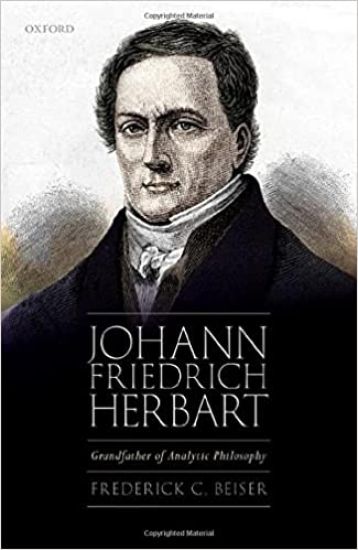
Though little known today, Johann Friedrich Herbart was one of the leading philosophers of his age, the competitor of Schelling and Hegel. Although he was trained by Fichte, Herbart soon became a critic of the idealist tradition and developed a philosophy antithetical to it. His own philosophy was opposed to the idealist tradition in important respects: he defended a dualism between the factual and normative; he was an ontological pluralist rather than monist; and he accepted crucial Kantian dualisms that had been rejected by the idealists. Herbart was also an important forerunner of analytic philosophy, first in breaking with the idealist tradition, and second in insisting that the proper method of philosophy is the analysis of concepts rather than speculation about the universe as a whole. In the first intellectual biography of Herbart in English, Frederick C. Beiser studies the development of one of 19th-century Germany's most important philosophers, from his education in Oldenburg and Jena to his final years in Göttingen.
Johann Gottlieb Fichte: The Doctrine of the State
Oxford University Press
2024
sidottu
The Doctrine of the State is a major work of political philosophy and philosophy of history by one of the most important authors of German Idealism, Johann Gottlieb Fichte. It represents Fichte's final sustained attempt to provide a synoptic overview of his entire system, including a summary of his famously evolving Wissenschaftslehre. The work's overriding concern is with founding the rule of reason in an irrational world. Fichte provides a synoptic account of human history from the dawn of humanity, through the ancient world, and into a modern world governed by a kind of secularized Christianity. His account of humanity's development is one that involves the struggle between faith and reason. Fichte's philosophical analysis of history can be compared to other important works of this period, including works by Friedrich Schelling and G. W. F. Hegel. Written against the backdrop of Napoleon's disastrous defeat in Russia in 1813, the book also revisits the question of the nature and purpose of nationhood and conflict among peoples that Fichte had originally pursued in his important nationalist work, the Addresses to the German Nation. This edition also contains translated excerpts from Fichte's 1813 diary, where his fiery republican resistance to tyranny at home and abroad appear most clearly.
Johann Sebastian Bach: The Culmination of an Era
Karl Geiringer; Irene Geiringer
Oxford University Press
1966
sidottu
A definitive study of the life and music of the great German composer, including a systematic analysis of his artistic development within each major type of composition
Johann Sebastian Bach's Goldberg Variations Reimagined
Erinn E. Knyt
OXFORD UNIVERSITY PRESS INC
2024
sidottu
This book provides the first detailed reception history of adaptations of Johann Sebastian Bach's Aria mit 30 Veränderungen (Goldberg Variations, BWV 988). It documents multiple ways Bach's work has appeared in arrangements, transcriptions, and re-compositions from 1800 to 2020. It examines adaptations for the traditional concert hall as well as for dance, theater, cinema, literature, digital media, and visual art. Overall, the book reveals a dramatic increase in adaptations of the piece in the late twentieth and early twenty-first centuries. In addition, it brings the reception history of Bach's Goldberg Variations into dialogue with broader scholarly discourse about performance practice issues. The piece was often performed in transcribed or arranged versions in the nineteenth century and then again in the late twentieth and early twenty-first centuries. Yet if nineteenth-century adaptations of this piece were usually created out of necessity, as a means of performing a lengthy piece without access to the original instrument, many twenty-first century adaptations, which have developed alongside historically informed performances, were motivated by deconstructionist ideologies. This contrasts with the middle part of the twentieth century, when there was a prevalence of historically informed performances and a dearth of adaptations. Comparisons to other works by Bach reveal similar performance practice trends. The reception history documented in the book also considers the musical work concept. It shows that, particularly since the late 1980s, there has been a loosening of the regulative hold of the modernist work concept associated with single authorship, structural unity, and an autonomous score. It reveals that many recent adaptations are not direct interpretations of an authoritative text, but engage in multivalent dialogues as Bach's score becomes an infinite or open text in which multiple people, including subsequent (re)-composers, performers, directors, and audience members enter into inter- and intra-textual conversations. In the process, the book contributes to recent studies about adaptations, the role of musical authorship, and changing notions of Bach and the work concept in the twenty-first century. At the same time, it discusses many recently composed pieces, including ones by underrepresented composers.
This book (published in German by Bärenreiter in 1988 and now available in English translation for the first time) is a comprehensive guide to the genesis, transmission, structure, meaning, and performance considerations of Bach's St John Passion. The St John Passion is one of Bach's most fascinating works. Its text demonstrates a profound understanding of St John's Gospel. The musical design of the choruses with their numerous interrelationships is quite unique and requires some explanation. The fact that the Passion exists in four different versions leads Dürr to ask which changes were intentional and which were the result of practical constraints or of orders issued by church authorities. The introduction to the work is preceded by a detailed account of its genesis and transmission, and the uniquely complicated nature of the sources. The discussion of the Passion itself is based on the assumption that what Bach wanted to say to the Leipzig congregation on Good Friday was designed to be understood in verbal and musical terms. Number symbolism, 'eye music', and encrypted information do not form the essence of what Bach was trying to communicate to us.
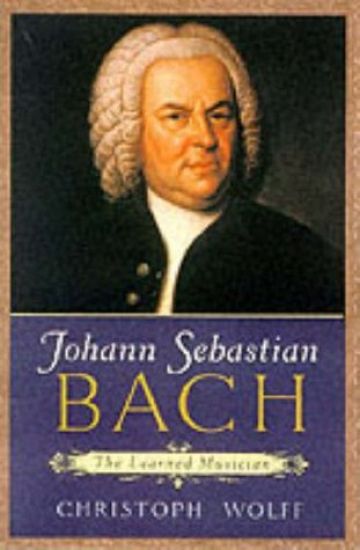
Although we have heard of the music of J.S. Bach in countless performances and recordings, the composer himself still comes across only as an enigmatic figure in a single familiar portrait. As we mark the 250th anniversary of Bach's death, author and leading Bach scholar, here Christoph Wolff presents a new picture that brings to life this towering figure of the Baroque era. This engaging new biography portrays Bach as the living, breathing, and sometimes imperfect human being that he was, while bringing to bear all the advances of the last half-century of Bach scholarship. Wolff demonstrates the intimate connection between the composer's life and his music, showing how Bach's superb inventiveness pervaded his career as a musician, composer, performer, scholar, and teacher. And throughout, we see Bach in the broader context of his time: its institutions,traditions, and influences. With this highly readable book, Wolff sets a new standard for Bach biography.
Johann Heinrich Alsted, professor of philosophy and theology at the Calvinist academy of Heborn, was a man of many parts. A deputy to the famous Synod of Dort and greatest encyclopaedist of his age, he was also a pioneer of Calvinist millenarianism and a devoted student of astrology, alchemy, Lullism, and the works of Giordano Bruno. From the mainstream Reformed tradition, Alsted and his circle inherited the zeal for further reformation of church, state, and society; but with this they blended hermetic dreams of a general reformation and the restoration of primordial perfection to the fallen human nature through Lullist and alchemical panaceas. However paradoxical from a strictly Calvinist standpoint, this loose synthesis helped prepare the programme of Alsted's greatest student, Jan Amos Cominius, and the following generation of central European universal reformers. Alsted's intellectual biography opens up unexpected perspectives on the reforming movements of the seventeenth century, and provides an invaluable introduction to many of the central ideas, individuals and institutions of this neglected era of central European intellectual history.
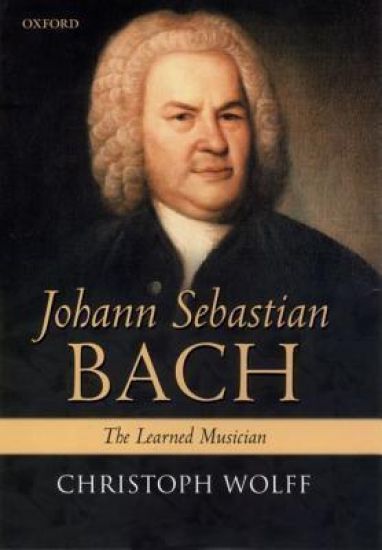
This biography portrays Bach as the living, breathing, and sometimes imperfect human being that he was, while using all the advances of Bach scholarship. The author demonstrates the connection between the composer's life and his music and looks at both in the context of the time.