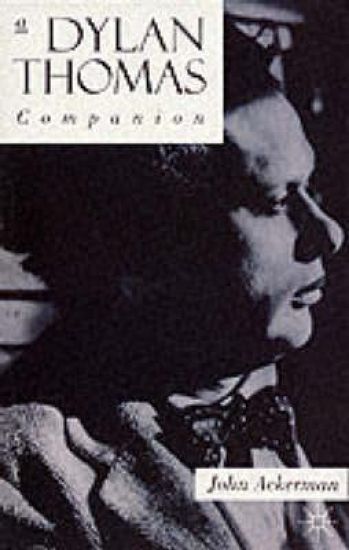
Opening with Thomas's life, the book offers vignettes of Swansea in the 1920s and 1930s, pre- and post-war Laugharne and rural West Wales, wartime London and New York City in the early 1950s, seen through the poet's eyes. Thomas's political views are focused on, as well as his social attitudes.
`That brilliant commentator on Dylan, John Ackerman' - Andrew Sinclair, Dylan Thomas: Poet of his People John Ackerman's highly acclaimed study of the poems and prose works of Dylan Thomas traces his development as a writer, linking this for the first time with his Welsh background. The formative influence of Swansea on the young poet, his family roots in West Wales and the childhood visits to Fernhill farm and the nearby Blaen Cwm cottage are all included, together with the Boat House anhd Laugharne, the absorbing village life and the inspiration of its now famous land- and sea-scapes. The impact of Welsh nonconformity and the chapel, and the radical politics of Wales are also explored as important influences on the poet's career. The 1994 preface, together with the introduction, throws new light on later poems like 'Prologue', the poet's work in film, broadcasting, as reader and as lecturer, while his own newly-discovered words, sharp and witty and with a poet's eye highlight his life, times and craft. The kaleidoscope of his changing worlds is seen in his homes in Wales and England, and his need in each one for a separate place to write, whether the hillside shed in Laugharne or a gypsy caravan in Oxfordshire or Camden.
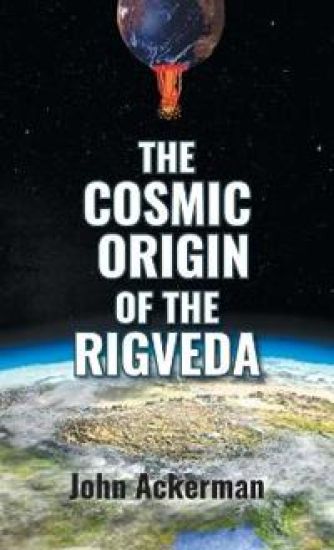
Based upon hymns in praise of Mars, Venus, and Mercury visible in the heavens close to Earth, the Rig Veda reveals ninety-nine 30-year cyclic encounters by which the Earth's lithosphere was terra-formed between 3687 and 687 BC. During this entire Vedic Period modern Flora fell to the Earth as Soma (manna) along with the soil and water in which it flourished.Ancient texts: reveal the force that drove the 'Continental Drift' of Alfred Wegener and produced the multi-layered granite cratons which raised the continents; decipher the 'column that supported the sky' chronicled by Marinus Anthony van der Sluijs in Traditional Cosmology V2; identify the cosmic cause of the K-T extinction of the dinosaur world; and place the origin of the 'cosmic microwave background' within the solar system 4000 BC.Consistent traditional cosmologies of numerous cultures, including Amerind peoples, deflate the elitist stance which characterize modern academia: atheism; Darwinian evolution of all modern species including Homo Sapiens Sapiens; and 4.6 billion-year uniformitarian cosmology of the solar system.Correctly interpreted for the first time, the Rig Veda explains that the outflow channels, imagined as the creator cloving his bladder, formed the Oceanus Borealis at the beginning of each kalpa, the lava 'golden egg' expanded within the ocean at Mars north pole, forming the northern island prithv, and at the end of each kalpa the waters rose above the island and swirled into the nabhi (navel) at its center forming the maelstrom, or whirlpool. All of these features are still visible on Mars today because the last event occurred in 687 BC. Thus the Rig Veda reveals the recent history of all the the planets, none of which currently resemble their forms in 4000 BC. Although not directly addressed in this text, the beneficence, wisdom and power revealed by the cyclic manipulation of the planets to terra-form the Earth within Biblical times, proves the reality of God.
Planetary science was born as an opposition to Immanuel Velikovsky's "Worlds in Collision," a number one best-seller in 1950 based on ancient texts from cultures around the world. Based on ancient texts of a number of cultures, Velikovsky claimed that Venus was born out of Jupiter and would therefore be hot and Jupiter would be radiating electromagnetic radiation. When the first observations of these planets proved this claim true, a prominent Astronomer Harold Shapely assigned a young PhD Carl Sagan to oppose Velikovsky arguing that Venus is hot because of a "runaway greenhouse effect" and Jupiter is a gas planet, in public debates. Due to support from the astronomical community, Sagan's simplistic claims were adopted as the "standard model" which advocates that the solar system has been in its current state for billions of years despite the great differences in the planets. However, this model remains unproven to this day despite many probes sent to these planets. The enormous ages of the planets suggested by this model support the notion that all life including mankind evolved from lower forms over millions of years. The the author of Miracle: The Creation of the Earth" compares the Rigveda, Egyptian, Greek and Roman texts, space probe data, close-up images of these planets and correlates these with biblical passages which suggest that the surface of the Earth was formed in biblical times by the intervention of a supremely wise and powerful intelligence whose complex manipulation of the planets seems beyond the bounds of theology. It suggests a complete destruction of ancient life on Earth, the K-T extinction, about 4000 BC followed by a 3,000-year creation period during which a new crust and the complete fully developed modern day life forms were transferred from an ancient living planet captured and released in a geostationary orbit of the Earth during one hundred 30-year cycles, while mankind, newly created (Genesis 1:26-28) watched and wrote the ancient myths.There were multiple purposes of the 30-year cycles. The smaller ancient planet became distorted by the tidal force of the more massive Earth during each capture period, described in terms of well known features mentioned in ancient texts of many cultures, resulting in its release. The 15.6-year releases into an orbit of the Sun allowed it to regain its spherical shape and regrow vegetation. These same periods on Earth made possible the formation of granite, unique to the Earth and allowed the momentum of the continents induced by the tidal effects of the captures to continue. This leads to new interpretations e.g. of Genesis 1:1 where "the "heaven and earth" refer to the two planets orbiting one another and the real time announcement that the creation is complete in 687 BC (Isaiah 65:17). The obvious conclusion being that a superior culture with more wisdom and power than ever imagined, far beyond that currently being sought by the SETI project, planned and executed the transfer of life to the Earth.Geologists (Paleontologists) today have no idea that this terraforming of the Earth's surface took place recently because the soil and sedimentary rock that covers the K-T extinction contains zircon crystals, the ratios of uranium to lead in which are currently imagined to give Earth ages. However, these crystals were blasted from volcanic vents on the ancient planet therefore the U/Pb ages are indicative of the ancient planet, not the Earth. As a result, the creation period on Earth, the Cenozoic, is thought to be 66 million years before the present instead of 6,000 years, therefore scientists cannot imagine the ancient myths contain any valuable information. All fossils are dated based on the zircon crystals in the nearby soil or rock not by radiocarbon14 of the fossil tissue because of the assumption that they are ancient.
Robert John Ackermann deals decisively with the problem of relativism that has plagued post-empiricist philosophy of science. Recognizing that theory and data are mediated by data domains (bordered data sets produced by scientific instruments), he argues that the use of instruments breaks the dependency of observation on theory and thus creates a reasoned basis for scientific objectivity. Originally published in 1985. The Princeton Legacy Library uses the latest print-on-demand technology to again make available previously out-of-print books from the distinguished backlist of Princeton University Press. These editions preserve the original texts of these important books while presenting them in durable paperback and hardcover editions. The goal of the Princeton Legacy Library is to vastly increase access to the rich scholarly heritage found in the thousands of books published by Princeton University Press since its founding in 1905.
Robert John Ackermann deals decisively with the problem of relativism that has plagued post-empiricist philosophy of science. Recognizing that theory and data are mediated by data domains (bordered data sets produced by scientific instruments), he argues that the use of instruments breaks the dependency of observation on theory and thus creates a reasoned basis for scientific objectivity. Originally published in 1985. The Princeton Legacy Library uses the latest print-on-demand technology to again make available previously out-of-print books from the distinguished backlist of Princeton University Press. These editions preserve the original texts of these important books while presenting them in durable paperback and hardcover editions. The goal of the Princeton Legacy Library is to vastly increase access to the rich scholarly heritage found in the thousands of books published by Princeton University Press since its founding in 1905.
In this work a known philosopher offers an analysis of the hidden assumptions that lie at the heart of contemporary social ideology. Robert John Ackermann argues that all social life is intrinsically heterogeneous and that such homogeneous constructs as race, gender, class, nation and state are necessarily artificial. In the course of his inquiry, he discusses what we mean when we invoke these terms and explores the intellectual implications and concrete consequences of their everyday use. Although Ackermann's approach is philosophical, his arguments are grounded in his personal experience - from encounters with the subtle workings of racism and sexism to active participation in local government. He urges his readers to draw on their own experiences to test the validity of his conclusions. In his view, only by breaking down the traditional distinction between private perception and public authority, ""subjective"" and ""objective"" knowledge, can the insights of philosophy prove useful in promoting meaningful social change. In a final chapter, Ackermann stresses the need to combine social theory with political practice. Against the advocates of universal rationalism on the one hand, and the champions of multiculturalism on the other, he makes the case for a genuinely democratic politics of inclusion.
What if rhetoric and climate are intimately connected? Taking climates to be rhetorical and rhetoric to be climatic, A Reading Group offers a generative framework for making sense of rhetorical studies as they grapple with the challenges posed by antiracist, decolonial, affective, ecological, and more-than-human scholarship to a tradition with a long history of being centered around individual, usually privileged, human agents wielding language as their principal instrument. Understanding the atmospheric and ambient energies of rhetoric underscores the challenges and promises of trying to heal a harmed world from within it. A cowritten “multigraph,” which began in 2018 as a reading group, this book enacts an intimate, mutualistic spirit of shared critical inquiry and play—an exciting new way of doing, thinking, and feeling rhetorical studies by six prominent scholars in rhetoric from communication and English departments alike.
This book examines the process of reading (when one's purpose is to create a text of one's own) and writing (which includes a response to the work of others). This is a central process in most college work and at the heart of critical literacy. The study observed students in the transition from high school to college, and in the process of trying to enter the community of academic discourse. The study draws on the methods of textual analysis, teacher evaluation, and interviews to examine students' writing and revising.
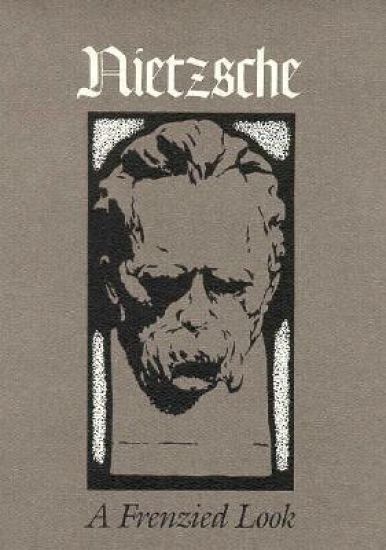
This study challenges the common view that Nietzsche passed through several discrete periods of thought, each based upon a different set of values, and that his work can best be understood as a collection of isolated insights. Ackermann's textual analysis shows the underlying unity of Nietzsche's thought. Ackermann, offering an introduction to Nietzsche, also covers his main texts, such as ""The Birth of Tragedy"", ""Thus Spake Zarathustra"", ""Beyond Good and Evil"" and ""Human, All too Human"".
For over 60 years, residents and practicing pathologists have turned to Rosai and Ackerman's Surgical Pathology?for definitive guidance on every aspect of the field, delivered in a readable, easy-to-digest, and engaging manner. In the two-volume 11th Edition, a dynamic new author team ensures that this classic text retains its signature anecdotal style, while revising the content to bring you fully up to date. Widely used for board exam preparation, as well as for everyday reference in practice, this leading resource equips you to effectively and efficiently diagnose the complete range of neoplastic and non-neoplastic entities. Provides comprehensive coverage of the clinical presentation, gross and microscopic features, ultrastructural and immunohistochemical findings, prognosis, and therapy for virtually every pathologic lesion. Presents content now grouped in sections corresponding to organs and systems, making disease entities easier to locate. Includes state-of-the-art coverage of the latest disease classifications, molecular biology and pathology, immunohistochemistry, genetics, prognostic/predictive markers, and more - all highlighted by more than 3,000 full-color illustrations of commonly seen pathologies. Showcases the knowledge and expertise of an innovative new author team: prolific author John R. Goldblum, MD (GI pathology, soft tissue tumors); Laura Lamps, MD (hepatobiliary, endocrine tumors, infectious disease); Jesse McKenney, MD (GU/GYN, soft tissue tumors); and Jeff Myers, MD (pulmonary, pleural, mediastinum); accompanied by a select list of subspecialty contributors. Expert ConsultT eBook version included with purchase. This enhanced eBook experience allows you to search all of the text, figures, Q&As, and references from the book on a variety of devices.
""John White of Dorchester, England and His Participation in Founding the Massachusetts Bay Colony"" is a historical book written by Arthur W. Ackerman. The book explores the life and contributions of John White, a prominent figure in the founding of the Massachusetts Bay Colony. The author provides a detailed account of White's background, including his upbringing in England and his role as a Puritan minister. The book also delves into White's involvement in the establishment of the Massachusetts Bay Colony, including his leadership in the Dorchester Company and his participation in the Great Migration of Puritans to New England. The author draws on a variety of primary sources, including letters, diaries, and other historical documents, to provide a comprehensive and engaging account of White's life and legacy. Overall, ""John White of Dorchester, England and His Participation in Founding the Massachusetts Bay Colony"" is a fascinating read for anyone interested in the history of early America and the role of religion in shaping the country's founding.Publications Of The Governor And Company Of Massachusetts Bay In New England, No. 1.This scarce antiquarian book is a facsimile reprint of the old original and may contain some imperfections such as library marks and notations. Because we believe this work is culturally important, we have made it available as part of our commitment for protecting, preserving, and promoting the world's literature in affordable, high quality, modern editions, that are true to their original work.