Kirjahaku
Etsi kirjoja tekijän nimen, kirjan nimen tai ISBN:n perusteella.
1000 tulosta hakusanalla John André
Proceedings of a Board of General Officers, Held by Order of His Excellency Gen. Washington, Commander in Chief of the Army of the United States of America, Respecting Major John Andrè
John André
Gale Ecco, Print Editions
2018
sidottu
The 18th century was a wealth of knowledge, exploration and rapidly growing technology and expanding record-keeping made possible by advances in the printing press. In its determination to preserve the century of revolution, Gale initiated a revolution of its own: digitization of epic proportions to preserve these invaluable works in the largest archive of its kind. Now for the first time these high-quality digital copies of original 18th century manuscripts are available in print, making them highly accessible to libraries, undergraduate students, and independent scholars.Delve into what it was like to live during the eighteenth century by reading the first-hand accounts of everyday people, including city dwellers and farmers, businessmen and bankers, artisans and merchants, artists and their patrons, politicians and their constituents. Original texts make the American, French, and Industrial revolutions vividly contemporary.++++The below data was compiled from various identification fields in the bibliographic record of this title. This data is provided as an additional tool in helping to insure edition identification: ++++Library of CongressW027871Providence: Printed and sold by John Carter, 1780]. 16 p.; 4
Andreana. Containing the Trials, Executiuon and Various Matter Connected with the History of Major John Andre, Adjutant General of the British Army in America
John Andre
Gale Ecco, Making of Modern Law
2012
pokkari
Lopeman examines the impact advocacy of intentional judicial activism by a justice of a state supreme court can have on establishing the court as a policy maker. He examines the attitudinal model and the judicial role model of decision making and concludes that, while the attitudinal model might describe the decision-making process in the U.S. Supreme Court, the judicial role model better describes decision making in state supreme courts. This judicial role model allows the activist to transform a court into a policy maker.The traditions, recent history, and biographies of recent justices of the Indiana, West Virginia, and Ohio courts are examined to establish a significant relationship between the presence of an activist advocate justice and active policy making by the courts. These courts' decisions in cases with policy making potential are contrasted with decisions in similar cases of three state supreme courts that did not have an advocate justice. Lopeman argues that the presence of an activist advocate explains a court's transformation to active policy making, and that other apparent explanations are insufficient. He emphasizes that the motives of an activist advocate are likely to determine the permanence of policy making in the court. This volume is an important resource for political scientists, legal scholars, and other researchers involved with judicial decision making, state politics, and state constitutional law.
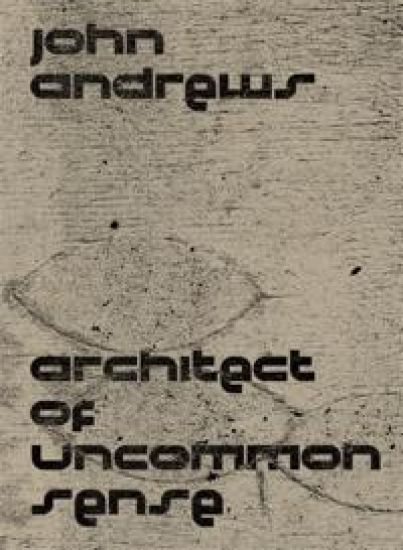
Though he garnered global praise at the peak of his career from 1960 to 1990, Australian architect John Andrews faced waning fame as postmodern cultural transformations challenged modernist design values, and wider social and economic changes led to a withdrawal of government-funded institutional commissions. Yet his body of work is a remarkable achievement that deserves to be better known.Following a path from Australia to the United States and Canada and back again, John Andrews: Architect of Uncommon Sense examines his most important buildings and reveals how the internationalization of architecture during this period was an unexpectedly dispersed geographical phenomenon, following more complex flows and localized progressions than earlier modernist ideas that travelled from center to periphery, metropole to outpost. Andrews negotiated the advent of postmodernism not by ignoring it, but by cultivating approaches that this new era foregrounded—identity, history, place—within the formal vocabularies of modernism. As Andrews assumed wider public roles and took appointments that allowed him to shape architectural education, he influenced design culture beyond his own personal portfolio. This book presents his legacy traversing local and international scenes and exemplifying late-modern developments of architecture while offering both generational continuities and discontinuities with what came after.John Andrews: Architect of Uncommon Sense features essays from Paul Walker, Mary Lou Lobsinger, Peter Scriver and Antony Moulis, Philip Goad, and Paolo Scrivano, along with nearly 100 new photographs from visual artist Noritaka Minami of existing buildings designed by Andrews in North America and Australia.


Historical Atlas of England; Physical, Political, Astronomical, Civil and Ecclesiastical, ... Interspersed With Geographical Notes and Dates ... and Explanations to Each map, ... By John Andrews,
John Andrews
Gale Ecco, Print Editions
2018
sidottu
The 18th century was a wealth of knowledge, exploration and rapidly growing technology and expanding record-keeping made possible by advances in the printing press. In its determination to preserve the century of revolution, Gale initiated a revolution of its own: digitization of epic proportions to preserve these invaluable works in the largest archive of its kind. Now for the first time these high-quality digital copies of original 18th century manuscripts are available in print, making them highly accessible to libraries, undergraduate students, and independent scholars.Rich in titles on English life and social history, this collection spans the world as it was known to eighteenth-century historians and explorers. Titles include a wealth of travel accounts and diaries, histories of nations from throughout the world, and maps and charts of a world that was still being discovered. Students of the War of American Independence will find fascinating accounts from the British side of conflict. ]+++The below data was compiled from various identification fields in the bibliographic record of this title. This data is provided as an additional tool in helping to insure edition identification: ++++British LibraryT088948No more published after p.116.London: printed by J. Smeeton: sold by the author, 1797. 2], iv,116p., plates: maps; 1

John Andrew Corbett (1812-1880): In Commemoration of the Life and Times of an Early Settler of Upper Canada
Michael T. Tracy
Createspace Independent Publishing Platform
2017
nidottu
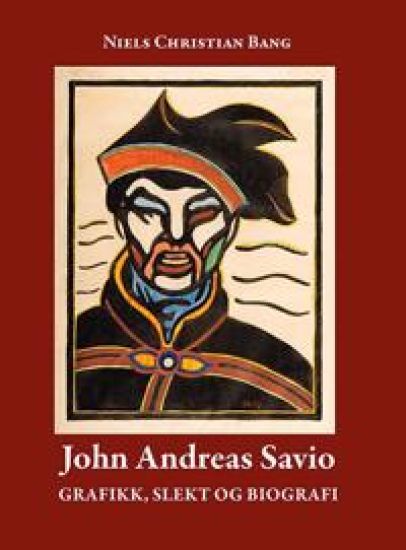
Den samiske kunstner John Andreas Savio (1902-1938) ansees av forfatteren som den hittil betydeligste samiske billedkunstner. Det er som grafiker John Savio har sin største kunstneriske og tekniske styrke. Boken viser 154 av hans grafiske trykk i sort-hvitt og farger. Der avtrykk ikke er kjent, men trykkplaten finnes, så gjengis foto av trykkplaten. I tillegg vises håndkolorert grafikk og for noen motiver også forarbeider til grafikken.

John Andrews (clergyman)
OmniScriptum
2026
pokkari
Major John André: The Life and Death of the Famous British Spymaster during the Revolutionary War
Charles River
Createspace Independent Publishing Platform
2016
nidottu
*Includes pictures *Includes contemporary accounts about Andr 's career and execution *Includes online resources and a bibliography for further reading *Includes a table of contents "I pray you to bear me witness that I meet my fate like a brave man." - Andr Spying and treachery are as much a part of warfare as weapons and death. This has always been the case since the earliest battles and is not likely to change in the future. And yet, even within this irregular system, there are certain rules, especially in past eras such as the American Revolution. First, while spying on behalf of one's country is perfectly respectable, betraying one's nation is treason. Second, honorable men do not involve those too innocent to understand the consequences of their actions in their schemes. Third, no man wearing his own uniform can be considered a spy, for his garments make it clear who he is and preclude deception. All three of these rules played into the story of the machinations and death of Major John Andr . No one who knew Andr personally would ever have dreamed he would one day hang. He was raised by devoutly religious parents and was a loyal Englishman and solid officer in His Majesty's army. He had, it was rumored, an unfortunate romantic liaison that ended with a cancelled engagement, and during the early days of the American Revolutionary War, he had served his king in Canada before being captured and held as a prisoner of war. Once he was returned to his command, he was promoted in recognition of his strength of character under duress. His reputation was so sterling, in fact, that he was given a very sensitive role, that of gathering intelligence for the British Army as they tried to put down the rebellious American colonies. This assignment, and an alleged relationship to a beautiful young Loyalist in Philadelphia named Peggy Shippen, would lead him to one of the colonists' biggest war heroes, Benedict Arnold. Arnold had arguably been more instrumental for the colonies' successes from 1775-1778 than anyone else, even perhaps George Washington, but a confluence of events left him willing to betray the cause he had fought and bled so hard for after he became military commander of Philadelphia. In one of the most controversial and scrutinized episodes of the war, Arnold married Peggy Shippen despite her Loyalist sympathies, and while Arnold was willing to break the first rule, Andr broke the second rule by using Shippen to pass messages, possibly even playing on her own affections for him. Ultimately, it was in breaking the third rule of espionage that Andr made his fatal mistake, for when he met near West Point to facilitate Arnold's betrayal, he changed his clothes one fateful night in September 1780, he changed his destiny and earned a place in the history books at the cost of his life. He was tried and convicted of being a spy, and he was sentenced to hang by men who had more respect for him than they did for their turncoat countryman. In the end, they agreed with Washington himself, who insisted that he was "more unfortunate than criminal." Major John Andr The Life and Death of the Famous British Spymaster during the Revolutionary War profiles the influential part the dashing British spymaster played in the Revolution. Along with pictures of important people, places, and events, you will learn about Andr like never before, in no time at all.
Major John André: The Life and Death of the Famous British Spymaster during the Revolutionary War
Charles River
Createspace Independent Publishing Platform
2017
nidottu
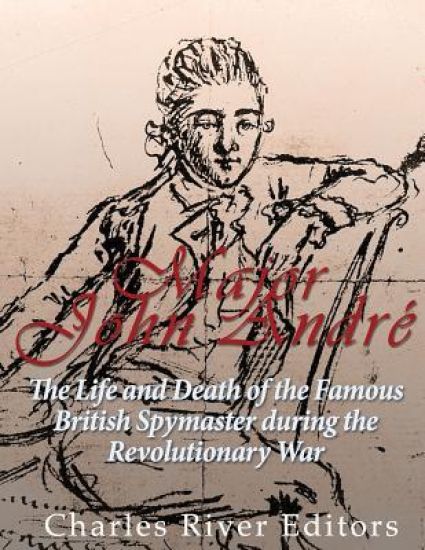
*Includes pictures *Includes contemporary accounts about Andr 's career and execution *Includes online resources and a bibliography for further reading *Includes a table of contents "I pray you to bear me witness that I meet my fate like a brave man." - Andr Spying and treachery are as much a part of warfare as weapons and death. This has always been the case since the earliest battles and is not likely to change in the future. And yet, even within this irregular system, there are certain rules, especially in past eras such as the American Revolution. First, while spying on behalf of one's country is perfectly respectable, betraying one's nation is treason. Second, honorable men do not involve those too innocent to understand the consequences of their actions in their schemes. Third, no man wearing his own uniform can be considered a spy, for his garments make it clear who he is and preclude deception. All three of these rules played into the story of the machinations and death of Major John Andr . No one who knew Andr personally would ever have dreamed he would one day hang. He was raised by devoutly religious parents and was a loyal Englishman and solid officer in His Majesty's army. He had, it was rumored, an unfortunate romantic liaison that ended with a cancelled engagement, and during the early days of the American Revolutionary War, he had served his king in Canada before being captured and held as a prisoner of war. Once he was returned to his command, he was promoted in recognition of his strength of character under duress. His reputation was so sterling, in fact, that he was given a very sensitive role, that of gathering intelligence for the British Army as they tried to put down the rebellious American colonies. This assignment, and an alleged relationship to a beautiful young Loyalist in Philadelphia named Peggy Shippen, would lead him to one of the colonists' biggest war heroes, Benedict Arnold. Arnold had arguably been more instrumental for the colonies' successes from 1775-1778 than anyone else, even perhaps George Washington, but a confluence of events left him willing to betray the cause he had fought and bled so hard for after he became military commander of Philadelphia. In one of the most controversial and scrutinized episodes of the war, Arnold married Peggy Shippen despite her Loyalist sympathies, and while Arnold was willing to break the first rule, Andr broke the second rule by using Shippen to pass messages, possibly even playing on her own affections for him. Ultimately, it was in breaking the third rule of espionage that Andr made his fatal mistake, for when he met near West Point to facilitate Arnold's betrayal, he changed his clothes one fateful night in September 1780, he changed his destiny and earned a place in the history books at the cost of his life. He was tried and convicted of being a spy, and he was sentenced to hang by men who had more respect for him than they did for their turncoat countryman. In the end, they agreed with Washington himself, who insisted that he was "more unfortunate than criminal." Major John Andr The Life and Death of the Famous British Spymaster during the Revolutionary War profiles the influential part the dashing British spymaster played in the Revolution. Along with pictures of important people, places, and events, you will learn about Andr like never before, in no time at all.

Proceedings of a board of general officers respecting Major John André
André John
Hansebooks
2019
pokkari
Proceedings of a board of general officers respecting Major John Andr is an unchanged, high-quality reprint of the original edition of 1867. Hansebooks is editor of the literature on different topic areas such as research and science, travel and expeditions, cooking and nutrition, medicine, and other genres. As a publisher we focus on the preservation of historical literature. Many works of historical writers and scientists are available today as antiques only. Hansebooks newly publishes these books and contributes to the preservation of literature which has become rare and historical knowledge for the future.
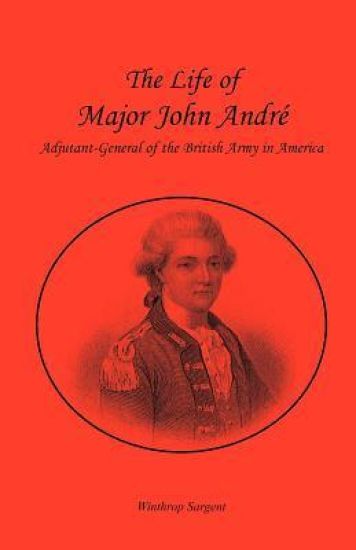
The Life of Major John André, Adjutant-General of the British Army in America
Winthrop Sargent
Heritage Books
2009
pokkari

Proceedings of a Board of General Officers, Held by Order of His Excellency Gen. Washington, Commander in Chief of the Army of the United States of America, Respecting Major John Andre
John Andr; John Andre
Gale Ecco, Print Editions
2010
pokkari
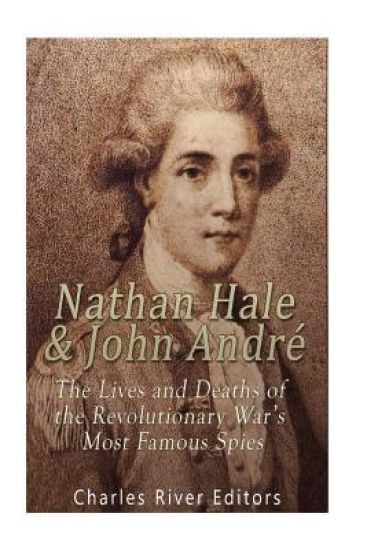
Nathan Hale and John André: The Lives and Deaths of the Revolutionary War's Most Famous Spies
Charles River
Createspace Independent Publishing Platform
2016
nidottu
*Includes pictures*Includes quotes by both men about the war*Includes online resources and a bibliography for further readingFor over 230 years, American schoolchildren have been taught about the story of Nathan Hale, or at least a legend of it, and in the process the myth of Hale and his possibly apocryphal final words have immortalized the young man as America's most famous spy, despite his failed mission.After the siege of Boston forced the British to evacuate that city in March 1776, Continental Army commander George Washington suspected that the British would move by sea to New York City, the next logical target in an attempt to end a colonial insurrection. He thus rushed his army south to defend the city, but Washington's army would ultimately be pushed west all the way through New Jersey the rest of the year. However, shortly before the colonists had to leave New York, Washington tried to implement intelligence operations around New York City, and one of the early spies was young Nathan Hale. A young officer in the Continental Army from Connecticut, Hale was asked by Washington to go behind British lines on Long Island and bring back information on what the British were up to there. Unfortunately, Hale was quickly identified by Loyalists, found with incriminating papers on his body, and executed the morning after he was caught. The 21 year old Hale's name may have very well been lost to history but for propaganda efforts to make him a martyr to the cause, most notably the reports of his last words about regretting that he had but one life to lose for his country. If Hale said anything like the quote he's best known for, he was likely reciting an exchange in the play Cato by Joseph Addison or playing off of it, but regardless of what he actually said, the story and the legend of Hale aimed to cover up the fact that his mission was an abject failure, due both to bad luck and ineptitude. No one who knew John Andr personally would ever have dreamed he would one day hang. He was raised by devoutly religious parents and was a loyal Englishman and solid officer in His Majesty's army. He had, it was rumored, an unfortunate romantic liaison that ended with a cancelled engagement, and during the early days of the American Revolutionary War, he had served his king in Canada before being captured and held as a prisoner of war. Once he was returned to his command, he was promoted in recognition of his strength of character under duress. His reputation was so sterling, in fact, that he was given a very sensitive role, that of gathering intelligence for the British Army as they tried to put down the rebellious American colonies. This assignment, and an alleged relationship to a beautiful young Loyalist in Philadelphia named Peggy Shippen, would lead him to one of the colonists' biggest war heroes, Benedict Arnold. Arnold had arguably been more instrumental for the colonies' successes from 1775-1778 than anyone else, even perhaps George Washington, but a confluence of events left him willing to betray the cause he had fought and bled so hard for after he became military commander of Philadelphia. In one of the most controversial and scrutinized episodes of the war, Arnold married Peggy Shippen despite her Loyalist sympathies, and while Arnold was willing to break the first rule, Andr broke the second rule by using Shippen to pass messages, possibly even playing on her own affections for him. Ultimately, it was in breaking the third rule of espionage that Andr made his fatal mistake, for when he met near West Point to facilitate Arnold's betrayal, he changed his clothes one fateful night in September 1780, he changed his destiny and earned a place in the history books at the cost of his life. He was tried and convicted of being a spy, and he was sentenced to hang by men who had more respect for him than they did for their turncoat countryman.
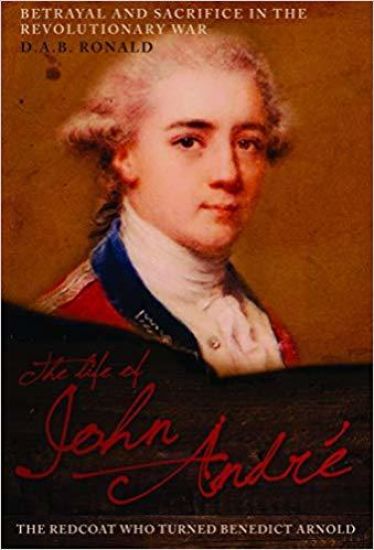
John André was head of the British Army’s Secret Service in North America as the Revolutionary War entered its most bitter and, ultimately, decisive phase. In 1780, he masterminded the defection of a high-ranking American officer — General Benedict Arnold. Arnold—his name for ever synonymous with treason in American folklore — had recently been appointed commander of West Point and agreed, through André, to turn over to the British this strategically vital fort on the upper reaches of the Hudson River. Control of the fort would interrupt lines of communication between New England and the southern colonies, seriously impeding military operations against the British. The plan was also to simultaneously kidnap General George Washington, Commander-in-Chief of the Continental Army. By these two masterstrokes, the British believed they could end rebel resistance.The secret negotiations between Arnold and André were protracted and fraught with danger. Arnold’s new wife, Peggy became the go-between in the negotiations. Arnold insisted that, to complete negotiations, he and André must meet face to face. At the dead of night on September 21st 1780 the two rendezvoused in no-man’s-land. Sir Henry Clinton, commander of British forces in North America and André’s immediate superior, agreed to this meeting but with three strict conditions: that André not go within the American lines; that he remain in uniform; and that he carry away from the meeting no incriminating papers. Thus, if caught, André could not be treated as a spy.Yet, when André was captured forty-eight hours later, he was within American lines, had changed into civilian clothes and was carrying maps of West Point hidden in his boots. The Americans had no option other than to treat him as a spy, especially when he himself admitted this. He was convicted by military tribunal and hanged — his death lamented both in America and England.While biographers agree on the facts of this tragic episode, they disagree on André’s motives and why he chose to sacrifice himself. This new biography of André puts forward a new answer to this mystery — not only why he acted as he did, but how he wished others to see his actions.
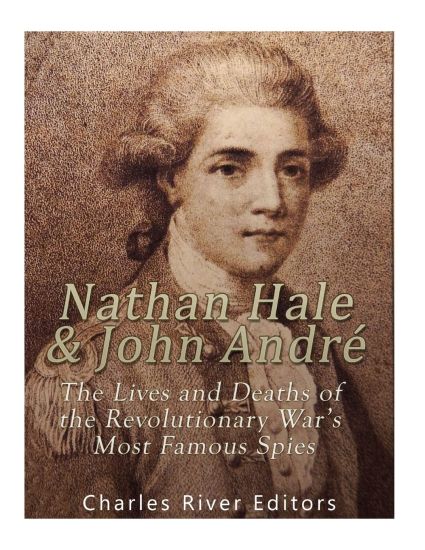
Nathan Hale and John André: The Lives and Deaths of the Revolutionary War's Most Famous Spies
Charles River
Createspace Independent Publishing Platform
2018
nidottu
*Includes pictures*Includes quotes by both men about the war*Includes online resources and a bibliography for further readingFor over 230 years, American schoolchildren have been taught about the story of Nathan Hale, or at least a legend of it, and in the process the myth of Hale and his possibly apocryphal final words have immortalized the young man as America's most famous spy, despite his failed mission.After the siege of Boston forced the British to evacuate that city in March 1776, Continental Army commander George Washington suspected that the British would move by sea to New York City, the next logical target in an attempt to end a colonial insurrection. He thus rushed his army south to defend the city, but Washington's army would ultimately be pushed west all the way through New Jersey the rest of the year. However, shortly before the colonists had to leave New York, Washington tried to implement intelligence operations around New York City, and one of the early spies was young Nathan Hale. A young officer in the Continental Army from Connecticut, Hale was asked by Washington to go behind British lines on Long Island and bring back information on what the British were up to there. Unfortunately, Hale was quickly identified by Loyalists, found with incriminating papers on his body, and executed the morning after he was caught. The 21 year old Hale's name may have very well been lost to history but for propaganda efforts to make him a martyr to the cause, most notably the reports of his last words about regretting that he had but one life to lose for his country. If Hale said anything like the quote he's best known for, he was likely reciting an exchange in the play Cato by Joseph Addison or playing off of it, but regardless of what he actually said, the story and the legend of Hale aimed to cover up the fact that his mission was an abject failure, due both to bad luck and ineptitude. No one who knew John Andr personally would ever have dreamed he would one day hang. He was raised by devoutly religious parents and was a loyal Englishman and solid officer in His Majesty's army. He had, it was rumored, an unfortunate romantic liaison that ended with a cancelled engagement, and during the early days of the American Revolutionary War, he had served his king in Canada before being captured and held as a prisoner of war. Once he was returned to his command, he was promoted in recognition of his strength of character under duress. His reputation was so sterling, in fact, that he was given a very sensitive role, that of gathering intelligence for the British Army as they tried to put down the rebellious American colonies. This assignment, and an alleged relationship to a beautiful young Loyalist in Philadelphia named Peggy Shippen, would lead him to one of the colonists' biggest war heroes, Benedict Arnold. Arnold had arguably been more instrumental for the colonies' successes from 1775-1778 than anyone else, even perhaps George Washington, but a confluence of events left him willing to betray the cause he had fought and bled so hard for after he became military commander of Philadelphia. In one of the most controversial and scrutinized episodes of the war, Arnold married Peggy Shippen despite her Loyalist sympathies, and while Arnold was willing to break the first rule, Andr broke the second rule by using Shippen to pass messages, possibly even playing on her own affections for him. Ultimately, it was in breaking the third rule of espionage that Andr made his fatal mistake, for when he met near West Point to facilitate Arnold's betrayal, he changed his clothes one fateful night in September 1780, he changed his destiny and earned a place in the history books at the cost of his life. He was tried and convicted of being a spy, and he was sentenced to hang by men who had more respect for him than they did for their turncoat countryman.