Kirjojen hintavertailu. Mukana 11 342 296 kirjaa ja 12 kauppaa.

Kirjahaku

Etsi kirjoja tekijän nimen, kirjan nimen tai ISBN:n perusteella.

1000 tulosta hakusanalla John B. Judis

Genesis: Truman, American Jews, and the Origins of the Arab/Israeli Conflict
A probing look at one of the most incendiary subjects of our time--the relationship between the United States and IsraelThere has been more than half a century of raging conflict between Jews and Arabs--a violent, costly struggle that has had catastrophic repercussions in a critical region of the world. In Genesis, John B. Judis argues that, while Israelis and Palestinians must shoulder much of the blame, the United States has been the principal power outside the region since the end of World War II and as such must account for its repeated failed diplomacy efforts to resolve this enduring strife. The fatal flaw in American policy, Judis shows, can be traced back to the Truman years. What happened between 1945 and 1949 sealed the fate of the Middle East for the remainder of the century. As a result, understanding that period holds the key to explaining almost everything that follows--right down to George W. Bush's unsuccessful and ill-conceived effort to win peace through holding elections among the Palestinians, and Barack Obama's failed attempt to bring both parties to the negotiating table. A provocative narrative history animated by a strong analytical and moral perspective, and peopled by colorful and outsized personalities and politics, Genesis offers a fresh look at these critical postwar years, arguing that if we can understand how this stalemate originated, we will be better positioned to help end it.
William F. Buckley, Jr.

William F. Buckley, Jr.

John B. Judis

Simon Schuster
2001
pokkari
Possibly more relevant now than ever before, John B. Judis' William F. Buckley, Jr follows the life and times of the "Patron Saint of Conservatives."From Simon & Schuster comes the definitive biography of William F. Buckley, Jr., the "Patron Saint of Conservatives," by journalist and writer John B. Judis. Get your copy of William F. Buckley Jr. today.
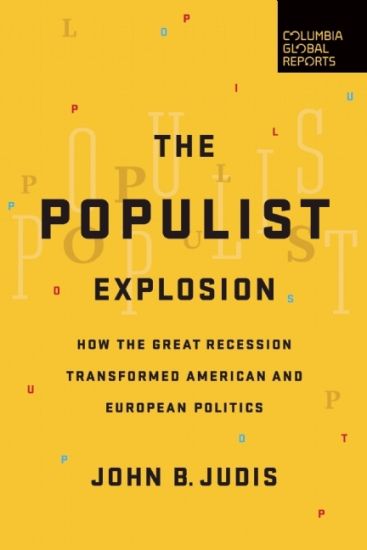
The Populist Explosion

The Populist Explosion

John B. Judis

Columbia Global Reports
2016
pokkari
"Far and away the most incisive examination of the central development in contemporary politics: the rise of populism on both the right and the left. Superb." - Thomas Edsall, New York Times columnist What's happening in global politics, and is there a thread that ties it all together? As if overnight, many Democrats revolted and passionately backed a socialist named Bernie Sanders; the United Kingdom voted to leave the European Union, in a stunning rebuke; the vituperative billionaire Donald Trump became the presidential nominee of the Republican Party; and a slew of rebellious parties continued to win election after election in countries like Switzerland, Norway, Italy, Austria, and Greece. John B. Judis, one of America's most respected political analysts, tells us why we need to understand the populist movement that began in the United States in the 1890s and whose politics have recurred on both sides of the Atlantic ever since. The Populist Explosion is essential reading for anyone hoping to grasp a global political system that is only just beginning what will be a long-running and highly consequential readjustment.
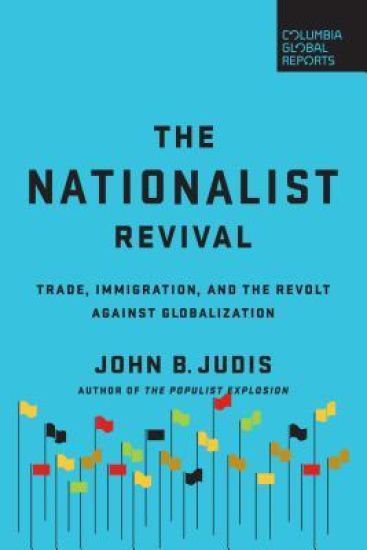
The Nationalist Revival

The Nationalist Revival

John B. Judis

Columbia Global Reports
2018
pokkari
Why has nationalism come roaring back? Trump in America, Johnson in the U.K., anti-EU parties in Italy, Germany, France, the Netherlands, Austria, Poland, and Hungary, and nativist or authoritarian leaders in Turkey, Russia, India, and China—Why has nationalism suddenly returned with a vengeance? Is the world headed back to the fractious conflicts between nations that led to world wars and depression in the early 20th Century? Based on travels in America, Europe, and Asia, veteran political analyst John B. Judis found that almost all people share nationalist sentiments that can be the basis of vibrant democracies as well as repressive dictatorships. Today’s outbreak of toxic “us vs. them” nationalism is an extreme reaction to utopian cosmopolitanism, which advocates open borders, free trade, rampant outsourcing, and has branded nationalist sentiments as bigotry. Can a new international order be created that doesn’t dismiss what is constructive about nationalism? As he does for populism in The Populist Explosion and for socialism in The Socialist Awakening, Judis looks at nationalism from its modern origins in the 1800s to today to find answers.“Essential reading.” —E.J. Dionne Jr., Washington Post
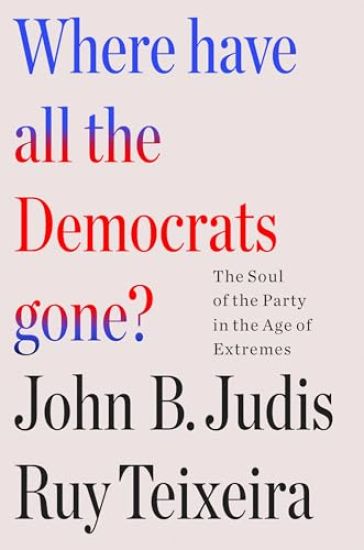
Where Have All the Democrats Gone?

Where Have All the Democrats Gone?

John B. Judis

HENRY HOLT COMPANY INC
2024
nidottu
For decades, American politics has been plagued by a breakdown between the Democratic and Republican parties, in which victory has inevitably led to defeat and vice versa. Both parties have lost sight of the people at the center of the American electorate, leading to polarization and paralysis. In Where Have All the Democrats Gone?, John B. Judis and Ruy Teixeira reveal the tectonic changes shaping the country’s current political landscape that both pundits and political scientists have missed. The Democratic Party, once the preserve of small towns as well as big cities and of the industrial working class and the newly immigrated, has abandoned and even actively alienated many of these voters. In this clarion call and essential argument for common sense and common ground, Judis and Teixeira reveal the transformation of American politics and provide a razor-sharp critique of where the Democrats have gone awry and how they can avoid political disaster in the days ahead.
The Socialist Awakening

The Socialist Awakening

John B. Judis

Columbia Global Reports
2020
nidottu
“A person of the left, Judis specializes in speaking truth to liberals.” —E.J. Dionne Jr., The Washington Post As the pandemic depression lays bare the failure of market capitalism worldwide, and as protesters flood the streets in unprecedented numbers seeking racial and economic equality, you can find something in common among many of those disillusioned with the way things are—socialism. How did this happen? Why now? John B. Judis, himself a veteran of socialist movements, explores how an ideology thought to be long dead has taken hold as a broad movement among younger people dissatisfied with mainstream politics both on the right and the left, in America, Great Britain, and elsewhere in Europe and the world. From Karl Marx to Eduard Bernstein, Eugene Debs to Victor Berger, Bernie Sanders to Jeremy Corbyn, The Socialist Awakening chronicles the rebirth of an idea driven by a rising anti-capitalist resentment among those looking to reclaim public power over the direction of private enterprise—an idea that has become urgent in the wake of the pandemic and the economic depression.
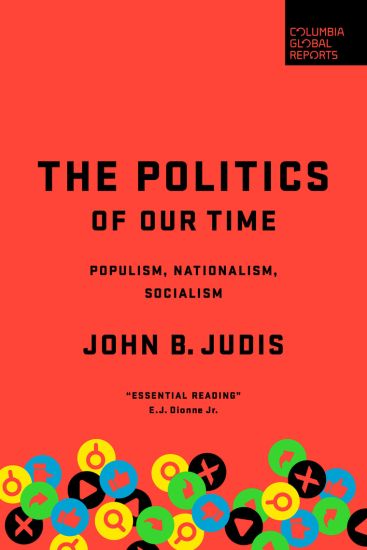
The Politics of Our Time

The Politics of Our Time

John B. Judis

Columbia Global Reports
2021
sidottu
A one-volume history of the most consequential political movements of our time—populism, nationalism, socialism—and how they are influencing the twenty-first centuryThe distinguished political analyst John Judis has brought out a book with Columbia Global Reports during each of the last three national political seasons: The Populist Explosion in 2016, The Nationalist Revival in 2018, and The Socialist Awakening in 2020. Together, these books chart the rise during the second decade of the twenty-first century of new and unexpected political movements in the United States and Europe that arose in the wake of the Great Recession, the conflict with al-Qaeda and ISIS, and encroaching climate change.Judis has revised and updated these three books, and written a new introductory essay that seeks to explain the tumultuous last decade—most notably, Donald Trump's presidency and the response to a global pandemic and recession. This volume is an indispensable guide to understanding the deeply rooted disenchantment that gave rise to populist parties and politicians on the right and left—and to the global changes that have transformed the politics of our time. "Essential reading." —E.J. Dionne Jr., The Washington Post
Where Have All the Democrats Gone?

Where Have All the Democrats Gone?

John B. Judis and Ruy Teixeira; Ruy Teixeira; John B. Judis

HENRY HOLT COMPANY INC
2023
sidottu
Leading up to the 2024 election, it’s becoming clear that the Democrats could easily lose the White House, whether Biden or a replacement is heading the ticket. But this is not as big a surprise as we might think. Since 1992, American politics has been plagued by a breakdown between the Democratic and Republican parties, in which victory has inevitably led to defeat, and vice versa. Both parties have lost sight of the political center of the American electorate, leading to polarisation and paralysis, and resulting in an inability to meet challenges at home and abroad. While many are likely to blame our presidents for leading the country astray, the politicians are mere symptoms of the underlying disease. John B. Judis and Ruy Teixeira reveal the major driving forces behind the current state of American politics - the tectonic changes shaping the country’s new political landscape that pundits and political scientists alike have missed. The Democratic party, once the preserve of the industrial working class and racial minorities, has become the party of new post-industrial metro centres. In the process, Democrats have abandoned and even actively alienated immigrants and working-class voters, pushing them toward the right. In this incisive critique, Judis and Teixeira provide a clarion and essential argument for common sense and common ground to fix our broken political system. Provocative and illuminating, Where Have All the Democrats Gone? reveals the transformation of American politics and serves as a much-needed wakeup call for Democrats and Republicans alike.
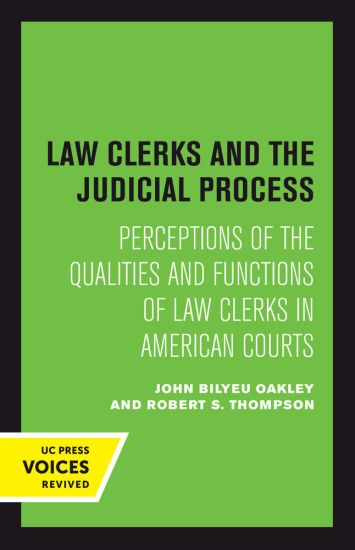
Law Clerks and the Judicial Process

Law Clerks and the Judicial Process

John B. Oakley; Robert S. Thompson

University of California Press
2018
pokkari
This is the first in-depth empirical and historical study of the use of law clerks by American judges. Although possessing a hundred-year heritage, the institution has been ignored as an important component of the process of judicial decision-making. Law clerks are, in the authors' words, "subordinate, anonymous, but often quite powerful lawyers who function as the non-commissioned officers in the army of the judiciary." American courts are currently altering the traditional use of law clerks through the introduction of important innovations that enhance the ability of judges to dispose of cases rapidly but detract from personal judicial control over individual decisions. The authors investigate the clash of tradition and innovation through interviews with sixty-three judges of federal courts and appellate courts in California. They find distinctly different models of law clerk usage in the state and federal systems, which they analyze on the basis of the judges' own perceptions of the qualitative and quantitive impact on their decision of variations in the character, tenure, and duties of staff assistants. They offer suggestions on how modern courts can cope with the "crisis of volume" without unduly sacrificing traditional standards of judicial autonomy. Because of the confidential nature of judicial deliberations, judges are rarely willing to discuss publicly their use of law clerks. This study employs unconventional techniques for penetrating the secrecy of judicial chambers while respecting the confidentiality and the individuality of its sources. It presents important new information on the internal operating procedures of the courts studies, collating interview data with facts abstracted from pre-existing but often obscure sources, and providing a particularly close look at the inner workings of the Supreme Court of California and the United States Court of Appeals for the Ninth Circuit. Revealing the significance of public funding of judicial staff in determining patterns of law clerk usage, it should promote further investigation and debate regarding the proper structure and role of staff assistance in the judicial process. This title is part of UC Press's Voices Revived program, which commemorates University of California Press’s mission to seek out and cultivate the brightest minds and give them voice, reach, and impact. Drawing on a backlist dating to 1893, Voices Revived makes high-quality, peer-reviewed scholarship accessible once again using print-on-demand technology. This title was originally published in 1980.
Law Clerks and the Judicial Process

Law Clerks and the Judicial Process

John B. Oakley; Robert S. Thompson

University of California Press
2024
sidottu
This is the first in-depth empirical and historical study of the use of law clerks by American judges. Although possessing a hundred-year heritage, the institution has been ignored as an important component of the process of judicial decision-making. Law clerks are, in the authors' words, "subordinate, anonymous, but often quite powerful lawyers who function as the non-commissioned officers in the army of the judiciary." American courts are currently altering the traditional use of law clerks through the introduction of important innovations that enhance the ability of judges to dispose of cases rapidly but detract from personal judicial control over individual decisions. The authors investigate the clash of tradition and innovation through interviews with sixty-three judges of federal courts and appellate courts in California. They find distinctly different models of law clerk usage in the state and federal systems, which they analyze on the basis of the judges' own perceptions of the qualitative and quantitive impact on their decision of variations in the character, tenure, and duties of staff assistants. They offer suggestions on how modern courts can cope with the "crisis of volume" without unduly sacrificing traditional standards of judicial autonomy. Because of the confidential nature of judicial deliberations, judges are rarely willing to discuss publicly their use of law clerks. This study employs unconventional techniques for penetrating the secrecy of judicial chambers while respecting the confidentiality and the individuality of its sources. It presents important new information on the internal operating procedures of the courts studies, collating interview data with facts abstracted from pre-existing but often obscure sources, and providing a particularly close look at the inner workings of the Supreme Court of California and the United States Court of Appeals for the Ninth Circuit. Revealing the significance of public funding of judicial staff in determining patterns of law clerk usage, it should promote further investigation and debate regarding the proper structure and role of staff assistance in the judicial process. This title is part of UC Press's Voices Revived program, which commemorates University of California Press’s mission to seek out and cultivate the brightest minds and give them voice, reach, and impact. Drawing on a backlist dating to 1893, Voices Revived makes high-quality, peer-reviewed scholarship accessible once again using print-on-demand technology. This title was originally published in 1980.
John B. Stetson University Bulletin, 1939-1940; 40
This work has been selected by scholars as being culturally important and is part of the knowledge base of civilization as we know it.This work is in the public domain in the United States of America, and possibly other nations. Within the United States, you may freely copy and distribute this work, as no entity (individual or corporate) has a copyright on the body of the work.Scholars believe, and we concur, that this work is important enough to be preserved, reproduced, and made generally available to the public. To ensure a quality reading experience, this work has been proofread and republished using a format that seamlessly blends the original graphical elements with text in an easy-to-read typeface.We appreciate your support of the preservation process, and thank you for being an important part of keeping this knowledge alive and relevant.