Kirjojen hintavertailu. Mukana 11 244 527 kirjaa ja 12 kauppaa.

Kirjahaku

Etsi kirjoja tekijän nimen, kirjan nimen tai ISBN:n perusteella.

1000 tulosta hakusanalla John Benson

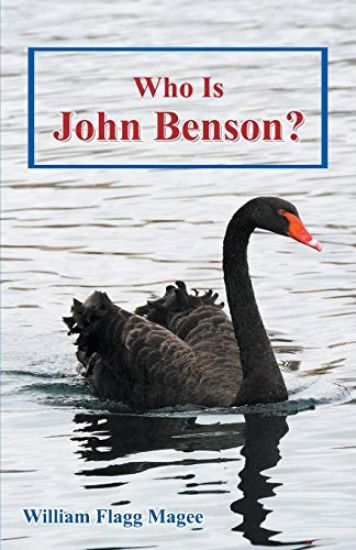
Who Is John Benson?

Who Is John Benson?

William Flagg Magee

Strategic Book Publishing Rights Agency, LLC
2017
pokkari
Who Is John Benson? He walks with death on his mind, as he mourns the tragic passing of his wife Mimi. Grieving for his wife of thirty years, John Benson's life takes a turn he never could have imagined.A photojournalist, John is offered a job taking photos of an oasis owned by a wealthy Middle Eastern sheik. But it turns out the sheik is hatching a diabolical plot that will kill millions.Seduced by two women, one a Mossad agent, and the other a CIA agent, his life is turned upside down.John turns into a warrior for justice. As for the sheik? A Mossad agent brought out of retirement will try to dissuade him from his bioterrorism scheme. This exhilarating thriller will keep readers guessing until the very end.William Flagg Magee was born in Reno, Nevada. His interest in writing began when he was a student at The University of Nevada, Reno, but he finally answered his life's calling in his mid-sixties and has never looked back. Magee also published The Elephant Hunter, as well as Dark Chaos/Dealer's Choice (under the pseudonym Montague Flagg). The author and his wife live in Dallas, Texas, and have two grown sons.Publisher's website: http: //sbprabooks.com/WilliamFlaggMagee
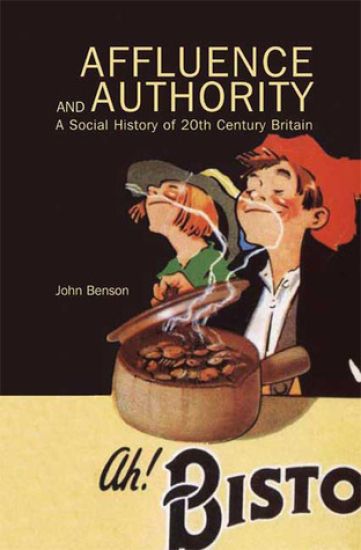
Affluence and Authority

Affluence and Authority

John Benson

Hodder Arnold
2005
nidottu
The turn of the millennium generated a spate of reflections on the state of the nation and the ways in which life in Britain had changed during the course of the twentieth century. "Affluence and Authority" contributes to this debate by providing a wide-ranging, well-informed and accessible interpretation of British social history during a hundred years of profound, and almost certainly unprecedented, economic, political, cultural, demographic and ideological change.
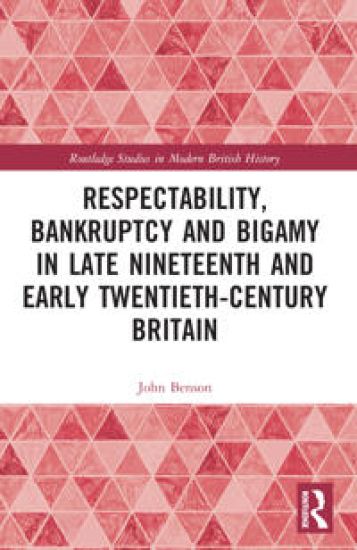
Respectability, Bankruptcy and Bigamy in Late Nineteenth- and Early Twentieth-Century Britain
Respectability, Bankruptcy and Bigamy in Late Nineteenth and Early Twentieth-Century Britain explores the vexed question of middle-class respectability in Victorian and Edwardian Britain. It focuses upon the life of London solicitor Hamilton Pawley (1860–1936), who was barred from working by the Law Society, twice declared bankrupt, and in 1919 was sentenced to eighteen months’ imprisonment with hard labour for bigamously marrying a woman practically forty years his junior. If Pawley did not suffer the revenge of respectable society, it is difficult to think who would.Drawing upon the fact that the disgraced and the disreputable have always tended to attract a disproportionate amount of attention, the book ranges widely, exploring such important issues as middle-class education, career choices, the dynamics of family life, and the workings of the late nineteenth and early twentieth-century legal system. It shows that Pawley was able to hold on to his professional – and even gentlemanly – status for far longer than seemed likely. This all suggests, the book concludes, that although respectability was as important to the middle class as we have always been told, it was both easier to acquire and easier to retain than we have generally been led to believe.This book will appeal to all those interested in British society in the late nineteenth and early twentieth centuries.
Respectability, Bankruptcy and Bigamy in Late Nineteenth- and Early Twentieth-Century Britain
Respectability, Bankruptcy and Bigamy in Late Nineteenth and Early Twentieth-Century Britain explores the vexed question of middle-class respectability in Victorian and Edwardian Britain. It focuses upon the life of London solicitor Hamilton Pawley (1860–1936), who was barred from working by the Law Society, twice declared bankrupt, and in 1919 was sentenced to eighteen months’ imprisonment with hard labour for bigamously marrying a woman practically forty years his junior. If Pawley did not suffer the revenge of respectable society, it is difficult to think who would.Drawing upon the fact that the disgraced and the disreputable have always tended to attract a disproportionate amount of attention, the book ranges widely, exploring such important issues as middle-class education, career choices, the dynamics of family life, and the workings of the late nineteenth and early twentieth-century legal system. It shows that Pawley was able to hold on to his professional – and even gentlemanly – status for far longer than seemed likely. This all suggests, the book concludes, that although respectability was as important to the middle class as we have always been told, it was both easier to acquire and easier to retain than we have generally been led to believe.This book will appeal to all those interested in British society in the late nineteenth and early twentieth centuries.
Environmental Ethics

Environmental Ethics

John Benson

Routledge
2000
sidottu
Presupposing no prior knowledge of philosophy, John Benson introduces the fundamentals of environmental ethics by asking whether a concern with human well-being is an adequate basis for environmental ethics. He encourages the reader to explore this question, considering techniques used to value the environment and critically examining 'light green' to 'deep green' environmentalism. Each chapter is linked to a reading from a key thinker such as J.S. Mill and E.O. Wilson. Key features include activities and exercises, enabling readers to monitor their progress throughout the book, chapter summaries and guides to further reading.
Environmental Ethics

Environmental Ethics

John Benson

Routledge
2000
nidottu
Presupposing no prior knowledge of philosophy, John Benson introduces the fundamentals of environmental ethics by asking whether a concern with human well-being is an adequate basis for environmental ethics. He encourages the reader to explore this question, considering techniques used to value the environment and critically examining 'light green' to 'deep green' environmentalism. Each chapter is linked to a reading from a key thinker such as J.S. Mill and E.O. Wilson. Key features include activities and exercises, enabling readers to monitor their progress throughout the book, chapter summaries and guides to further reading.
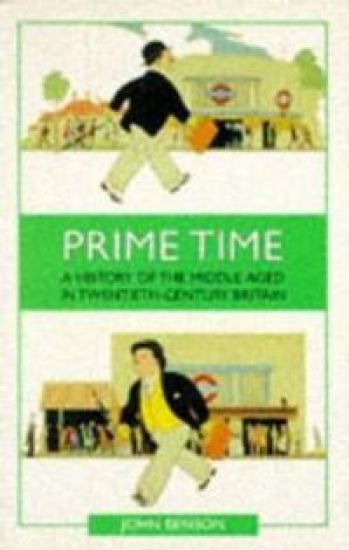
Prime Time

Prime Time

John Benson

Routledge
1997
nidottu
Numerous studies consider the history of childhood, adolescence and old age, yet the middle aged, consistently the most productive and powerful of age groups have been consistently ignored. In this pioneering study John Benson considers how perceptions and experience of middle age have changed, and how its power-base has diminished, affected by the steady ageing of the population the increasing independence of the yound and growing economic insecurity. This thought-provoking study also illuminates the whole economic, social and cultural history of twentieth-century Britain.
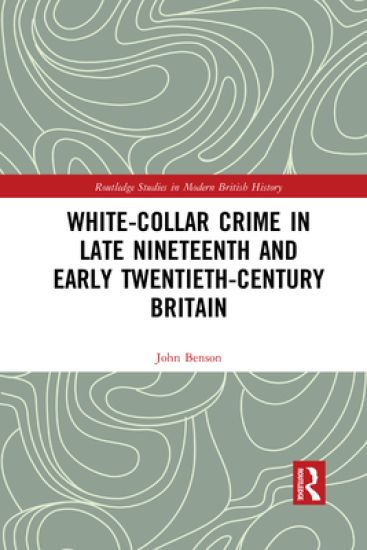
White-Collar Crime in Late Nineteenth and Early Twentieth-Century Britain
This book throws new light on white-collar crime, criminals and criminality in late nineteenth and early twentieth-century Britain. It does so by considering the life of one man, Jesse Varley (1869–1929), who embezzled more than £80,000 from Wolverhampton Corporation, and for a decade and more enjoyed an ostentatiously extravagant lifestyle. He was discovered, and despite serving a period of penal servitude, he turned again to white-collar crime (this time in Sheffield). Sentenced again to penal servitude, he died a few years later in Liverpool in what were said to be 'very poor circumstances'.
White-Collar Crime in Late Nineteenth and Early Twentieth-Century Britain
This book throws new light on white-collar crime, criminals and criminality in late nineteenth and early twentieth-century Britain. It does so by considering the life of one man, Jesse Varley (1869–1929), who embezzled more than £80,000 from Wolverhampton Corporation, and for a decade and more enjoyed an ostentatiously extravagant lifestyle. He was discovered, and despite serving a period of penal servitude, he turned again to white-collar crime (this time in Sheffield). Sentenced again to penal servitude, he died a few years later in Liverpool in what were said to be 'very poor circumstances'.
Gerald Howard-Smith and the ‘Lost Generation’ of Late Victorian and Edwardian England
Gerald Howard-Smith’s life is intriguing both in its own right and as a vehicle for exploring the world in which he lived. Tall, boisterous and sometimes rather irascible, he was one of the so-called ‘Lost Generation’ whose lives were cut short by the First World War. Brought up in London, and educated at Eton and Cambridge, he excelled both at cricket and athletics. After qualifying as a solicitor he moved to Wolverhampton and threw himself into the local sporting scene, making a considerable name for himself in the years before the First World War. Volunteering for military service in 1914, he was decorated for bravery before being killed in action two years later. Reporting his death, the War History of the South Staffordshire Regiment claimed that, ‘In his men’s eyes he lived as a loose-limbed hero, and in him they lost a very humorous and a very gallant gentleman.’As well as telling the fascinating story of Gerald Howard-Smith for the first time, this important new biography explores such complex and important issues as childhood and adolescence, class relations, sporting achievement, manliness and masculinity, metropolitan-provincial relationships, and forms of commemoration. It will therefore be of interest to educationalists, sports historians, local and regional historians, and those interested in class, gender and civilian-military relations – indeed all those seeking to understand the economic, social, and cultural life of late nineteenth and early twentieth-century Britain.