Kirjojen hintavertailu. Mukana 11 244 527 kirjaa ja 12 kauppaa.

Kirjahaku

Etsi kirjoja tekijän nimen, kirjan nimen tai ISBN:n perusteella.

1000 tulosta hakusanalla John Beston

Patrick White Within the Western Literary Tradition

Patrick White Within the Western Literary Tradition

John Beston

Sydney University Press
2010
nidottu
Patrick White within the Western Literary Tradition is a collection of essays demonstrating the strong influence of European, British, and American cultures on White's work. Representing the author's interest spanning over thirty-five years, the essays expose White's evocation of dimensions other than material reality, his preoccupation with epiphanies and mythmaking, and his constant forging of a poetic style. The book also contains a series of analytical studies of the themes and characters in White's major novels (The Aunt's Story, The Tree of Man and Voss).
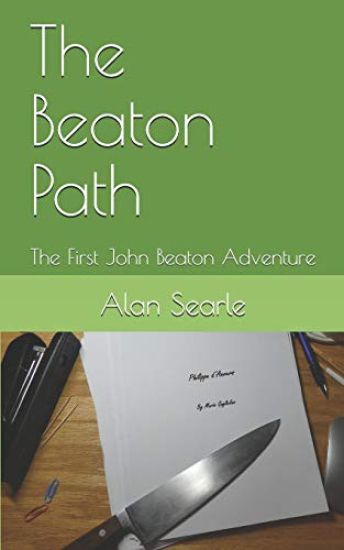
The Beaton Path: The First John Beaton Adventure

The Beaton Path: The First John Beaton Adventure

Alan Searle

Independently Published
2017
nidottu
John Beaton was not having a good day, and it only got worse after an event in a parking garage when he was almost killed. Four years later he thought he'd put the events behind him, but a chance encounter on the day of his retirement party makes him realize nothing is resolved. He begins to investigate what happened and discovers more than he bargained for. Does the tale of French treasure related by a disabled nursing home resident have any validity?Are there people really that evil?The story takes him from Washington State to Bulgaria and Belarus, as he unravels the truth behind a two-hundred-year-old tale of Napoleonic gold, and the modern day criminals who want it for themselves.
Beaton Again: The Third John Beaton Adventure

Beaton Again: The Third John Beaton Adventure

Alan Searle

Independently Published
2019
nidottu
It's February in the Pacific North West and John Beaton doesn't like it. He likes it even less when his Aunt Olly is taken ill and he has to fly to Wales to help her - "no matter how cold, wet and windy it is Washington State, it'll be colder, wetter and windier in Wales". He survives his week there, but on the eve of his departure he has a chance encounter in a fish and chip shop which makes him a person of interest to both the British Security Service and a ruthless killer. Pulled back again to Wales, John and his wife Ann are thrust into an adventure where it looks like neither will survive.The story moves from Wales, to Florida, to Paris and a final confrontation near Italy's Adriatic Coast.
Beaton Back: The Second John Beaton Adventure

Beaton Back: The Second John Beaton Adventure

Alan Searle

Independently Published
2019
nidottu
John Beaton was not brought up in the US political system, so when a friend asks him to help with a election campaign he hopes he will learn a little more how it works. After all, his vote counts - doesn't it? And he knows his political choices are independent and rational - aren't they? And just how many members of Congress are being blackmailed? Once again, John is drawn into events and intrigue out his control and ends up fighting for his life.
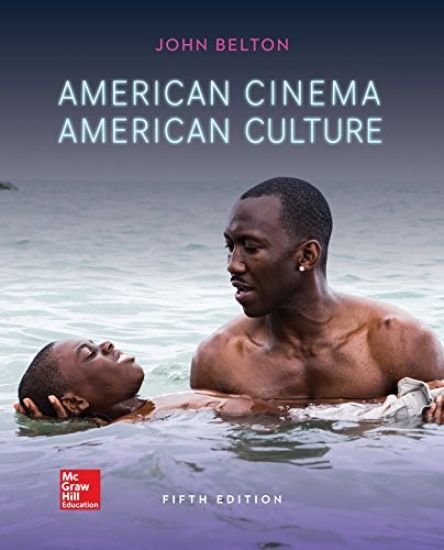
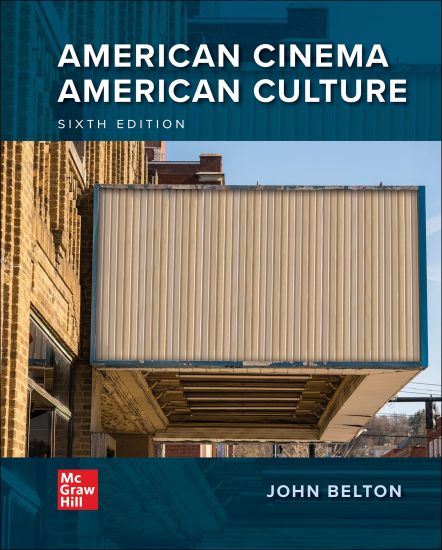
American Cinema/American Culture

American Cinema/American Culture

John Belton

McGraw-Hill Professional
2018
nidottu
American Cinema/American Culture, 5th Edition, looks at the interplay between American cinema and mass culture from the 1890s to 2017. Students are introduced to the cultural history of film focusing on topics and issues rather than on rote learning. This introduction to American Cinema is ideal for introductory courses of American cinema, American film history courses, and introductory film appreciation courses. The text provides a cultural overview of the phenomenon of the American moviegoing experience, engagingly written in a lively and entertaining style by John Belton, a preeminent scholar in the field of film studies.
Widescreen Cinema

Widescreen Cinema

John Belton

Harvard University Press
1992
sidottu
"Ladies and gentlemen: THIS IS CINERAMA." With these words, on September 30, 1952, the heavy red curtains in New York's Broadway Theatre opened on a panoramic Technicolor image of the Rockaways Playland Atom-Smasher Roller Coaster--and moviegoers were abruptly plunged into a new and revolutionary experience. The cinematic transformation heralded by this giddy ride was, however, neither as sudden nor as straightforward as it seemed. "Widescreen Cinema" leads us through the twists and turns and decades it took for film to change its shape and, along the way, shows how this fitful process reflects the vagaries of cultural history. Widescreen and wide-film processes had existed since the 1890s. Why, then, John Belton asks, did 35mm film become a standard? Why did a widescreen revolution fail in the 1920s but succeed in the 1950s? And why did movies shrink again in the 1960s, leaving us with the small screen multiplexes and mall cinemas that we know today? The answers, he discovers, have as much to do with popular notions of leisure time and entertainment as with technology. Beginning with film's progress from peepshow to projection in 1896 and focusing on crucial stages in film history, such as the advent of sound, Belton puts widescreen cinema into its proper cultural context. He shows how Cinerama, CinemaScope, Vista Vision, Todd-AO, and other widescreen processes marked significant changes in the conditions of spectatorship after World War 11 -and how the film industry itself sought to redefine those conditions. The technical, the economic, the social, the aesthetic -every aspect of the changes shaping and reshaping film comes under Belton's scrutiny as he reconstructs the complex history of widescreen cinema and relates this history to developments in mass-produced leisure-time entertainment in the twentieth century. Highly readable even at its most technical, this book illuminates a central episode in the evolution of cinema and, in doing so, reveals a great deal about the shifting fit between film and society.
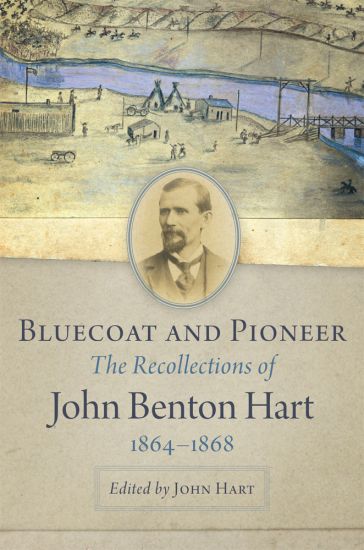
Bluecoat and Pioneer

Bluecoat and Pioneer

John Benton Hart

University of Oklahoma Press
2019
sidottu
In 1918, urged on by his son Harry, John Benton Hart began to tell stories of a three-year period in his youth. He recalled his days as a trooper in the Eleventh Kansas Cavalry, fighting in Missouri and on the frontier, and his time as a civilian jack-of-all-trades doing risky work for the U.S. Army on the Wyoming-Montana Bozeman Trail in the middle of the Indian resistance campaign known as Red Cloud's War. Once started, John Benton Hart became an enthusiastic raconteur, describing events with an almost cinematic vividness, while his son, an aspiring writer, documented his father's testimony in what became several manuscripts. Compiled and reproduced here, edited by historian John Hart, John Benton Hart's great-grandson, this memoir is a singular document of living history. As a young Kansas cavalryman, John Benton Hart participated in two momentous episodes of the Civil War era - Sterling Price's Missouri Expedition of 1864, including the Battle of Westport, and such engagements in the Plains Indian Wars as the Battle of Platte Bridge in July 1865 and the Hayfield Fight near Fort C. F. Smith in 1867. In the engaging style of a natural storyteller, Hart re-creates these events as he experienced them, giving readers a rare glimpse at moments of historical import from the point of view of the ""ordinary"" soldier. In arresting detail, he also tells of crossing the Plains as a bullwhacker, carrying the mail between the beleaguered forts on the Bozeman Trail, and befriending scout Jim Bridger and Mountain Crow Chief Blackfoot. Framed and supplemented with the editor's biographical, historical, and explanatory notes, Hart's memoir offers a new perspective on events long fixed in the historical imagination. As history writ large or on a personal scale, Bluecoat and Pioneer tells a remarkable story.
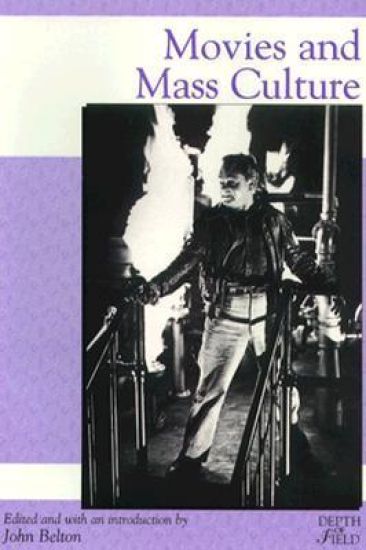
Movies & Mass Culture

Movies & Mass Culture

John Belton

Rutgers University Press
1995
nidottu
Movies and Mass Culture looks at the ways in which American identity shapes and is shaped by motion pictures. Movies serve not only as texts that document who we think we are or were, but they also reflect changes in our self-image, tracing the transformation from one kind of America to another. They assist audiences in negotiating major changes in identity, carrying them across difficult periods of cultural transition so that a more or less coherent national identity again emerges. Films thus help their viewers to span the gaps and fissures that cultural changes cause, allowing passage over any disjointedness that in some way might disrupt our sense of what we believe in as a nation. This volume examines this process, illustrating the ways in which films aided America's transition from an agrarian to an industrial economy; from a nation of producers to one of consumers; and from a community of individuals to a mass society.
American Cinema/American Culture: 2025 Release ISE
American Cinema/American Culture introduces the reader to basic issues related to the phenomenon of American cinema. It looks at American film history from the 1890s through today, but it does not always explore this history in a purely chronological way. In fact, it is not (strictly speaking) a history. Rather, it is a cultural history, which focuses more on topics and issues than on what happened when. American Cinema/American Culture reflects the crucial role movies play in the process of identity-formation. Films not only serve as texts that document who we think we are or were, they also reflect changes in the nation’s self-image, tracing the transformation from one kind of America to another.
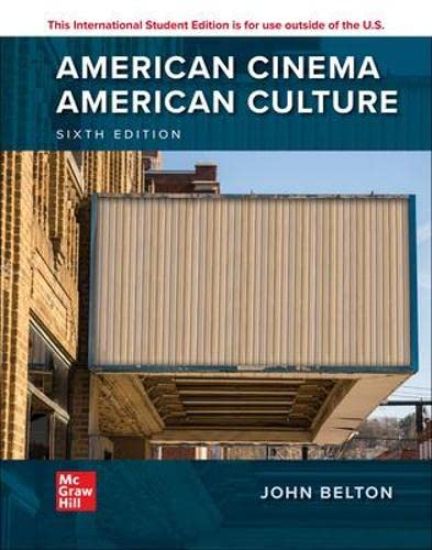
American Cinema/American Culture ISE

American Cinema/American Culture ISE

John Belton

McGraw-Hill Education
2021
nidottu
American Cinema/American Culture introduces the reader to basic issues related to the phenomenon of American cinema. It looks at American film history from the 1890s through today, but it does not always explore this history in a purely chronological way. In fact, it is not (strictly speaking) a history. Rather, it is a cultural history, which focuses more on topics and issues than on what happened when. American Cinema/American Culture plays a crucial role in the process of identity-formation. Films not only serve as texts that document who we think we are or were, but they also reflect changes in our self-image, tracing the transformation from one kind of America to another.