Kirjojen hintavertailu. Mukana 11 342 296 kirjaa ja 12 kauppaa.

Kirjahaku

Etsi kirjoja tekijän nimen, kirjan nimen tai ISBN:n perusteella.

1000 tulosta hakusanalla John Borrows

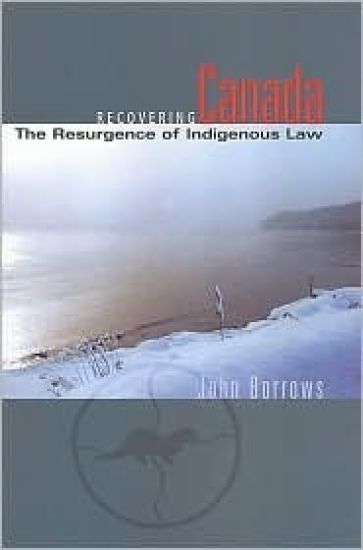
Recovering Canada

Recovering Canada

John Borrows

University of Toronto Press
2002
pokkari
Canada is covered by a system of law and governance that largely obscures and ignores the presence of pre-existing Indigenous regimes. Indigenous law, however, has continuing relevance for both Aboriginal peoples and the Canadian state. In his in-depth examination of the continued existence and application of Indigenous legal values, John Borrows suggests how First Nations laws could be applied by Canadian courts, and tempers this by pointing out the many difficulties that would occur if the courts attempted to follow such an approach. By contrasting and comparing Aboriginal stories and Canadian case law, and interweaving political commentary, Borrows argues that there is a better way to constitute Aboriginal / Crown relations in Canada. He suggests that the application of Indigenous legal perspectives to a broad spectrum of issues that confront us as humans will help Canada recover from its colonial past, and help Indigenous people recover their country. Borrows concludes by demonstrating how Indigenous peoples' law could be more fully and consciously integrated with Canadian law to produce a society where two world views can co-exist and a different vision of the Canadian constitution and citizenship can be created.
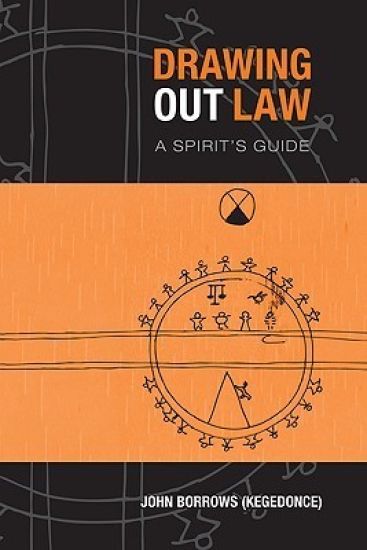
Drawing Out Law

Drawing Out Law

John Borrows

University of Toronto Press
2010
pokkari
The Anishinabek Nation's legal traditions are deeply embedded in many aspects of customary life. In Drawing Out Law, John Borrows (Kegedonce) skillfully juxtaposes Canadian legal policy and practice with the more broadly defined Anishinabek perception of law as it applies to community life, nature, and individuals. This innovative work combines fictional and non-fictional elements in a series of connected short stories that symbolize different ways of Anishinabek engagement with the world. Drawing on oral traditions, pictographic scrolls, dreams, common law case analysis, and philosophical reflection, Borrows' narrative explores issues of pressing importance to the future of indigenous law and offers readers new ways to think about the direction of Canadian law. Shedding light on Canadian law and policy as they relate to Indigenous peoples, Drawing Out Law illustrates past and present moral agency of Indigenous peoples and their approaches to the law and calls for the renewal of ancient Ojibway teaching in contemporary circumstances. This is a major work by one of Canada's leading legal scholars, and an essential companion to Canada's Indigenous Constitution.
Canada's Indigenous Constitution

Canada's Indigenous Constitution

John Borrows

University of Toronto Press
2010
pokkari
Canada's Indigenous Constitution reflects on the nature and sources of law in Canada, beginning with the conviction that the Canadian legal system has helped to engender the high level of wealth and security enjoyed by people across the country. However, longstanding disputes about the origins, legitimacy, and applicability of certain aspects of the legal system have led John Borrows to argue that Canada's constitution is incomplete without a broader acceptance of Indigenous legal traditions. With characteristic richness and eloquence, John Borrows explores legal traditions, the role of governments and courts, and the prospect of a multi-juridical legal culture, all with a view to understanding and improving legal processes in Canada. He discusses the place of individuals, families, and communities in recovering and extending the role of Indigenous law within both Indigenous communities and Canadian society more broadly. This is a major work by one of Canada's leading legal scholars, and an essential companion to Drawing Out Law: A Spirit's Guide.
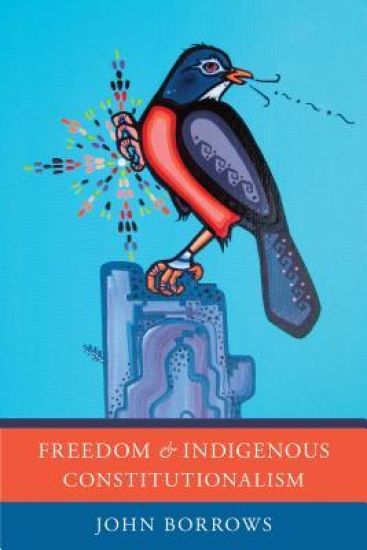
Freedom and Indigenous Constitutionalism

Freedom and Indigenous Constitutionalism

John Borrows

University of Toronto Press
2016
pokkari
Indigenous traditions can be uplifting, positive, and liberating forces when they are connected to living systems of thought and practice. Problems arise when they are treated as timeless models of unchanging truth that require unwavering deference and unquestioning obedience. Freedom and Indigenous Constitutionalism celebrates the emancipatory potential of Indigenous traditions, considers their value as the basis for good laws and good lives, and critiques the failure of Canadian constitutional traditions to recognize their significance. Demonstrating how Canada’s constitutional structures marginalize Indigenous peoples’ ability to exercise power in the real world, John Borrows uses Ojibwe law, stories, and principles to suggest alternative ways in which Indigenous peoples can work to enhance freedom. Among the stimulating issues he approaches are the democratic potential of civil disobedience, the hazards of applying originalism rather than living tree jurisprudence in the interpretation of Aboriginal and treaty rights, American legislative actions that could also animate Indigenous self-determination in Canada, and the opportunity for Indigenous governmental action to address violence against women.
Law's Indigenous Ethics

Law's Indigenous Ethics

John Borrows

University of Toronto Press
2019
pokkari
Law’s Indigenous Ethics examines the revitalization of Indigenous peoples’ relationship to their own laws and, in so doing, attempts to enrich Canadian constitutional law more generally. Organized around the seven Anishinaabe grandmother and grandfather teachings of love, truth, bravery, humility, wisdom, honesty, and respect, this book explores ethics in relation to Aboriginal issues including title, treaties, legal education, and residential schools. With characteristic depth and sensitivity, John Borrows brings insights drawn from philosophy, law, and political science to bear on some of the most pressing issues that arise in contemplating the interaction between Canadian state law and Indigenous legal traditions. In the course of a wide-ranging but accessible inquiry, he discusses such topics as Indigenous agency, self-determination, legal pluralism, and power. In its use of Anishinaabe stories and methodologies drawn from the emerging field of Indigenous studies, Law’s Indigenous Ethics makes a significant contribution to scholarly debate and is an essential resource for readers seeking a deeper understanding of Indigenous rights, societies, and cultures.
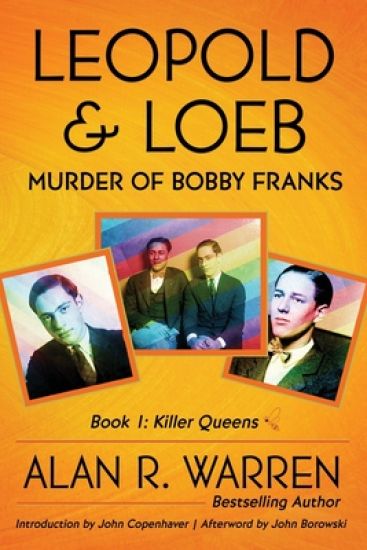
Leopold & Loeb

Leopold & Loeb

John Borrowski; John Copenhaver; Alan R Warren

House of Mystery Publishing
2021
pokkari
The Killer Queens is a new series of historical fiction books based on true stories. Sources, such as police reports and newspaper articles, are examined to gather as many facts as possible surrounding each case. As with any work of fiction, some creative additions are made when telling these stories, usually within the conversations between the personalities involved. The various sources are the basis of these conversations and hopefully, make them come alive for the readers to help understand what was meant by those words.Book 1 of the series focuses on what has been called "The Crime of the Century" in 1920s United States. At the center of this murder case were Nathan Leopold Jr. and Richard Loeb - two wealthy University of Chicago students who, in May of 1924, kidnapped and murdered 14-year-old Bobby Franks. With Leopold and Loeb, both males, the dominance shifted from one to the other. Regardless of who held it, the result was the same. They were both very interested in crime and pushing the envelope for the next thrill. The vicious "thrill kill" of Bobby Franks was the bloody result of an intense and unhealthy co-dependent bond between the murdering duo. As you read the exploration of the case in this book, ask yourself: Would these young men be as vulnerable to their manipulations today? If they couldn't have harnessed and used shame as a control tactic, would they have been as successful at recruiting a criminal counterpart? Finally, to what degree can we hold the prevalent homophobia of this era accountable as a force to bear on this tragedy?
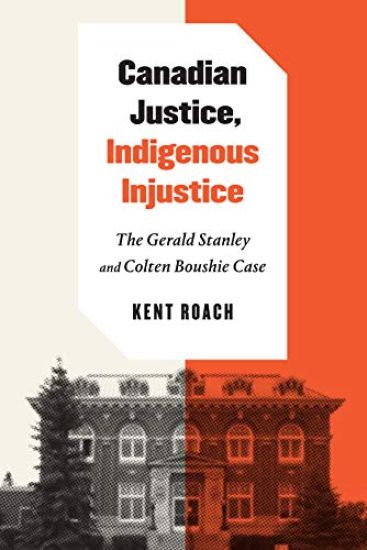
Canadian Justice, Indigenous Injustice

Canadian Justice, Indigenous Injustice

Kent Roach; John Borrows

MCGILL-QUEEN'S UNIVERSITY PRESS
2022
nidottu
In August 2016 Colten Boushie, a twenty-two-year-old Cree man from Red Pheasant First Nation, was fatally shot on a Saskatchewan farm by white farmer Gerald Stanley. In a trial that bitterly divided Canadians, Stanley was acquitted of both murder and manslaughter by a jury in Battleford with no visible Indigenous representation. In Canadian Justice, Indigenous Injustice Kent Roach critically reconstructs the Gerald Stanley/Colten Boushie case to examine how it may be a miscarriage of justice. Roach provides historical, legal, political, and sociological background to the case including misunderstandings over crime when Treaty 6 was negotiated, the 1885 hanging of eight Indigenous men at Fort Battleford, the role of the RCMP, prior litigation over Indigenous underrepresentation on juries, and the racially charged debate about defence of property, self-defence, guns, and rural crime. Drawing on both trial transcripts and research on miscarriages of justice, Roach looks at jury selection, the controversial "hang fire" defence, how the credibility and beliefs of Indigenous witnesses were challenged on the stand, and Gerald Stanley's implicit appeals to self-defence and defence of property, as well as the decision not to appeal the acquittal. Concluding his study, Roach asks whether Prime Minister Justin Trudeau's controversial call to "do better" is possible, given similar cases since Stanley's, the difficulty of reforming the jury or the RCMP, and the combination of Indigenous underrepresentation on juries and overrepresentation among those victimized and accused of crimes. Canadian Justice, Indigenous Injustice is a searing account of one case that provides valuable insight into criminal justice, racism, and the treatment of Indigenous peoples in Canada.
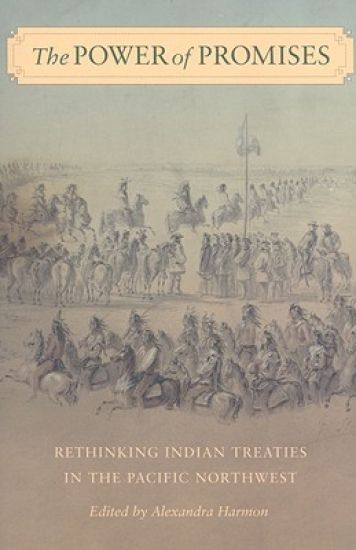
The Power of Promises

The Power of Promises

Alexandra Harmon; John Borrows

University of Washington Press
2009
sidottu
Treaties with Native American groups in the Pacific Northwest have had profound and long-lasting implications for land ownership, resource access, and political rights in both the United States and Canada. In The Power of Promises, a distinguished group of scholars, representing many disciplines, discuss the treaties' legacies.In North America, where treaties have been employed hundreds of times to define relations between indigenous and colonial societies, many such pacts have continuing legal force, and many have been the focus of recent, high-stakes legal contests. The Power of Promises shows that Indian treaties have implications for important aspects of human history and contemporary existence, including struggles for political and cultural power, law's effect on people's self-conceptions, the functions of stories about the past, and the process of defining national and ethnic identities.
The Power of Promises

The Power of Promises

Alexandra Harmon; John Borrows

University of Washington Press
2008
pokkari
Treaties with Native American groups in the Pacific Northwest have had profound and long-lasting implications for land ownership, resource access, and political rights in both the United States and Canada. In The Power of Promises, a distinguished group of scholars, representing many disciplines, discuss the treaties' legacies.In North America, where treaties have been employed hundreds of times to define relations between indigenous and colonial societies, many such pacts have continuing legal force, and many have been the focus of recent, high-stakes legal contests. The Power of Promises shows that Indian treaties have implications for important aspects of human history and contemporary existence, including struggles for political and cultural power, law's effect on people's self-conceptions, the functions of stories about the past, and the process of defining national and ethnic identities.
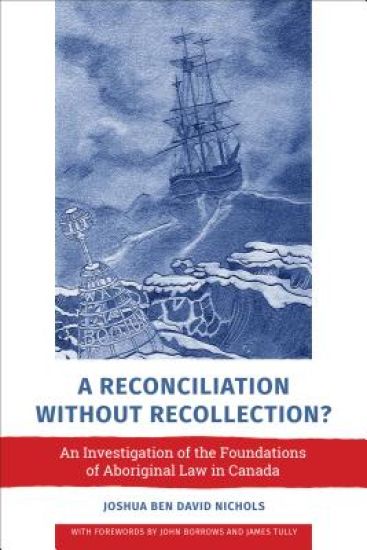
A Reconciliation Without Recollection?

A Reconciliation Without Recollection?

Joshua Nichols; John Borrows; James Tully

University of Toronto Press
2019
pokkari
The current framework for reconciliation between Indigenous peoples and the Canadian state is based on the Supreme Court of Canada’s acceptance of the Crown’s assertion of sovereignty, legislative power, and underlying title. The basis of this assertion is a long-standing interpretation of Section 91(24) of Canada’s Constitution, which reads it as a plenary grant of power over Indigenous communities and their lands, leading the courts to simply bypass the question of the inherent right of self-government. In A Reconciliation without Recollection?, Joshua Ben David Nichols argues that if we are to find a meaningful path toward reconciliation, we will need to address the history of sovereignty without assuming its foundations. Exposing the limitations of the current model, Nichols carefully examines the lines of descent and association that underlie the legal conceptualization of the Aboriginal right to govern. Blending legal analysis with insights drawn from political theory and philosophy, A Reconciliation without Recollection? is an ambitious and timely intervention into one of the most pressing concerns in Canada.
Breathing Life Into the Stone Fort Treaty

Breathing Life Into the Stone Fort Treaty

Aimée Craft; John Borrows

Purich Publishing
2013
pokkari
In order to interpret and implement a treaty between the Crown and Canada's First Nations, we must look to its spirit and intent, and consider what was contemplated by the parties at the time the treaty was negotiated, argues Aimée Craft. Using a detailed analysis of Treaty One – today covering what is southern Manitoba – she illustrates how negotiations were defined by Anishinabe laws (inaakonigewin), which included the relationship to the land, the attendance of all jurisdictions' participants, and the rooting of the treaty relationship in kinship. While the focus of this book is on Treaty One, Anishinabe laws (inaakonigewin) defined the settler-Anishinabe relationship well before this, and the principles of interpretation apply equally to all treaties with First Nations.
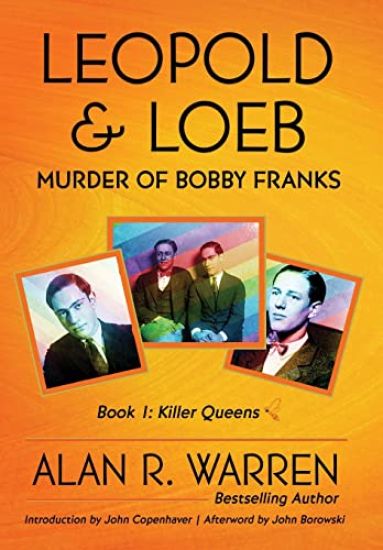
Leopold & Loeb

Leopold & Loeb

Alan R Warren; John Borrowski; John Copenhaver

Alan R Warren
2022
sidottu
The Killer Queens is a new series of historical fiction books based on true stories. Sources, such as police reports and newspaper articles, are examined to gather as many facts as possible surrounding each case. As with any work of fiction, some creative additions are made when telling these stories, usually within the conversations between the personalities involved. The various sources are the basis of these conversations and hopefully, make them come alive for the readers to help understand what was meant by those words.Book 1 of the series focuses on what has been called "The Crime of the Century" in 1920s United States. At the center of this murder case were Nathan Leopold Jr. and Richard Loeb - two wealthy University of Chicago students who, in May of 1924, kidnapped and murdered 14-year-old Bobby Franks.With Leopold and Loeb, both males, the dominance shifted from one to the other. Regardless of who held it, the result was the same. They were both very interested in crime and pushing the envelope for the next thrill. The vicious "thrill kill" of Bobby Franks was the bloody result of an intense and unhealthy co-dependent bond between the murdering duo.As you read the exploration of the case in this book, ask yourself: Would these young men be as vulnerable to their manipulations today? If they couldn't have harnessed and used shame as a control tactic, would they have been as successful at recruiting a criminal counterpart? Finally, to what degree can we hold the prevalent homophobia of this era accountable as a force to bear on this tragedy?
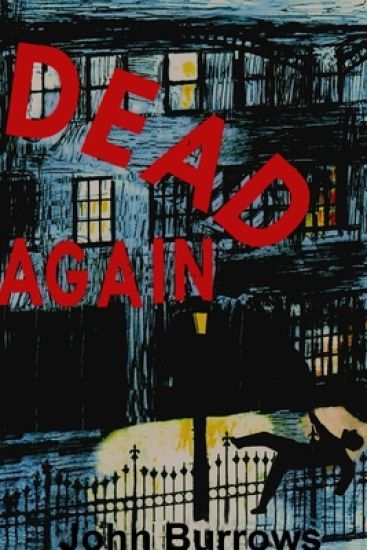
Dead Again

Dead Again

John Burrows

Lulu Press Inc
2014
nidottu
When Cobb's friend dies by suicide the police say that it is an open and shut case, but Cobb is far from satisfied. He follows his nose and a few psychic intuitions, and what was a simple suicide turns into a series of devilish crimes. Cobb tears himself away from his university lecturing and follows a very dangerous course to put all the clues together. He ends up asking himself the question "how can a dead man have committed these crimes?" It is a very traumatic time in Cobb's life. Not only does he escape death by a hair's breadth, he finds himself having a passionate but loving relationship with a younger woman
Dead Again 2 (the Sequel)

Dead Again 2 (the Sequel)

John Burrows

Lulu Press Inc
2014
nidottu
Cobb finds it difficult to go on. Though he finally brought an end to Kyle, he also lost the meaning to his life. He returns to his university lecturing 'to keep his head on straight' but allows himself to dwell in the past, a time when every day brought new miracles. Now, there could be no more miracles - or could there? Trouble has a way of finding Cobb and it is a strange route he follows, and a number of attempts on his life, before he realizes what is going on. I hope that you have read DEAD AGAIN before reading this sequel since some important events carry over from one to the other. I would appreciate it, too, if you did not disclose the revelations in the early chapters of this book
Dead Again

Dead Again

John Burrows

Lulu Press Inc
2014
sidottu
When Cobb's friend dies by suicide the police say that it is an open and shut case, but Cobb is far from satisfied. He follows his nose and a few psychic intuitions, and what was a simple suicide turns into a series of devilish crimes. Cobb tears himself away from his university lecturing and follows a very dangerous course to put all the clues together. He ends up asking himself the question "how can a dead man have committed these crimes?" It is a very traumatic time in Cobb's life. Not only does he escape death by a hair's breadth, he finds himself having a passionate but loving relationship with a younger woman
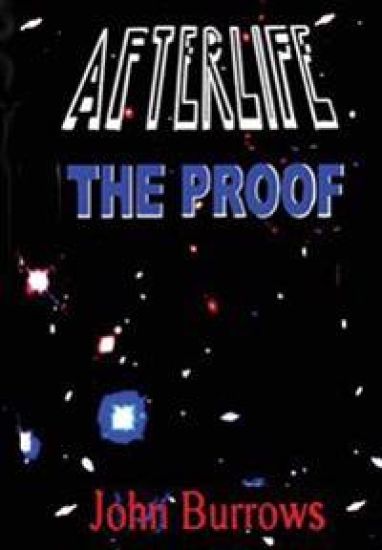
Afterlife - the Proof

Afterlife - the Proof

John Burrows

Lulu.com
2015
nidottu
The afterlife really does exist. There is an enormous amount of evidence proving that it is so. It has been by confirmed by professors, scientists, doctors, lawyers and even converted sceptics. Some of the more convincing evidence comes from the Scole experiments, cross-correspondence, and solid materializations All of the evidence proves that the personality lives on and that when we die we will meet our loved ones again. We should all look forward to that day. And although there are no churches or religions there, I hope that, like me, it brings you peace of mind. Have a good life
Afterlife - the Proof

Afterlife - the Proof

John Burrows

Lulu.com
2015
sidottu
The afterlife really does exist. There is an enormous amount of evidence proving that it is so. It has been by confirmed by professors, scientists, doctors, lawyers and even converted sceptics. Some of the more convincing evidence comes from the Scole experiments, cross-correspondence, and solid materializations All of the evidence proves that the personality lives on and that when we die we will meet our loved ones again. We should all look forward to that day. And although there are no churches or religions there, I hope that, like me, it brings you peace of mind. Have a good life.