Kirjojen hintavertailu. Mukana 11 627 220 kirjaa ja 12 kauppaa.

Kirjahaku

Etsi kirjoja tekijän nimen, kirjan nimen tai ISBN:n perusteella.

1000 tulosta hakusanalla John Bowes

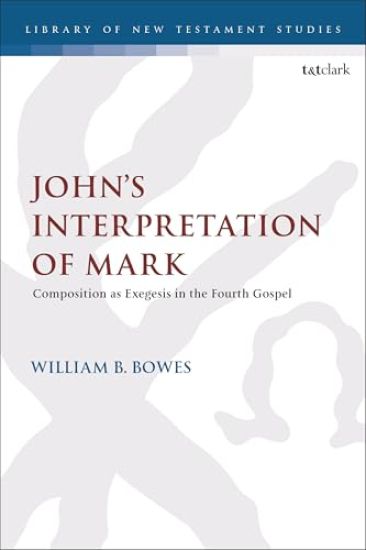
John’s Interpretation of Mark

John’s Interpretation of Mark

William B. Bowes

BLOOMSBURY PUBLISHING PLC
2026
sidottu
William B. Bowes investigates the Fourth Gospel as a creative reworking of Mark, situating John within the vibrant literary culture of late Second Temple Judaism. Rather than treating John as an isolated voice, Bowes argues that the Evangelist adopts compositional practices akin to Jewish texts categorized as Rewritten Scripture—works that extend authoritative tradition through interpretive rewriting. This approach reframes John not as independent but as an inspired interpreter who reshapes Mark for a later context and audience. Bowes begins by reviewing scholarly paradigms on John’s use of Mark and mapping these against Jewish methods of source reuse. Bowes then offers five detailed case studies comparing Johannine episodes with their Markan counterparts and with analogous Jewish texts. These include John 1’s portrayal of John the Baptist alongside Jubilees 1; the Temple disturbance in John 2 with Mark 11 and the Temple Scroll; the feeding of the five thousand in John 6 with Mark 6 and the Genesis Apocryphon; the Bethany anointing in John 12 with Mark 14 and Philo’s De Vita Mosis; and the Roman trial narrative in John 18–19 with Mark 15 and Josephus’ Jewish Antiquities. Through these comparisons, Bowes demonstrates how John employs additions, omissions, rearrangements, and theological reframing, all techniques characteristic of Jewish exegetical rewriting. By situating John’s Gospel within this Jewish literary milieu, Bowes illuminates its compositional logic and interpretive purpose, offering a fresh paradigm for understanding the origins of the Fourth Gospel and its complex interplay of similarity and difference with Mark.
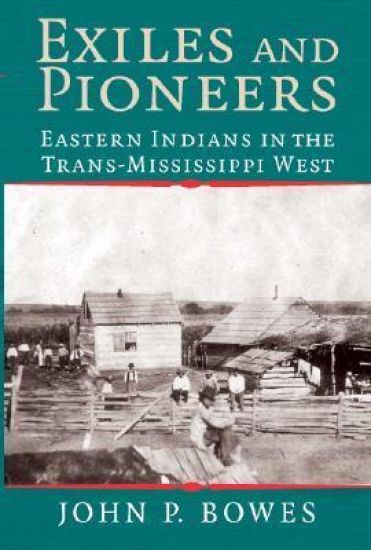
Exiles and Pioneers

Exiles and Pioneers

John P. Bowes

Cambridge University Press
2007
pokkari
Exiles and Pioneers analyzes the removal and post-removal histories of Shawnee, Delaware, Wyandot, and Potawatomi Indians. The book argues that the experience of these eastern Indians from the late 1700s to the 1860s was at its core a struggle over geographic and political place within the expanding United States. Even as American expansion limited the geographic scope of Indian lands, the extension of American territories and authority raised important questions about the political status of these Indians as individuals as well as nations within the growing republic. More specifically, the national narrative and even the prominent images of Indian removal cast the eastern Indians as exiles who were constantly pushed beyond the edges of American settlement. This study proposes that ineffective federal policies and ongoing debates within Indian communities also cast some of these eastern Indians as pioneers, unwilling trailblazers in the development of the United States.
Exiles and Pioneers

Exiles and Pioneers

John P. Bowes

Cambridge University Press
2007
sidottu
Exiles and Pioneers analyzes the removal and post-removal histories of Shawnee, Delaware, Wyandot, and Potawatomi Indians. The book argues that the experience of these eastern Indians from the late 1700s to the 1860s was at its core a struggle over geographic and political place within the expanding United States. Even as American expansion limited the geographic scope of Indian lands, the extension of American territories and authority raised important questions about the political status of these Indians as individuals as well as nations within the growing republic. More specifically, the national narrative and even the prominent images of Indian removal cast the eastern Indians as exiles who were constantly pushed beyond the edges of American settlement. This study proposes that ineffective federal policies and ongoing debates within Indian communities also cast some of these eastern Indians as pioneers, unwilling trailblazers in the development of the United States.
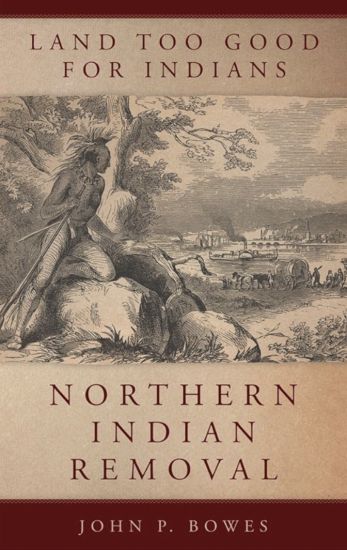
Land Too Good for Indians

Land Too Good for Indians

John P. Bowes

University of Oklahoma Press
2016
sidottu
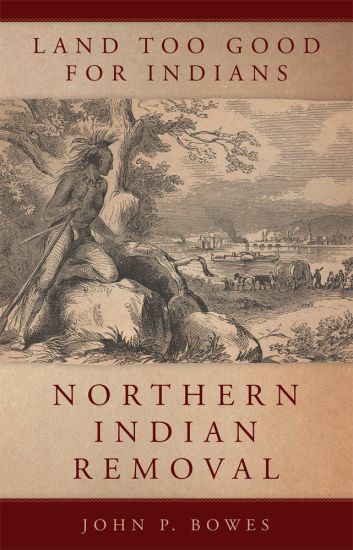
The history of Indian removal has often followed a single narrative arc, one that begins with President Andrew Jackson's Indian Removal Act of 1830 and follows the Cherokee Trail of Tears. In that conventional account, the Black Hawk War of 1832 encapsulates the experience of tribes in the territories north of the Ohio River. But Indian removal in the Old Northwest was much more complicated - involving many Indian peoples and more than just one policy, event, or politician. In Land Too Good for Indians, historian John P. Bowes takes a long-needed closer, more expansive look at northern Indian removal - and in so doing amplifies the history of Indian removal and of the United States. Bowes focuses on four case studies that exemplify particular elements of removal in the Old Northwest. He traces the paths taken by Delaware Indians in response to Euro-American expansion and U.S. policies in the decades prior to the Indian Removal Act. He also considers the removal experience among the Seneca-Cayugas, Wyandots, and other Indian communities in the Sandusky River region of northwestern Ohio. Bowes uses the 1833 Treaty of Chicago as a lens through which to examine the forces that drove the divergent removals of various Potawatomi communities from northern Illinois and Indiana. And in exploring the experiences of the Odawas and Ojibwes in Michigan Territory, he analyzes the historical context and choices that enabled some Indian communities to avoid relocation west of the Mississippi River. In expanding the context of removal to include the Old Northwest, and adding a portrait of Native communities there before, during, and after removal, Bowes paints a more accurate - and complicated - picture of American Indian history in the nineteenth century. Land Too Good for Indians reveals the deeper complexities of this crucial time in American history.
Land Too Good for Indians

Land Too Good for Indians

John P. Bowes

University of Oklahoma Press
2017
nidottu
The history of Indian removal has often followed a single narrative arc, one that begins with President Andrew Jackson's Indian Removal Act of 1830 and follows the Cherokee Trail of Tears. In that conventional account, the Black Hawk War of 1832 encapsulates the experience of tribes in the territories north of the Ohio River. But Indian removal in the Old Northwest was much more complicated - involving many Indian peoples and more than just one policy, event, or politician. In Land Too Good for Indians, historian John P. Bowes takes a long-needed closer, more expansive look at northern Indian removal - and in so doing amplifies the history of Indian removal and of the United States. Bowes focuses on four case studies that exemplify particular elements of removal in the Old Northwest. He traces the paths taken by Delaware Indians in response to Euro-American expansion and U.S. policies in the decades prior to the Indian Removal Act. He also considers the removal experience among the Seneca-Cayugas, Wyandots, and other Indian communities in the Sandusky River region of northwestern Ohio. Bowes uses the 1833 Treaty of Chicago as a lens through which to examine the forces that drove the divergent removals of various Potawatomi communities from northern Illinois and Indiana. And in exploring the experiences of the Odawas and Ojibwes in Michigan Territory, he analyzes the historical context and choices that enabled some Indian communities to avoid relocation west of the Mississippi River. In expanding the context of removal to include the Old Northwest, and adding a portrait of Native communities there before, during, and after removal, Bowes paints a more accurate - and complicated - picture of American Indian history in the nineteenth century. Land Too Good for Indians reveals the deeper complexities of this crucial time in American history.
Multiple-Use Management

Multiple-Use Management

Bowes Michael D.; Krutilla John V.

Resources for the Future Press (RFF Press)
1989
sidottu
In this book, Bowes and Krutilla bring together what is known and relevant about valuing the nonmarket services of the public forests and propose a new theoretical framework that allows multiple uses, the biological dynamics of the forest, and the institutional and economic realities of public forest management to be taken into account in forest planning and budgeting. The authors begin by tracing the development of multiple use in forest management and by exploring the multiple uses of the public forests and the economics of multiple-use forestry. They offer a masterful analysis of the nineteenth-century model of the single timber stand on which much forestry practice has been premised. Bowes and Krutilla then take a giant step forward by developing a larger theoretical framework and showing how forest structure and dynamics can be included in the economic model. The authors' rigorous exposition theory provides the foundation for analyzing case studies of management for timber and water yields in the Rockies, of recreation valuation in the Black Hills and White Mountain national forests, and of joint production in the White Clouds Peaks --- analyses that demonstrate the authors' great skill in developing practical methodologies to meet actual forest management problems.
Badge and Buckshot

Badge and Buckshot

John Boessenecker

University of Oklahoma Press
1993
nidottu
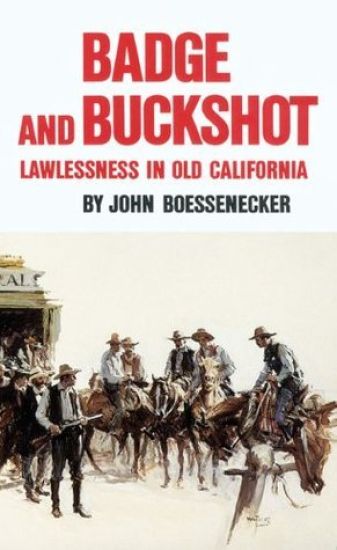
Badge and Buckshot is a comprehensive book at many of the once-famous peace officers and outlaws of Old California. Told here for the first time are the true stories of Ben Thorn, the iron-willed but scandal-plagued sheriff of Calaveras County; John C. Boggs, the fast-shooting nemesis of the Tom Bell and Rattlesnake Dick gangs; Ben and Dudley Johnson, the notorious ""Tulare Twins""; Kid Thompson, whose train-robbing exploits took place just blocks from present-day Los Angeles film and television studios; and Coates-Frost feud, California's bloodiest vendetta, which endured more than twenty years and left fourteen men dead. Here, too, are the first complete accounts of Captain Ingram's Rangers, the band of Confederate guerrillas who raided stagecoaches in California during the Civil War; Steve Venard, the soft-spoken lawman who killed three outlaws in a single gunfight; and the legendary Bill Miner, whose career of banditry spanned almost half a century. The product of more than ten years of painstaking research, Badge and Buckshot recounts one of the forgotten sagas of the Old West, an action-packed tale of shoot-outs, stage holdups, manhunts, and lynchings. At the same time, through extensive use of pioneer newspaper files, court records, and previously unpublished illustrations, it shatters old myths and demonstrates the overall effectiveness of the criminal justice system in Old California. For authentic Americana, Badge and Buckshot is not to be missed.
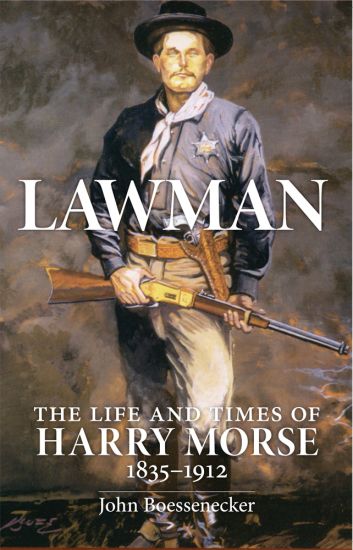
Lawman

Lawman

John Boessenecker

University of Oklahoma Press
1998
sidottu
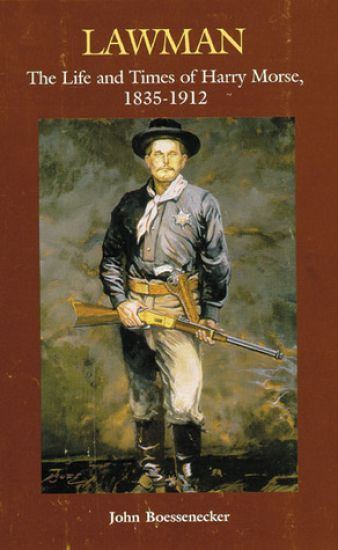
Harry Morse - gunfighter, manhunter, and sleuth - was among the West's most famous lawmen. Elected sheriff of Alameda County, California, in 1864, he went on to become San Francisco's foremost private detective. His career spanned five decades. In this gripping biography, John Boessenecker brings Morse's now-forgotten story to light, chronicling not only the lawman's remarkable adventures but also the turbulent times in which he lived.Armed only with raw courage and a Colt revolver, Morse squared off against a small army of desperadoes and beat them at their own game. He shot to death the notorious bandidos Narato Ponce and Juan Soto, outgunned the vicious Narciso Bojorques, and pursued the Tiburcio Vasquez gang for two months in one of the West's longest and most tenacious manhunts. Later, Morse captured Black Bart, America's greatest stagecoach robber. His exploits were legendary.Drawing on Morse's diaries, memoirs, and correspondence, Boessenecker weaves the lawman's colorful accounts into his narrative. Rare photographs of outlaws and lawmen and of the sites of Morse's exploits further enliven the story.
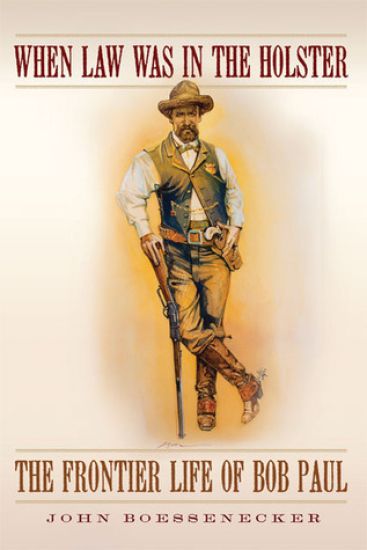
When Law Was in the Holster

When Law Was in the Holster

John Boessenecker

University of Oklahoma Press
2012
sidottu
One of the great lawmen of the Old West, Bob Paul (1830-1901) cast a giant shadow across the frontiers of California and Arizona Territory for nearly fifty years. Today he is remembered mainly for his friendship with Wyatt Earp and his involvement in the stirring events surrounding the famous 1881 gunfight near the OK Corral in Tombstone, Arizona. This long-overdue biography fills crucial gaps in Paul's story and recounts a life of almost constant adventure.As told by veteran western historian John Boessenecker, this story is more than just a western shoot-'em-up, and it reveals Paul to be far more than a blood-and-thunder gunfighter. Beginning with Paul's boyhood adventures as a whaler in the South Pacific, the author traces his journey to Gold Rush California, where he served respectively as constable, deputy sheriff, and sheriff in Calaveras County, and as Wells Fargo shotgun messenger and detective. Then, in the turbulent 1880s, Paul became sheriff of Pima County, Arizona, and a railroad detective for the Southern Pacific. In 1890 President Benjamin Harrison appointed him U.S. marshal of Arizona Territory.Transcending local history, Paul's story provides an inside look into the rough-and-tumble world of frontier politics, electoral corruption, Mexican-U.S. relations, border security, vigilantism, and western justice. Moreover, issues that were important in Paul's career - illegal immigration, smuggling on the Mexican border, youth gangs, racial discrimination, ethnic violence, and police-minority relations - are as relevant today as they were during his lifetime.
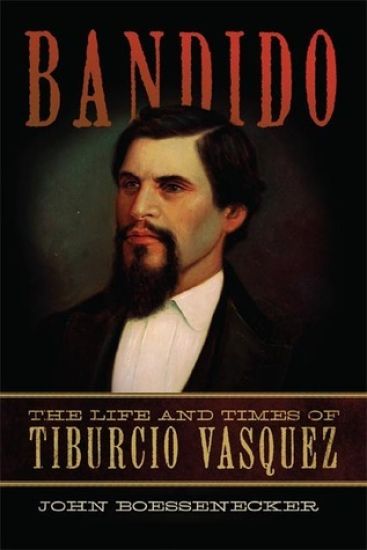
Bandido

Bandido

John Boessenecker

University of Oklahoma Press
2014
nidottu
Tiburcio Vasquez is, next to Joaquin Murrieta, America's most infamous Hispanic bandit. After he was hanged as a murderer in 1875, the Chicago Tribune called him ""the most noted desperado of modern times."" Yet questions about him still linger. Why did he become a bandido? Why did so many Hispanics protect him and his band? Was he a common thief and heartless killer who got what he deserved, or was he a Mexican American Robin Hood who suffered at the hands of a racist government? In this engrossing biography, John Boessenecker provides definitive answers.Bandido pulls back the curtain on a life story shrouded in myth - a myth created by Vasquez himself and abetted by writers who saw a tale ripe for embellishment. Boessenecker traces his subject's life from his childhood in the seaside adobe village of Monterey, to his years as a young outlaw engaged in horse rustling and robbery. Two terms in San Quentin failed to tame Vasquez, and he instigated four bloody prison breaks that left twenty convicts dead. After his final release from prison, he led bandit raids throughout Central and Southern California. His dalliances with women were legion, and the last one led to his capture in the Hollywood Hills and his death on the gallows at the age of thirty-nine.From dusty court records, forgotten memoirs, and moldering newspaper archives, Boessenecker draws a story of violence, banditry, and retribution on the early California frontier that is as accurate as it is colorful. Enhanced by numerous photographs - many published here for the first time - Bandido also addresses important issues of racism and social justice that remain relevant to this day.
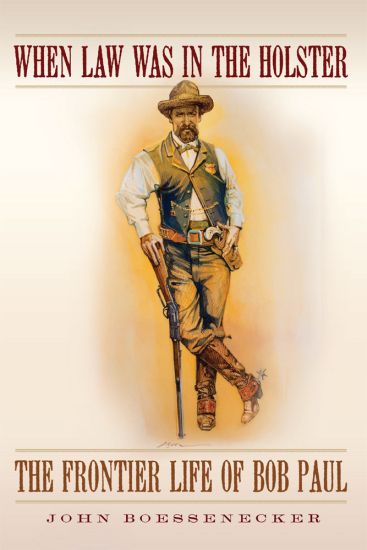
When Law Was in the Holster

When Law Was in the Holster

John Boessenecker

University of Oklahoma Press
2018
nidottu
One of the great lawmen of the Old West, Bob Paul (1830-1901) cast a giant shadow across the frontiers of California and Arizona Territory for nearly fifty years. Today he is remembered mainly for his friendship with Wyatt Earp and his involvement in the stirring events surrounding the famous 1881 gunfight near the OK Corral in Tombstone, Arizona. This long-overdue biography fills crucial gaps in Paul's story and recounts a life of almost constant adventure.As told by veteran western historian John Boessenecker, this story is more than just a western shoot-'em-up, and it reveals Paul to be far more than a blood-and-thunder gunfighter. Beginning with Paul's boyhood adventures as a whaler in the South Pacific, the author traces his journey to Gold Rush California, where he served respectively as constable, deputy sheriff, and sheriff in Calaveras County, and as Wells Fargo shotgun messenger and detective. Then, in the turbulent 1880s, Paul became sheriff of Pima County, Arizona, and a railroad detective for the Southern Pacific. In 1890 President Benjamin Harrison appointed him U.S. marshal of Arizona Territory.Transcending local history, Paul's story provides an inside look into the rough-and-tumble world of frontier politics, electoral corruption, Mexican-U.S. relations, border security, vigilantism, and western justice. Moreover, issues that were important in Paul's career - illegal immigration, smuggling on the Mexican border, youth gangs, racial discrimination, ethnic violence, and police-minority relations - are as relevant today as they were during his lifetime.
Lawman

Lawman

John Boessenecker

UNIVERSITY OF OKLAHOMA PRESS
2022
nidottu
Harry Morse - gunfighter, manhunter, and sleuth - was among the West's most famous lawmen. Elected sheriff of Alameda County, California, in 1864, he went on to become San Francisco's foremost private detective. His career spanned five decades. In this gripping biography, John Boessenecker brings Morse's now-forgotten story to light, chronicling not only the lawman's remarkable adventures but also the turbulent times in which he lived.Armed only with raw courage and a Colt revolver, Morse squared off against a small army of desperadoes and beat them at their own game. He shot to death the notorious bandidos Narato Ponce and Juan Soto, outgunned the vicious Narciso Bojorques, and pursued the Tiburcio Vasquez gang for two months in one of the West's longest and most tenacious manhunts. Later, Morse captured Black Bart, America's greatest stagecoach robber. His exploits were legendary.Drawing on Morse's diaries, memoirs, and correspondence, Boessenecker weaves the lawman's colorful accounts into his narrative. Rare photographs of outlaws and lawmen and of the sites of Morse's exploits further enliven the story.