Kirjojen hintavertailu. Mukana 11 244 527 kirjaa ja 12 kauppaa.

Kirjahaku

Etsi kirjoja tekijän nimen, kirjan nimen tai ISBN:n perusteella.

1000 tulosta hakusanalla John C Cleland

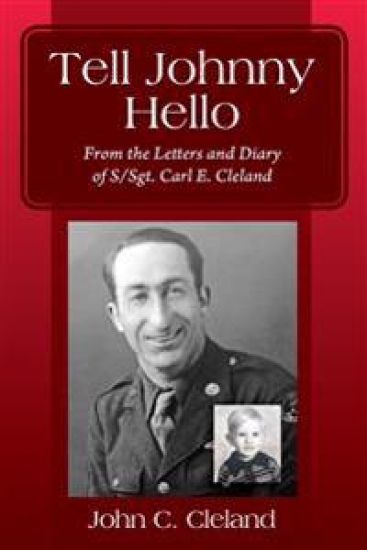
Tell Johnny Hello

Tell Johnny Hello

John C Cleland

Outskirts Press
2021
pokkari
Carl was trained as a gunner and radio operator on a B-24 stationed in Norfolk England. He Flew 26 missions including the raid on Ploesti Oil Refineries in Romania from a South African base near Benghazi. In his letters to "home folks" he describes the places and people he sees through the eyes of a photographer from both air and land, and shares observations of the people he meets. His Diary describes the daily life of a soldier and the dangers, "excitement," successes and failures of the bombing missions the crew of the ship, "Lemon Drop" are a part of. Through his letters and diary, Carl reveals his thoughts, passions, love of family, love of wife, love of living, and window into his soul. As he writes home, Carl often mentions his youngest nephew by inserting a, "Tell Johnny Hello." Johnny is the author and was only three at the time. John's personal observations and interpretations describe a two-year history of the Cleland Family. It is a WWII Gold Star story as told by a soldier caught up in the drama and sacrifices of war. The author has no memory of his Uncle Carl but came into possession of Carl's footlocker containing 125 letters, scrap books, mementos, a few photos, a box of his medals, including two Air Medals with five Oak Leaf Clusters, a Distinguished Flying Cross, and a leather bound diary. As the letters and diary were transcribed and collated the story emerges and Johnny gets to know his Uncle Carl intimately through Carl's written word. The story includes a wartime love story. Carl and Nellie were married just before he left for England and do not see each other for ten months. He returns home and after a long leave with Nellie and family, Carl is assigned to a training facility for heavy bombers in Casper Wyoming. The tragic end of the story comes in a headline from a local newspaper, War Hero Killed in Wyoming Plane Crash
Tell Johnny Hello

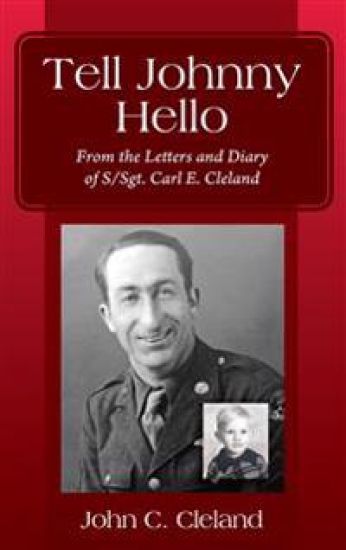
Tell Johnny Hello

John C Cleland

Outskirts Press
2021
sidottu
Carl was trained as a gunner and radio operator on a B-24 stationed in Norfolk England. He Flew 26 missions including the raid on Ploesti Oil Refineries in Romania from a South African base near Benghazi. In his letters to "home folks" he describes the places and people he sees through the eyes of a photographer from both air and land, and shares observations of the people he meets. His Diary describes the daily life of a soldier and the dangers, "excitement," successes and failures of the bombing missions the crew of the ship, "Lemon Drop" are a part of. Through his letters and diary, Carl reveals his thoughts, passions, love of family, love of wife, love of living, and window into his soul. As he writes home, Carl often mentions his youngest nephew by inserting a, "Tell Johnny Hello." Johnny is the author and was only three at the time. John's personal observations and interpretations describe a two-year history of the Cleland Family. It is a WWII Gold Star story as told by a soldier caught up in the drama and sacrifices of war. The author has no memory of his Uncle Carl but came into possession of Carl's footlocker containing 125 letters, scrap books, mementos, a few photos, a box of his medals, including two Air Medals with five Oak Leaf Clusters, a Distinguished Flying Cross, and a leather bound diary. As the letters and diary were transcribed and collated the story emerges and Johnny gets to know his Uncle Carl intimately through Carl's written word. The story includes a wartime love story. Carl and Nellie were married just before he left for England and do not see each other for ten months. He returns home and after a long leave with Nellie and family, Carl is assigned to a training facility for heavy bombers in Casper Wyoming. The tragic end of the story comes in a headline from a local newspaper, War Hero Killed in Wyoming Plane Crash
John C. Calhoun

John C. Calhoun

Irving H. Bartlett

WW Norton Co
2007
nidottu
John C. Calhoun was a rare figure in American history: a lifelong politician who was also a profound political philosopher. Vice president under John Quincy Adams and Andrew Jackson, he was a dominant presence in the U.S. Senate. Now comes a major new biography from the author of Daniel Webster.
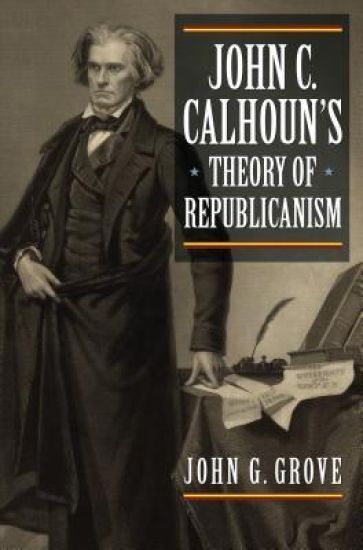
John C. Calhoun's Theory of Republicanism

John C. Calhoun's Theory of Republicanism

John Grove

University Press of Kansas
2016
sidottu
John C. Calhoun (1782-1850), the South Carolinian who served as a congressman, a senator, and the seventh vice president of the United States, is best known for his role in southern resistance to abolition and his doctrine of state nullification. But he was also an accomplished political thinker, articulating the theory of the ""concurrent majority."" This theory, John G. Grove contends, is a rare example of American political thought resting on classical assumptions about human nature and political life. By tracing Calhoun's ideas over the course of his political career, Grove unravels the relationship between the theory of the concurrent majority and civic harmony, constitutional reform, and American slavery. In doing so, Grove distinguishes Calhoun's political philosophy from his practical, political commitment to states' rights and slavery, and identifies his ideas as a genuinely classical form of republicanism that focuses on the political nature of mankind, public virtue, and civic harmony.Man was a social creature, Calhoun argued, and the role of government was to maximize society's ability to thrive. The requirements of social harmony, not abstract individual rights, were therefore the foundation of political order. Hence the concurrent majority permitted the unique elements in any given society to pursue their interests as long as these did not damage the whole society; it forced rulers to act in the interest of the whole. John C. Calhoun's Theory of Republicanism offers a close analysis of the historical development of this idea from a basic, inherited republican ideology into a well-defined political theory. In the process, this book demonstrates that Calhoun's infamous defense of American slavery, while unwavering, was intellectually shallow and, in some ways, contradicted his highly developed political theory.
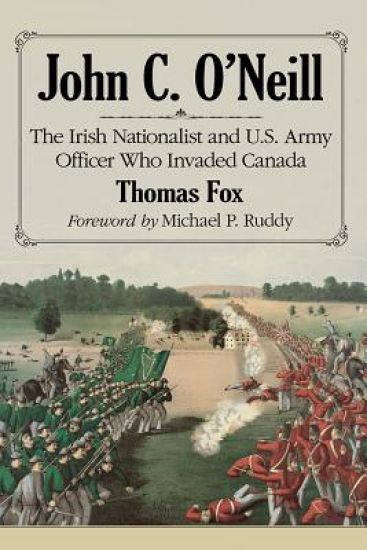
John C. O'Neill

John C. O'Neill

Thomas Fox

McFarland Co Inc
2019
pokkari
? In June 1866, an 800-man contingent of the Irish Fenian Brotherhood invaded Canada from Buffalo, New York, in an effort to free Ireland from British rule. The force was led by Irish-born John Charles O'Neill, a veteran of the Union Army's 5th Indiana Cavalry. The three-day invasion was a military success but a political failure, yet O'Neill was celebrated for his leadership and humanity. Elevated to the presidency of the Fenian Brotherhood, "General" O'Neill would again lead Irish nationalists against Canada in 1870. Jailed and later pardoned by President U.S. Grant, O'Neill left the Fenians and attempted a third, futile attack into Canada. O'Neill then became a colonizer, urging Irish Americans to abandon cities in the East to settle on the fertile plains of the West. O'Neill City, Nebraska, is named in his honor. This first full-length biography covers the rise, fall and resurgence of a remarkable figure in American and Irish history.
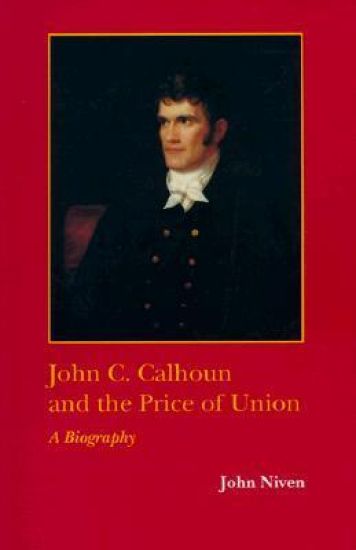
John C. Calhoun and the Price of Union

John C. Calhoun and the Price of Union

LOUISIANA STATE UNIVERSITY PRESS
1993
nidottu
John C. Calhoun (1782-1850) was one of the prominent figure of American politics in the first half of the nineteenth century. The son of a slaveholding South Carolina family, he served in the federal government in various capacities, as senator from his home state, as secretary of war and secretary of state, and as vice-president in the administrations of John Quincy Adams and Andrew Jackson. Calhoun was a staunch supporter of the interests of his state and region. His battle from tariff reform, aimed at alleviating the economic problems of the southern states, eventually led him to formulate his famous nullification doctrine, which asserted the right of states to declare federal laws null and void within their own boundaries.In the first full-scale biography of Calhoun in almost half a century, John Niven skillfully presents a new interpretation of this preeminent spokesman of the Old South. Deftly blending Calhoun's public career with important elements of his private life, Niven shows Calhoun to have been at once a more consistent politician and a far more complex human being than previous historians have thought. Rather than history's image of an assured, self-confident Calhoun, Niven reveals a figure who was in many ways insecure and defensive.Niven maintains that the War of 1812, which Calhoun helped instigate and which nearly resulted in the nation's ruin, made a lasting impression on Calhoun's mind and personality. From that point until the end of his life, he sought security first from the western Indians and the British while he was secretary of war, then from northern exploitation of southern wealth through what he regarded as manipulation of public policy while he was vice-president and a senator. He worked tirelessly to further the South's slave-plantation system of economic and social values. He sought protection for a region that he freely admitted was low in population and poor in material resources, and he defended a position that he knew was morally inferior.Niven portrays Calhoun as a driven, tragic figure whose ambitions and personal desires to achieve leadership and compensate for a lack of inner assurance were often thwarted. The life he made for himself, the peace he felt on his plantation with his dependent retainers, and the agricultural pursuits that represented to him and his neighbors stability in a rapidly changing environment were beyond price. Calhoun sought to resist any menace to this way of life with all the force of his character and intellect. Yet in the end Calhoun's headstrong allegiance to his region helped to destroy the very culture he sought to preserve and disrupted the Union he had hoped to keep whole.Niven's masterful retelling of Calhoun's eventful life is a model biography.
John C.Calhoun

John C.Calhoun

Margaret L. Coit

University of South Carolina Press
1991
nidottu
John C. Calhoun remains a striking and central figure in American history. From 1811 to 1850 he served as representative from South Carolina, secretary of war, vice president, secretary of state, and senator. During the same period he was twice contender for the presidency of the United States. From the beginning to the end of his career, Calhoun arrested public attention and influenced public opinion, having major influence on every issue of the period. A champion of state rights, he is an important figure in the drama of expansion ad conflict that is at the heart of American history in the nineteenth-century.
John C. Fremont, Western Pathfinder

John C. Fremont, Western Pathfinder

Sanford Tousey

Hassell Street Press
2021
sidottu
This work has been selected by scholars as being culturally important and is part of the knowledge base of civilization as we know it.This work is in the public domain in the United States of America, and possibly other nations. Within the United States, you may freely copy and distribute this work, as no entity (individual or corporate) has a copyright on the body of the work.Scholars believe, and we concur, that this work is important enough to be preserved, reproduced, and made generally available to the public. To ensure a quality reading experience, this work has been proofread and republished using a format that seamlessly blends the original graphical elements with text in an easy-to-read typeface.We appreciate your support of the preservation process, and thank you for being an important part of keeping this knowledge alive and relevant.
John C. Fremont, Western Pathfinder

John C. Fremont, Western Pathfinder

Sanford Tousey

Hassell Street Press
2021
nidottu
This work has been selected by scholars as being culturally important and is part of the knowledge base of civilization as we know it.This work is in the public domain in the United States of America, and possibly other nations. Within the United States, you may freely copy and distribute this work, as no entity (individual or corporate) has a copyright on the body of the work.Scholars believe, and we concur, that this work is important enough to be preserved, reproduced, and made generally available to the public. To ensure a quality reading experience, this work has been proofread and republished using a format that seamlessly blends the original graphical elements with text in an easy-to-read typeface.We appreciate your support of the preservation process, and thank you for being an important part of keeping this knowledge alive and relevant.