Kirjojen hintavertailu. Mukana 11 244 527 kirjaa ja 12 kauppaa.

Kirjahaku

Etsi kirjoja tekijän nimen, kirjan nimen tai ISBN:n perusteella.

1000 tulosta hakusanalla John C. Weaver

Adam Smith’s Islands

Adam Smith’s Islands

John C. Weaver

MCGILL-QUEEN'S UNIVERSITY PRESS
2025
nidottu
Many developed countries restructured relations between state and economy from the late 1970s into the 1990s. Among them, New Zealand went far, fast, and left a clear trail, making it possible to study economic restructuring as it occurred, with all the debates, uncertainty, surprises, mistakes, and accomplishments this entailed. Adam Smith’s Islands reveals the inside life of a government determined to revolutionize its nation’s politics and economy.While the 1980s economic restructuring of members of the Organisation for Economic Co-operation and Development and former Warsaw Pact countries can seem like a foregone conclusion from the vantage point of the twenty-first century, John Weaver examines how local and global institutions had to come together to implement social adjustments in New Zealand. Mounting evidence that the state had not functioned as an effective manager split the business community and primary producers between defenders of subsidization and free-market insurgents. Reforms undertaken by the governing Labour Party included abandoning currency controls, privatizing state-run businesses, ending a multitude of open and disguised subsidies, tightening fiscal responsibility, and reforming taxation. Adam Smith’s Islands focuses on the verifiable: direct primary sources from dozens of state collections and deposits of personal papers. The archival cornucopia informing this history supports a narrative that has little in common with intellectual histories of neoliberalism. To understand how the relationship between the economy and the state changed, we need to grasp how and why core institutions, practices, and cultural beliefs shed some of their once potent legitimacy.Through the lens of New Zealand, Adam Smith’s Islands examines larger questions about policy dilemmas, the global flow of capital, and the sustainability of social adjustments in economic restructuring. In so doing, it casts new light on the formation and history of what is casually labelled today as the neoliberal state.
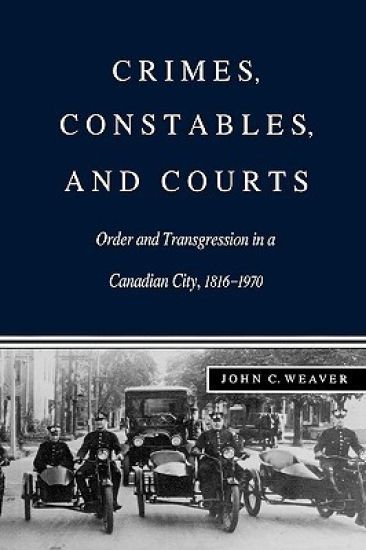
Crimes, Constables, and Courts

Crimes, Constables, and Courts

John C. Weaver

McGill-Queen's University Press
1995
sidottu
Using Hamilton, Ontario, as his model, Weaver makes extensive use of newspaper accounts and police, court, and jail records in a revealing exploration of individual crime cases and overall trends in crime. Tracing the origin and evolution of courts, juries, police, and punishments, Weaver takes into account various social and cultural issues. For example, he shows how increasing centralization and professionalization of the criminal justice system and police have deprived communities of input, and how the legal system continues to be male dominated and biased against newcomers, strangers, and marginalized social groups. Often critical of the "state," Weaver paints a sympathetic view of police constables, who play an ambiguous role in the community while being saddled with an expanding array of onerous duties. Crimes, Constables, and Courts is history at its best - informative, entertaining, and accessible with a lively human element woven throughout. "Truly outstanding." Rod C. Macleod, Department of History, University of Alberta.
Crimes, Constables, and Courts

Crimes, Constables, and Courts

John C. Weaver

McGill-Queen's University Press
1995
nidottu
Using Hamilton, Ontario, as his model, Weaver makes extensive use of newspaper accounts and police, court, and jail records in a revealing exploration of individual crime cases and overall trends in crime. Tracing the origin and evolution of courts, juries, police, and punishments, Weaver takes into account various social and cultural issues. For example, he shows how increasing centralization and professionalization of the criminal justice system and police have deprived communities of input, and how the legal system continues to be male dominated and biased against newcomers, strangers, and marginalized social groups. Often critical of the "state," Weaver paints a sympathetic view of police constables, who play an ambiguous role in the community while being saddled with an expanding array of onerous duties. Crimes, Constables, and Courts is history at its best - informative, entertaining, and accessible with a lively human element woven throughout. "Truly outstanding." Rod C. Macleod, Department of History, University of Alberta.
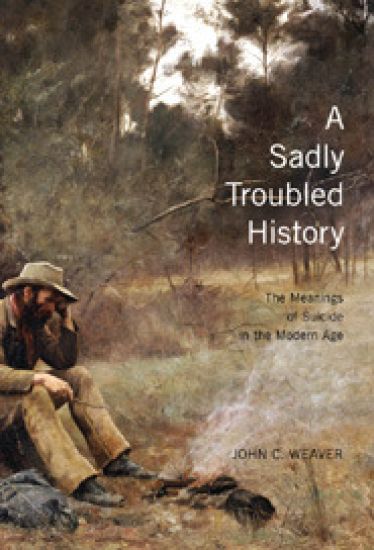
A Sadly Troubled History

A Sadly Troubled History

John C. Weaver

McGill-Queen's University Press
2009
sidottu
More people die by suicide each year than by homicide, wars, and terrorist attacks combined. Witnesses and survivors are left perplexed and troubled. Doctors, clinical psychologists, and social workers try to deal with it through their professional routines; sociologists and psychiatrists attempt to provide theoretical explanations of it. In a study of nearly 7000 suicides from 1900 to 1950 in New Zealand and Queensland, Australia, John Weaver documents the challenges that ordinary people experienced during turbulent times and, using witnesses' testimony, death bed statements, and suicide notes, reconstructs individuals' thoughts as they decide whether to endure their suffering. Bridging social and medical history, Weaver presents an intellectual and political history of suicide studies, a revealing construction and deconstruction of suicide rates, a discussion of gender, life stages, and socio-economic circumstances in relation to suicide patterns, reflections on reasoning processes and intent, and society's reactions to suicide, including medical intervention. A Sadly Troubled History marshals thousands of suicide inquests, replete with observations on the anxieties of unemployment, the heartbreak of romantic disappointment, the pain of domestic turmoil, and the torments of mental illness, to demonstrate that history - although, like biochemistry, sociology, psychology, and psychiatry, reliant on remarkable yet imperfect information - can contribute to a better understanding of the suicidal act and its motives.
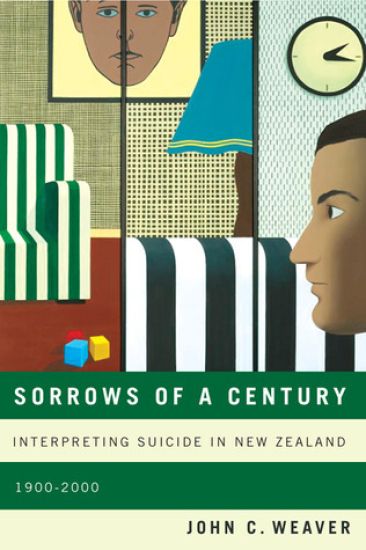
Sorrows of a Century

Sorrows of a Century

John C. Weaver

McGill-Queen's University Press
2014
sidottu
In Sorrows of a Century, John Weaver describes how personal relationships, work, poverty, war, illness, and legal troubles have driven thousands to despair. His study is set in twentieth-century New Zealand where - in spite of high standards of living and a commitment to social welfare - citizens have experienced the profound losses and stresses of the human condition. Focusing on New Zealand because it has the most comprehensive and accessible coroners' records, Weaver analyzes a staggering amount of information to determine the social and cultural factors that contribute to suicide rates. He examines the country's investigations into sudden deaths, places them within the context of major events and societal changes, and turns to witnesses' statements, suicide notes, and medical records to remark on prevention strategies. His extensive survey of twelve thousand cases also provides an insightful assessment of psychiatry and psychology in the last century. In reviewing the motives and methods of suicide, Weaver points out the complications facing deterrence. Moving beyond the timeless present of the social sciences and the irrationality emphasized in psychology, Sorrows of a Century marshals testimony to highlight the historical context and rational conduct behind suicide.
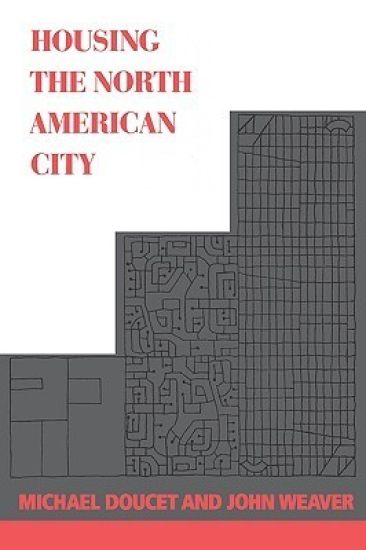
Housing the North American City

Housing the North American City

Michael Doucet; John C. Weaver

McGill-Queen's University Press
1991
sidottu
Doucet and Weaver begin this empirical, analytical, and narrative study with an analysis of the evolution of land development as an enterprise and continue with an examination of house design and construction practices, the development of the apartment building, and an account of class and age as they relate to housing tenure. They also relate developments in Hamilton to the current state of urban historiography, using their case study to resolve discrepancies and contradictions in the literature. Among the major themes the authors deal with is a controversial exploration of what they see as a central North American urge: the desire to own a home. Other themes include the social allocation of urban space, the quality and affordability of housing, the increased interest of large corporations in the land development and financial service industries, and a comparative analysis of housing in Canada and the United States. The authors have drawn on civic and business records dating from the early nineteenth century to the latest planning data. Combining this information with their comprehensive analysis, Doucet and Weaver show that current housing problems and potential solutions are better understood when seen as part of a historical process. They provide a critical assessment of the ways in which contemporary society produces shelter and question the use of technical innovations alone to resolve housing crises.
John C. Calhoun

John C. Calhoun

Irving H. Bartlett

WW Norton Co
2007
nidottu
John C. Calhoun was a rare figure in American history: a lifelong politician who was also a profound political philosopher. Vice president under John Quincy Adams and Andrew Jackson, he was a dominant presence in the U.S. Senate. Now comes a major new biography from the author of Daniel Webster.
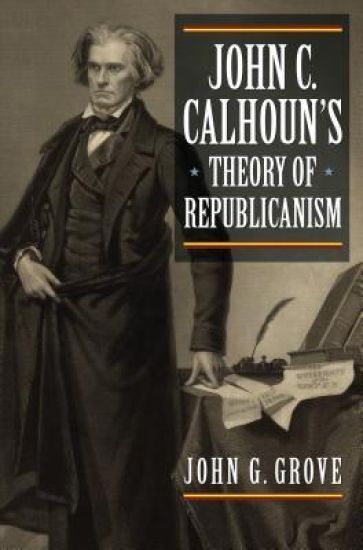
John C. Calhoun's Theory of Republicanism

John C. Calhoun's Theory of Republicanism

John Grove

University Press of Kansas
2016
sidottu
John C. Calhoun (1782-1850), the South Carolinian who served as a congressman, a senator, and the seventh vice president of the United States, is best known for his role in southern resistance to abolition and his doctrine of state nullification. But he was also an accomplished political thinker, articulating the theory of the ""concurrent majority."" This theory, John G. Grove contends, is a rare example of American political thought resting on classical assumptions about human nature and political life. By tracing Calhoun's ideas over the course of his political career, Grove unravels the relationship between the theory of the concurrent majority and civic harmony, constitutional reform, and American slavery. In doing so, Grove distinguishes Calhoun's political philosophy from his practical, political commitment to states' rights and slavery, and identifies his ideas as a genuinely classical form of republicanism that focuses on the political nature of mankind, public virtue, and civic harmony.Man was a social creature, Calhoun argued, and the role of government was to maximize society's ability to thrive. The requirements of social harmony, not abstract individual rights, were therefore the foundation of political order. Hence the concurrent majority permitted the unique elements in any given society to pursue their interests as long as these did not damage the whole society; it forced rulers to act in the interest of the whole. John C. Calhoun's Theory of Republicanism offers a close analysis of the historical development of this idea from a basic, inherited republican ideology into a well-defined political theory. In the process, this book demonstrates that Calhoun's infamous defense of American slavery, while unwavering, was intellectually shallow and, in some ways, contradicted his highly developed political theory.
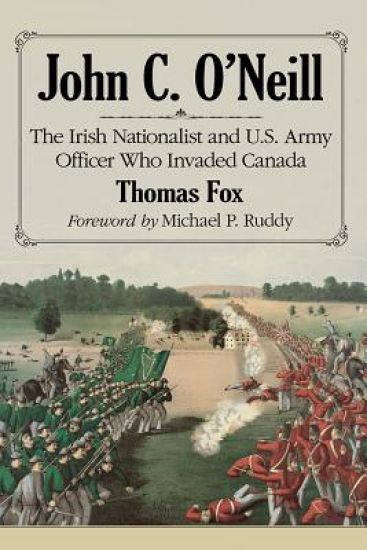
John C. O'Neill

John C. O'Neill

Thomas Fox

McFarland Co Inc
2019
pokkari
? In June 1866, an 800-man contingent of the Irish Fenian Brotherhood invaded Canada from Buffalo, New York, in an effort to free Ireland from British rule. The force was led by Irish-born John Charles O'Neill, a veteran of the Union Army's 5th Indiana Cavalry. The three-day invasion was a military success but a political failure, yet O'Neill was celebrated for his leadership and humanity. Elevated to the presidency of the Fenian Brotherhood, "General" O'Neill would again lead Irish nationalists against Canada in 1870. Jailed and later pardoned by President U.S. Grant, O'Neill left the Fenians and attempted a third, futile attack into Canada. O'Neill then became a colonizer, urging Irish Americans to abandon cities in the East to settle on the fertile plains of the West. O'Neill City, Nebraska, is named in his honor. This first full-length biography covers the rise, fall and resurgence of a remarkable figure in American and Irish history.
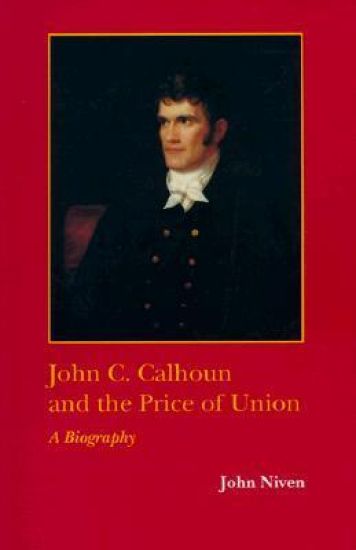
John C. Calhoun and the Price of Union

John C. Calhoun and the Price of Union

LOUISIANA STATE UNIVERSITY PRESS
1993
nidottu
John C. Calhoun (1782-1850) was one of the prominent figure of American politics in the first half of the nineteenth century. The son of a slaveholding South Carolina family, he served in the federal government in various capacities, as senator from his home state, as secretary of war and secretary of state, and as vice-president in the administrations of John Quincy Adams and Andrew Jackson. Calhoun was a staunch supporter of the interests of his state and region. His battle from tariff reform, aimed at alleviating the economic problems of the southern states, eventually led him to formulate his famous nullification doctrine, which asserted the right of states to declare federal laws null and void within their own boundaries.In the first full-scale biography of Calhoun in almost half a century, John Niven skillfully presents a new interpretation of this preeminent spokesman of the Old South. Deftly blending Calhoun's public career with important elements of his private life, Niven shows Calhoun to have been at once a more consistent politician and a far more complex human being than previous historians have thought. Rather than history's image of an assured, self-confident Calhoun, Niven reveals a figure who was in many ways insecure and defensive.Niven maintains that the War of 1812, which Calhoun helped instigate and which nearly resulted in the nation's ruin, made a lasting impression on Calhoun's mind and personality. From that point until the end of his life, he sought security first from the western Indians and the British while he was secretary of war, then from northern exploitation of southern wealth through what he regarded as manipulation of public policy while he was vice-president and a senator. He worked tirelessly to further the South's slave-plantation system of economic and social values. He sought protection for a region that he freely admitted was low in population and poor in material resources, and he defended a position that he knew was morally inferior.Niven portrays Calhoun as a driven, tragic figure whose ambitions and personal desires to achieve leadership and compensate for a lack of inner assurance were often thwarted. The life he made for himself, the peace he felt on his plantation with his dependent retainers, and the agricultural pursuits that represented to him and his neighbors stability in a rapidly changing environment were beyond price. Calhoun sought to resist any menace to this way of life with all the force of his character and intellect. Yet in the end Calhoun's headstrong allegiance to his region helped to destroy the very culture he sought to preserve and disrupted the Union he had hoped to keep whole.Niven's masterful retelling of Calhoun's eventful life is a model biography.
John C.Calhoun

John C.Calhoun

Margaret L. Coit

University of South Carolina Press
1991
nidottu
John C. Calhoun remains a striking and central figure in American history. From 1811 to 1850 he served as representative from South Carolina, secretary of war, vice president, secretary of state, and senator. During the same period he was twice contender for the presidency of the United States. From the beginning to the end of his career, Calhoun arrested public attention and influenced public opinion, having major influence on every issue of the period. A champion of state rights, he is an important figure in the drama of expansion ad conflict that is at the heart of American history in the nineteenth-century.