Kirjojen hintavertailu. Mukana 11 627 378 kirjaa ja 12 kauppaa.

Kirjahaku

Etsi kirjoja tekijän nimen, kirjan nimen tai ISBN:n perusteella.

1000 tulosta hakusanalla John Cage; Kyle (FRW) Gann

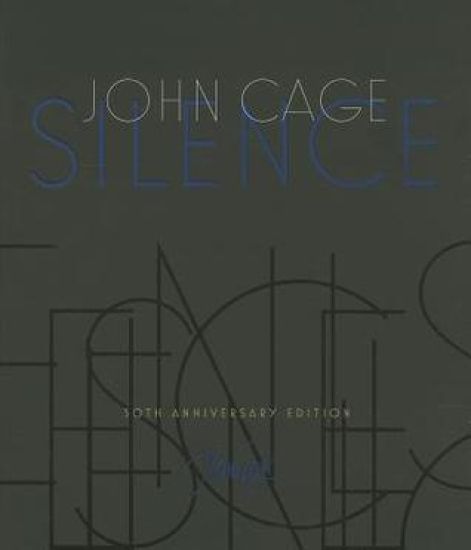
Silence

Silence

John Cage; Kyle (FRW) Gann

Wesleyan University Press
2013
pokkari
Silence, John Cage's first book and epic masterpiece, was published in October 1961. In these lectures, scores, and writings, Cage tries, as he says, to find a way of writing that comes from ideas, is not about them, but that produces them. Often these writings include mesostics and essays created by subjecting the work of other writers to chance procedures using the I Ching. Fifty years later comes a beautiful new edition with a foreword by eminent music critic Kyle Gann. A landmark book in American arts and culture, Silence has been translated into more than forty languages and has sold over half a million copies worldwide. Wesleyan University Press is proud to celebrate the fiftieth anniversary of the book's publication with this special hardcover edition.
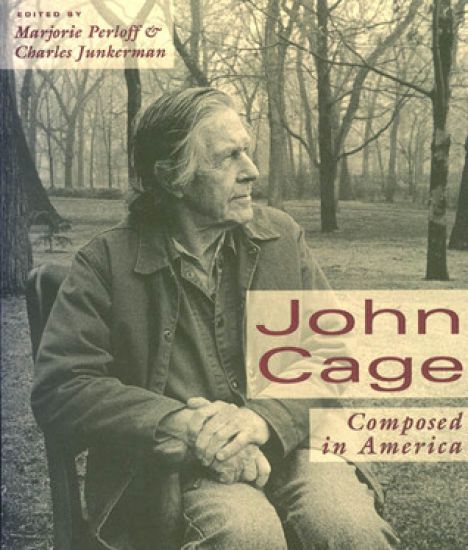
John Cage

John Cage

University of Chicago Press
1994
nidottu
When the avant-gardist John Cage died, he was already the subject of many interviews, memoirs and discussions of his contribution to music, music theory and performance practice. This text includes a revisionist treatment of the way Cage himself has composed and been "composed" in America. A disciple of Duchamp and Schoenberg, Satie and Joyce, Cage created compositions that undercut some of these artists' central principles and then attributed his own compositional theories to their "tradition." Following the text of Cage's "Overpopulation and Art," delivered at Stanford shortly before his death, ten critics respond to the complexity and contradiction exhibited in his work. In keeping with Cage's own interdisciplinarity, the critics approach the work from a variety of disciplines: philosophy (Daniel Herwitz, Gerald L. Bruns), biography and cultural history (Thomas S. Hines), game and chaos theory (N. Katherine Hayles), music culture (Jann Pasler), opera history (Herbert Lindenberger), literary and art criticism (Marjorie Perloff), cultural poetics (Gordana P. Crnkovic, Charles Junkerman), and poetic practice (Joan Retallack).
John Cage

John Cage

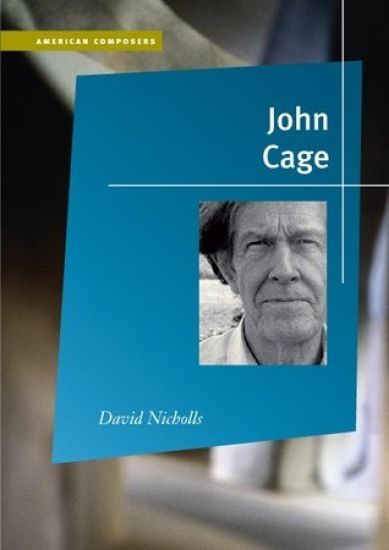
David Nicholls

University of Illinois Press
2007
sidottu
John Cage was a giant of American experimental music--composer, writer, and artist. He is most widely known for his 1952 composition 4'33, whose three movements continue to challenge the definition of music by being performed without playing a single note. In questioning fundamental tenets of Western music, Cage was often at the center of controversy, and is regarded as an important contributor to many facets of American culture. To enable readers to understand what makes Cage such an extraordinary figure, David Nicholls masterfully places his striking body of prose and poetry, over 300 music compositions, and prominent performance career into historical, environmental, intellectual, philosophical, and aesthetic contexts. Nicholls’ intimate study of John Cage’s personal and professional life confirms the legacy of this major figure in twentieth-century American culture.
John Cage

John Cage

Sara Haefeli

Routledge
2019
nidottu
This annotated bibliography uncovers the wealth of resources available on the life and music of John Cage, one of the most influential and fascinating composers of the twentieth-century. The guide will focus on documentary studies, archival resources, scholarly research, and autobiographical materials, and place the composer and his work in a larger context of postmodern philosophy, art and theater movements, and contemporary politics. It will support emerging scholarship and inquiry for future research on Cage, with carefully selected sources and useful annotations.
John Cage

John Cage

Routledge
2008
nidottu
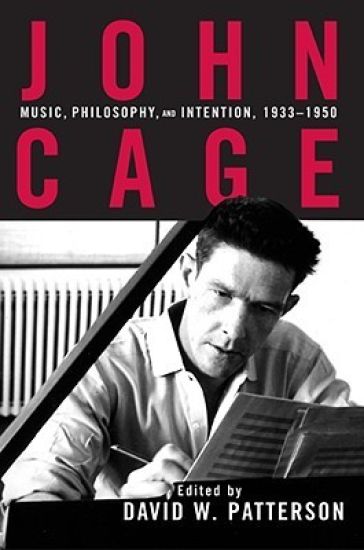
John Cage: Music, Philosophy, and Intention, 1933--1950 explores the early part of John Cage’s life and career, concentrating on the "pre-chance" period from roughly 1933 to 1950. These essays consider influences on Cage’s work, his early percussion pieces, his evolving aesthetic, and his movement toward an ideology that would later shape his own work, arguing that a reevaluation of this early period is crucial to understanding his later work. It includes contributions from an international group of music and art scholars.
John Cage

John Cage

CRC Press Inc
2001
sidottu
John Cage seeks to explore the early part of the composer's life and career, concentrating on the pre-chance period between 1933 and 1950 that is crucial to understanding his later work. The essays consider Cage's influences, his evolving aesthetic, and his movement toward ideology that would later shape his work.
John Cage

John Cage

Sara Haefeli

Routledge
2017
sidottu
This annotated bibliography uncovers the wealth of resources available on the life and music of John Cage, one of the most influential and fascinating composers of the twentieth-century. The guide will focus on documentary studies, archival resources, scholarly research, and autobiographical materials, and place the composer and his work in a larger context of postmodern philosophy, art and theater movements, and contemporary politics. It will support emerging scholarship and inquiry for future research on Cage, with carefully selected sources and useful annotations.
John Cage: A Mycological Foray

John Cage: A Mycological Foray

John Cage

Atelier Editions
2020
nidottu
Foraging for mushrooms with John Cage: writing, art, photography and ephemera from an idiosyncratic chapter in the composer's life Imagined as an extended mushroom-foraging expedition, John Cage: A Mycological Foray gathers together Cage’s mushroom-themed compositions, photographs, illustrations and ephemera. Indeterminacy Stories and other writings by Cage are interwoven throughout the first volume within a central essay examining Cage’s enduring relationship with mycology. Also included is a transcript of Cage’s 1983 performance, MUSHROOMS et Variationes. The second volume is the inaugural reproduction of Cage’s 1972 portfolio, Mushroom Book, authored in collaboration with illustrator Lois Long and botanist Alexander H. Smith. Readers are thus drawn through the landscape of Cage’s mycologically centred oeuvre and interests, discovering assorted works, images, compositions, philosophies and ephemera, as one might encounter assorted fungi and flora while foraging. John Cage: A Mycological Foray constitutes a new, idiosyncratic chapter in Cage’s oeuvre, a departure from the composer’s more established narrative. American composer and music theorist John Cage (1912–92) was a pioneer of indeterminacy in music, electroacoustic music and a leading figure of the postwar avant-garde. His influence extended to the realms of dance, poetry, performance and visual art.
John Cage

John Cage

Rob Haskins

Reaktion Books
2012
nidottu
John Cage’s contribution to twentieth-century music, literature and art not only established his place as a leading figure in the post-war avant-garde, but also guaranteed his enduring controversy. His emphasis on chance, as opposed to intention, rejected traditional artistic methods and caused uproar amongst his peers. The shock provoked by pieces such as 4’33” still reverberates today, as Cage’s radical approach to art and aesthetics continues to challenge and inspire artists worldwide.In his new biography Rob Haskins considers John Cage’s life, art, ideas and work, evaluating the twin pillars of Cage’s creative output and the ideas that lie behind it. Demystifying the artist’s use of chance, and his relationship to Zen Buddhism, the book explores Cage’s belief that everyday life and art are one and the same. John Cage will appeal to musicians and artists, as well as general readers interested in the art, music and ideas of the twentieth century.
John Cage Diary

John Cage Diary

John Cage

Siglio Press
2019
nidottu
Now available in an expanded paperback edition, Diary registers Cage's assessment of the times in which he lived as well as his often uncanny portents about the world we live in now. With a great sense of play as well as purpose, Cage traverses vast territory, from the domestic minutiae of everyday life to ideas about how to feed the world. He used chance operations to determine not only the word count and the application of various typefaces but also the number of letters per line, the patterns of indentation, and in the case of Part Three, originally published by Something Else Press color. The unusual visual variances on the page become almost musical as language takes on a physical and aural presence.While Cage used chance operations to expand the possibilities of creating and shaping his work beyond the limitations of individual taste, Diary nonetheless accumulates into a complex reflection of Cage's sensibilities as a thinker and citizen of the world, illuminating his social and political awareness, as well as his idealism and sense of humor: it becomes an oblique but indelible portrait of one the most influential figures of the 20th-century American avant-garde.Collecting all eight parts into a single volume, co-editors Joe Biel and Richard Kraft also used chance operations to render the entire text in various combinations of the red and blue (used by Dick Higgins and Alison Knowles for Part Three) as well as to apply a single set of 18 fonts to the entire work. In the editors' note, Kraft and Biel elucidate the procedure of chance operations and demonstrate its application, giving readers a rare opportunity to see how the text is transformed.This expanded paperback edition reproduces the 2015 hardback edition, with a new essay by mycologist and Cage aficionado David Rose and, most important, with a significant addendum that includes many facsimile pages of Cage's handwritten notebook of a ninth part in progress, bringing the reader into compelling proximity to Cage's process and the raw material from which Diary was made.
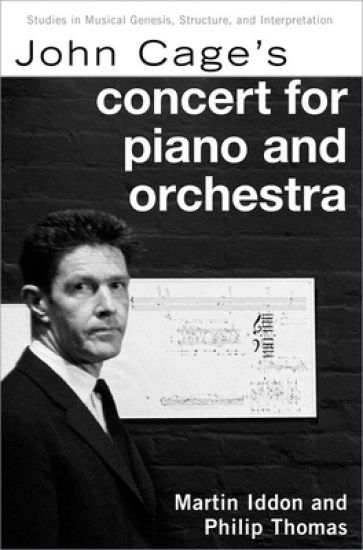
John Cage's Concert for Piano and Orchestra

John Cage's Concert for Piano and Orchestra

Martin Iddon; Philip Thomas

Oxford University Press Inc
2020
sidottu
John Cage's Concert for Piano and Orchestra is one of the seminal works of the second half of the twentieth century, and the centerpiece of the middle period of Cage's output. It is a culmination of Cage's work up to that point, incorporating notation techniques he had spent the past decade developing - techniques which remain radical to this day. But despite Cage's vitality to the musical development of the twentieth century, and the Concert's centrality to his career, the work is still rarely performed and even more rarely examined in detail. In this volume, Martin Iddon and Philip Thomas provide a rich and critical examination of this enormously significant piece, tracing its many contexts and influences - particularly Schoenberg, jazz, and Cage's own compositional practice - through a wide and previously untapped range of archival sources. Iddon and Thomas explain the Concert through a reading of its many histories, especially in performance - from the legendary performer disobedience and audience disorder of its 1958 New York premiere to a no less disastrous European premiere later the same year. They also highlight the importance of the piano soloist who premiered the piece, David Tudor, and its use alongside choreographer Merce Cunningham's Antic Meet. A careful examination of an apparently bewildering piece, the book explores the critical response to the Concert's performances, re-interrogates the mythology surrounding it, and finally turns to the music itself, in all its component parts, to see what it truly asks of performers and listeners.
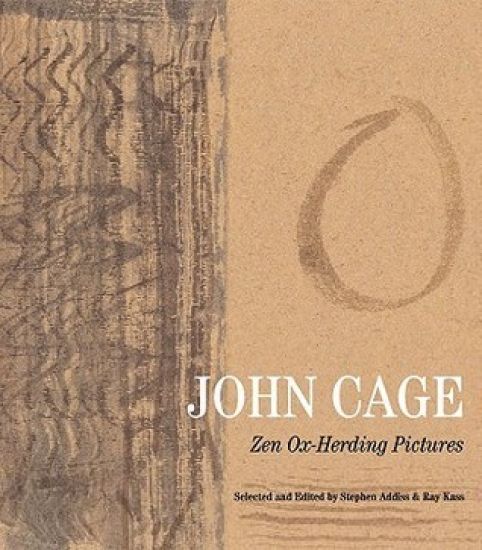
John Cage: Zen Ox-Herding Pictures

John Cage: Zen Ox-Herding Pictures

Stephen Addiss; Ray Kass

George Braziller Inc
2009
sidottu
"John Cage: The Zen Ox-Herding Pictures" brings together fifty never-before-seen watercolour images from renowned artist and composer John Cage, revealing the powerful influence of Zen in his life and work. These pieces were originally created on paper towels at the 1988 Mountain Lake Workshop as Cage experimented with the flow and tone of colours from his brush as he prepared for larger works. Authors Stephen Addiss and Ray Kass unite them here in patterns both planned and dictated by chance, the same methods by which Cage himself composed his later works. Ray Kass and Stephen Addiss provide introductory essays, discussing their experience with the works and the artist himself. They also explore fragments of Cage's poetry and his many statements about Zen practice, providing a fascinating lens through which the images seem to become mysterious echoes of the centuries-old "Ten Ox-Herding Paintings" - images about searching for, finding, and returning from the path to enlightenment.
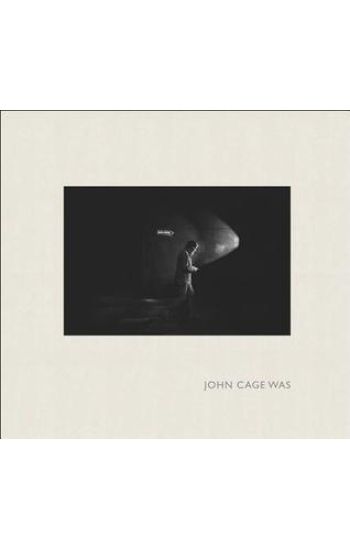
John Cage Was

John Cage Was

James Klosty

Wesleyan University Press
2014
sidottu
It is difficult to imagine a world without John Cage. His playful, challenging spirit remains pervasive—a formative force in the lives of those in the forefront of today's arts. This special book combines iconic photographs of Cage by James Klosty with eclectic testimony the author commissioned from people the world over, each asked to contribute their thoughts on Cage's influence on their lives and work with one-hundred-word statements. These remembrances range from humorous to reverent, to irreverent, and are from artists including Laurie Anderson, John Ashbery, Gavin Bryars, Jasper Johns, Harry Mathews, Meredith Monk, Mark Morris, Ron Padgett, Yoko Ono, Yvonne Rainer, Steve Reich, Peter Sellars, Stephen Sondheim, Twyla Tharp, Michael Tilson Thomas, Anne Waldman, Robert Wilson, and many more. The evocative duotone photographs show John Cage alone and in association with Merce Cunningham, Marcel Duchamp, Octavio Paz, Aaron Copland, and many others. The book provides public and private glimpses into the man who transformed chance from an inescapable inevitability of life into disciplined creativity through music, writing, philosophy, printmaking, and, on the largest scale of all, living. John Cage Was gives us a privileged view of an irreplaceable man who had few enemies and innumerable disciples.
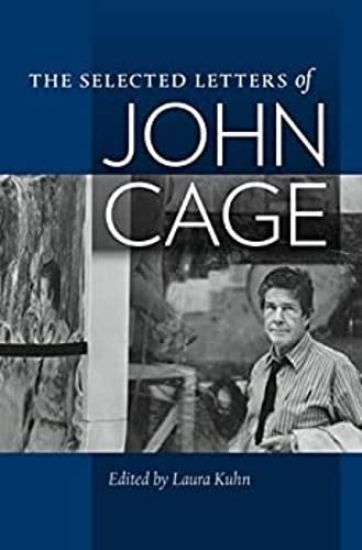
The Selected Letters of John Cage

The Selected Letters of John Cage

John Cage; Laura Kuhn

WESLEYAN UNIVERSITY PRESS
2022
nidottu
This selection of over five hundred letters gives us the life of John Cage with all the intelligence, wit, and inventiveness that made him such an important and groundbreaking composer and performer. The missives range from lengthy reports of his early trips to Europe in the 1930s through his years with the dancer Merce Cunningham, and shed new light on his growing eminence as an iconic performance artist of the American avant-garde. Cage's joie de vivre resounds in these letters - fully annotated throughout - in every phase of his career, and includes correspondence with Peter Yates, David Tudor, and Pierre Boulez, among others. Above all, they reveal his passionate interest in people, ideas, and the arts. The voice is one we recognize from his writings: singular, profound, irreverent, and funny. Not only will readers take pleasure in Cage's correspondence with and commentary about the people and events of a momentous and transformative time in the arts, they will also share in his meditations on the very nature of art. A deep pleasure to read, this volume presents an extraordinary portrait of a complex, brilliant man who challenged and changed the artistic currents of the twentieth century.
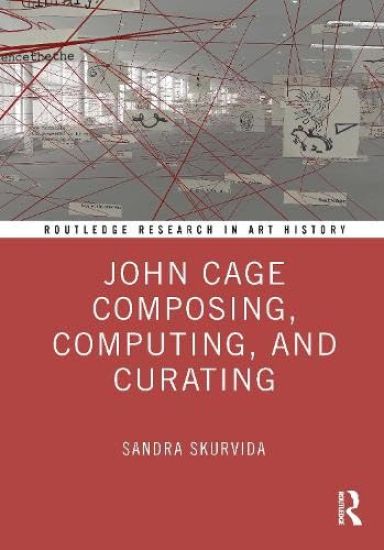
John Cage Composing, Computing, and Curating

John Cage Composing, Computing, and Curating

Sandra Skurvida

TAYLOR FRANCIS LTD
2025
sidottu
This study reassesses Cage’s multifaceted practice from a transdisciplinary perspective, using text as a premise for his musical, visual, lingual, and museal compositions.In his compositions, John Cage opened the structures of music, language, and the museum to change perpetuated by chance operations. His correspondences across history with an extended circle of creators, including Erik Satie, Marcel Duchamp, and Henry David Thoreau, among many others, erased single-minded authorship via methodical processing of source material. Foreshadowing ecological recycling, Cage’s late compositions for museum opened perspectives for posthuman mediation in curating and contemporary art. He conceived of anarchy as the coexistence of mutually aiding yet autonomous self-determinate entities. This book introduces Cage to the twenty-first century as a composer whose work intersects different temporalities and modes of being, the past and the present, the human and the non-human, and the individual and the communal.The book will be of interest to scholars of art history, music, curatorial studies, and museum studies.