Kirjahaku
Etsi kirjoja tekijän nimen, kirjan nimen tai ISBN:n perusteella.
1000 tulosta hakusanalla John Clarke
An Essay Upon the Education of Youth in Grammar-Schools. ... by John Clarke, ... the Third Edition. with Very Large Additions.
John Clarke
Gale Ecco, Print Editions
2010
pokkari
![A Sermon Delivered at the Church in Brattle-Street, January 2, 1784. at the Interment of the REV. Samuel Cooper, D.D. Who Expired, December 29, 1783. by John Clarke, A.M. Junior Pastor of the First Church in Boston. [Two Lines from Samuel].](/covers/9781140716709.jpg)
A Sermon Delivered at the Church in Brattle-Street, January 2, 1784. at the Interment of the REV. Samuel Cooper, D.D. Who Expired, December 29, 1783. by John Clarke, A.M. Junior Pastor of the First Church in Boston. [Two Lines from Samuel].
John Clarke
Gale Ecco, Print Editions
2010
pokkari
An Answer to the Question, Why Are You a Christian? by John Clarke, Minister of a Church in Boston. the Sixth Edition.
John Clarke
Gale Ecco, Print Editions
2010
pokkari

A Demonstration of Some of the Principal Sections of Sir Isaac Newton's Principles of Natural Philosophy. ... by John Clarke, ...
John Clarke
Gale Ecco, Print Editions
2010
pokkari
An Essay Upon Study. Wherein Directions are Given for the due Conduct Thereof, and the Collection of a Library, Proper for the Purpose, Consisting of the Choicest Books ... By John Clarke,
John Clarke
Gale Ecco, Print Editions
2018
sidottu
The 18th century was a wealth of knowledge, exploration and rapidly growing technology and expanding record-keeping made possible by advances in the printing press. In its determination to preserve the century of revolution, Gale initiated a revolution of its own: digitization of epic proportions to preserve these invaluable works in the largest archive of its kind. Now for the first time these high-quality digital copies of original 18th century manuscripts are available in print, making them highly accessible to libraries, undergraduate students, and independent scholars.The Age of Enlightenment profoundly enriched religious and philosophical understanding and continues to influence present-day thinking. Works collected here include masterpieces by David Hume, Immanuel Kant, and Jean-Jacques Rousseau, as well as religious sermons and moral debates on the issues of the day, such as the slave trade. The Age of Reason saw conflict between Protestantism and Catholicism transformed into one between faith and logic -- a debate that continues in the twenty-first century.++++The below data was compiled from various identification fields in the bibliographic record of this title. This data is provided as an additional tool in helping to insure edition identification: ++++British LibraryT108173Also issued as a part of: 'An essay upon the education of youth in grammar-schools', Dublin, 1736.Dublin: printed by S. Powell, for Edward Exshaw, 1736. vi,146p.; 12
![A Sermon Delivered at the Church in Brattle-Street, January 2, 1784. At the Interment of the Rev. Samuel Cooper, D.D. who Expired, December 29, 1783. By John Clarke, A.M. Junior Pastor of the First Church in Boston. [Two Lines From Samuel]](/covers/9781379336150.jpg)
A Sermon Delivered at the Church in Brattle-Street, January 2, 1784. At the Interment of the Rev. Samuel Cooper, D.D. who Expired, December 29, 1783. By John Clarke, A.M. Junior Pastor of the First Church in Boston. [Two Lines From Samuel]
John Clarke
Gale Ecco, Print Editions
2018
sidottu
The 18th century was a wealth of knowledge, exploration and rapidly growing technology and expanding record-keeping made possible by advances in the printing press. In its determination to preserve the century of revolution, Gale initiated a revolution of its own: digitization of epic proportions to preserve these invaluable works in the largest archive of its kind. Now for the first time these high-quality digital copies of original 18th century manuscripts are available in print, making them highly accessible to libraries, undergraduate students, and independent scholars.The Age of Enlightenment profoundly enriched religious and philosophical understanding and continues to influence present-day thinking. Works collected here include masterpieces by David Hume, Immanuel Kant, and Jean-Jacques Rousseau, as well as religious sermons and moral debates on the issues of the day, such as the slave trade. The Age of Reason saw conflict between Protestantism and Catholicism transformed into one between faith and logic -- a debate that continues in the twenty-first century.++++The below data was compiled from various identification fields in the bibliographic record of this title. This data is provided as an additional tool in helping to insure edition identification: ++++British LibraryW029137Half-title: Mr. Clarke's sermon, at the interment of the Rev. Dr. Cooper. Page 35 misnumbered 53 in some copies.Boston: Printed by John Gill, M, DCC, LXXXIV. 1784]. 35, 1] p.; 8

An Essay Upon the Education of Youth in Grammar-schools. ... By John Clarke, ... The Third Edition. With Very Large Additions
John Clarke
Gale Ecco, Print Editions
2018
sidottu
The 18th century was a wealth of knowledge, exploration and rapidly growing technology and expanding record-keeping made possible by advances in the printing press. In its determination to preserve the century of revolution, Gale initiated a revolution of its own: digitization of epic proportions to preserve these invaluable works in the largest archive of its kind. Now for the first time these high-quality digital copies of original 18th century manuscripts are available in print, making them highly accessible to libraries, undergraduate students, and independent scholars.Delve into what it was like to live during the eighteenth century by reading the first-hand accounts of everyday people, including city dwellers and farmers, businessmen and bankers, artisans and merchants, artists and their patrons, politicians and their constituents. Original texts make the American, French, and Industrial revolutions vividly contemporary.++++The below data was compiled from various identification fields in the bibliographic record of this title. This data is provided as an additional tool in helping to insure edition identification: ++++British LibraryT108856With a final advertisement leaf.London: printed for Charles Hitch, 1740. 4],222, 2]p.; 12

An Answer to the Question, Why are you a Christian? By John Clarke, Minister of a Church in Boston. The Sixth Edition
John Clarke
Gale Ecco, Print Editions
2018
sidottu
The 18th century was a wealth of knowledge, exploration and rapidly growing technology and expanding record-keeping made possible by advances in the printing press. In its determination to preserve the century of revolution, Gale initiated a revolution of its own: digitization of epic proportions to preserve these invaluable works in the largest archive of its kind. Now for the first time these high-quality digital copies of original 18th century manuscripts are available in print, making them highly accessible to libraries, undergraduate students, and independent scholars.The Age of Enlightenment profoundly enriched religious and philosophical understanding and continues to influence present-day thinking. Works collected here include masterpieces by David Hume, Immanuel Kant, and Jean-Jacques Rousseau, as well as religious sermons and moral debates on the issues of the day, such as the slave trade. The Age of Reason saw conflict between Protestantism and Catholicism transformed into one between faith and logic -- a debate that continues in the twenty-first century.++++The below data was compiled from various identification fields in the bibliographic record of this title. This data is provided as an additional tool in helping to insure edition identification: ++++British LibraryW037799"Advertisement from the first London edition of this work"--p. iii]-vii, signed: Theophilus Lindsey. Parentheses substituted for square brackets in imprint transcription.Boston: Printed and sold by Samuel Hall, no. 53, Cornhill, October, 1797. (Published according to act of Congress). vii, 4], 12-80 p.; 12
A Third Defence of Dr. Clarke's Demonstration of the Being and Attributes of God. Being a Vindication of the two Former Defences, in Answer to a Pamphlet, Entitled, Dr. Clarke's Notions of Space Examin'd, &c. By John Clarke
John Clarke
Gale Ecco, Print Editions
2018
sidottu
The 18th century was a wealth of knowledge, exploration and rapidly growing technology and expanding record-keeping made possible by advances in the printing press. In its determination to preserve the century of revolution, Gale initiated a revolution of its own: digitization of epic proportions to preserve these invaluable works in the largest archive of its kind. Now for the first time these high-quality digital copies of original 18th century manuscripts are available in print, making them highly accessible to libraries, undergraduate students, and independent scholars.The Age of Enlightenment profoundly enriched religious and philosophical understanding and continues to influence present-day thinking. Works collected here include masterpieces by David Hume, Immanuel Kant, and Jean-Jacques Rousseau, as well as religious sermons and moral debates on the issues of the day, such as the slave trade. The Age of Reason saw conflict between Protestantism and Catholicism transformed into one between faith and logic -- a debate that continues in the twenty-first century.++++The below data was compiled from various identification fields in the bibliographic record of this title. This data is provided as an additional tool in helping to insure edition identification: ++++British LibraryT084241London: printed for James, John, and Paul Knapton, 1733. 4],92p.; 8
An Essay Upon the Education of Youth in Grammar-schools. In Which the Vulgar Method of Teaching is Examined, and a new one Proposed, ... By John Clarke, ... The Second Edition. With Very Large Additions
John Clarke
Gale Ecco, Print Editions
2018
sidottu
The 18th century was a wealth of knowledge, exploration and rapidly growing technology and expanding record-keeping made possible by advances in the printing press. In its determination to preserve the century of revolution, Gale initiated a revolution of its own: digitization of epic proportions to preserve these invaluable works in the largest archive of its kind. Now for the first time these high-quality digital copies of original 18th century manuscripts are available in print, making them highly accessible to libraries, undergraduate students, and independent scholars.Delve into what it was like to live during the eighteenth century by reading the first-hand accounts of everyday people, including city dwellers and farmers, businessmen and bankers, artisans and merchants, artists and their patrons, politicians and their constituents. Original texts make the American, French, and Industrial revolutions vividly contemporary.++++The below data was compiled from various identification fields in the bibliographic record of this title. This data is provided as an additional tool in helping to insure edition identification: ++++British LibraryT144312With a final advertisement leaf.London: printed for Arthur Bettesworth, 1730. 4],222, 2]p.; 12

A Demonstration of Some of the Principal Sections of Sir Isaac Newton's Principles of Natural Philosophy. ... By John Clarke,
John Clarke
Gale Ecco, Print Editions
2018
sidottu
The 18th century was a wealth of knowledge, exploration and rapidly growing technology and expanding record-keeping made possible by advances in the printing press. In its determination to preserve the century of revolution, Gale initiated a revolution of its own: digitization of epic proportions to preserve these invaluable works in the largest archive of its kind. Now for the first time these high-quality digital copies of original 18th century manuscripts are available in print, making them highly accessible to libraries, undergraduate students, and independent scholars.Medical theory and practice of the 1700s developed rapidly, as is evidenced by the extensive collection, which includes descriptions of diseases, their conditions, and treatments. Books on science and technology, agriculture, military technology, natural philosophy, even cookbooks, are all contained here.++++The below data was compiled from various identification fields in the bibliographic record of this title. This data is provided as an additional tool in helping to insure edition identification: ++++British LibraryT144750London: printed for James and John Knapton, 1730. xvj,313, 7]p., XVII plates; 8

The Foundation of Morality in Theory and Practice Considered, in an Examination of the Learned Dr. Samuel Clarke's Opinion, Concerning the Original of Moral Obligation; ... By John Clarke,
John Clarke
Gale Ecco, Print Editions
2018
sidottu
The 18th century was a wealth of knowledge, exploration and rapidly growing technology and expanding record-keeping made possible by advances in the printing press. In its determination to preserve the century of revolution, Gale initiated a revolution of its own: digitization of epic proportions to preserve these invaluable works in the largest archive of its kind. Now for the first time these high-quality digital copies of original 18th century manuscripts are available in print, making them highly accessible to libraries, undergraduate students, and independent scholars.The Age of Enlightenment profoundly enriched religious and philosophical understanding and continues to influence present-day thinking. Works collected here include masterpieces by David Hume, Immanuel Kant, and Jean-Jacques Rousseau, as well as religious sermons and moral debates on the issues of the day, such as the slave trade. The Age of Reason saw conflict between Protestantism and Catholicism transformed into one between faith and logic -- a debate that continues in the twenty-first century.++++The below data was compiled from various identification fields in the bibliographic record of this title. This data is provided as an additional tool in helping to insure edition identification: ++++British LibraryT017532With a final leaf of advertisements and errata.York: printed by Thomas Gent: and sold by A. Bettesworth, London]; T. Hammond, jun. in York; and T. Ryles in Hull, 1726]. 112, 2]p.; 8

In this fascinating biography, author Lisa Baile provides a detailed portrait of John Clarke, the man who became British Columbia's most renowned mountaineer by doing it his way. Clarke had no interest in "trophy climbs" and never did ascend many of BC's highest peaks. On the other hand, he explored more virgin territory and racked up more first ascents than any other climber -- perhaps more than any climber who ever lived. Although he came to be honoured far and wide and is one of the few mountaineers to be awarded the Order of Canada, he was a modest man who pursued his passion without fanfare, frequently embarking on gruelling expeditions into unknown territory by himself. His reputation spread and grew to legendary proportions, not just owing to the prodigious scale of his achievements, but because of the way he carried them out -- he travelled light and scorned technology, wearing cotton long Johns and eating home-made granola. He dedicated his life to exploring the numberless, nameless peaks of the Coast Range and worked at odd jobs just long enough to pay for the next season's climbing.He was charismatic and famously attractive to women, but none were able to compete with his first love and he didn't marry until he was almost fifty. Always a popular lecturer, in his later years he devoted his considerable energies to the cause of environmental education. After he succumbed to cancer in 2003, the BC government named Mount John Clarke in his honour -- fitting recognition for the man who had himself named many BC mountains. This book covers this remarkable life from beginning to end, examining Clarke through his own words and pictures as well as through the words of his many friends. All agree it was an honour to have known him, and readers will find it equally inspiring to meet him through these pages.
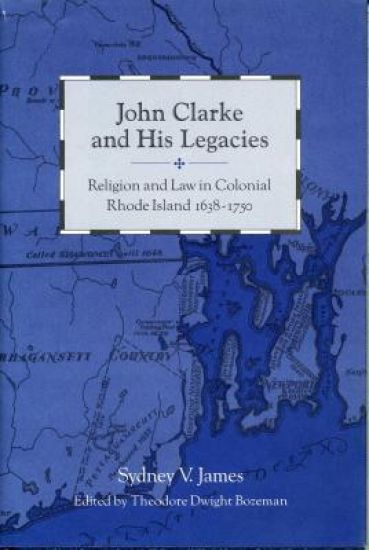
John Clarke and His Legacies is the first full-length biography of John Clarke (1609–76), a principal founder of colonial Rhode Island. Although Roger Williams usually gets most of the attention, Sydney James shows that Clarke made a lasting contribution to the colony—perhaps more so than Williams. Williams was the first Baptist minister in America, but he left his church after a very short time. And although Williams won the first charter for Rhode Island, the charter soon had to be replaced. Clarke, however, founded the first Baptist church in Newport, where he continued to contribute to the Baptist community. And in 1663 he procured the royal charter that would remain the foundation of government in Rhode Island until 1842.This inquiry into Clarke's life engages a variety of intriguing topics. It surveys a formative stage in American Baptist history, one that spurned dependency upon government more thoroughly than any part of the United States does today. Through the experience of Clark, we see pioneering American religious volunteerism, problems of church-state relations, and the peculiar nature of colonial relations with the parent country.
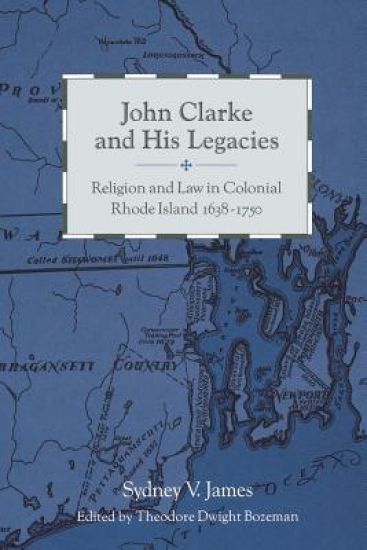
John Clarke and His Legacies is the first full-length biography of John Clarke (1609–76), a principal founder of colonial Rhode Island. Although Roger Williams usually gets most of the attention, Sydney James shows that Clarke made a lasting contribution to the colony—perhaps more so than Williams. Williams was the first Baptist minister in America, but he left his church after a very short time. And although Williams won the first charter for Rhode Island, the charter soon had to be replaced. Clarke, however, founded the first Baptist church in Newport, where he continued to contribute to the Baptist community. And in 1663 he procured the royal charter that would remain the foundation of government in Rhode Island until 1842.This inquiry into Clarke's life engages a variety of intriguing topics. It surveys a formative stage in American Baptist history, one that spurned dependency upon government more thoroughly than any part of the United States does today. Through the experience of Clark, we see pioneering American religious volunteerism, problems of church-state relations, and the peculiar nature of colonial relations with the parent country.