The fully revised and updated new edition of this authoritative work provides a clear and detailed analysis of the institutions and procedures for the settlement of international disputes. There has been a continued expansion of the number of international tribunals and the number of cases before international courts in recent years. The proliferation of such fora and of the jurisprudence they generate has made it essential to understand and regulate evolving andcompeting jurisdictions. This new edition authoritatively sets out the substance and procedure of the law of international dispute settlement in the context of these new developments.The first part of the book examines the different methods and institutions of dispute settlement. It introduces the most important dispute settlement methods and discusses the role of domestic courts in settling international disputes. It assesses the institutions of general jurisdiction, notably the International Court of Justice, and the various sectoral regimes of dispute settlement. Part two provides a comprehensive examination of procedure before an international court or tribunal. It setsout the shared elements of procedure, while also highlighting the important procedural differences between the various international courts and arbitral bodies. This section includes an discussion of the law of evidence and the conduct of counsel in international adjudication. The third part focuseson the problems facing the system of international dispute settlement as a result of the proliferation of dispute resolution mechanisms, and the augmenting specialization and fragmentation of international law. It analyses the various ways competing jurisdictions can be regulated to avoid creating conflicting decisions, and the resultant systemic incoherence. The book remains essential reading for both students of international law and international legal practitioners.
The fully revised and updated new edition of this authoritative work provides a clear and detailed analysis of the institutions and procedures for the settlement of international disputes. There has been a continued expansion of the number of international tribunals and the number of cases before international courts in recent years. The proliferation of such fora and of the jurisprudence they generate has made it essential to understand and regulate evolving andcompeting jurisdictions. This new edition authoritatively sets out the substance and procedure of the law of international dispute settlement in the context of these new developments.The first part of the book examines the different methods and institutions of dispute settlement. It introduces the most important dispute settlement methods and discusses the role of domestic courts in settling international disputes. It assesses the institutions of general jurisdiction, notably the International Court of Justice, and the various sectoral regimes of dispute settlement. Part two provides a comprehensive examination of procedure before an international court or tribunal. It setsout the shared elements of procedure, while also highlighting the important procedural differences between the various international courts and arbitral bodies. This section includes an discussion of the law of evidence and the conduct of counsel in international adjudication. The third part focuseson the problems facing the system of international dispute settlement as a result of the proliferation of dispute resolution mechanisms, and the augmenting specialization and fragmentation of international law. It analyses the various ways competing jurisdictions can be regulated to avoid creating conflicting decisions, and the resultant systemic incoherence. The book remains essential reading for both students of international law and international legal practitioners.
This work has been selected by scholars as being culturally important and is part of the knowledge base of civilization as we know it.This work is in the public domain in the United States of America, and possibly other nations. Within the United States, you may freely copy and distribute this work, as no entity (individual or corporate) has a copyright on the body of the work.Scholars believe, and we concur, that this work is important enough to be preserved, reproduced, and made generally available to the public. To ensure a quality reading experience, this work has been proofread and republished using a format that seamlessly blends the original graphical elements with text in an easy-to-read typeface.We appreciate your support of the preservation process, and thank you for being an important part of keeping this knowledge alive and relevant.
Title: Essays on the Progress of the Vital Principle from the Vegetable to the Animal Kingdoms and the Soul of Man, introductory to contemplations on Deity. MS. notes by the author].Publisher: British Library, Historical Print EditionsThe British Library is the national library of the United Kingdom. It is one of the world's largest research libraries holding over 150 million items in all known languages and formats: books, journals, newspapers, sound recordings, patents, maps, stamps, prints and much more. Its collections include around 14 million books, along with substantial additional collections of manuscripts and historical items dating back as far as 300 BC.The GENERAL HISTORICAL collection includes books from the British Library digitised by Microsoft. This varied collection includes material that gives readers a 19th century view of the world. Topics include health, education, economics, agriculture, environment, technology, culture, politics, labour and industry, mining, penal policy, and social order. ++++The below data was compiled from various identification fields in the bibliographic record of this title. This data is provided as an additional tool in helping to insure edition identification: ++++ British Library Collier, John; 1800. xii. 376 p.; 8 . 1144.f.4.
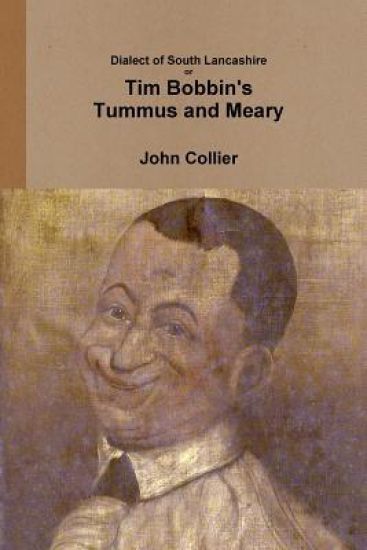
John Collier was an English caricaturist and satirical poet known by the pseudonym of Tim Bobbin. His first and most famous work, A View of the Lancashire Dialect, or, Tummus and Mary, appeared in 1746, and is the earliest significant piece of Lancashire dialect to be published He died in 1786 leaving the sum of GBP50 and was buried in the churchyard of Rochdale Parish Church, St. Chad's. He wrote his own epitaph 20 minutes before he died, "Jack of all trades...left to lie i'th dark" which is inscribed upon his gravestone. He had also written a number of other humorous epitaphs for graves, a number of which can still be seen in St. Chad's churchyard. This 1850 edition also includes an enlarged and ammended gloassary of Lancashire Dialect compiled by Samuel Bamford.
This work has been selected by scholars as being culturally important, and is part of the knowledge base of civilization as we know it. This work was reproduced from the original artifact, and remains as true to the original work as possible. Therefore, you will see the original copyright references, library stamps (as most of these works have been housed in our most important libraries around the world), and other notations in the work.This work is in the public domain in the United States of America, and possibly other nations. Within the United States, you may freely copy and distribute this work, as no entity (individual or corporate) has a copyright on the body of the work.As a reproduction of a historical artifact, this work may contain missing or blurred pages, poor pictures, errant marks, etc. Scholars believe, and we concur, that this work is important enough to be preserved, reproduced, and made generally available to the public. We appreciate your support of the preservation process, and thank you for being an important part of keeping this knowledge alive and relevant.
This republication of the third edition (1889) of John Collier's classic text offers a fascinating and informative glimpse into the academic oil painting tradition of the late nineteenth century. Includes instructions for painting from life using the "sight-size" method, advice on choosing the proper paints and mediums, as well as in-depth discussions of subject matter, color theory, and the comparative advantages of direct versus indirect painting. Highly recommended for anyone interested in the revival of traditional oil painting techniques.
John Collier's edgy, sardonic tales are works of rare wit, curious insight, and scary implication. They stand out as one of the pinnacles in the critically neglected but perennially popular tradition of weird writing that includes E.T.A. Hoffmann and Charles Dickens as well as more recent masters like Jorge Luis Borges and Roald Dahl. With a cast of characters that ranges from man-eating flora to disgruntled devils and suburban salarymen (not that it's always easy to tell one from another), Collier's dazzling stories explore the implacable logic of lunacy, revealing a surreal landscape whose unstable surface is depth-charged with surprise.







![Essays on the Progress of the Vital Principle from the Vegetable to the Animal Kingdoms and the Soul of Man, Introductory to Contemplations on Deity. Ms. Notes [By the Author].](/covers/9781241504588.jpg)