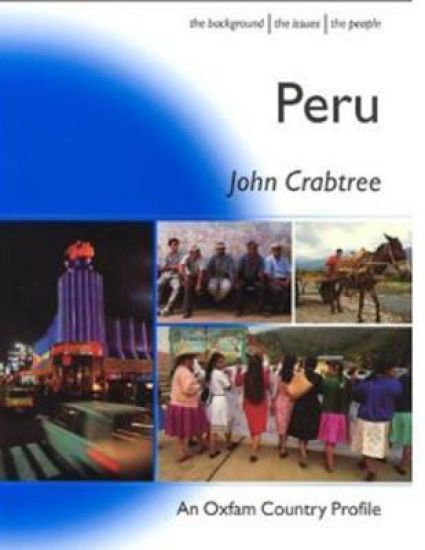
This outstanding series provides concise and lively introductions to countries and the major development issues they face. Packed full of factual information, photographs, and maps, the guides also focus on ordinary people and the impact that historical, economic and environmental issues have on their lives.
Title: A Concise History of the Parish and Vicarage of Halifax, in the county of York.Publisher: British Library, Historical Print EditionsThe British Library is the national library of the United Kingdom. It is one of the world's largest research libraries holding over 150 million items in all known languages and formats: books, journals, newspapers, sound recordings, patents, maps, stamps, prints and much more. Its collections include around 14 million books, along with substantial additional collections of manuscripts and historical items dating back as far as 300 BC.The HISTORY OF BRITAIN & IRELAND collection includes books from the British Library digitised by Microsoft. As well as historical works, this collection includes geographies, travelogues, and titles covering periods of competition and cooperation among the people of Great Britain and Ireland. Works also explore the countries' relations with France, Germany, the Low Countries, Denmark, and Scandinavia. ++++The below data was compiled from various identification fields in the bibliographic record of this title. This data is provided as an additional tool in helping to insure edition identification: ++++ British Library Crabtree, John; 1836. ix. 563 p.; 8 . 10360.ee.23.
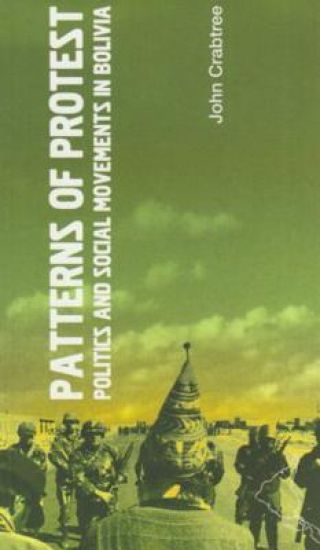
Bolivia leapt onto the front pages of the news in October 2003, when the 'Gas Wars' protests caused the ousting of Bolivia's President, Gonzalo Sanchez de Lozada. In the Gas Wars the indigenous inhabitants, trade unions, and other civil society groups came together to protest the sale of Bolivian natural gas to the United States through a pipeline leading to Chile. In the unrest protestors were killed, and calls for the President to resign grew ever louder. Bolivia has a long history of social protest. In Cochabamba in 2000, the Water Wars saw nearly 10,000 people take to the streets against the privatisation of water. The Bolivian peoples' strong stance against foreign interests and the sale of their natural resources has been triggered by US pressure; first in the 'war on drugs' - the fumigation of 'illegal' coca crops - and pressure waged on a wider front of IMF structural adjustments, and the neo-liberal regime. In Patterns of Protest, UK-based Andean expert John Crabtree explains the antecedents of a poor country's struggle against its most powerful neighbours, and the predatory interests of global capitalism.In a strongly indigenous nation, explains the influence of Quechua and Aymara identity and organising in Bolivian politics, and analyses the unique way that Boliva has united disparate populations - the urban working class and the rural indigenous people - to demand that Bolivian natural resources benefit Bolivians first.
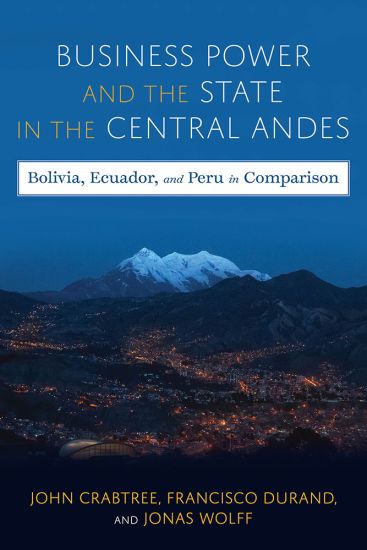
This coauthored monograph examines how business groups have interacted with state authorities in the three central Andean countries from the mid-twentieth century through the early twenty-first. This time span covers three distinct economic regimes: the period of state-led import substitutive industrialization from the 1950s through the 1970s, the neoliberalism of the 1980s and 1990s, and the post-neoliberal period since the earlier 2000s. These three countries share many similarities but also have important differences that reveal how power is manifested. Peru has had an almost unbroken hegemony of business elites who leverage their power over areas of state activity that affect them. Bolivia, by contrast, shows how strong social movements have challenged business dominance at crucial periods, reflecting a weaker elite class that is less able to exercise influence over decision-making. Ecuador falls in between these two, with business elites being more fragmented than in Peru and social movements being weaker than in Bolivia. The authors analyze the viability of these different regimes and economic models, why they change in specific circumstances, and how they affect the state and its citizen.
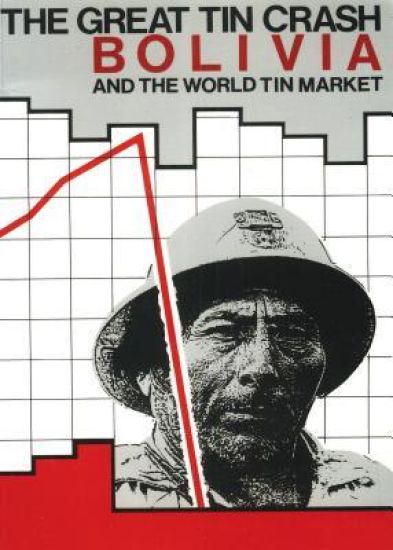
Traces the story of tin, from the rise of the tin can to the present, and including a look at the tin crash of 1985 from the point of view of those who have lost the most: the miners and their families.
While leftist governments have been elected across Latin America, this ‘Pink Tide’ has so far failed to reach Peru. Instead, the corporate elite remains firmly entrenched, and the left continues to be marginalised. Peru therefore represents a particularly stark example of ‘state capture’, in which an extreme concentration of wealth in the hands of a few corporations and pro-market technocrats has resulted in a monopoly on political power.Post the 2016 elections, John Crabtree and Francisco Durand look at the ways in which these elites have been able to consolidate their position at the expense of genuine democracy, with a particular focus on the role of mining and other extractive industries, where extensive privatization and deregulation has contributed to extreme disparities in wealth and power.In the process, Crabtree and Durand provide a unique case study of state development, by revealing the mechanisms used by elites to dominate political discussion and marginalize their opponents, as well as the role played by external actors such as international financial institutions and foreign investors. The significance of Crabtree’s findings therefore extends far beyond Peru, and illuminates the wider issue of why mineral-rich countries so often struggle to attain meaningful democracy.
While leftist governments have been elected across Latin America, this ‘Pink Tide’ has so far failed to reach Peru. Instead, the corporate elite remains firmly entrenched, and the left continues to be marginalised. Peru therefore represents a particularly stark example of ‘state capture’, in which an extreme concentration of wealth in the hands of a few corporations and pro-market technocrats has resulted in a monopoly on political power.Post the 2016 elections, John Crabtree and Francisco Durand look at the ways in which these elites have been able to consolidate their position at the expense of genuine democracy, with a particular focus on the role of mining and other extractive industries, where extensive privatization and deregulation has contributed to extreme disparities in wealth and power.In the process, Crabtree and Durand provide a unique case study of state development, by revealing the mechanisms used by elites to dominate political discussion and marginalize their opponents, as well as the role played by external actors such as international financial institutions and foreign investors. The significance of Crabtree’s findings therefore extends far beyond Peru, and illuminates the wider issue of why mineral-rich countries so often struggle to attain meaningful democracy.
Since Evo Morales was elected president in 2006 as leader of the MAS, the first social movement to achieve political power in Latin America, Bolivia has seen radical changes and continues to generate huge interest worldwide. In this revealing new book, Crabtree and Chaplin show how ordinary people have responded to the processes of change that have taken place in the country over the last few years. Based on a wealth of interview material and original reportage, the book enters the terrain of grassroots politics, identifying how Bolivians work within the country's social movements and how they view the effects that this participation has achieved. It asks how they see their lives as being altered - for better or for worse - by this experience, as well as how they evaluate the experience of becoming politically involved, often for the first time. This unique bottom-up analysis explores the often complex relationship between Bolivia's people, social movements and the state, highlighting both the achievements and limitations of the MAS administration. In doing so, it casts important new light both on the nature of the Bolivian 'experiment' and its implications for participatory politics in other parts of the developing world.
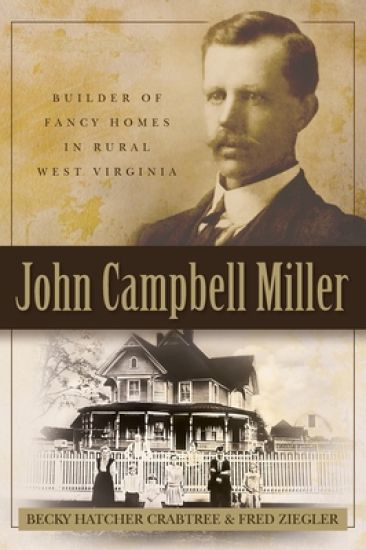
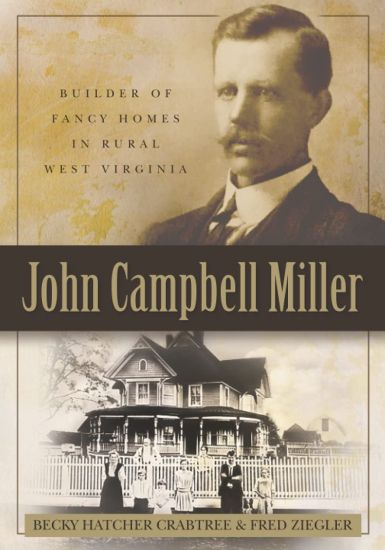
Beautifully illustrated and with charming detail, this book documents fifty-nine houses and public structures of builder John Campbell Miller primarily in southwestern Monroe County, West Virginia, which were constructed between 1886 and 1923. They range from the high Victorian Queen Anne style to the twentieth century Colonial Revival and Craftsman styles, and many are elegant farmhouses that stand out from the bucolic landscape.Readers gain a glimpse of the era when large farming families were the norm and horse-drawn wagons were giving way to motorized vehicles. Organized by community, this book contains over two hundred photographs, roughly half of which are vintage, and a text that covers the stylistic elements as well as the family stories of each. These details have been resurrected through visits and interviews with current residents as well as from the files of the Monroe County Historical Society. The identification of Miller's buildings is based on a list and photo file maintained over the last hundred years by generations of his family.
It happens in marriages, parent-child relationships, friendships, workplaces, and churches: Communication falters, friendships wane, teenagers withdraw, marriages fail, and bitter rifts sever once-strong ties. Christian communities are no exception. Why do so many of our relationships suffer from alienation, indifference, and even hostility? Author Sam Crabtree believes that often at the heart of these breakdowns is a lack of affirmation. He observes in Scripture that God grants mercy to those who refresh others, and in life that people tend to be influenced by those who praise them. Crabtree shows how a robust “God-centered affirmation ratio” refreshes others and honors God. Practicing Affirmation sounds a call to recognize and affirm the character of Christ in others. When done well, affirmation does not fuel pride in the person, but refreshes them and honors God. All who are discouraged in relationships will find wisdom and practical insight in this book.
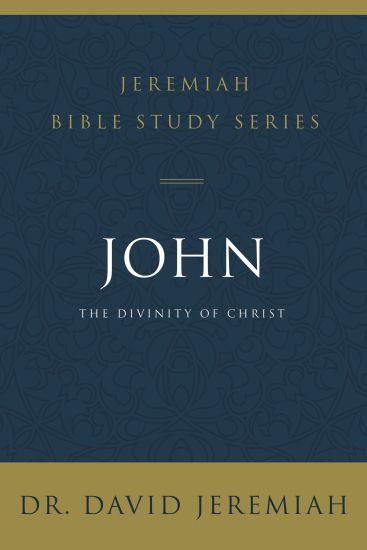
Jesus came to give us life.Jesus called twelve men to be His disciples, but three fishermen–Peter, James, and John–shared a special relationship with Him. They were given direct access to some of the more pivotal events in Jesus’ ministry, such as the transfiguration, His raising of Lazarus from the dead, and His agony in the Garden of Gethsemane. John’s account thus gives us a unique glimpse from one of Jesus’ closest disciples into the significance of the life, death, and resurrection of Christ. John reveals how Jesus came to provide “living water” to quench our deep spiritual thirst for the things of God. He shows how Jesus is the “bread of life” who satisfies our deep spiritual hunger. And he reveals how Jesus is the only way we can obtain that living water and bread of life, for “no one comes to the Father” except through Him.The Jeremiah Bible Study Series captures Dr. David Jeremiah’s forty-plus years of commitment to teaching the Word of God. In each study, he will help you understand what the Bible says, what it meant to the people at the time it was written, and what it means to you today. Along the way, you will gain insights into the text, identify key stories and themes, and be challenged to apply the truth you find in your life.
A companion series to the acclaimed Word Biblical CommentaryFinding the great themes of the books of the Bible is essential to the study of God's Word and to the preaching and teaching of its truths. These themes and ideas are often like precious gems: they lie beneath the surface and can only be discovered with some difficulty. While commentaries are useful for helping readers understand the content of a verse or chapter, they are not usually designed to help the reader to trace important subjects systematically within a given book a Scripture.The Word Biblical Themes series helps readers discover the important themes of a book of the Bible. This series distills the theological essence of a given book of Scripture and serves it up in ways that enrich the preaching, teaching, worship, and discipleship of God's people. Volumes in this series:Are written by top biblical scholarsFeature authors who wrote on the same book of the Bible for the Word Biblical Commentary seriesDistill deep and focused study on a biblical book into the most important themes and practical applications of themGive readers an ability to see the "big picture" of a book of the Bible by understanding what topics and concerns were most important to the biblical writersHelp address pressing issues in the church today by showing readers see how the biblical writers approached similar issues in their dayAre ideal for sermon preparation and for other teaching in the church Word Biblical Themes are an ideal resource for any reader who has used and benefited from the Word Biblical Commentary series, and will help pastors, bible teachers, and students as they seek to understand and apply God’s word to their ministry and learning.
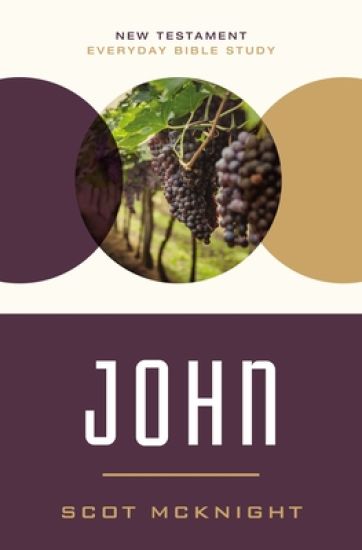
Become a daily Bible reader, attentive to the mind of God."Scot McKnight is one of my absolute favorite New Testament scholars and his Everyday Bible Study series is akin to Einstein creating a user-friendly version of the Theory of Relativity!"—Lisa Harper, award-winning author and Bible teacherIn the New Testament Everyday Bible Study Series, widely respected biblical scholar Scot McKnight reveals the newness and activeness of God's Word as it works in our everyday lives. His unique approach to Bible study combines sound theology with relevant pastoral wisdom. Each volume of this series provides:Original Meaning: Brief, precise expositions of the biblical text and offers a clear focus for the central message of each passage.Fresh Interpretation: Brings the passage alive with fresh images and what it means to follow King Jesus.Practical Application: Biblical connections and questions for reflection and application for each passage. Ideal for personal reflection or group study, John will help you see God in the biblical context so you can hear from God in your context. John's Gospel highlights how people responded to Jesus in the first century but also showcases responses for readers today: faith that abides in who he is, obeys what he calls us to do, and witnesses about Jesus to the world.Who Jesus is and who we understand him to be shape how we respond to Jesus and the kind of person we are created to become.Scot McKnight will walk you and your group through John with Scripture passages (sometimes translated from the original by McKnight himself), reflection questions, pastoral insights, and ideas for putting God's words into action.