Kirjojen hintavertailu. Mukana 11 244 527 kirjaa ja 12 kauppaa.

Kirjahaku

Etsi kirjoja tekijän nimen, kirjan nimen tai ISBN:n perusteella.

1000 tulosta hakusanalla John Craig-Sharples

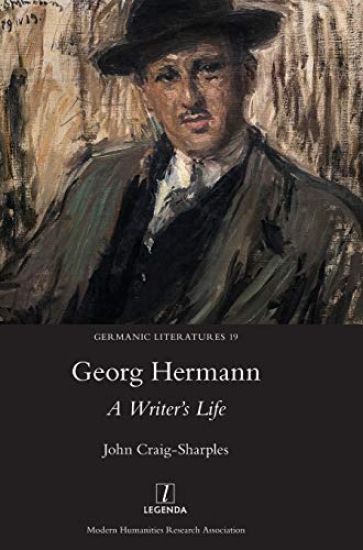
Georg Hermann

Georg Hermann

John Craig-Sharples

Legenda
2019
sidottu
Following the success of his novel Jettchen Gebert (1906), Georg Hermann (1871-1943) became one of Germany's best-loved authors: Schnitzler called him 'the Jewish Fontane'.
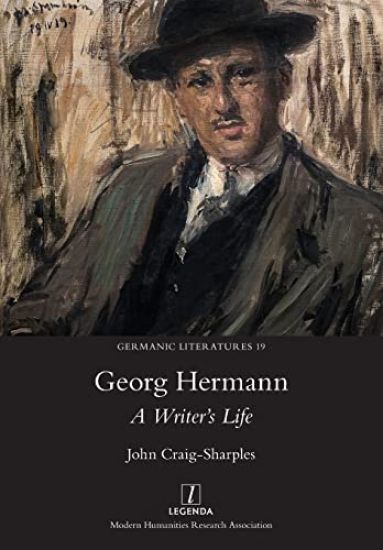
Georg Hermann

Georg Hermann

John Craig-Sharples

Legenda
2021
pokkari
Following the success of his novel Jettchen Gebert (1906), Georg Hermann (1871-1943) became one of Germany's best-loved authors: Schnitzler called him 'the Jewish Fontane'. A Berliner himself, Hermann was celebrated for capturing the spirit and atmosphere of the city, and renowned for his Impressionistic ability to evoke mood and ambience. He became a prominent opponent of war in 1914, and his journalism during the Weimar years shows him to have been one of the first writers to recognise the threat posed by the rising tide of anti-Semitism. Facing arrest in March 1933, he went into exile in the Netherlands, but continued to publish new novels, most notably Rosenemil (1935). Following the German occupation, Hermann was incarcerated in Westerbork in June 1943. He was transported from there to Auschwitz, where he died.Richly illustrated with previously unseen photographs from the family's extensive private collection, this intimate study tells Hermann's complete story for the first time, blending an exploration of his personal world with analysis of his principal works, and reveals how an understanding of Hermann's life offers fresh insights into the darkest period in German history.John Craig-Sharples read Modern History at Brasenose College, Oxford, and has subsequently worked in the UK civil service. He is Georg Hermann's great-grandson.
Life, Letters And Addresses Of John Craig Havemeyer (1914)
This book, "Life, Letters And Addresses Of John Craig Havemeyer (1914)", by John Craig Havemeyer, is a replication of a book originally published before 1914. It has been restored by human beings, page by page, so that you may enjoy it in a form as close to the original as possible. This book was created using print-on-demand technology. Thank you for supporting classic literature.
Introduction to Robotics

Introduction to Robotics

John Craig

Pearson
2017
sidottu
For senior-year undergraduate and first-year graduate courses in robotics. An intuitive introduction to robotic theory and application Since its original publication in 1986, Craig’s Introduction to Robotics: Mechanics and Control has been the leading textbook for teaching robotics at the university level. Blending traditional mechanical engineering material with computer science and control theoretical concepts, the text covers a range of topics, including rigid-body transformations, forward and inverse positional kinematics, velocities and Jacobians of linkages, dynamics, linear and non-linear control, force control methodologies, mechanical design aspects, and robotic programming. The 4th Edition features a balance of application and theory, introducing the science and engineering of mechanical manipulation--establishing and building on foundational understanding of mechanics, control theory, and computer science. With an emphasis on computational aspects of problems, the text aims to present material in a simple, intuitive way.
The Reformation in English Towns, 1500-1640
This volume seeks to address a relatively neglected subject in the field of English reformation studies: the reformation in its urban context. Drawing on the work of a number of historians, this collection of essays will seek to explore some of the dimensions of that urban stage and to trace, using a mixture of detailed case studies and thematic reflections, some of the ways in which religious change was both effected and affected by the activities of townsmen and women.
The Reformation in English Towns, 1500-1640
This volume seeks to address a relatively neglected subject in the field of English reformation studies: the reformation in its urban context. Drawing on the work of a number of historians, this collection of essays will seek to explore some of the dimensions of that urban stage and to trace, using a mixture of detailed case studies and thematic reflections, some of the ways in which religious change was both effected and affected by the activities of townsmen and women.
The Mint

The Mint

John Craig

Cambridge University Press
2011
pokkari
For an august and important institution of the realm, whose activities concern every citizen so constantly and continuously, is it not surprising how little every citizen knows of the London Mint in detail? In this 1953 book its story up until the 1950s is told with unimpeachable authority by Sir John Craig, former Deputy Master and Comptroller of the Royal Mint and Engraver of the King's Seals. Any reader may follow the chronology of the Mint, from the many crude workshops of the early days to the central, nationally recognised organisation with statutory safeguards that it has become. Here they may read of those who influenced the growth and policy of the Mint, watch the development of monetary theory, as well as the changes in technical processes of coin making, and the gradual evolution of statutory control. The whole work is illustrated from the archives of the Mint.
The Well for A New Civilization

The Well for A New Civilization

John Craig

Blue Logic
2022
sidottu
The human species is threatening itself and Earth, its home, with destruction. With our sheer numbers, our garbage and our toxic way of living, and our weaponry and political instability, we have put our own survival in doubt. Our civilization is failing under the stresses we ourselves have brought to bear. It seems some kind of retrenchment must occur, some culling of our population, some retreat to a less exploitative relation with what sustains us. Whether that step back will come in climactic violence, as in nuclear war, or in the relentless grinding of environmental degradation, we cannot say.Now is the time to plant a new civilization, one oriented not merely to survival but to a different human purpose. The acts of human beings derive from their level of consciousness. When our behavior is reflexive and unpiloted, we are functioning at a low level of conscious awareness. When our behavior is crude, selfish, merciless or unmindful, we have allowed the lower elements of our nature to usurp our better consciousness. The first principle of a new civilization must be that that which makes us more conscious is good and that which makes us less conscious is destructive.The definitive element of our best consciousness is a high state of Presence. Presence is not in time; it is a fundamentally different phenomenon from the past and future our minds create. It is not reason or belief. It is the awareness of pure being and thus a portal out of time and mortality. To act from the Present fosters love; only in the Present is the unity of conscious awareness revealed.We must value and build on that which engenders and sustains our highest consciousness. This collection of poems is dedicated to a new civilization of Presence.
Reformation, Politics and Polemics

Reformation, Politics and Polemics

John Craig

Ashgate Publishing Limited
2002
sidottu
Drawing primarily from Suffolk sources, this book explores the development and place of Protestantism in early modern society, defined as much in terms of its practice in local communities as in its more public pronouncements from those in authority. Using detailed analysis of four communities, Mildenhall, Bury St Edmunds, Thetford and Hadleigh, John Craig explores the responses and initiatives of these towns to the question of the Reformation in the 16th century. A fascinating picture emerges of the preoccupations and priorities of particular groups. The political goals and consciousness of townsmen and tradesmen are examined, and the problems of analyzing the evidence for ascribing religious motivations to urban factions are highlighted. The case of Hadleigh addresses some aspects of the connection often made between the growth of Protestantism and the incidence of social division and conflict. These local studies provide the basis for a broader perspective on urban reformation in East Anglia.
The Balance System of Savings' Bank Accounts by Double Entry
"The Balance System of Savings' Bank Accounts by Double Entry" offers a detailed exploration of accounting practices tailored for savings banks. Written by John Craig, this book provides a comprehensive guide to managing savings bank accounts using the double-entry bookkeeping method. It presents a structured approach to maintaining financial records, ensuring accuracy and transparency in banking operations. This book is an invaluable resource for accounting professionals, bank managers, and anyone involved in the financial administration of savings institutions. It provides clear instructions and practical insights into the balance system, enhancing the reader's understanding of financial management within the banking sector. With its focus on double-entry bookkeeping, this text remains relevant for those seeking to improve their accounting skills and maintain efficient bank operations. This work has been selected by scholars as being culturally important, and is part of the knowledge base of civilization as we know it. This work was reproduced from the original artifact, and remains as true to the original work as possible. Therefore, you will see the original copyright references, library stamps (as most of these works have been housed in our most important libraries around the world), and other notations in the work. This work is in the public domain in the United States of America, and possibly other nations. Within the United States, you may freely copy and distribute this work, as no entity (individual or corporate) has a copyright on the body of the work. As a reproduction of a historical artifact, this work may contain missing or blurred pages, poor pictures, errant marks, etc. Scholars believe, and we concur, that this work is important enough to be preserved, reproduced, and made generally available to the public. We appreciate your support of the preservation process, and thank you for being an important part of keeping this knowledge alive and relevant.