
Kirjahaku
Etsi kirjoja tekijän nimen, kirjan nimen tai ISBN:n perusteella.
1000 tulosta hakusanalla John D. Caputo

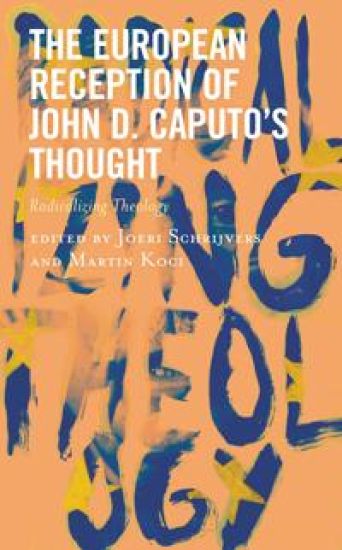
The European Reception of John D. Caputo’s Thought
BLOOMSBURY PUBLISHING PLC
2022
sidottu
This book gathers the European reception of John. D. Caputo's proposal for a radical theology of our time. Philosophers and theologians from within Europe respond to Caputo's attempt to configure a less rigid, less dogmatic form of religion. These scholars, in turn, receive responses by Caputo. This volume so aims to strengthen the development of radical theology in Europe and abroad.
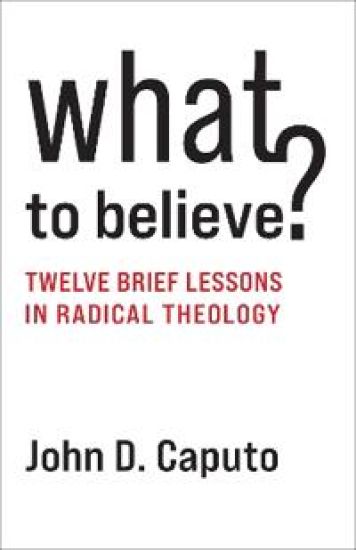
If you no longer “believe in God,” the Supreme Being of classical theology, or you never did in the first place, is there anything you still ought to believe, anything you should cherish unconditionally, no matter what? In this lively and accessible book, addressed to believers, “recovering” believers, disbelievers, nonbelievers, and “nones” alike—to anyone in search of what they really do believe—the acclaimed philosopher and theologian John D. Caputo seeks out what there is to believe, with or without religion.Writing in a lucid and witty style, Caputo offers a bold account of a “radical theology” that is anything but what the word theology suggests to most people. His point of departure is autobiographical, describing growing up in the world of pre-Vatican II Catholicism, serving as an altar boy, and spending four years in a Catholic religious order after high school. Caputo places Augustine’s Confessions, Tillich’s Dynamics of Faith, and Jacques Derrida and postmodern theory in conversation in the service of what he calls the “mystical sense of life.” He argues that radical theology is not simply an academic exercise but describes a concrete practice immediately relevant to the daily lives of believers and nonbelievers alike. What to Believe? is an engaging introduction to radical theology for all readers curious about what religion can mean today.
If you no longer “believe in God,” the Supreme Being of classical theology, or you never did in the first place, is there anything you still ought to believe, anything you should cherish unconditionally, no matter what? In this lively and accessible book, addressed to believers, “recovering” believers, disbelievers, nonbelievers, and “nones” alike—to anyone in search of what they really do believe—the acclaimed philosopher and theologian John D. Caputo seeks out what there is to believe, with or without religion.Writing in a lucid and witty style, Caputo offers a bold account of a “radical theology” that is anything but what the word theology suggests to most people. His point of departure is autobiographical, describing growing up in the world of pre-Vatican II Catholicism, serving as an altar boy, and spending four years in a Catholic religious order after high school. Caputo places Augustine’s Confessions, Tillich’s Dynamics of Faith, and Jacques Derrida and postmodern theory in conversation in the service of what he calls the “mystical sense of life.” He argues that radical theology is not simply an academic exercise but describes a concrete practice immediately relevant to the daily lives of believers and nonbelievers alike. What to Believe? is an engaging introduction to radical theology for all readers curious about what religion can mean today.
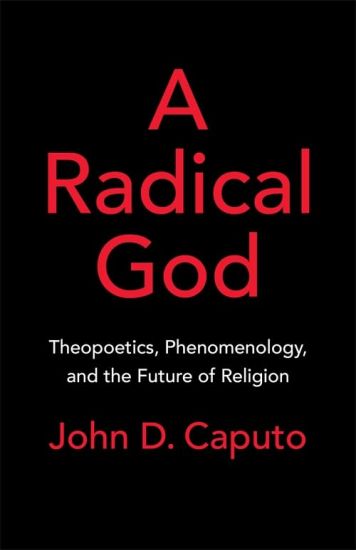
Religion is making itself unbelievable—scandal-ridden, antiscientific, authoritarian, and reactionary. Can religion be saved? Is it even worth saving? Can religion be saved not just from its critics but from itself? John D. Caputo proposes a radical alternative—what he calls “religion’s last stand”—by turning to theopoetics. In the traditional account, theopoetics calls for approaching God poetically because God transcends human language. Caputo contests this view, arguing that in the radical account, God does not precede but is generated by the poetic imagination. Theopoetics is not adorning an already constituted God; it is constituting the very idea of God. A radical God, untethered from theological orthodoxy and confessional rivalries, is neither a real being nor an unreal illusion, neither the object of supernatural belief nor the reject of skeptical disbelief. By adopting a phenomenological suspension of both belief and disbelief, both theism and atheism, both the religious and the secular, Caputo demystifies the distinction between the natural and the supernatural and replaces it with the distinction between the prosaic and the poetic. A daring undertaking in radical theology, this lively and provocative book proposes a startlingly different future for religion.
Religion is making itself unbelievable—scandal-ridden, antiscientific, authoritarian, and reactionary. Can religion be saved? Is it even worth saving? Can religion be saved not just from its critics but from itself? John D. Caputo proposes a radical alternative—what he calls “religion’s last stand”—by turning to theopoetics. In the traditional account, theopoetics calls for approaching God poetically because God transcends human language. Caputo contests this view, arguing that in the radical account, God does not precede but is generated by the poetic imagination. Theopoetics is not adorning an already constituted God; it is constituting the very idea of God. A radical God, untethered from theological orthodoxy and confessional rivalries, is neither a real being nor an unreal illusion, neither the object of supernatural belief nor the reject of skeptical disbelief. By adopting a phenomenological suspension of both belief and disbelief, both theism and atheism, both the religious and the secular, Caputo demystifies the distinction between the natural and the supernatural and replaces it with the distinction between the prosaic and the poetic. A daring undertaking in radical theology, this lively and provocative book proposes a startlingly different future for religion.

Is anything ever not an interpretation? Does interpretation go all the way down? Is there such a thing as a pure fact that is interpretation-free? If not, how are we supposed to know what to think and do? These tantalizing questions are tackled by renowned American thinker John D Caputo in this wide-reaching exploration of what the traditional term 'hermeneutics' can mean in a postmodern, twenty-first century world. As a contemporary of Derrida's and longstanding champion of rethinking the disciplines of theology and philosophy, for decades Caputo has been forming alliances across disciplines and drawing in readers with his compelling approach to what he calls "radical hermeneutics." In this new introduction, drawing upon a range of thinkers from Heidegger to the Parisian "1968ers" and beyond, he raises a series of probing questions about the challenges of life in the postmodern and maybe soon to be 'post-human' world.'

The Insistence of God presents the provocative idea that God does not exist, God insists, while God's existence is a human responsibility, which may or may not happen. For John D. Caputo, God's existence is haunted by "perhaps," which does not signify indecisiveness but an openness to risk, to the unforeseeable. Perhaps constitutes a theology of what is to come and what we cannot see coming. Responding to current critics of continental philosophy, Caputo explores the materiality of perhaps and the promise of the world. He shows how perhaps can become a new theology of the gaps God opens.
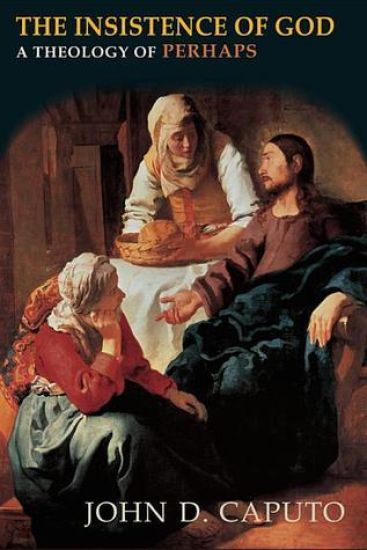
The Insistence of God presents the provocative idea that God does not exist, God insists, while God's existence is a human responsibility, which may or may not happen. For John D. Caputo, God's existence is haunted by "perhaps," which does not signify indecisiveness but an openness to risk, to the unforeseeable. Perhaps constitutes a theology of what is to come and what we cannot see coming. Responding to current critics of continental philosophy, Caputo explores the materiality of perhaps and the promise of the world. He shows how perhaps can become a new theology of the gaps God opens.

John D. Caputo stretches his project as a radical theologian to new limits in this groundbreaking book. Mapping out his summative theological position, he identifies with Martin Luther to take on notions of the hidden god, the theology of the cross, confessional theology, and natural theology. Caputo also confronts the dark side of the cross with its correlation to lynching and racial and sexual discrimination. Caputo is clear that he is not writing as any kind of orthodox Lutheran but is instead engaging with a radical view of theology, cosmology, and poetics of the cross. Readers will recognize Caputo's signature themes—hermeneutics, deconstruction, weakness, and the call—as well as his unique voice as he writes about moral life and our strivings for joy against contemporary society and politics.
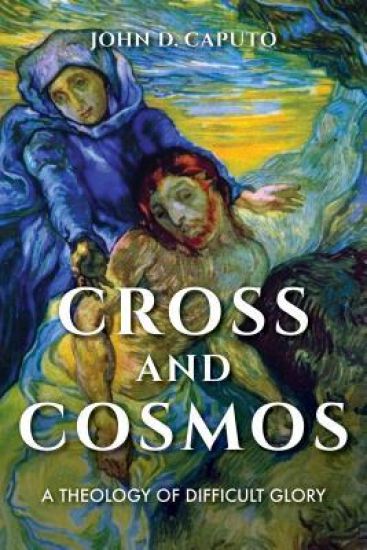
John D. Caputo stretches his project as a radical theologian to new limits in this groundbreaking book. Mapping out his summative theological position, he identifies with Martin Luther to take on notions of the hidden god, the theology of the cross, confessional theology, and natural theology. Caputo also confronts the dark side of the cross with its correlation to lynching and racial and sexual discrimination. Caputo is clear that he is not writing as any kind of orthodox Lutheran but is instead engaging with a radical view of theology, cosmology, and poetics of the cross. Readers will recognize Caputo's signature themes—hermeneutics, deconstruction, weakness, and the call—as well as his unique voice as he writes about moral life and our strivings for joy against contemporary society and politics.
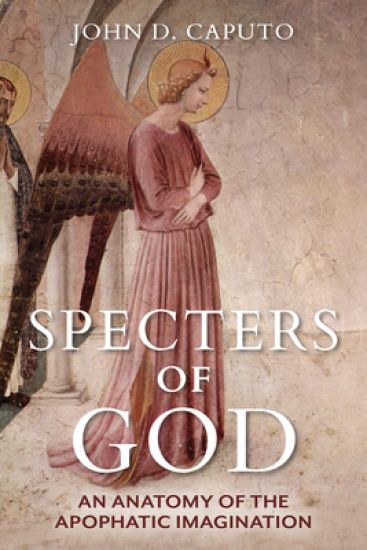
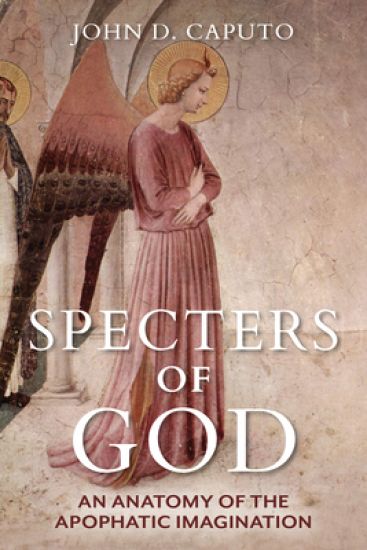
In Specters of God, John D. Caputo returns to the original impulse of his work, the "mystical element" in things, here under the name of an "anxious apophatics," as distinct from an "edifying apophatics" anchored in unity with God. In dialogue with Schelling, a new turn for him and the lynchpin of this argument, Caputo addresses the nocturnal powers in being, the specters that haunt our being and bring us up short. The result is an erudite and insightful analysis—in his usual lively and masterful style—of several key "spectral" figures from medieval angelology and Eckhart's Gottheit, through Luther's deus absconditus and Schelling's "Satanology," to the spectralization and virtualization of the world in the "posthuman" age. Arguing that the name of God is not the master name of a super-being who is going to save us but a placeholder for sources deep in our apophatic imaginary, he asks, Has "God" become a (holy) ghost of the past? A passing spectral effect of the ancient harmonies of the spheres? Does radical thinking culminate in a cosmopoetics beyond theism and its theology, in a doxology to the transient glory of the world, whatever it was in the beginning, however eerie its end, world without why?
In Specters of God, John D. Caputo returns to the original impulse of his work, the "mystical element" in things, here under the name of an "anxious apophatics," as distinct from an "edifying apophatics" anchored in unity with God. In dialogue with Schelling, a new turn for him and the lynchpin of this argument, Caputo addresses the nocturnal powers in being, the specters that haunt our being and bring us up short. The result is an erudite and insightful analysis—in his usual lively and masterful style—of several key "spectral" figures from medieval angelology and Eckhart's Gottheit, through Luther's deus absconditus and Schelling's "Satanology," to the spectralization and virtualization of the world in the "posthuman" age. Arguing that the name of God is not the master name of a super-being who is going to save us but a placeholder for sources deep in our apophatic imaginary, he asks, Has "God" become a (holy) ghost of the past? A passing spectral effect of the ancient harmonies of the spheres? Does radical thinking culminate in a cosmopoetics beyond theism and its theology, in a doxology to the transient glory of the world, whatever it was in the beginning, however eerie its end, world without why?
"This is a remarkable book: wide-ranging, resonant, and well-written; it is also reflective and personable, warm and engaging." —Philosophy and Literature "With this book Caputo takes his place firmly as the foremost American, continental post-modernist . . . " —International Philosophical Quarterly "One cannot but be impressed by the scope of Radical Hermeneutics." —Man and World "Caputo's study is stunning in its scope and scholarship." —Robert E. Lauder, St. John's University, The Thomist For John D. Caputo, hermeneutics means radical thinking without transcendental justification: attending to the ruptures and irregularities in existence before the metaphysics of presence has a chance to smooth them over. Radical Hermeneutics forges a closer collaboration between hermeneutics and deconstruction than has previously been attempted.

"Against Ethics is beautifully written, clever, learned, thought-provoking, and even inspiring." —Theological Studies "Writing in the form of his ideas, Caputo offers the reader a truly exquisite reading experience. . . . his iconic style mirrors a truly refreshing honesty that draws the reader in to play." —Quarterly Journal of Speech "Against Ethics is, in my judgment, one of the most important works on philosophical ethics that has been written in recent years. . . . Caputo speaks with a passion and a concern that are rare in academic philosophy. His profound sense of humor deepens the passion of the viewpoints he develops." —Mark C. Taylor "Obligation happens!" declares Caputo in this brilliant and witty postmodern critique of ethics, framed as a contemporary restaging of Kierkegaard's Fear and Trembling.
"Caputo offers a compelling plea for a reinterpretation of Heidegger that will make us more humane, and more attuned to the call of justice and mercy than to the call of Being." —Christian Century "There is no other book that focuses on the religious significance of the many 'turnings' in Heidegger's thought, nor that addresses the question of Heidegger's politics textually rather than autobiographically." —Merold Westphal A readable chronological consideration of Heidegger's texts that assesses his achievement as a thinker, while pointing to the sources of his political and ethical failure. Caputo addresses the religious significance of Heidegger's thought.

"Caputo's book is riveting. . . . A singular achievement of stylistic brio and impeccable scholarship, it breaks new ground in making a powerful case for treating Derrida as homo religiosis. . . . There can be no mistaking the importance of Caputo's work." —Edith Wyschogrod "No one interested in Derrida, in Caputo, or in the larger question of postmodernism and religion can afford to ignore this pathbreaking study. Taking full advantage of the most recent and least discussed writings of Derrida, it offers a careful and comprehensive account of the religious dimension of Derrida's thought." —Merold Westphal
In these spirited essays, John D. Caputo continues the project he launched with Radical Hermeneutics of making hermeneutics and deconstruction work together. Caputo claims that we are not born into this world hard-wired to know Being, Truth, or the Good, and we are not vessels of a Divine or other omnipotent supernatural force. Focusing on how various contemporary philosophers develop aspects of this fragmented view of the life world in areas such as madness, friendship, democracy, gender, science, the "end of ethics," religion, and mysticism, this animated study by one of America's leading continental philosophers shakes the foundations of religion and philosophy, even as it gives them new life.
Applying an ever more radical hermeneutics (including Husserlian and Heideggerian phenomenology, Derridian deconstruction, and feminism), John D. Caputo breaks down the name of God in this irrepressible book. Instead of looking at God as merely a name, Caputo views it as an event, or what the name conjures or promises in the future. For Caputo, the event exposes God as weak, unstable, and barely functional. While this view of God flies in the face of most religions and philosophies, it also puts up a serious challenge to fundamental tenets of theology and ontology. Along the way, Caputo's readings of the New Testament, especially of Paul's view of the Kingdom of God, help to support the "weak force" theory. This penetrating work cuts to the core of issues and questions—What is the nature of God? What is the nature of being? What is the relationship between God and being? What is the meaning of forgiveness, faith, piety, or transcendence?—that define the terrain of contemporary philosophy of religion.