Kirjojen hintavertailu. Mukana 11 244 527 kirjaa ja 12 kauppaa.

Kirjahaku

Etsi kirjoja tekijän nimen, kirjan nimen tai ISBN:n perusteella.

1000 tulosta hakusanalla John Douglas Morrison

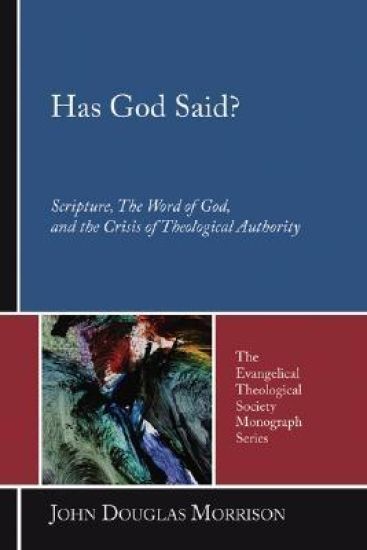
Has God Said?

Has God Said?

John Douglas Morrison

Pickwick Publications
2006
sidottu
Has God said? Has God actually spoken, declared himself and his purposes to us? Historically the Christian faith has affirmed God's redemptive, revelatory speaking as historical, contentful, redemptive, centrally in Jesus Christ and, under Christ and by the Spirit, in the text of Holy Scripture. But in the past three centuries developments in Western culture have created a crisis in relation to historical, divine authority. The modern reintroduction of destructive dualisms, cosmological and epistemological, via Descartes, Newton, Spinoza, and Kant have injured not only the physical sciences (e.g., positivism) but Christian theology as well. The resulting ""eclipse of God"" has permeated Western culture. In terms of the Christian understanding of revelation, it has meant the separation of God from historical action, the rejection of God's actual self-declaration, and especially in textual form, Holy Scripture. After critical analysis of these dualistic developments, this book presents the problematic effects in both Protestant (Schleiermacher, Bultmann, Tillich) and Roman Catholic (Rahner, Dulles) theology. The thought and influence of Karl Barth on the nature of Scripture is examined and distinguished from most ""Barthian approaches."" The effects of dualistic ""Barthian"" thought on contemporary evangelical views of Scripture (Pinnock, Fackre, Bloesch) are also critically analyzed and responses made (Helm, Wolterstorff, Packer). The final chapter is a christocentric, multileveled reformulation of the classical Scripture Principle, via Einstein, Torrance, and Calvin, that reaffirms the church's historical ""identity thesis,"" that Holy Scripture is the written Word of God, a crucial aspect of God's larger redemptive-revelatory purpose in Christ. ""John Morrison's Has God Said? rightly identifies the central issue in an Evangelical doctrine of Scripture. It's all about the meaning of 'is, ' as in 'the Bible is the Word of God.' Carefully distinguishing Barth's own position from 'Barthian' pretenders, Morrison analyzes various contemporary options, Evangelical and non-Evangelical, and then offers his own constructive proposal. Morrison's new position builds on Barth's (not Barthian ) Christocentric insights even as it reclaims the Scripture principle in a manner that even Calvin could applaud."" Kevin Vanhoozer Trinity Evangelical Divinity School ""For those who want to think deeply about what it means to say that the Bible is the word of God, John Morrison brings wide-ranging resources and careful reflection. Reading this book is a challenging but rewarding task."" Millard Erickson Baylor University ""Bravo to John Morrison for addressing a weighty issue in philosophical theology that is seldom even proposed, let alone faced squarely in recent academic discussions. Far from avoiding the general trend in recent critical thought, Morrison is to be commended for his affirmation that Scripture is an intricate component of God's redemptive self-revelation to a needy world. This volume places front and center God's work through Jesus Christ and in the very text of Scripture. I highly recommend this rigorous intellectual investigation and subsequent call to reaffirm Scripture as a crucial element in the revelation of God's loving actions to a needy creation."" Gary R. Habermas, Liberty University John Douglas Morrison is Professor of Theology and Philosophy at Liberty University and Liberty Theological Seminary. His first book, Knowledge of the Self-Revealing God in the Thought of Thomas Forsyth Torrance, has received much recognition both in Europe and North America. In addition, he has written numerous articles on the church fathers, Calvin, Kierkegaard, Barth, and various developments in Roman Catholic thought.
Knowledge of the Self-Revealing God in the Thought of Thomas Forsyth Torrance
This work examines Thomas Forsyth Torrance's concern for the modern re-entrenchment of dualism as it has negatively affected the Christian faith and the realist knowledge of God in Christ. Additionally, an analysis is made of Torrance's program to faithfully restore theological thinking, theological science, and true objectivity out of the Christocentric-Trinitarian self-disclosure of God via the modern return to critical realist epistemology in the physical sciences (e.g., Einstein, Polanyi). The study concludes with a critical examination of the adequacy and completeness of Torrance's endeavor (the problem of residual dualism) in the light of his own theological and redemptive concerns. John Morrison's book brings to light the contribution of the most important English language Protestant theologian of this century. Unlike others who have attempted to present Torrance's oeuvre by means of one or other of his guiding principles, Morrison draws them together into a coherent whole. Morrison's command of the ideas and spirit of Torrance is masterful. The splendid interrelations and potencies of Torrance's writing are unfolded in this highly competent work. Kurt Richardson, Gordon-Conwell Theological Seminary John Morrison has given the theological world a discerning analysis of the theology of one of the seminal thinkers of our time. T. F. Torrance's theology is so broad and deep in its scope that it is difficult to master, but Dr. Morrison has done an outstanding job of plumbing the depths of this great Scottish theologian.... This scholarly, comprehensive study is a major contribution toward helping us understand the theology of the great Edinburgh theologian. I. John Hesselink, Albertus C. Van Raalte Professor Emeritus of Systematic Theology, Western Theological Seminary Though Torrance has been hailed by some as 'one of the most substantial figures in recent Western intellectual history, ' he has also been called 'one of the most neglected' (Alisdair I. C. Heron). Morrison's new book seeks to correct this imbalance. This is a thorough examination of T. F. Torrance's theological writings; it is an erudite work that lays bare the very core of Torrance's thought, places it in context, traces its sources, and seeks to determine its implications for contemporary theology. Balanced as it is between homage and critical analysis, this book should prove indispensable for anyone who is interested in Torrance or in the ever-enduring and ever-changing dialectic between faith and reason. Carlos M. N. Eire, Professor of History and Religious Studies, Yale University This is a careful, accurate, thorough, and illuminating presentation of T. F. Torrance's thought together with various positive and negative assessments of his thought. It will be useful to anyone interested in systematic theology (and philosophical theology) because serious questions are raised and analyzed. This book definitely represents competent scholarship. The author wrestles with Torrance's position, presents his own critique of Torrance with a constructive proposal which, if he is correct, would lead in the direction Torrance has set for himself - toward a unified theology grounded in Christ and thus in the immanent Trinity. He makes his points well and does not shrink from difficult questions. All in all Dr. Morrison writes convincingly. Paul D. Molnar, Professor of Systematic Theology, St. John's University, New York John Douglas Morrison was born in Billings, Montana. He holds a B.A. from the University of Montana, an M.Div. and a Th.M. from Western Seminary, and an M.A. and a Ph.D. from the University of Virginia (Philosophical Theology). He has published journal articles on Kierkegaard, Calvin, Barth, and Torrance. He teaches theology and philosophy at Liberty University and Liberty Baptist Theological Seminary, Lynchburg, Virginia.
Has God Said?

Has God Said?

John Douglas Morrison

Wipf Stock Publishers
2006
pokkari
Has God said? Has God actually spoken, declared himself and his purposes to us? Historically the Christian faith has affirmed God's redemptive, revelatory speaking as historical, contentful, redemptive, centrally in Jesus Christ and, under Christ and by the Spirit, in the text of Holy Scripture. But in the past three centuries developments in Western culture have created a crisis in relation to historical, divine authority. The modern reintroduction of destructive dualisms, cosmological and epistemological, via Descartes, Newton, Spinoza, and Kant have injured not only the physical sciences (e.g., positivism) but Christian theology as well. The resulting ""eclipse of God"" has permeated Western culture. In terms of the Christian understanding of revelation, it has meant the separation of God from historical action, the rejection of God's actual self-declaration, and especially in textual form, Holy Scripture. After critical analysis of these dualistic developments, this book presents the problematic effects in both Protestant (Schleiermacher, Bultmann, Tillich) and Roman Catholic (Rahner, Dulles) theology. The thought and influence of Karl Barth on the nature of Scripture is examined and distinguished from most ""Barthian approaches."" The effects of dualistic ""Barthian"" thought on contemporary evangelical views of Scripture (Pinnock, Fackre, Bloesch) are also critically analyzed and responses made (Helm, Wolterstorff, Packer). The final chapter is a christocentric, multileveled reformulation of the classical Scripture Principle, via Einstein, Torrance, and Calvin, that reaffirms the church's historical ""identity thesis,"" that Holy Scripture is the written Word of God, a crucial aspect of God's larger redemptive-revelatory purpose in Christ. ""John Morrison's Has God Said? rightly identifies the central issue in an Evangelical doctrine of Scripture. It's all about the meaning of 'is, ' as in 'the Bible is the Word of God.' Carefully distinguishing Barth's own position from 'Barthian' pretenders, Morrison analyzes various contemporary options, Evangelical and non-Evangelical, and then offers his own constructive proposal. Morrison's new position builds on Barth's (not Barthian ) Christocentric insights even as it reclaims the Scripture principle in a manner that even Calvin could applaud."" Kevin Vanhoozer Trinity Evangelical Divinity School ""For those who want to think deeply about what it means to say that the Bible is the word of God, John Morrison brings wide-ranging resources and careful reflection. Reading this book is a challenging but rewarding task."" Millard Erickson Baylor University ""Bravo to John Morrison for addressing a weighty issue in philosophical theology that is seldom even proposed, let alone faced squarely in recent academic discussions. Far from avoiding the general trend in recent critical thought, Morrison is to be commended for his affirmation that Scripture is an intricate component of God's redemptive self-revelation to a needy world. This volume places front and center God's work through Jesus Christ and in the very text of Scripture. I highly recommend this rigorous intellectual investigation and subsequent call to reaffirm Scripture as a crucial element in the revelation of God's loving actions to a needy creation."" Gary R. Habermas, Liberty University John Douglas Morrison is Professor of Theology and Philosophy at Liberty University and Liberty Theological Seminary. His first book, Knowledge of the Self-Revealing God in the Thought of Thomas Forsyth Torrance, has received much recognition both in Europe and North America. In addition, he has written numerous articles on the church fathers, Calvin, Kierkegaard, Barth, and various developments in Roman Catholic thought.
John Douglas's Guide to Landing a Career in Law Enforcement
A legendary FBI profiler uses his twenty-five years of experience in law enforcement to create a unique career guide, indispensable for anyone seeking to gain employment with the FBI, the Secret Service, air marshals, or any police agency, with helpful contact information, study guides Web sites, worksheets, checklists, self-evaluations, and other useful resources. Original. 20,000 first printing.
A Short Dissertation on the Gout. Wherein the Universal Fear of Doing Anything to Ease or Cure it, ... Will be Proved to be a Mere Bug-bear, ... By John Douglas,
The 18th century was a wealth of knowledge, exploration and rapidly growing technology and expanding record-keeping made possible by advances in the printing press. In its determination to preserve the century of revolution, Gale initiated a revolution of its own: digitization of epic proportions to preserve these invaluable works in the largest archive of its kind. Now for the first time these high-quality digital copies of original 18th century manuscripts are available in print, making them highly accessible to libraries, undergraduate students, and independent scholars.The Age of Enlightenment profoundly enriched religious and philosophical understanding and continues to influence present-day thinking. Works collected here include masterpieces by David Hume, Immanuel Kant, and Jean-Jacques Rousseau, as well as religious sermons and moral debates on the issues of the day, such as the slave trade. The Age of Reason saw conflict between Protestantism and Catholicism transformed into one between faith and logic -- a debate that continues in the twenty-first century.++++The below data was compiled from various identification fields in the bibliographic record of this title. This data is provided as an additional tool in helping to insure edition identification: ++++British LibraryT048151London: printed for the author, Westminster; and sold by Mr. Wood, and Mr. Corbett, 1741. 4],24p.; 8
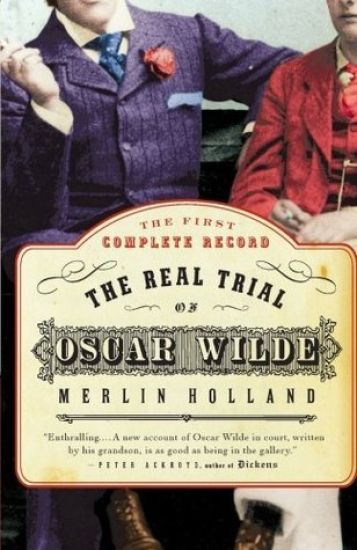
The Real Trial of Oscar Wilde: The First Uncensored Transcript of the Trial of Oscar Wilde Vs. John Douglas, Marquess of Queensberry, 1895
Oscar Wilde had one of literary history's mostexplosive love affairs with Lord Alfred "Bosie"Douglas. In 1895, Bosie's father, the Marquessof Queensberry, delivered a note to the Albemarle Clubaddressed to "Oscar Wilde posing as sodomite." WithBosie's encouragement, Wilde sued the Marquess forlibel. He not only lost but he was tried twice for "grossindecency" and sent to prison with two years' hard labor.With this publication of the uncensored trial transcripts, readers can for the first time in more than a century hearWilde at his most articulate and brilliant. The Real Trialof Oscar Wilde documents an alarmingly swift fall fromgrace; it is also a supremely moving testament to the rightto live, work, and love as one's heart dictates.
Bacteriophages

Bacteriophages

John Douglas

Chapman and Hall
1975
nidottu
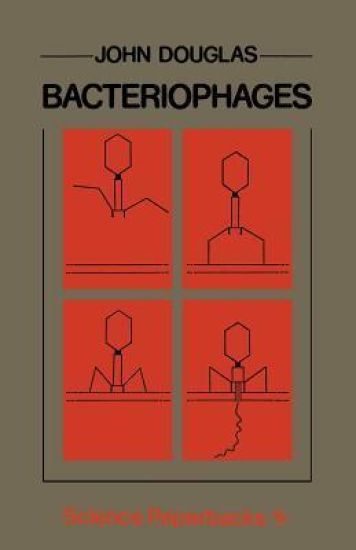
The contribution of bacteriophages to the development of modern biology cannot be overestimated yet, sixty years after their discovery, they are as remote and mysterious to many scientists as they are to most laymen. This book endeavours to remedy the situation: an attempt has been made to provide, in readily comprehensible form, a nucleus of information essential to anyone embarking on the study of bacteriophages or using them in their work for the first time. It shows the range of bacteriophage structure and behaviour; it illustrates the role of bacteriophage in molecular biology; it surveys the current state of the art; it presents the medical and industrial aspects. Some simple experimental procedures are given in sufficient detail for the beginner to attempt them successfully. Other, more sophisticated pro­ cedures are presented so as to impart a feeling of intimate reality without dazzling the reader with technical complexity. I hope that young readers will forgive me for assuming that they have some knowledge of bacteria, nucleic acids, antibodies and isotopes. Likewise I would ask mature workers to excuse the omission of cherished specialities. To have included all these, valuable though they are, might have put this book beyond the re ach of the phage-novices for whom it is intended. Specific references, save a few of particular interest, have been omitted. Other books on bacteriophage v vi BACTERIOPHAGES provide them in abundance.