

Kirjahaku
Etsi kirjoja tekijän nimen, kirjan nimen tai ISBN:n perusteella.
1000 tulosta hakusanalla John Downing





Erik Götlind’s findings and ideas and the development of GRT are drawn from over 40 years of clinical experience from therapies or supervision of therapies with psychotic patients, and others with severe deficit pathology, including severe personality disorders or severe depressions, and also people with a basically neurotic personality structure but who nevertheless also suffer from deficit pathology. Growth in Regression Therapy (GRT) is based on the clinical finding that it is possible, in a person who suffered from early maternal deprivation, to recapitulate therapeutically the first years of life again, in a partially regressed state lasting several months, the early process phase of the GRT. During this time he or she receives, in a nurturing caring relationship, the close human contact that was originally lacking, and thus the original state of deficit is repaired or undone. Thereafter the patient continues in the growth process out of the regression. Thus GRT is a self-strengthening technique. This finding is basically in contradiction to the traditionally held psychoanalytic view. The process takes place at a very deep, almost biological level of attachment. GRT has immensely broadened the scope of our possibilities to work with these conditions psychotherapeutically. Moreover, having gone through this form of therapy initially, many of these patients are then able to tolerate intensive in-depth explorative therapy which very often would not have been possible before, due to an insufficiently strong self or ego structure, and at best achieve full healing. Thus GRT adds a qualitatively new dimension to psychotherapy, that is, it is more than just a new alternative technique among many others. In many patients it can be seen as an essential and decisive element and phase in a long term on-going psychotherapeutic process.

A Surprise Party on Quizberry Farm
John Downing; Brianne Downing
Createspace Independent Publishing Platform
2016
nidottu
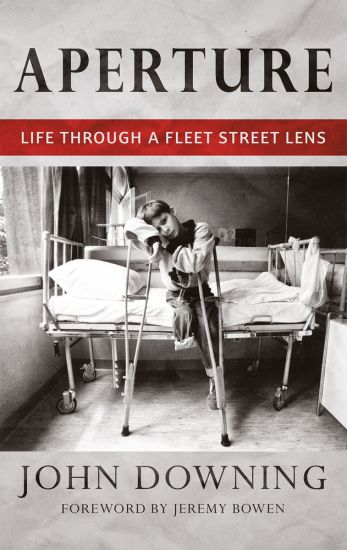
John Downing was the pre-eminent press photographer of his generation, winning British Press Photographer of the Year seven times. As a photojournalist Downing recognised a good story, and how to tell it. Aperture is a fascinating and engaging mix of recording the heyday of Fleet Street – multi-million daily sales of the only source of readable news and information, driven by dynamic characters and with its own cultures – and Downing’s less glamorous personal experiences on the job. These included long assignments in hotspots around the world, including South Sudan, Afghanistan, Nicaragua, Uganda, Bangladesh and Chernobyl, which are vividly described. Widely respected by colleagues, Downing’s work includes some of the iconic images of the period, including the only photograph of Thatcher immediately after the IRA bombing. Aperture describes the glamour and excitement of journalism at the time: the hard-nosed editors, the rivalries, the ‘work hard play hard culture’, foreign assignments issued at the drop of a hat, the toll on journalists and photographers. Newspapers were hugely important in the daily lives of their readers then, the world was less accessible than now, and newspapers played a vital role in shining light into some of its darker, more inaccessible parts. John Downing played a significant part in this, though not without some personal cost. Completed shortly before his death, with the help of colleague Wendy Holden, Downing filed a story for the final time: his own remarkable life.
The Modular Design of Lumped Parameter Delay Networks.
John James Downing
Hassell Street Press
2021
nidottu
This work has been selected by scholars as being culturally important and is part of the knowledge base of civilization as we know it.This work is in the public domain in the United States of America, and possibly other nations. Within the United States, you may freely copy and distribute this work, as no entity (individual or corporate) has a copyright on the body of the work.Scholars believe, and we concur, that this work is important enough to be preserved, reproduced, and made generally available to the public. To ensure a quality reading experience, this work has been proofread and republished using a format that seamlessly blends the original graphical elements with text in an easy-to-read typeface.We appreciate your support of the preservation process, and thank you for being an important part of keeping this knowledge alive and relevant.

The Cutaneous Manifestations of Systemic Diseases: American Lecture Series, No. 182
John Godwin Downing; Arthur C. Curtis
Literary Licensing, LLC
2012
nidottu

The Downing legends; stories in rhyme (New Haven, 1901). By: J. W. De Forest: John William De Forest (May 31, 1826 - July 17, 1906) was an American so
J. W. De Forest
Createspace Independent Publishing Platform
2017
nidottu


Caught between Soviets and Americans, John Russell can't escape his role as an accidental spy Book 5 in the John Russell historical thriller series. It's 1945, and British journalist John Russell has finally reunited with his German girlfriend, Effi, in London after a dangerous flight from war-torn Berlin. But Russell realizes his new life in England isn't going to last when he is tracked down by Soviet agent Shchepkin, who helped Russell escape the disastrous last days of the war and the Russian army's destruction of Berlin. It is time to repay the debt, and Shchepkin's bosses in Moscow are not the forgiving types. Russell has no choice but to agree to be transferred back to Germany, where he will resume his cover as an investigative journalist and hand over US intelligence reports on the German Communist Party. Meanwhile, Effi struggles to revive her acting career, but she cannot fight the desire to uncover ex-Nazi Party members still at large in Berlin. In this dangerous new world, where alliances change every day, will John and Effi be able to leave the past behind? Or are the new enemies the same as the old?
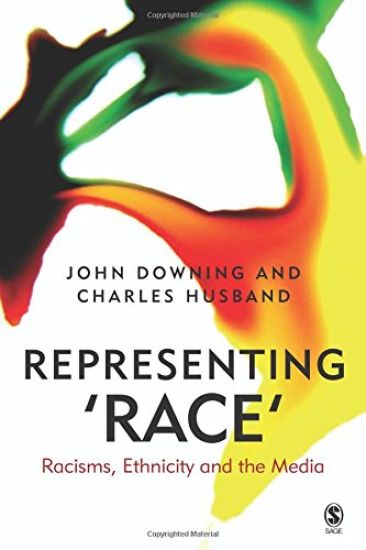
Well-informed, thoughtful and transnational in its perspectives, Downing and Husband's work is likely to become the key text in the field. The book is essential reading for anyone interested in the politics of race and representation. - Professor Daya K. Thussu, University of Westminster The media play a diverse and significant role in the practical expression of racism and in the everyday politics of ethnicity. Written by two veterans of research on media and 'race', this book offers a fresh comparative analyses of the issues and sets out the key agendas for future study. Representing Race - Racisms, Ethnicities and Media: Provides a conceptual framework for understanding the role of the media.Addresses a number of pressing political concerns including 'racial' justice and the drift to the Right.Includes a wide range of examples from Britain, the USA, Europe, and Australia.Analyzes the growth of indigenous people's media.Assesses current strategies for reforming professional media practice in this sphere. Drawing on years of research, this book provides both a major intervention in the debate, as well as a comprehensive introduction to the area. It will be required reading for anyone interested in race, representation and the media.
Well-informed, thoughtful and transnational in its perspectives, Downing and Husband's work is likely to become the key text in the field. The book is essential reading for anyone interested in the politics of race and representation. - Professor Daya K. Thussu, University of Westminster The media play a diverse and significant role in the practical expression of racism and in the everyday politics of ethnicity. Written by two veterans of research on media and 'race', this book offers a fresh comparative analyses of the issues and sets out the key agendas for future study. Representing Race - Racisms, Ethnicities and Media: Provides a conceptual framework for understanding the role of the media.Addresses a number of pressing political concerns including 'racial' justice and the drift to the Right.Includes a wide range of examples from Britain, the USA, Europe, and Australia.Analyzes the growth of indigenous people's media.Assesses current strategies for reforming professional media practice in this sphere. Drawing on years of research, this book provides both a major intervention in the debate, as well as a comprehensive introduction to the area. It will be required reading for anyone interested in race, representation and the media.

This is an entirely new edition of the author's 1984 study (originally published by South End Press) of radical media and movements. The first and second sections are original to this new edition. The first section explores social and cultural theory in order to argue that radical media should be a central part of our understanding of media in history. The second section weaves an historical and international tapestry of radical media to illustrate their centrality and diversity, from dance and graffiti to video and the internet and from satirical prints and street theatre to culture-jamming, subversive song, performance art and underground radio. The section also includes consideration of ultra-rightist media as a key contrast case. The book's third section provides detailed case-studies of the anti-fascist media explosion of 1974-75 in Portugal, Italy's long-running radical media, radio and access video in the USA, and illegal media in the dissolution of the former Soviet bloc dictatorships.
This is an entirely new edition of the author's 1984 study (originally published by South End Press) of radical media and movements. The first and second sections are original to this new edition. The first section explores social and cultural theory in order to argue that radical media should be a central part of our understanding of media in history. The second section weaves an historical and international tapestry of radical media to illustrate their centrality and diversity, from dance and graffiti to video and the internet and from satirical prints and street theatre to culture-jamming, subversive song, performance art and underground radio. The section also includes consideration of ultra-rightist media as a key contrast case. The book's third section provides detailed case-studies of the anti-fascist media explosion of 1974-75 in Portugal, Italy's long-running radical media, radio and access video in the USA, and illegal media in the dissolution of the former Soviet bloc dictatorships.
In this provocative book John Downing explores the many roles of the media within the fundamental political, economic and cultural changes that took place during the turbulence in Eastern Europe between 1980 and 1995. He examines the central elements underlying these changes: power, the state, societal change, the economy, institutionalized racism, ethnic insurgency, secrecy and surveillance. Internationalizing Media Theory critically evaluates media theories in relation to political and economic transitions, and challenges political science approaches for their failure to address vital issues in media and communication. Using a comparative and international focus, Downing analyzes the changes in Russia, Poland and Hungary and explores key aspects of the media during this period.
In this provocative book John Downing explores the many roles of the media within the fundamental political, economic and cultural changes that took place during the turbulence in Eastern Europe between 1980 and 1995. He examines the central elements underlying these changes: power, the state, societal change, the economy, institutionalized racism, ethnic insurgency, secrecy and surveillance. Internationalizing Media Theory critically evaluates media theories in relation to political and economic transitions, and challenges political science approaches for their failure to address vital issues in media and communication. Using a comparative and international focus, Downing analyzes the changes in Russia, Poland and Hungary and explores key aspects of the media during this period.

Occupational Marks and Other Physical Signs: A Guide to Personal Identification
Francesco Ronchese; John G. Downing
Literary Licensing, LLC
2013
sidottu
Occupational Marks and Other Physical Signs: A Guide to Personal Identification is a comprehensive guidebook written by Francesco Ronchese. The book is designed to provide readers with an in-depth understanding of how to identify individuals based on their physical characteristics, including occupational marks. The book begins with a brief introduction to the history of personal identification, highlighting the importance of physical characteristics in identifying individuals. It then goes on to discuss the various types of occupational marks, including scars, tattoos, and other physical traits that can be used to identify a person's profession or occupation. The guidebook also covers other physical signs that can be used to identify individuals, including birthmarks, moles, and other distinguishing features. It explains how these physical signs can be used in conjunction with other identification methods, such as fingerprints and DNA analysis, to positively identify an individual. The book is written in a clear and concise manner, making it accessible to a wide range of readers. It is an essential resource for law enforcement professionals, forensic scientists, and anyone interested in the science of personal identification. Overall, Occupational Marks and Other Physical Signs: A Guide to Personal Identification is an informative and practical guidebook that provides readers with a thorough understanding of the science of personal identification. It is a must-read for anyone interested in this fascinating field.This scarce antiquarian book is a facsimile reprint of the old original and may contain some imperfections such as library marks and notations. Because we believe this work is culturally important, we have made it available as part of our commitment for protecting, preserving, and promoting the world's literature in affordable, high quality, modern editions, that are true to their original work.