
Kirjahaku
Etsi kirjoja tekijän nimen, kirjan nimen tai ISBN:n perusteella.
1000 tulosta hakusanalla John F Nash
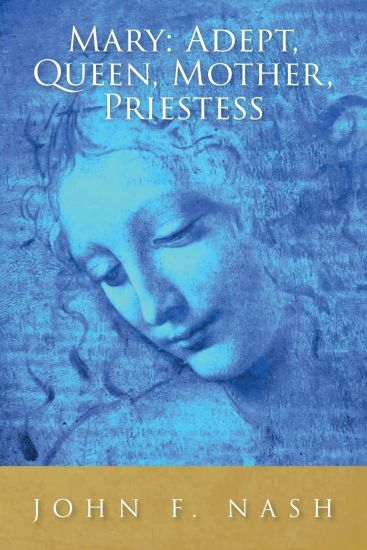
Mary was the mother of Jesus. But what else do we know about her? How have Christians and others related to her over the centuries? Has she communicated with us, and can we communicate with her? Where is Mary now? Does she continue to play a role in the church, humanity, and the world? This book addresses these and a myriad of other questions. Mary: Adept, Queen, Mother, Priestess is addressed to Christians of all traditions, students of modern esotericism, and anyone who feels drawn to Mary, wants to learn more about her, or wants to serve her. It is Mary's story, derived from scripture, early Christian writings, traditional doctrine and devotion, Marian apparitions, and esoteric teachings. No longer just the submissive handmaid, Mary is a powerful figure, promoting peace and healing and offering a special ministry to women and children. Mary is a worthy role model for all in the 21st century.
John F. Nash - Nobelpreistrager der Wirtschaftswissenschaften im Jahr 1994
Anne Moorbrink
Grin Verlag
2011
nidottu
A Celebration of John F. Nash Jr.
Duke University Press
1996
sidottu
This collection celebrates the pathbreaking work in game theory and mathematics of John F. Nash Jr., winner of the 1994 Nobel Prize in Economics. Nash’s analysis of equilibria in the theory of non-cooperative games has had a major impact on modern economic theory. This book, also published as volume 81 of the Duke Mathematical Journal, includes an important, but previously unpublished paper by Nash; the proceedings of the Nobel seminar held in Stockholm on December 8, 1994 in his honor; and papers by distinguished mathematicians and economists written in response to and in honor of Nash’s pioneering contributions to those fields. In 1950, when he was 22 years old, Nash presented his key idea-the Nash equilibrium-in the Ph.D. thesis he submitted to the Mathematics Department at Princeton University. In that paper, he defined a new concept of equilibrium and used methods from topology to prove the existence of an equilibrium point for n-person, finite, non-cooperative games, that is, for games in which the number of possible strategies are limited, no communication is allowed between the players, and n represents the number of players. The Nash equilibrium point is reached when none of the players can improve their position by changing strategies. By taking into account situations involving more than two players, specifically the general n-player game, Nash built significantly on the previous work of John Von Neumann and Oskar Morgenstern.Contributors. Abbas Bahri, Eric A. Carlen, Ennio De Giorgi, Charles Fefferman, Srihari Govidan, John C. Harsanyi, H. Hoffer, Carlos E. Kenig, S. Klainerman, Harold F. Kuhn, Michael Loss, William F. Lucas, M. Machedon, Roger B. Myerson, Raghavan Narasimhan, John F. Nash Jr., Louis Nirenberg, Jill Pipher, ZeÉv Rudnick, Peter Sarnak, Michael Shub, Steve Smale, Robert Wilson, K. Wysocki, E. Zehnder

John C. Harsanyi, John F. Nash Jr., Reinhard Selten, Robert J. Aumann and Thomas C. Schelling
Edward Elgar Publishing Ltd
2009
sidottu
This groundbreaking series brings together a critical selection of key papers by the Nobel Memorial Laureates in Economics that have helped shape the development and present state of economics. The editors have organised this comprehensive series by theme and each volume focuses on those Laureates working in the same broad area of study. The careful selection of papers within each volume is set in context by an insightful introduction to the Laureates' careers and main published works. This landmark series will be an essential reference for scholars throughout the world.
Essays on Game Theory is a unique collection of seven of John Nash's essays which highlight his pioneering contribution to game theory in economics. Featuring a comprehensive introduction by Ken Binmore which explains and summarizes John Nash's achievements in the field of non-cooperative and cooperative game theory, this book will be an indispensable reference for scholars and will be welcomed by those with an interest in game theory and its applications to the social sciences.

"Ask not what your country can do for you-ask what you can do for your country." When he was a young boy, John Fitzgerald Kennedy wondered about what happened in the world. He wanted to change the world when he grew up, and he did just that! Beginning readers will learn about the milestones in John F. Kennedy's life in this Level Two I Can Read biography, which combines a traditional, illustrated narrative with historical photographs at the back of book. Complete with a timeline, photographs, and little-known facts about the United States' thirty-fifth president, the brave John F. Kennedy. John F. Kennedy the Brave is a Level Two I Can Read, geared for kids who read on their own but still need a little help.

Updated edition of the authoritative single-volume biography of John F. Kennedy. Drawing upon first-hand sources and never-before-opened archives, prize-winning historian Robert Dallek reveals more than we ever knew about Jack Kennedy, forever changing the way we think about his life, his presidency and his legacy.Dallek also discloses that, while labouring to present an image of robust good health, Kennedy was secretly in and out of hospitals throughout his life, soill that he was administered last rites on several occasions. He never shies away from Kennedy's weaknesses, but also brilliantly explores his strengths. The result is a full portrait of a bold, brave and truly human John F. Kennedy.

Robert Dallek's masterful John F. Kennedy: An Unfinished Life was a number one national bestseller, and it remains the most widely read one-volume biography of the 35th President. Now, in this marvelous short biography of John F. Kennedy, Dallek achieves a miracle of compression, capturing in a small space the essence of his renowned full-length masterpiece. Here readers will find the fascinating insights and groundbreaking revelations found in An Unfinished Life. The heart of the book focuses on Kennedy's political career, especially the presidency. The book sheds light on key foreign affairs issues such as the Bay of Pigs debacle, Khrushchev's misguided bullying of Kennedy in Vienna, the Cuban Missile crisis, the nuclear test ban, the race for space, and the initial dealings with Southeast Asia, especially Laos. It also highlights the difficulties Kennedy faced getting a domestic agenda passed, from a tax cut to spur the economy, to federal aid to education, Medicare, and civil rights. Dallek reveals the thinking behind Robert Kennedy's appointment as Attorney General and convincingly argues that Kennedy would never have expanded the war in Vietnam the way that Lyndon Johnson did. The book also addresses questions about Kennedy's assassination and concludes with his presidential legacy and why he remains so popular despite serving only a thousand days in office.

While there are many biographies of JFK and accounts of the early years of US space efforts, this book uses primary source material and interviews with key participants to provide a comprehensive account of how the actions taken by JFK's administration have shaped the course of the US space program over the last 45 years.

John F. Kennedy entered the White House hoping to make America and the world a better and safer place in which to live. Through diplomacy, he wanted to achieve a settlement of the East-West tensions and to bring about a peaceful resolution to such issues as the Israeli-Arab conflict. Although his provision of defensive HAWK anti-aircraft missiles, in response to Russian, French, and British arms sales to the Arabs, made him the first President to supply arms to Israel, Kennedy feared both exacerbation of the arms race and the proliferation of nuclear weapons. While he remained an honest and loyal friend to Israel, he also attempted to further America's relationship with the Arab states and to encourage a settlement of the Arab refugee issue.Kennedy was an independent thinker who learned how to rely upon his own best judgment and intelligence rather than upon his father or officials like Dean Rusk or Allen Dulles. Kennedy ultimately agreed to regular consultations between Israeli and American military personnel, but he would not agree to a dual alliance nor would he allow America to become Israel's main source of military equipment. The author contends that it was this precarious and uncertain diplomatic and military situation that encouraged Israel to develop its own defense industries and to investigate the possibilities of producing its own nuclear weapons systems.
John F. Kennedy
Praeger Publishers Inc
1988
sidottu
As reassessment of Kennedy for the popular audience largely carries on in terms of hagiography or talebearing, some scholars are more quietly at work to fashion a dispassionate appraisal. A good sampling of research is this collection of 23 papers from a 1985 conference at Hofstra University. The topics, varied if not perfectly balanced encompass the missile crisis, fiscal policy, and other standard questions, as well as less traveled ground such Indo-American relations and the influence of William Lederer and Eugene Burdick's The Ugly American on the era. The conclusions are varied too, with Kennedy appearing neither a saint nor a scoundrel. Library JournalThe introduction looks at Kennedy as president and as politician, and establishes the two realms, myth and substance, in which the subsequent examination of Kennedy's life and career will be conducted. His presidency is then divided into the broad categories of foreign policy and domestic policy. Within these categories the suceeding chapters touch on the major controversies and conflicts of the Kennedy years in office, from the question of his religion, which clouded the candidacy, to his final days in the White House. The essays use events of the presidency as a means of reflecting on Kennedy the man, the Senator, and the candidate, as well as the President. Nothing is taken at face value, not Kennedy's liberalism, his support of minorities, nor the wisdom of his economic measure or his foreign policy decisions. All are scrutinized for the reality that often has been obscured by the popular myth. Along with the more widely noted issues, such as the communications flap over the vast wasteland reference, there are chapters on lesser known but nonetheless important issues, such as Kennedy's management of the Trust Territory of the Pacific Islands and his handling of relations with India. A brief concluding section sets the Kennedy presidency within a frame of two others, those of Truman and Reagan, yielding insights into each.

Prepared by a leading Kennedy scholar, this volume is the most definitive and up-to-date bibliography on Kennedy. Unlike the earlier efforts of the 1970s and early 1980s, it covers the primary sources on Kennedy and his presidency, including letters and other manuscript material, oral histories, and both published and unpublished government documents. It also contains the scholarly secondary literature including books, articles, and unpublished doctoral dissertations and masters theses on the Kennedy era. Finally, it includes most of the contemporary articles from various magazines and journals.No other publication contains an array of sources on Kennedy and his presidency as comprehensive and detailed as this volume. The sources are annotated with descriptive or evaluative statements. Having perused the vast majority of the publications covered, the author also suggests the work that still needs to be done on Kennedy and his presidency.
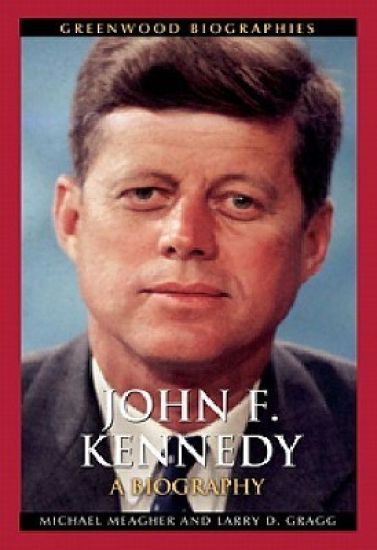
This biography examines the life and political career of a president whose idealism and policies continue to impact the world today despite his brief time in office.John F. Kennedy is revered as one of the United States' most iconic and inspirational presidents. Among his historic accomplishments, however, Kennedy was also a human being who made tragic miscalculations in the Bay of Pigs fiasco, publicly expressed doubts about democracy, and supported the use of fear-based tactics to manipulate the American people.John F. Kennedy: A Biography provides background information about the Kennedy family in the early 20th century, describes the rise of Joseph P. Kennedy as a major figure in American life, and chronicles the subsequent emergence of his second son, John F. Kennedy, as a leading figure in American politics. The authors provide a fascinating look at how the characteristics of a 23-year-old John F. Kennedy in 1940 were borne out in his performance as president two decades later.
John F. Kennedy and the New Pacific Community, 1961–63
Timothy P. Maga
Palgrave Macmillan
1990
sidottu
Charismatic and committed, John F. Kennedy remains one of the most revered, and most disliked, of US Presidents. Dedicated to changing 'the look' of the American Presidency, Kennedy was also pledged to changing the nature of US foreign policy-making. Victory in the Cold War was possible, he said, and the greatest challenge to that victory was in the Asian/Pacific region. Success there would signal the end of the communist versus capitalist confrontation. America 'can do it', he vowed. This book describes the Kennedy administration's desperate efforts to achieve the impossible dream: an American Cold War victory throughout Asia and the Pacific.
A lively, concise and cutting-edge biography of one of the towering figures of 20th-century history. Of all the US presidents of the post-Second World War period, John F. Kennedy is the most clearly idolized. There is a well-documented gulf between the public’s largely positive appraisal of this glamorous historical figure and professional historians’ skeptical and mixed evaluation of a president who had only a foreshortened single term in which to make his mark. What made JFK the man he was? How does he fit into the politics of his time? What were his policy goals, how did they shift, and how far did he manage to advance them? What was the Kennedy style of governance? Why was he killed and how can we explain the unprecedented outpouring of grief that his death elicited? How has his memory evolved since 1963?Acclaimed biographer Peter J. Ling explores all these important questions, sifting and synthesizing the prodigious mass of Kennedy scholarship to provide readers with a fresh and strongly contextualized portrait of the man and his presidency.John F. Kennedy will be essential reading for students of modern American history and anyone else seeking to understand the political and private life of America’s best known president.

A lively, concise and cutting-edge biography of one of the towering figures of 20th-century history. Of all the US presidents of the post-Second World War period, John F. Kennedy is the most clearly idolized. There is a well-documented gulf between the public’s largely positive appraisal of this glamorous historical figure and professional historians’ skeptical and mixed evaluation of a president who had only a foreshortened single term in which to make his mark. What made JFK the man he was? How does he fit into the politics of his time? What were his policy goals, how did they shift, and how far did he manage to advance them? What was the Kennedy style of governance? Why was he killed and how can we explain the unprecedented outpouring of grief that his death elicited? How has his memory evolved since 1963?Acclaimed biographer Peter J. Ling explores all these important questions, sifting and synthesizing the prodigious mass of Kennedy scholarship to provide readers with a fresh and strongly contextualized portrait of the man and his presidency.John F. Kennedy will be essential reading for students of modern American history and anyone else seeking to understand the political and private life of America’s best known president.