Kirjojen hintavertailu. Mukana 11 244 527 kirjaa ja 12 kauppaa.

Kirjahaku

Etsi kirjoja tekijän nimen, kirjan nimen tai ISBN:n perusteella.

1000 tulosta hakusanalla John Fisher

English Works of John Fisher, Bishop of Rochester

English Works of John Fisher, Bishop of Rochester

John Fisher

Oxford University Press
2002
sidottu
Bishop John Fisher was a scholar and theologian of European reputation, famous as a preacher and author of the first sermon-sequence to be printed in English. He was beheaded for his opposition to Henry VIII's divorce from Catherine of Aragon and pursued after his death by the enmity of the king, who surpressed his books and sought to blacken his name. The figure of John Fisher links the age of late medieval piety with the growth of Christian humanism and the new learning, which, as a friend of Erasmus, he introduced as chancellor of Cambridge University. His English writings are distinctive for their structured elegance and clarity. This new edition contains sermons written during the last fifteen years of Fisher's life, including a previously unpublished eyewitness account of the Field of Cloth of Gold celebrations, and devotional works composed while he was a prisoner in the Tower of London.
John Fisher

John Fisher

D.S. Brewer
1876
sidottu
This scarce antiquarian book is a selection from Kessinger PublishingA AcentsAcentsa A-Acentsa Acentss Legacy Reprint Series. Due to its age, it may contain imperfections such as marks, notations, marginalia and flawed pages. Because we believe this work is culturally important, we have made it available as part of our commitment to protecting, preserving, and promoting the world's literature. Kessinger Publishing is the place to find hundreds of thousands of rare and hard-to-find books with something of intere
John Fisher

John Fisher

Ernest Alfred Benians

Cambridge University Press
2014
pokkari
Originally published in 1935, this book presents the content of a lecture given by Ernest Alfred Benians to celebrate the quatercentenary celebrations of four Cambridge Colleges: Queens', Christ's, St John's, and Trinity. This book will be of value to anyone with an interest in John Fisher and British Church history.
A Treatise Concerning the Fruitful Sayings of David, the King and Prophet, in the Seven Penitential Psalms. ... By the Right Reverend Father in God John Fisher,
The 18th century was a wealth of knowledge, exploration and rapidly growing technology and expanding record-keeping made possible by advances in the printing press. In its determination to preserve the century of revolution, Gale initiated a revolution of its own: digitization of epic proportions to preserve these invaluable works in the largest archive of its kind. Now for the first time these high-quality digital copies of original 18th century manuscripts are available in print, making them highly accessible to libraries, undergraduate students, and independent scholars.The Age of Enlightenment profoundly enriched religious and philosophical understanding and continues to influence present-day thinking. Works collected here include masterpieces by David Hume, Immanuel Kant, and Jean-Jacques Rousseau, as well as religious sermons and moral debates on the issues of the day, such as the slave trade. The Age of Reason saw conflict between Protestantism and Catholicism transformed into one between faith and logic -- a debate that continues in the twenty-first century.++++The below data was compiled from various identification fields in the bibliographic record of this title. This data is provided as an additional tool in helping to insure edition identification: ++++British LibraryT081045 London]: Printed in the year, 1714. 4],342p.; 12
John Fisher's Court Sermons

John Fisher's Court Sermons

Oxford University Press
2021
sidottu
This is a critical edition of John Fisher's Treatise on the Penitential Psalms, sermons delivered in 1507-1508 to the household of Lady Margaret Beaufort, the mother of King Henry VII, who caused them to be published as the first English sermon collection ever printed. Also included is Bishop Fisher's funeral sermon for King Henry and his "month's mind" sermon for Lady Margaret herself, who died shortly after her son. Lady Margaret Beaufort was Fisher's patron and a notable benefactor to the University of Cambridge, where with his guidance she renewed Queens and Christ's Colleges, and founded a third, St John's, which her chaplain Fisher brought to completion after her death. The book features the subtitle "Preaching for Lady Margaret" because she was responsible for bringing the Treatise to general public attention and all these sermons owe their delivery to this remarkable woman, together with the gratitude of John Fisher's modern readers, because Fisher himself rarely sought publication for his English works. They are packed with scholarly reference to patristic and medieval theology, but also to contemporary chronicles, bestiaries and works of natural history and classical authors. This distinguished Treatise and its companion sermons gives the reader a glimpse into Fisher's mind, steeped in and devoted to the learning of his time yet always eager for the new scholarship of the humanists and their discoveries.
John Fisher and Thomas More: Keeping Their Souls While Losing Their Heads
In 1929, nearly four hundred years after the deaths of Saints Thomas More and John Fisher, G.K. Chesterton observed in words equally attributable to Fisher, "Blessed Thomas More is more important at this moment than at any moment since his death, even perhaps the great moment of his dying; but he is not quite so important as he will be in a hundred years." Judge Robert J Conrad, Jr. anticipates Chesterton's one-hundred-year mark in a collection of stories from the lives of More and Fisher, demonstrating how their sanctity and integrity carried them and those who loved them through tumultuous and heart-wrenching times which, perhaps surprisingly, bear a striking resemblance to the present epoch. At first blush, nothing could appear more different than the pre-industrial sixteenth century and the tech-centered modern era. But a closer examination presents a similar tale of political maneuvering and hostile hearings, legal corruption, viral pandemics, riots, suppression of speech, loss of religious liberty, and a profound indifference for truth. Judge Conrad effortlessly weaves together tales of both men and what made them who they were--family, faith, friendship, oaths, vocation, detachment, conscience--inviting those who strive for holiness down the same narrow path these two martyrs walked with a clarity founded upon the truth of Christ's Church, and a wit that charmed even their persecutors. Both these men refused to consent to the theological farce that would permit the king's divorce and remarriage and drive a wedge into the unity of the Christian world, and both paid for their convictions with their lives. More died the king's good servant and God's first. Fisher approached his execution with joy befit for a wedding. And yet, both stand today, long after they are gone, as models of courage in a time when it is desperately needed. Discover in this volume of powerful stories two saints whose lives could not be timelier for the present age.
Sir John Fisher's Naval Revolution

Sir John Fisher's Naval Revolution

Nicholas Lambert

University of South Carolina Press
2002
nidottu
For most of the 20th century, historians have thought that British naval policy was driven by the Anglo-German arms race. After examining a quantity of primary sources, Lambert concludes that Admiralty decision-making was in fact driven by factors unrelated to the German building programme. This volume explores the intrigue and negotiations between the Admiralty and leading domestic politicians and social reformers of the day, such as Herbert H. Asquith, David Lloyd George and Winston Churchill. Lambert also explains how Britain's naval leaders responded to these non-military, cultural challenges under the direction of Adimiral Sir John Fisher, the service head of the Admiralty from 1904 to 1910, who believed in a radically new approach to navel defence. For mainly political reasons, however, Fisher concealed his ""military technological revolution"" and worked surreptitiously to create a new model fleet capable of protecting all of Britain's imperial interests across the globe.
Fisher of Men: a Life of John Fisher, 1469–1535
John Fisher, 1469-1535 was a figure of European stature during the Tudor age. His many roles included those of bishop, humanist, theologian, cardinal, and ultimately martyr. This study places him in the context of sixteenth-century Christendom, focusing not just on his resistance to Henry VIII, but also on his active engagement with the renaissance and reformation.
Fisher of Men: a Life of John Fisher, 1469–1535
John Fisher, 1469-1535 was a figure of European stature during the Tudor age. His many roles included those of bishop, humanist, theologian, cardinal, and ultimately martyr. This study places him in the context of sixteenth-century Christendom, focusing not just on his resistance to Henry VIII, but also on his active engagement with the renaissance and reformation.
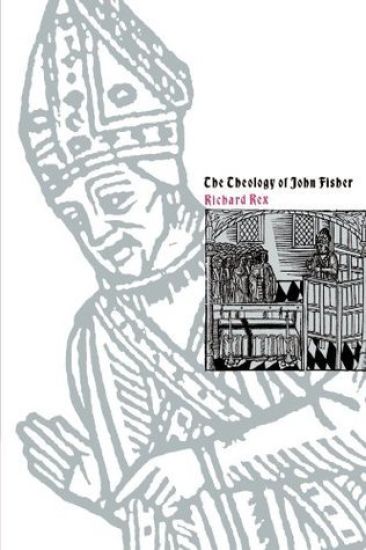
The Theology of John Fisher

The Theology of John Fisher

Richard Rex

Cambridge University Press
1991
sidottu
This book investigates the intellectual career of Bishop John Fisher (1469–1535), the early sixteenth-century bishop of Rochester and victim of Henry VIII’s Reformation, whose numerous writings included one of the most influential refutations of the century of Martin Luther. Richard Rex investigates the life and work of Fisher the scholar from his arrival in Cambridge in the 1480s to his prolonged literary campaign against Henry’s divorce from Catherine of Aragon in the years 1527–31. He traces the intellectual influences of scholasticism and humanism in his education and his subsequent career, and the way in which Fisher attempted to cope with the tensions between the authority of the church and the critical implications of humanist study. The heart of the book is concerned with Fisher’s most important works, his treatises against Luther and Oecolompadius in the 1520s. Rex draws attention to the perceptiveness and originality of his critique of Protestant doctrines, and attempts to restore one of the greatest intellectuals of early sixteenth-century England to his rightful place as a central figure in the scholarship of the age.
The Theology of John Fisher

The Theology of John Fisher

Richard Rex

Cambridge University Press
2003
pokkari
This book investigates the intellectual career of Bishop John Fisher (1469–1535), the early sixteenth-century bishop of Rochester and victim of Henry VIII’s Reformation, whose numerous writings included one of the most influential refutations of the century of Martin Luther. Richard Rex investigates the life and work of Fisher the scholar from his arrival in Cambridge in the 1480s to his prolonged literary campaign against Henry’s divorce from Catherine of Aragon in the years 1527–31. He traces the intellectual influences of scholasticism and humanism in his education and his subsequent career, and the way in which Fisher attempted to cope with the tensions between the authority of the church and the critical implications of humanist study. The heart of the book is concerned with Fisher’s most important works, his treatises against Luther and Oecolompadius in the 1520s. Rex draws attention to the perceptiveness and originality of his critique of Protestant doctrines, and attempts to restore one of the greatest intellectuals of early sixteenth-century England to his rightful place as a central figure in the scholarship of the age.
Fisher of Men: a Life of John Fisher, 1469–1535
John Fisher, 1469-1535 was a figure of European stature during the Tudor age. His many roles included those of bishop, humanist, theologian, cardinal, and ultimately martyr. This study places him in the context of sixteenth-century Christendom, focusing not just on his resistance to Henry VIII, but also on his active engagement with the renaissance and reformation.