Kirjojen hintavertailu. Mukana 11 342 296 kirjaa ja 12 kauppaa.

Kirjahaku

Etsi kirjoja tekijän nimen, kirjan nimen tai ISBN:n perusteella.

1000 tulosta hakusanalla John Ford

John Ford

John Ford

Bill Levy

Greenwood Press
1998
sidottu
John Ford (1894-1973) is universally acknowledged as one of the greatest directors in the history of cinema. He is the only person to win four Academy Awards for Direction, for The Informer (1935), The Grapes of Wrath (1940), How Green Was My Valley (1941), and The Quiet Man (1952). This reference book is a comprehensive guide to his career. The volume begins with a biography that looks at Ford as a person, a director, and a cinematic legend and influence. Ford's life is discussed chronologically, but the biography repeatedly considers how his early experiences shaped his creative vision and attempts to explain why he was so self-destructive and unhappy throughout his career. In addition, the biography carefully scrutinizes his methods, styles, techniques, and secrets of direction. A chronology presents his achievements in capsule form. The rest of the book provides detailed information about his many productions and about the response to his works. The heart of the volume is a filmography, which includes individual entries for 184 films with which Ford was involved, as either an actor, a director, a producer, a writer, an advisor, or an assistant. These entries include cast and credit information, a plot synopsis, critical commentary, and excerpts from reviews. The book also includes the most extensive annotated bibliography on Ford ever published, with more than 1000 entries for books, articles, dissertations, documentaries, and even four works of fiction concerning Ford. Additional sections of the book provide information about his unrealized projects; his radio, television, and theater work; his awards and honors; and special collections and archives.
John Ford

John Ford

Tag Gallagher

University of California Press
1988
pokkari
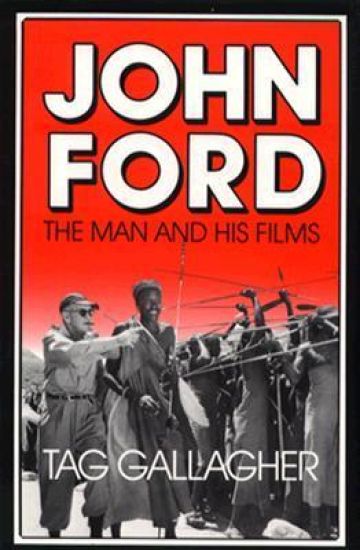
This radical re-reading of Ford's work studies his films in the context of his complex character, demonstrating their immense intelligence and their profound critique of our culture.
John Ford

John Ford

Spittles Brian

Routledge
2002
nidottu
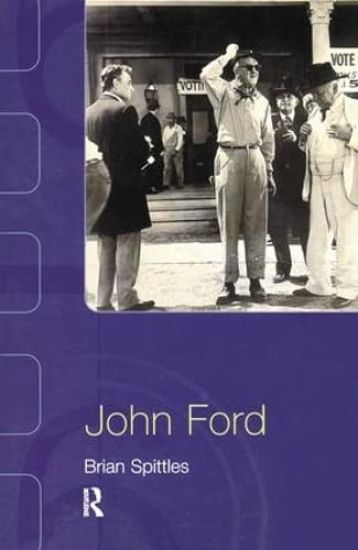
John Ford is a monumental figure in Hollywood and world cinema. Throughout his long and varied career spanning the silent and sound era, he produced nearly 150 films of which Iron Horse (1924), Stagecoach (1939), The Grapes of Wrath (1940), How Green Was My Valley (1941), The Searchers (1956) and The Man Who Shot Liberty Valance (1962) are classics of cinema. Ford was also an influential figure in developing, and extending Hollywood's traditions. Stylistically Ford was instrumental in developing new camera techniques, atmospheric lighting and diverse narrative devices. Thematically, long before it became conventional wisdom, Ford was exploring issues that concern us today, such as gender, race, the treatment of ethnic minorities and social outcasts, the nature of history and the relationship of myth and reality. For all these reasons, John Ford the man and his films reward thought and study, both for the general reader and the academic student. Ford's pictures express the world in which they were made, and have contributed to making what Hollywood is today. This book illustrates the excitement, importance, influence, creativity, deviousness and complexity of the man and his films.
John Ford

John Ford

Ronald L. Davis

University of Oklahoma Press
1997
pokkari
John Ford remains the most honoured director in Hollywood history, having won six Academy Awards and four New York Film Critics Awards. Drawing upon extensive written and oral history, Ronald L. David explores Ford's career from his silent classic, "The Iron Horse", through the transition to sound, and then into the pioneer years of location filming, the golden years of Hollywood and the movement toward television. During his career, Ford made such classics as "Stagecoach", "The Grapes of Wrath", "How Green Was My Valley", and "The Searchers" - 136 pictures in all, 54 of them Westerns. The complexity of his personality comes alive here through the eyes of his colleagues, friends, relatives, film critics and the actors he worked with, including John Wayne, Henry Fonda, Maureen O'Hara and Katharine Hepburn.
John Ford

John Ford

Joseph McBride; Michael Wilmington

THE UNIVERSITY PRESS OF KENTUCKY
2024
nidottu
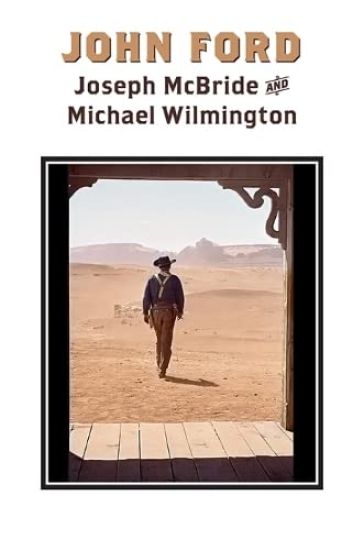
Orson Welles was once asked which directors he most admired. He replied: "The old masters. By which I mean John Ford, John Ford, and John Ford." A legend in his own time, John Ford (1894–1973) received a record four Academy Awards for best director, and two of his World War II documentaries won Oscars for the US Navy. He directed 136 films in a career that lasted from the early silent era through the late 1960s. Ford is celebrated throughout the world as the cinema's foremost chronicler of American history, the leading poet of the Western genre, and a wide-ranging filmmaker of profound emotional impact. His classic films - including Stagecoach (1939), The Grapes of Wrath (1940), How Green Was My Valley (1941), The Quiet Man (1952), The Searchers (1956), and The Man Who Shot Liberty Valance (1962) - remain widely popular, and he has been acknowledged as a major influence on filmmakers such as Jean Renoir, Ingmar Bergman, Akira Kurosawa, Howard Hawks, Frank Capra, Samuel Fuller, Elia Kazan, Sidney Lumet, Martin Scorsese, Steven Spielberg, and George Lucas. In this groundbreaking critical study, Joseph McBride and Michael Wilmington provide an overview of Ford's career as well as in-depth analyses of key Ford films. Analyzing recurring Fordian themes and relating each film to his entire body of work, the authors insightfully explore the full richness of Ford's tragicomic vision of history. This new and revised version includes a study of the twenty-seven Ford silent films now known to survive in whole or in part (more than double the number available when the original edition was published); essays on three controversial aspects of Ford: his tragicomic sensibility, his views of race, and the influence of his Irish heritage; and an expanded version of McBride's interview with Ford on the last day of his career.
John Ford

John Ford

Joseph McBride; Michael Wilmington

THE UNIVERSITY PRESS OF KENTUCKY
2024
sidottu
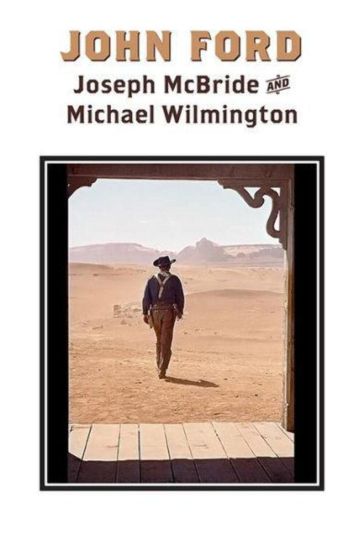
Orson Welles was once asked which directors he most admired. He replied: "The old masters. By which I mean John Ford, John Ford, and John Ford." A legend in his own time, John Ford (1894–1973) received a record four Academy Awards for best director, and two of his World War II documentaries won Oscars for the US Navy. He directed 136 films in a career that lasted from the early silent era through the late 1960s. Ford is celebrated throughout the world as the cinema's foremost chronicler of American history, the leading poet of the Western genre, and a wide-ranging filmmaker of profound emotional impact. His classic films - including Stagecoach (1939), The Grapes of Wrath (1940), How Green Was My Valley (1941), The Quiet Man (1952), The Searchers (1956), and The Man Who Shot Liberty Valance (1962) - remain widely popular, and he has been acknowledged as a major influence on filmmakers such as Jean Renoir, Ingmar Bergman, Akira Kurosawa, Howard Hawks, Frank Capra, Samuel Fuller, Elia Kazan, Sidney Lumet, Martin Scorsese, Steven Spielberg, and George Lucas. In this groundbreaking critical study, Joseph McBride and Michael Wilmington provide an overview of Ford's career as well as in-depth analyses of key Ford films. Analyzing recurring Fordian themes and relating each film to his entire body of work, the authors insightfully explore the full richness of Ford's tragicomic vision of history. This new and revised version includes a study of the twenty-seven Ford silent films now known to survive in whole or in part (more than double the number available when the original edition was published); essays on three controversial aspects of Ford: his tragicomic sensibility, his views of race, and the influence of his Irish heritage; and an expanded version of McBride's interview with Ford on the last day of his career.
John Ford

John Ford

Brian Spittles

Routledge
2017
sidottu
John Ford is a monumental figure in Hollywood and world cinema. Throughout his long and varied career spanning the silent and sound era, he produced nearly 150 films of which Iron Horse (1924), Stagecoach (1939), The Grapes of Wrath (1940), How Green Was My Valley (1941), The Searchers (1956) and The Man Who Shot Liberty Valance (1962) are classics of cinema. Ford was also an influential figure in developing, and extending Hollywood's traditions. Stylistically Ford was instrumental in developing new camera techniques, atmospheric lighting and diverse narrative devices. Thematically, long before it became conventional wisdom, Ford was exploring issues that concern us today, such as gender, race, the treatment of ethnic minorities and social outcasts, the nature of history and the relationship of myth and reality. For all these reasons, John Ford the man and his films reward thought and study, both for the general reader and the academic student. Ford's pictures express the world in which they were made, and have contributed to making what Hollywood is today. This book illustrates the excitement, importance, influence, creativity, deviousness and complexity of the man and his films.