Kirjojen hintavertailu. Mukana 11 244 527 kirjaa ja 12 kauppaa.

Kirjahaku

Etsi kirjoja tekijän nimen, kirjan nimen tai ISBN:n perusteella.

1000 tulosta hakusanalla John Fuegi

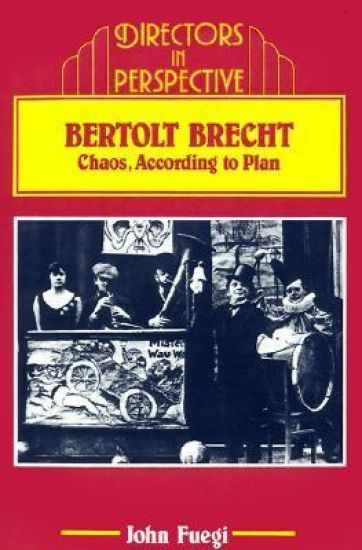
Bertolt Brecht

Bertolt Brecht

John Fuegi

Cambridge University Press
1987
pokkari
This is a full-length study of Bertolt Brecht's day-to-day work as a theatre director. Professor Fuegi has researched how Brecht worked and reacted with actors how his productions were actually put together in rehearsal. This book is the result of interviews with Brecht's closest associates.
A Miscellaneous Collection of Fugitive Pieces of Poetry, by the Late ... John Skinner ... Volume III. of His Posthumous Works.
Title: A Miscellaneous Collection of fugitive pieces of Poetry, by the late ... John Skinner ... Volume III. of his Posthumous Works.Publisher: British Library, Historical Print EditionsThe British Library is the national library of the United Kingdom. It is one of the world's largest research libraries holding over 150 million items in all known languages and formats: books, journals, newspapers, sound recordings, patents, maps, stamps, prints and much more. Its collections include around 14 million books, along with substantial additional collections of manuscripts and historical items dating back as far as 300 BC.The POETRY & DRAMA collection includes books from the British Library digitised by Microsoft. The books reflect the complex and changing role of literature in society, ranging from Bardic poetry to Victorian verse. Containing many classic works from important dramatists and poets, this collection has something for every lover of the stage and verse. ++++The below data was compiled from various identification fields in the bibliographic record of this title. This data is provided as an additional tool in helping to insure edition identification: ++++ British Library Skinner, John; 1809. 8 . 11642.dd.5.
John and Mary; Or, The Fugitive Slaves: A Tale of South-Eastern Pennsylvania
SKIRTING the south-eastern border of Lancaster, county, Pennsylvania, where it forms the dividing line between that and Chester county, is the Octorara creek. It is a beautiful and romantic stream, and after the union of its eastern and western branches, attains considerable size. Along its banks can be found almost every variety of scenery; and every description of romantic and picturesque beauty. The stream itself is a study for the lover of Nature, who would never tire in contemplating it. Now it spreads out a broad bright sheet of glassy surface, glowing like burnished silver, as it reflects the rays of the setting sun, or glistens beneath the full moon's rich flood of glorious light; while slowly, silently and almost imperceptibly it moves forward. Again, it rushes madly down some deep ravine, leaping wildly from rock to rock and dashing its white foam in every direction, as though it bore a message whose supreme importance Nature herself had recognized. Sometimes it traverses a deep forest, where for miles the mighty oak and the kingly pine, with their broad-spreading branches intertwined, almost shut out the light of day; while the whispered murmur of the waters seems like the sigh of some hopeless spirit wafted from the darkness of the unknown. Again emerging, it threads some green meadow, reflecting the blue heavens above, and the wild flowers and beautiful verdure that skirt its borders. Here and there is a mill-dam that turns the machinery that grinds the grain for the neighboring farmers; while over its breast glides a broad sheet of water, which, falling some distance, forms a miniature Niagara, whose roar can be heard for miles away in the stillness of the night or early morning, and whose voice reaches far and wide when the usually placid stream swells into an angry flood. One cannot but remark the partiality always felt toward a stream of water by those who dwell upon its borders. Nothing furnishes such solace for their leisure hours as a stroll along its banks. For them it has some ever-present attraction, which retains its freshness as long as life endures. Forty years ago or more, the period at which our story commences, the Octorara, or that part of it between the junction of the two branches and the Maryland line, was wilder and more romantic than at the present day. The deep, unbroken forests that then lined its banks have been partly cleared away. Houses have been erected where there was undisturbed solitude, lands cleared and cultivated and waterpower made available where then no sound of industry disturbed the stillness of nature. Still, at that time, it was by no means an unsettled section of country. Public highways leading north and south crossed the stream at intervals, which was passable for all kinds of vehicles at any of the fords, except when swollen by rains or rendered impassable by ice, which was often the case during the winter season.
John and Mary; Or, The Fugitive Slaves: A Tale of South-Eastern Pennsylvania
LARGE PRINT EDITION: The following story, originally written for the LANCASTER INQUIRER, is founded on facts that came within the personal knowledge of the writer. The characters described are all real ones, as will be attested by many of the older inhabitants, yet living in the region of country where the events described occurred. Belonging to a generation of people and a condition of society that are rapidly passing away, they cannot fail to excite an interest in the minds of those who, living under totally different influences, learn of them only through others. The narrative of John and Mary, or rather of Mary and her child, is founded strictly on facts, and resulted from a state of society that has passed away forever. Whatever faithfully describes the influences and results of the institution of slavery, must become more and more interesting to the present generation, and in the hope that this little volume will in a measure meet this growing want, the writer has consented to its publication in the present form. That some pleasure and profit may result to the reader from its perusal is the earnest desire of the author.
The life of John Thompson, a fugitive slave  Containing his history of 25 years in bondage, and his providential escape (Edition1)
In the shadowed corridors of early American history, where literary giants once roamed, emerges a narrative that has been out of print for decades and is now republished by Alpha Editions. This biographical study, a cultural treasure, delves into the life and legacy of an iconic figure whose works shaped the American literary scene. Restored for today's and future generations, the book offers a profound exploration of nineteenth century authorship, casting light on the intricate tapestry of American literature. As you turn its pages, you are transported to an era where the echoes of Washington Irving's contemporaries and the analytical whispers of a Nathaniel Hawthorne analysis can still be felt. This edition, not just a reprint, stands as a collector's item, inviting both scholars of American literature and history enthusiasts to rediscover Cooper's literary impact. Through vivid prose and insightful literary criticism, it captures the essence of an early 19th century world, inviting readers to ponder the enduring influence of its subjects. Whether you are a casual reader seeking to immerse yourself in a bygone era or a classic-collection buyer eager to own a piece of literary history, this book offers an unparalleled glimpse into the minds that shaped the nation's narrative.
The Fugitive Self: New and Selected Poems

The Fugitive Self: New and Selected Poems

John Wheatcroft

Etruscan Press
2009
nidottu
The Fugitive Self is a tribute to a distinguished career spanning fifty years in American letters. At once meditative, whimsical, and hard-hitting, it illuminates the spiritual cost of American expansion.Nothing we'd been counting onall the time we'd waitedwas waiting when we arrived.Only more waiting--John Wheatcroft is the author of twenty books in three genres, a WWII combat veteran, and professor emeritus at Bucknell University. He has a well-known following--Peter Balakian, Bruce Smith, Tom Gardner, Betsy Sholl--who believes his work is seminal to understanding violence now and in the second half of the twentieth century.