
Kirjahaku
Etsi kirjoja tekijän nimen, kirjan nimen tai ISBN:n perusteella.
1000 tulosta hakusanalla John G Jackson
The book challenges all the standard approaches to African history and will, no doubt, disturb a large number overnight "authorities" on Africa who will discover that they do not really know the depth of African history and the role that Africans played in creating early human societies. In its panoramic view, from the dawn of prehistory to modern resurgent Africa, Introduction to African Civilizations challenges the parochial historian, devastates the theoretical pretensions of white supremicists, expands intellectual horizons. It is a fascinating book to be read and reread for pleasure and knowledge by the layman and the scholar.

An unabridged edition to include original scripture and footnotes, with quotes by the author at book's end, 'There are many prayers that it would not be right to pray in public, but they are very dear to God's ear in private.'
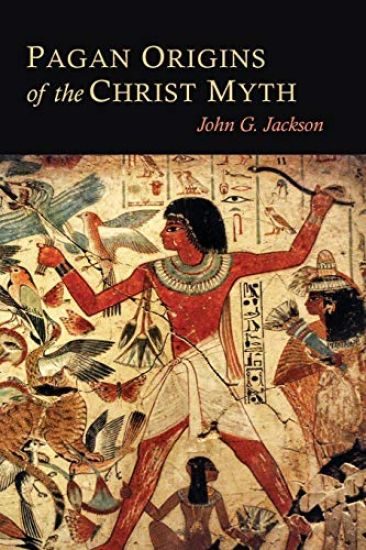

Explore the Ancient Origins of Christianity"Orthodox Christians recognize him as a god, Unitarians as a man, and Rationalists as a myth," wrote John G. Jackson about the central figure of one of the world's great religions. A Pan-African scholar, Jackson has authored many books on the African origin of civilization, and lectured widely on world history and comparative religion. Drawing upon the ancient lore and mythology of Babylon, Syria, India, Egypt, and Greece, in Christianity Before Christ Jackson reveals striking parallels to the traditional Christian story. "In Egypt, 3000 years ago, the birthdate of the sun-god was celebrated on the equivalent of] the 25th of December, the first day to noticeably lengthen after the day of the Winter Solstice." He continues, culture by culture, to unearth examples of virgin birth, performance of miracles, and symbols we associate with the Christian Church which had been in use long before that era. Extensively quoting other scholars, Jackson presents his case as the disciplined researcher he is. An unapologetic atheist, he was cautioned to "be more discreet" when lecturing 1970's university students on the historical origin of Christianity. But one need not share Jackson's philosophy to enjoy this thorough, well-paced odyssey comparing archaic traditions with what we think of today as Christianity. World religion students, historians, and any free thinker will find this important and worthwhile reading.Includes 56 illustrations.

Nothing is new or original in Christianity. All features and components of what is now known as Christianity were present in mythologies that flourished before Jesus is alleged to have lived, and this book shows how those myths evolved into today's religion.
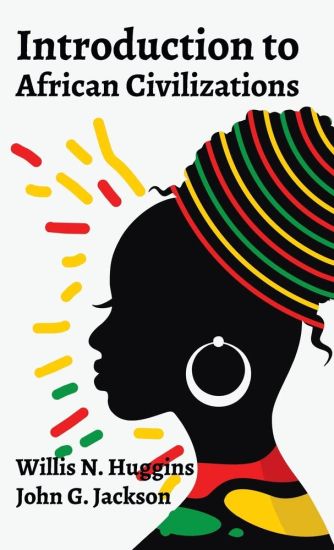
With brilliantly objective scholarship, respected historian and author John G. Jackson reexamines the outdated, racist, and Westernized history of Africa that is still taught in schools, and presents one infinitely more rich, colorful, varied-and truthful. Challenging the standard dehumanizing and exploitive approaches to African history, from the dawn of prehistory to the resurgent Africa of today--including the portrayal of Africans as "savages" who ultimately benefitted from European enslavement with its "blessings of Christian civilization"-Jackson confronts the parochial historian, devastates the theoretical pretensions of white supremacists, and expands intellectual horizons. Accessible and informed, fascinating and candid, Introduction to African Civilizations is an important historical guide that will enhance antiracist teachings for the general reader and the scholar alike. Introduction by John Henrik Clarke, pioneer of African Studies and author of Christopher Columbus and the African Holocaust
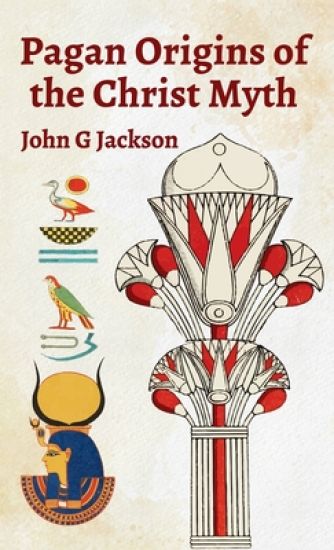
Pagan Orgins Of The Christ Myth Hardcover

Was Jesus Christ a Negro? and The African Origin of the Myths & Legends of the Garden of Eden The Roman Cookery Book Hardcover
John G Jackson
LUSHENA BOOKS INC
2015
sidottu
Jackson was born in Aiken, South Carolina, on April 1, 1907, and raised Methodist. At the age of 15 he moved to Harlem, New York, where he enrolled in Stuyvesant High School. During this time, he became interested in African-American history and culture and began writing essays on the subject. They were so impressive that in 1925, while still a high school student, Jackson was invited to write for Marcus Garvey's newspaper, "Negro World." From 1930 onwards, Jackson became associated with a number of Pan-African historians, activists and writers, including Hubert Harrison, Arturo Alfonso Schomburg, John Henrik Clarke, Willis Nathaniel Huggins and Joel Augustus Rogers. He also authored a number of books on African history, promoting a Pan-African and Afrocentrist view. "Was Jesus Christ a Negro?" is one of these tracts. It is accompanied by a second related tract "The African Origin of the Myths and Legends of the Garden of Eden," also included in the second part of "Was Jesus Christ a Negro?" in which he argued that Jesus may have been a black man.
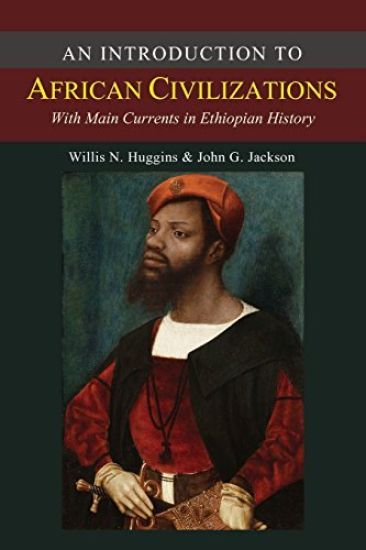
An Introduction to African Civilizations
John G Jackson; Willis Nathaniel Huggins
Martino Fine Books
2015
pokkari
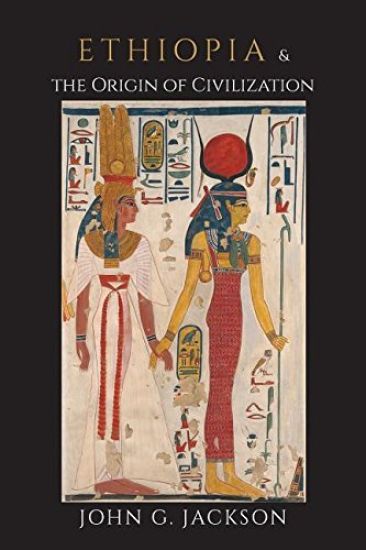
The New Federalist Papers
Jackson J. Barlow; Dennis J. Mahoney; John G. West
University Press of America
1988
sidottu
This book represents perhaps the single most important volume to be published on the Constitution during the Bicentennial. With over sixty contributing authors, it brings together the best of American constitutional scholarship for a comprehensive and provocative discussion of the Constitution's history, its principles and its current meaning. Contributing authors to the book range from historians and political scientists to Congressmen and Supreme Court Justices. Some of the better-known contributors include former Speaker of the House Tip O'Neill, former Chief Justice Warren Burger, Congressman Philip Crane, lawyer Phillis Schlafly, Pulitzer Prize-winning historian Leonard Levy, former United States Senator Eugene McCarthy, and the venerable dean of United States historians, Henry Steele Commager. Most of the articles published in this volume appeared originally as part of the acclaimed New Federalist Papers newspaper series, which has been used by hundreds of newspapers across the country since 1984. The book is arranged into seventeen different sections, each of which focuses on a major constitutional principle or institution. Topic areas include federalism, the separation of powers, Congress, the bureaucracy, the Presidency, the Judiciary, foreign policy, civil rights, economics, constitutional reform, and the relationship between church and state. The sections of the book were designed to parallel the standard subjects covered in an introductory college course. Co-published with Public Research, Syndicated.
The New Federalist Papers
Jackson J. Barlow; Dennis J. Mahoney; John G. West
University Press of America
1988
nidottu
This book represents perhaps the single most important volume to be published on the Constitution during the Bicentennial. With over sixty contributing authors, it brings together the best of American constitutional scholarship for a comprehensive and provocative discussion of the Constitution's history, its principles and its current meaning. Contributing authors to the book range from historians and political scientists to Congressmen and Supreme Court Justices. Some of the better-known contributors include former Speaker of the House Tip O'Neill, former Chief Justice Warren Burger, Congressman Philip Crane, lawyer Phillis Schlafly, Pulitzer Prize-winning historian Leonard Levy, former United States Senator Eugene McCarthy, and the venerable dean of United States historians, Henry Steele Commager. Most of the articles published in this volume appeared originally as part of the acclaimed New Federalist Papers newspaper series, which has been used by hundreds of newspapers across the country since 1984. The book is arranged into seventeen different sections, each of which focuses on a major constitutional principle or institution. Topic areas include federalism, the separation of powers, Congress, the bureaucracy, the Presidency, the Judiciary, foreign policy, civil rights, economics, constitutional reform, and the relationship between church and state. The sections of the book were designed to parallel the standard subjects covered in an introductory college course. Co-published with Public Research, Syndicated.
The Challenge of Front-Line Management
Carolyn L. Facteau; Katherine A. Jackson; Ronald R. Sims; John G. Veres
Praeger Publishers Inc
2000
sidottu
As the way work is done changes and as organizations flatten themselves down in response to demands posed by the new global economy, managers on the front lines, where some say the real work is done, need a broader set of skills than ever before. They must learn to see their jobs differently—to become tougher and more durable—but they must also become more flexible in how they interact with the organization itself and its changing work and economic environments. The authors emphasize key tasks that front-line managers must do today, such as strategic planning, budgeting, quality management, and benchmarking, and how they must focus attention on their customers, until now far removed and perhaps out of mind. They must also recognize the need for effective information systems and find ways to align their immediate work units with larger organizational strategies and processes. In short, the authors offer essentially a new paradigm for the way management should now be practiced in a far-ranging book that today's managers will need to keep pace with changes that could threaten their careers, and a book that offers others on the way up a way to start their own careers on the right foot.Becoming an effective front-line manager starts with understanding the job. The authors begin with a comprehensive look at what it means to be a front-line manager and the special challenges they face. They must become all things to all people, say the authors, and at the same time consider other, perhaps unfamiliar challenges, such as safety and health concerns. Front-line managers today must also learn to grow and adapt to changing work environments. The authors present an extensive view of these new tasks and roles and detail the ways in which front-line managers can address and overcome the obstacles they will find. The book is a readable, thought-provoking study of special interest to teachers of general management courses on the undergraduate and graduate levels.