Kirjojen hintavertailu. Mukana 11 213 693 kirjaa ja 12 kauppaa.

Kirjahaku

Etsi kirjoja tekijän nimen, kirjan nimen tai ISBN:n perusteella.

1000 tulosta hakusanalla John Gardner

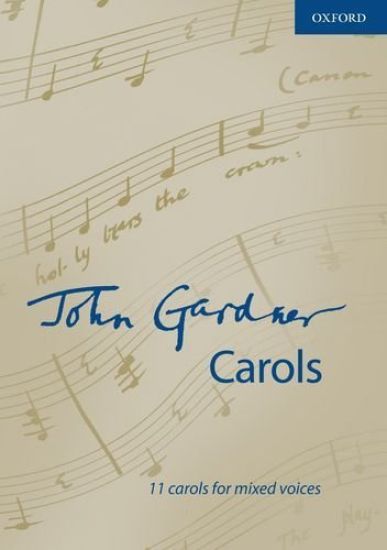
John Gardner Carols

John Gardner Carols

Oxford University Press
2012
muu
for SATB accompanied and unaccompanied This anthology of eleven carols celebrates the festive music of John Gardner (1917-2011). It contains some of his most well-known settings alongside new repertoire, including a previously unpublished Epiphany carol, 'Entry of the Three Kings'. From the reflective 'A Christmas Hymn' to his joyful setting of 'The holly and the ivy', John Gardner Carols presents a variety of styles and moods that will delight choirs and audiences alike. A number of pieces give alternative performance instructions to allow upper-voice choirs to enjoy this superb collection. A number of the carols are included on the EM Records CD 'John Gardner: Cantata for Christmas, Organ Concerto, Christmas Carols' (EMR CD009) with the City of London Choir, conducted by Hilary Davan Wetton and Chris Gardner.
John Gardner: A Tiny Eulogy

John Gardner: A Tiny Eulogy

Phil Jourdan

Punctum Books
2012
nidottu
John Gardner's career was permanently changed by his publication of On Moral Fiction (1978), a controversial and derided assessment of the state of literature as Gardner saw it. By arguing for a return to greater seriousness and moral commitments in literature, Gardner found himself attacked on all sides by critics and writers who found his conservatism suspicious or simply irrelevant.In this short tribute to Gardner's late intellectual concerns, Phil Jourdan looks at some of the difficulties in On Moral Fiction, and asks whether Gardner was rigorous enough in his deployment of various philosophical concepts through his book. Convinced that, despite any problems of argumentative method or intellectual honesty, On Moral Fiction's basic message should not be dismissed outright, Jourdan tries to determine what is superfluous to the book, so that we may focus on its core: a call for writers not to forget their moral influence on readers.Now that Gardner's career is half-forgotten, it is worth remembering this impassioned and public debate on the role of literature has been around far longer than we care to pretend: throughout the centuries, as literature attempts to define itself over and over, the question of morality is always lurking in the background. In John Gardner: A Tiny Eulogy, Phil Jourdan tries to separate the man from the argument, and insists that the latter should not be dismissed because of the imperfection of the former.
John Gardner Murray

John Gardner Murray

Annie Leakin Sioussat

Palala Press
2018
pokkari
This work has been selected by scholars as being culturally important, and is part of the knowledge base of civilization as we know it. This work was reproduced from the original artifact, and remains as true to the original work as possible. Therefore, you will see the original copyright references, library stamps (as most of these works have been housed in our most important libraries around the world), and other notations in the work.This work is in the public domain in the United States of America, and possibly other nations. Within the United States, you may freely copy and distribute this work, as no entity (individual or corporate) has a copyright on the body of the work.As a reproduction of a historical artifact, this work may contain missing or blurred pages, poor pictures, errant marks, etc. Scholars believe, and we concur, that this work is important enough to be preserved, reproduced, and made generally available to the public. We appreciate your support of the preservation process, and thank you for being an important part of keeping this knowledge alive and relevant.
Conversations with John Gardner

Conversations with John Gardner

University Press of Mississippi
1990
nidottu
This collection, selected from more than 140 interviews Gardner granted, presents a wealth of information on the life and art of one of America's foremost novelists.These interviews show him as a novelist, a charismatic teacher of creative writing, and a widely published scholar who has vast knowledge and who generated much literary information in his lectures and interviews.After the publication of such popular and critical successes as Grendel (1971) and The Sunlight Dialogues (1972), this philosophical writer with an enviable talent for storytelling was regarded as ""a major contemporary writer."" After Gardner had demonstrated that he was one of America's most prolific, versatile, and imaginative authors, he became one of its most controversial when he attacked the literary establishment in his book On Moral Fiction and in his interviews.These candid conversations reveal a man of contrasts and contradictions, a writer who, as one of his interviewers remarks, ""brought to everything he did a passion that at times bordered on madness.
The Cannon of Learning: Reginald John Gardner's story, 1926-1999.

The Cannon of Learning: Reginald John Gardner's story, 1926-1999.

David P. D. Munns; Reginald John Gardner

Createspace Independent Publishing Platform
2014
nidottu
These are the memoirs of Reg Gardner. He grew up in Sydney and served in the military for over thirty years. At the peak of his career, he commanded the Australian artillery regiment in Vietnam and was the Australian defence attach to Japan. He was a witness and participant in many of the major events of Australia's Cold War. In the late 1970s, Reg retired from army service and became an undergraduate in classics at the Australian National University. There, through his undergraduate and Ph.D. years, Reg brought an inspiration that only a life lived in community can offer. Throughout his military and university life, Reg's story tells of his commitment to, and passion for, a deep belief in the positive value of maintaining traditions and fostering pride in a community. The Colonel-Doctor was a soldier and a scholar, a man of profound dignity, faith, and honour, a devoted family man, and the living definition of a gentlemen. Told with a wry sense of humour, the Cannon of Learning commemorates a rich and full life of service and inspiration.
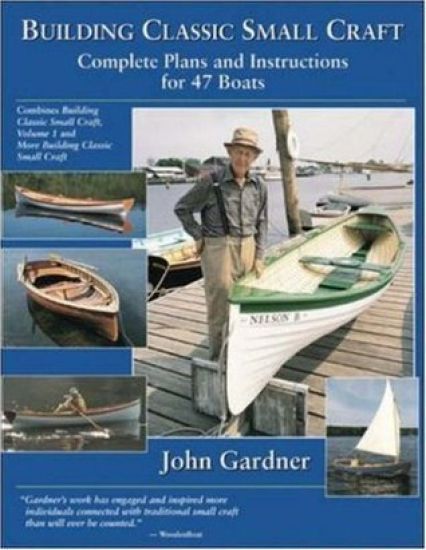
Building Classic Small Craft

Building Classic Small Craft

John Gardner

International Marine Publishing Co
2003
nidottu
This work offers plans and instructions to build 47 functional wooden boats for oar, motor, or sail. It covers flatirons, dories, semi-dories, peapods, St Lawrence River skiffs, Merrymeeting Bay duckboats, Whitehall rowing boats, Rangeley boats, herries, and Sea Bright skiffs.
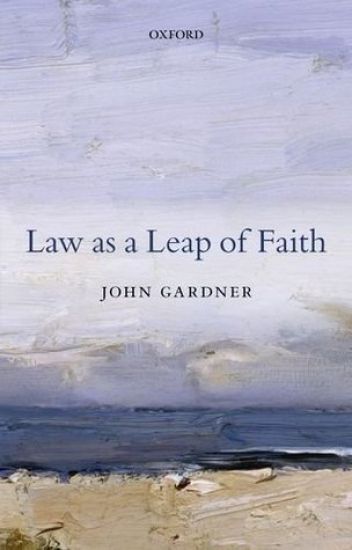
Law as a Leap of Faith

Law as a Leap of Faith

John Gardner

Oxford University Press
2014
nidottu
How do laws resemble rules of games, moral rules, personal rules, rules found in religious teachings, school rules, and so on? Are laws rules at all? Are they all made by human beings? And if so how should we go about interpreting them? How are they organized into systems, and what does it mean for these systems to have 'constitutions'? Should everyone want to live under a system of law? Is there a special kind of 'legal justice'? Does it consist simply in applying the law of the system? And how does it relate to the ideal of 'the rule of law'? These and other classic questions in the philosophy of law form the subject-matter of Law as a Leap of Faith. In this book John Gardner collects, revisits, and supplements fifteen years of celebrated writings on general questions about law and legal systems - writings in which he attempts, without loss of philosophical finesse or insight, to cut through some of the technicalities with which the subject has become encrusted in the late twentieth century. Taking his agenda broadly from H.L.A. Hart's The Concept of Law (1961), Gardner shows how the key ideas in that work live on, and how they have been and can still be improved in modest ways to meet important criticisms - in some cases by concession, in some cases by circumvention, and in some cases by restatement. In the process Gardner engages with key ideas of other modern giants of the subject including Kelsen, Holmes, Raz, and Dworkin. Most importantly he presents the main elements of his own unique and refreshingly direct way of thinking about law, brought together in one place for the first time.
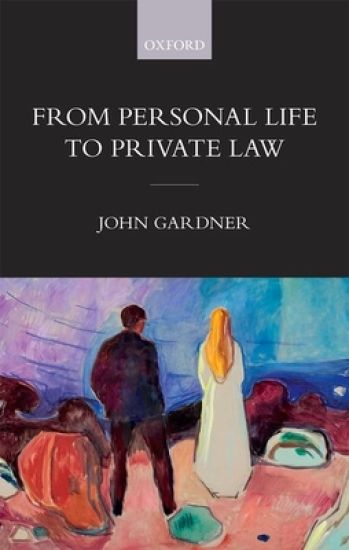
From Personal Life to Private Law

From Personal Life to Private Law

John Gardner

Oxford University Press
2018
sidottu
Mounting a lawsuit against someone who has wronged you is a prospect no less fearful than being on the receiving end of such a lawsuit. Litigation in the courts has a reputation for being a byzantine process far removed from ordinary life, often failing to address people's real grievances while adding to their pain. Yes, there is money to be had if you win. But beyond that, what is it all in aid of? In this book John Gardner argues that, in spite of their legal intricacy, many of the questions that perennially occupy the courts in civil cases are actually timeless puzzles about the human condition. The architecture of the law of torts and the law of contract turns out to track the contours of personal life much more closely than you might expect. Using a wide range of examples from literature and life as well as law, Gardner explores big questions about our relationships to our own pasts and our own futures as well as to other people. What are friends for? Why does it matter how your actions turn out? What is the good of saying sorry? Why regret your mistakes? How can anyone be compensated for an irreversible loss? Why would you want to hold onto the life you already have? And what does any of this have to do with all those protracted legal disputes about damaged cars, ruined holidays, and leaky roofs?
From Personal Life to Private Law

From Personal Life to Private Law

John Gardner

Oxford University Press
2019
nidottu
Mounting a lawsuit against someone who has wronged you is a prospect no less fearful than being on the receiving end of such a lawsuit. Litigation in the courts has a reputation for being a byzantine process far removed from ordinary life, often failing to address people's real grievances while adding to their pain. Yes, there is money to be had if you win. But beyond that, what is it all in aid of? In this book John Gardner argues that, in spite of their legal intricacy, many of the questions that perennially occupy the courts in civil cases are actually timeless puzzles about the human condition. The architecture of the law of torts and the law of contract turns out to track the contours of personal life much more closely than you might expect. Using a wide range of examples from literature and life as well as law, Gardner explores big questions about our relationships to our own pasts and our own futures as well as to other people. What are friends for? Why does it matter how your actions turn out? What is the good of saying sorry? Why regret your mistakes? How can anyone be compensated for an irreversible loss? Why would you want to hold onto the life you already have? And what does any of this have to do with all those protracted legal disputes about damaged cars, ruined holidays, and leaky roofs?
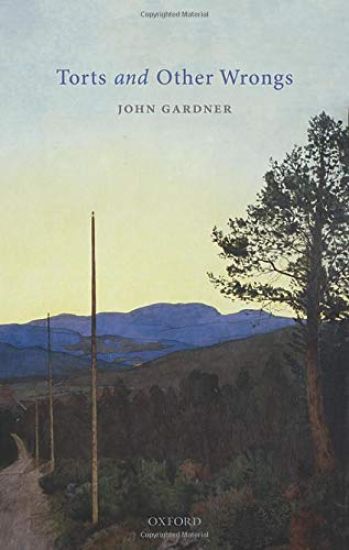
Torts and Other Wrongs

Torts and Other Wrongs

John Gardner

Oxford University Press
2019
sidottu
Torts and other Wrongs is a collection of eleven of the author's essays on the theory of the law of torts and its place in the law more generally. Two new essays accompany nine previously published pieces, a number of which are already established classics of theoretical writing on private law. Together they range across the distinction between torts and other wrongs, the moral significance of outcomes, the nature and role of corrective and distributive justice, the justification of strict liability, the nature of the reasonable person standard, and the role of public policy in tort adjudication. Though focussed on the law of torts, the wide-ranging analysis in each chapter will speak to theorists of private law more generally.
Torts and Other Wrongs

Torts and Other Wrongs

John Gardner

Oxford University Press
2021
nidottu
Torts and other Wrongs is a collection of eleven of the author's essays on the theory of the law of torts and its place in the law more generally. Two new essays accompany nine previously published pieces, a number of which are already established classics of theoretical writing on private law. Together they range across the distinction between torts and other wrongs, the moral significance of outcomes, the nature and role of corrective and distributive justice, the justification
Offences and Defences

Offences and Defences

John Gardner

Oxford University Press
2007
sidottu
John Gardner's writings on the theory of criminal law have had a significant impact on the way that this subject is understood by legal scholars and philosophers. This book collects together a selection of his best-known and most provocative pieces. John Gardner tackles persistent and troublesome questions about the philosophical foundations of the criminal law. Which wrongs are suitable to be crimes and why? What are the conditions of criminal responsibility, and how do they relate to the conditions of moral responsibility? What does it take to be complicit in another's wrongdoing? Should crimes ever be excused, and if so, on what basis? How, if at all, should the criminal law adapt to conditions of social and cultural diversity? The issues raised in these essays have a significance extending beyond the law. What does it mean to be a responsible agent and why does it matter? Is my moral character only or mostly my own business? Is there a difference between being reasonable and being rational? These and many other moral problems lurk in the background of the criminal law, and the pieces in this book bring them into the foreground. Theoretical writings on the criminal law have often been dominated by a preoccupation with the justification of criminal punishment. This work is different. Although it discusses the legitimacy of criminal punishment it proceeds on the footing that the criminal law does many important things apart from punishing people. In particular, Gardner argues that the criminal law provides an important forum for people to explain themselves. Such a forum would be important, argues Gardner, even if criminal punishment were to be abolished.
Offences and Defences

Offences and Defences

John Gardner

Oxford University Press
2007
nidottu
John Gardner's writings on the theory of criminal law have had a significant impact on the way that this subject is understood by legal scholars and philosophers. This book collects together a selection of his best-known and most provocative pieces. John Gardner tackles persistent and troublesome questions about the philosophical foundations of the criminal law. Which wrongs are suitable to be crimes and why? What are the conditions of criminal responsibility, and how do they relate to the conditions of moral responsibility? What does it take to be complicit in another's wrongdoing? Should crimes ever be excused, and if so, on what basis? How, if at all, should the criminal law adapt to conditions of social and cultural diversity? The issues raised in these essays have a significance extending beyond the law. What does it mean to be a responsible agent and why does it matter? Is my moral character only or mostly my own business? Is there a difference between being reasonable and being rational? These and many other moral problems lurk in the background of the criminal law, and the pieces in this book bring them into the foreground. Theoretical writings on the criminal law have often been dominated by a preoccupation with the justification of criminal punishment. This work is different. Although it discusses the legitimacy of criminal punishment it proceeds on the footing that the criminal law does many important things apart from punishing people. In particular, Gardner argues that the criminal law provides an important forum for people to explain themselves. Such a forum would be important, argues Gardner, even if criminal punishment were to be abolished.
Law as a Leap of Faith

Law as a Leap of Faith

John Gardner

Oxford University Press
2012
sidottu
How do laws resemble rules of games, moral rules, personal rules, rules found in religious teachings, school rules, and so on? Are laws rules at all? Are they all made by human beings? And if so how should we go about interpreting them? How are they organized into systems, and what does it mean for these systems to have 'constitutions'? Should everyone want to live under a system of law? Is there a special kind of 'legal justice'? Does it consist simply in applying the law of the system? And how does it relate to the ideal of 'the rule of law'? These and other classic questions in the philosophy of law form the subject-matter of Law as a Leap of Faith. In this book John Gardner collects, revisits, and supplements fifteen years of celebrated writings on general questions about law and legal systems - writings in which he attempts, without loss of philosophical finesse or insight, to cut through some of the technicalities with which the subject has become encrusted in the late twentieth century. Taking his agenda broadly from H.L.A. Hart's The Concept of Law (1961), Gardner shows how the key ideas in that work live on, and how they have been and can still be improved in modest ways to meet important criticisms - in some cases by concession, in some cases by circumvention, and in some cases by restatement. In the process Gardner engages with key ideas of other modern giants of the subject including Kelsen, Holmes, Raz, and Dworkin. Most importantly he presents the main elements of his own unique and refreshingly direct way of thinking about law, brought together in one place for the first time.