Kirjojen hintavertailu. Mukana 11 244 527 kirjaa ja 12 kauppaa.

Kirjahaku

Etsi kirjoja tekijän nimen, kirjan nimen tai ISBN:n perusteella.

1000 tulosta hakusanalla John Godwin

Lucretius: De Rerum Natura IV

Lucretius: De Rerum Natura IV

John Godwin

Aris Phillips Ltd
1987
sidottu
Book IV of Lucretius' great philosophical poem deals mainly with the psychology of sensation ad thought. The heart of this book is a new text, incorporating the latest scholarship on the text of Lucretius, with a clear prose facing translation. The commentary concentrates on the thought of the text (relating it to other philosophers beside Epicurus) and the poetry of the Latin, placing the text in relation to Roman literature in general, and attempting to demonstrate the poetic genius of Lucretius. The introduction deals with the didactic tradition in ancient literature and Lucretius' place in it, the structure of De Rerum Natura, the salient features of the philosophy of Epicurus and the transmission of the text.
Lucretius: De Rerum Natura IV

Lucretius: De Rerum Natura IV

John Godwin

Aris Phillips Ltd
1987
nidottu
Book IV of Lucretius' great philosophical poem deals mainly with the psychology of sensation ad thought. The heart of this book is a new text, incorporating the latest scholarship on the text of Lucretius, with a clear prose facing translation. The commentary concentrates on the thought of the text (relating it to other philosophers beside Epicurus) and the poetry of the Latin, placing the text in relation to Roman literature in general, and attempting to demonstrate the poetic genius of Lucretius. The introduction deals with the didactic tradition in ancient literature and Lucretius' place in it, the structure of De Rerum Natura, the salient features of the philosophy of Epicurus and the transmission of the text.
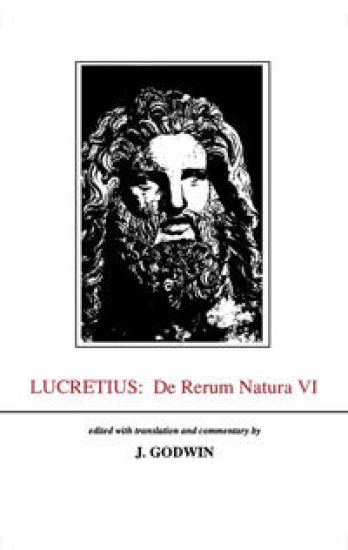
Lucretius: De Rerum Natura VI

Lucretius: De Rerum Natura VI

John Godwin

Aris Phillips Ltd
1991
sidottu
The purpose of this edition is to demonstrate the quality and interest of book VI: the intellectual curiosity of the analyst of earthquakes, volcanoes and marvellous phenomena, the rhetorical and philosophical powers of a thinker who wants to make his interpretation of Epicureanism both cogent and vivid, the deep humane compassion of the chronicler of the Plague at Athens, the sheer brilliance of the poet whose verse inspired all later writers in the tradition. This edition of the book is designed to make the poem accessible to readers who have not picked up Lucretius before and so the background has been treated as fully as possible. Latin text with facing-page translation.
Lucretius: De Rerum Natura VI

Lucretius: De Rerum Natura VI

John Godwin

Aris Phillips Ltd
1991
nidottu
The purpose of this edition is to demonstrate the quality and interest of book VI: the intellectual curiosity of the analyst of earthquakes, volcanoes and marvellous phenomena, the rhetorical and philosophical powers of a thinker who wants to make his interpretation of Epicureanism both cogent and vivid, the deep humane compassion of the chronicler of the Plague at Athens, the sheer brilliance of the poet whose verse inspired all later writers in the tradition. This edition of the book is designed to make the poem accessible to readers who have not picked up Lucretius before and so the background has been treated as fully as possible. Latin text with facing-page translation.
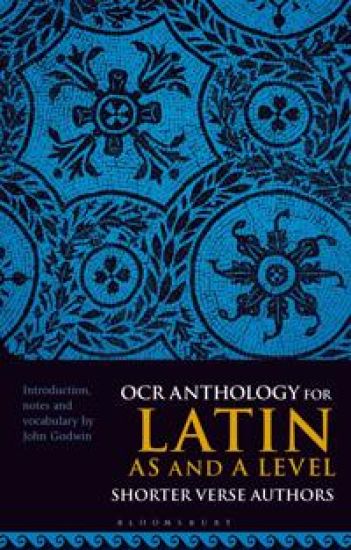
OCR Anthology for Latin AS and A Level Shorter Verse Authors
This is the OCR-endorsed edition covering the Latin AS and A-Level (Group 1) prescription for examinations in 2026–28 of Tibullus I.2, I.5, II.4 and the the A-Level (Group 2) prescription for examinations in 2027–28 of Ovid's Metamorphoses VII and Lucretius' de rerum natura I, giving full Latin text, commentary and vocabulary, with a detailed introduction that also covers the prescribed material to be read in English for A Level.The three poets contained in this volume present a wide range of Latin verse from the end of the republic and the early empire. There is some challenging philosophical poetry on the world in which we live, explaining and exploring the atomic nature of matter and seeing the wonderful ways in which nature works, there is Ovid’s wonderfully inventive and dramatic account of the sorceress Medea and her doomed love for the Argonaut Jason, and there are three poignant love-poems by the poet Tibullus. These three writers in their different ways manage to use Latin verse to convey a picture of the world which is both strange and familiar: Lucretius anticipates much of classical Physics, Ovid is the ancient world’s magic realist before the term was coined, and Tibullus offers us a case-study in heartbreak which rings as true today as it did in ancient times.Supporting resources are available on the Companion Website: https://bloomsbury.pub/OCReditions-2026-2028.
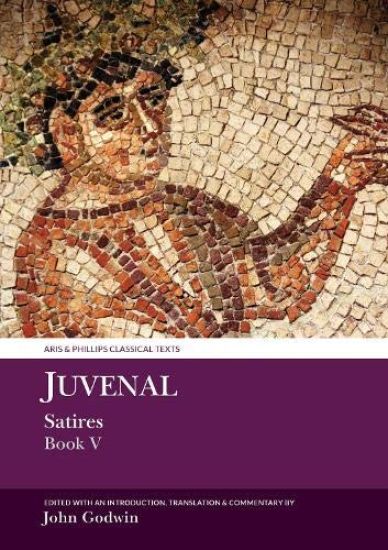
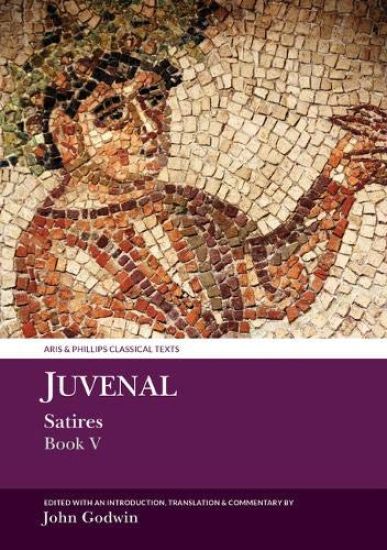
Juvenal: Satires Book V

Juvenal: Satires Book V

John Godwin

Liverpool University Press
2020
sidottu
Juvenal’s fifth and final book of Satires consists of three complete poems and one fragment and continues and completes his satirical assessment of the Rome of the early second century AD. The poems treat us to a scandalised exposure of folly and vice and also the voice of sweet reason as the poet advises us how to live our lives—all delivered in the hugely entertaining tones of a great master of the Latin language. There is here laugh-out-loud humour, razor-sharp descriptions of the sights, sounds and smells of ancient Rome and also some of the most moving lines of this extraordinary poet. All four poems promote the value of human life and the need to accept our lives without worshipping the false gods of money, power or superstition. Satires 13 and 14 both deal with our need to use money without being enslaved by it, Satire 15 is an astonishing tour de force description of the cannibalism perpetrated in a vicious war in Egypt, while the final unfinished poem in the collection looks from a worm’s-eye view at the advantages enjoyed by men enlisted in the Praetorian guard.The Introduction sets Juvenal in the history of Roman Satire, explores the style of the poems and also asks how far they can be read as in any sense serious, given the ironic pose adopted by the satirist. The text is accompanied by a literal English translation and the commentary (which is keyed to important words in the translation and aims to be accessible to readers with little or no Latin) seeks to explain both the factual background to the poems and also the literary qualities which make this poetry exciting and moving to a modern audience.
Juvenal: Satires Book V

Juvenal: Satires Book V

John Godwin

Liverpool University Press
2020
nidottu
Juvenal’s fifth and final book of Satires consists of three complete poems and one fragment and continues and completes his satirical assessment of the Rome of the early second century AD. The poems treat us to a scandalised exposure of folly and vice and also the voice of sweet reason as the poet advises us how to live our lives—all delivered in the hugely entertaining tones of a great master of the Latin language. There is here laugh-out-loud humour, razor-sharp descriptions of the sights, sounds and smells of ancient Rome and also some of the most moving lines of this extraordinary poet. All four poems promote the value of human life and the need to accept our lives without worshipping the false gods of money, power or superstition. Satires 13 and 14 both deal with our need to use money without being enslaved by it, Satire 15 is an astonishing tour de force description of the cannibalism perpetrated in a vicious war in Egypt, while the final unfinished poem in the collection looks from a worm’s-eye view at the advantages enjoyed by men enlisted in the Praetorian guard.The Introduction sets Juvenal in the history of Roman Satire, explores the style of the poems and also asks how far they can be read as in any sense serious, given the ironic pose adopted by the satirist. The text is accompanied by a literal English translation and the commentary (which is keyed to important words in the translation and aims to be accessible to readers with little or no Latin) seeks to explain both the factual background to the poems and also the literary qualities which make this poetry exciting and moving to a modern audience.
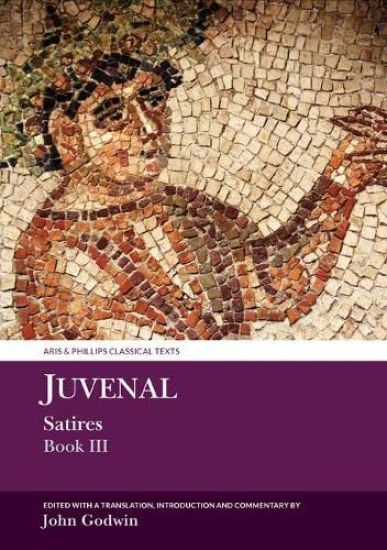
Juvenal Satires Book III

Juvenal Satires Book III

John Godwin

LIVERPOOL UNIVERSITY PRESS
2022
sidottu
The three poems (Satires 7, 8 and 9) that comprise Book 3 of the Satires form a brilliant collection, displaying Juvenal at the height of his powers and in the full breadth of his interests. Satire 7 takes a jaundiced look at intellectual life in Rome, bemoaning the financial poverty which is the lot of the writer, the lawyer and the teacher in an age where patrons may shower them with praise but rarely with cash. Satire 8 is an excoriating account of the old ‘noble’ families and how their current representatives are anything but noble in their behaviour both at home and in the provinces. The scandalous Satire 9 returns to the theme of patronage in a superbly acid dialogue with a certain Naevolus who has served his patron sexually and who now complains of the poor returns for his extensive and energetic labours. All three poems purport to describe and to critique Roman society, but they do so with an irony which draws attention to the medium as well as the message and which makes the speaker of the poetry often the target of his own abuse. This is the first edition of Book 3 as a unit by itself and the first edition intended for students with limited knowledge of Latin. The introduction sets the scene for the text and gathers background information on a range of essential topics pertinent to the text. The commentary as well as dealing with textual transmission, the metre, the factual background and advanced points of stylistic interest also aims to impart something of the pleasure and interest to be gained from reading this sublimely skilful poetry.
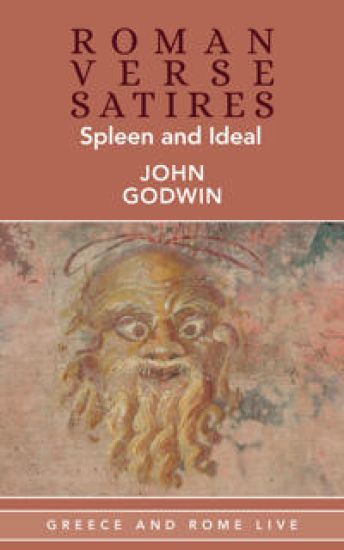
Roman Verse Satires

Roman Verse Satires

John Godwin

LIVERPOOL UNIVERSITY PRESS
2024
sidottu
Ebook available to libraries exclusively as part of the JSTOR Path to Open initiative. The Romans claimed to have invented satire—one of the most enduring and certainly one of the most entertaining genres of literature bequeathed to posterity from the ancient world. Modern satire aims generally to puncture pretence and to hurt its targets with withering caricature and bruising irony, but Roman satire was not so easy to characterise. One of the earliest exponents (Lucilius) went in for some personal invective and set the tone for many a 21st-century scribbler keen to wound his enemies with well-chosen words, but later writers in the Roman tradition distanced themselves from the tradition of personal critique and were reluctant to paint themselves as in any sense attack-dogs. If they were inveighing against folly and vice, it was (they claimed) more in a spirit of positive encouragement to us all to live better and happier lives, freed from the shackles of character-flaws and absurd behaviour. Satire in verse was also a highly self-conscious literary exercise which invested its moral message with layers of irony and wit. This tradition of both personal and philosophical satire laid the foundations for the massive tradition of satire in Europe which continues to this day. Roman Verse Satires will examine the tradition of hexameter verse satires as practised by Ennius, Lucilius, Horace, Persius and Juvenal and will also present something of the massive influence which this this complex, at times contradictory and entertaining Roman genre had on later literature, culture and film.
Juvenal Satires Book III

Juvenal Satires Book III

John Godwin

LIVERPOOL UNIVERSITY PRESS
2024
nidottu
The three poems (Satires 7, 8 and 9) that comprise Book 3 of the Satires form a brilliant collection, displaying Juvenal at the height of his powers and in the full breadth of his interests. Satire 7 takes a jaundiced look at intellectual life in Rome, bemoaning the financial poverty which is the lot of the writer, the lawyer and the teacher in an age where patrons may shower them with praise but rarely with cash. Satire 8 is an excoriating account of the old ‘noble’ families and how their current representatives are anything but noble in their behaviour both at home and in the provinces. The scandalous Satire 9 returns to the theme of patronage in a superbly acid dialogue with a certain Naevolus who has served his patron sexually and who now complains of the poor returns for his extensive and energetic labours. All three poems purport to describe and to critique Roman society, but they do so with an irony which draws attention to the medium as well as the message and which makes the speaker of the poetry often the target of his own abuse. This is the first edition of Book 3 as a unit by itself and the first edition intended for students with limited knowledge of Latin. The introduction sets the scene for the text and gathers background information on a range of essential topics pertinent to the text. The commentary as well as dealing with textual transmission, the metre, the factual background and advanced points of stylistic interest also aims to impart something of the pleasure and interest to be gained from reading this sublimely skilful poetry.
Lucretius

Lucretius

John Godwin

Bristol Classical Press
2004
nidottu
The Roman poet Lucretius, who lived in the first century BC, composed an epic poem, De Rerum Natura (On the Nature of the Universe), whose avowed purpose was to change the way we live our lives, to abandon our fear of the gods and of death, and to see what real happiness is and how to obtain it. The poem explains the atomic nature of the world and our own place in it, examining the microscopic world of atoms and the telescopic world of the universe, as well as human life in all its facets - politics, pleasure, the nature of perception, our dreams and sexual behaviour. Here John Godwin explains Lucretius' great poem in its Roman context, assessing the literary and philosophical value of the poems and arguing the merits of the poet's claim to change our lives. Lucretius is seen as a writer for our time, offering us a text of enormous beauty and artistry which will help us find happiness and serenity in a turbulent world.
Reading Catullus

Reading Catullus

John Godwin

Bristol Phoenix Press
2008
nidottu
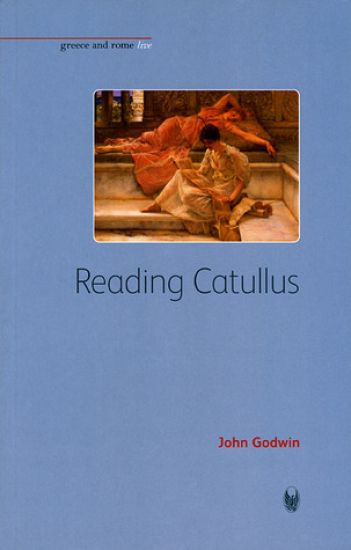
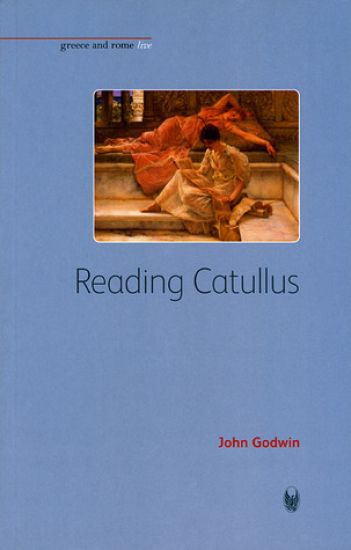
Of all the Roman poets Catullus is the most accessible for the modern reader. His poems range from the sublimely beautiful to the scatologically disgusting, from the world of heroic epic poetry to the dirt of the Roman streets. This accessible book, which assumes no prior knowledge of the poet or of Roman poetry in general, explores Catullus in all his many guises. In six concise chapters Godwin deals with the cultural background to Catullus’ poetic production, its literary context, the role of love, Alexandrian learning and obscenity and, in the final chapter, considers the coherence and rationale of the collection as a whole. Each chapter is illustrated by readings of a number of poems, chosen to give a representative overview of Catullus’ poety. All quotations from the text are translated and a brief discursive section of ‘Further Reading’ is provided at the end of each chapter. A timeline giving dates of authors mentioned and full bibliography is also supplied.
Juvenal: Satires Book IV

Juvenal: Satires Book IV

John Godwin

Aris Phillips Ltd
2016
sidottu
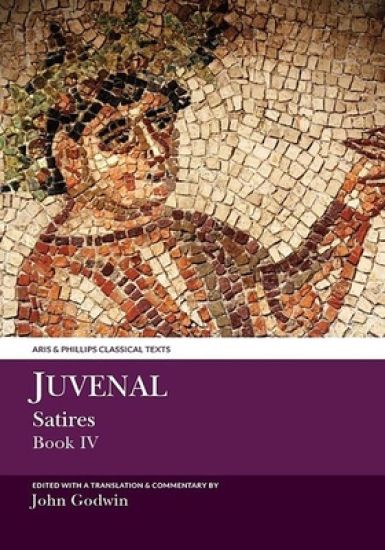
Juvenal's fourth book of Satires consists of three poems which are all concerned with contentment in various forms. The poet adopts a more resigned and philosophical tone, unlike the brash anger of the earlier books. These poems use enormous humour and wit to puncture the pretensions of the foolish and the wicked, urging an acceptance of our lives and a more positive stance towards life and death by mockery of the pompous and comic description of the rich and famous. In Satire 10 Juvenal examines the human desire to be rich, famous, attractive and powerful and dismisses all these goals as not worth striving for - we are in fact happier as we are. In Satires 11 and 12 he argues for the simple life which can deliver genuine happiness rather than risking the decadence of luxury and the perils of sea-travel and legacy-hunting. Self-knowledge and true friendship are the moral heart of these poems; but they are also complex literary constructs in which the figure of the speaker can be elusive and the ironic tone can cast doubt on the message being imparted. The Introduction places Juvenal in the history of Satire and also explores the style of the poems as well as the degree to which they can be read as in any sense documents of real life. The text is accompanied by a literal English translation and the commentary is keyed to important words in the translation and aims to be accessible to readers with little or no Latin. It seeks to explain both the factual background to the poems and also the literary qualities which make this poetry exciting and moving to a modern audience.
Juvenal: Satires Book IV

Juvenal: Satires Book IV

John Godwin

Aris Phillips Ltd
2016
nidottu
Juvenal's fourth book of Satires consists of three poems which are all concerned with contentment in various forms. The poet adopts a more resigned and philosophical tone, unlike the brash anger of the earlier books. These poems use enormous humour and wit to puncture the pretensions of the foolish and the wicked, urging an acceptance of our lives and a more positive stance towards life and death by mockery of the pompous and comic description of the rich and famous. In Satire 10 Juvenal examines the human desire to be rich, famous, attractive and powerful and dismisses all these goals as not worth striving for - we are in fact happier as we are. In Satires 11 and 12 he argues for the simple life which can deliver genuine happiness rather than risking the decadence of luxury and the perils of sea-travel and legacy-hunting. Self-knowledge and true friendship are the moral heart of these poems; but they are also complex literary constructs in which the figure of the speaker can be elusive and the ironic tone can cast doubt on the message being imparted. The Introduction places Juvenal in the history of Satire and also explores the style of the poems as well as the degree to which they can be read as in any sense documents of real life. The text is accompanied by a literal English translation and the commentary is keyed to important words in the translation and aims to be accessible to readers with little or no Latin. It seeks to explain both the factual background to the poems and also the literary qualities which make this poetry exciting and moving to a modern audience.
Roman Verse Satires

Roman Verse Satires

John Godwin

LIVERPOOL UNIVERSITY PRESS
2026
nidottu
Ebook available to libraries exclusively as part of the JSTOR Path to Open initiative. The Romans claimed to have invented satire—one of the most enduring and certainly one of the most entertaining genres of literature bequeathed to posterity from the ancient world. Modern satire aims generally to puncture pretence and to hurt its targets with withering caricature and bruising irony, but Roman satire was not so easy to characterise. One of the earliest exponents (Lucilius) went in for some personal invective and set the tone for many a 21st-century scribbler keen to wound his enemies with well-chosen words, but later writers in the Roman tradition distanced themselves from the tradition of personal critique and were reluctant to paint themselves as in any sense attack-dogs. If they were inveighing against folly and vice, it was (they claimed) more in a spirit of positive encouragement to us all to live better and happier lives, freed from the shackles of character-flaws and absurd behaviour. Satire in verse was also a highly self-conscious literary exercise which invested its moral message with layers of irony and wit. This tradition of both personal and philosophical satire laid the foundations for the massive tradition of satire in Europe which continues to this day. Roman Verse Satires will examine the tradition of hexameter verse satires as practised by Ennius, Lucilius, Horace, Persius and Juvenal and will also present something of the massive influence which this this complex, at times contradictory and entertaining Roman genre had on later literature, culture and film.
Reading Catullus

Reading Catullus

John Godwin

Bristol Phoenix Press
2008
sidottu
Of all the Roman poets Catullus is the most accessible for the modern reader. His poems range from the sublimely beautiful to the scatologically disgusting, from the world of heroic epic poetry to the dirt of the Roman streets. This accessible book, which assumes no prior knowledge of the poet or of Roman poetry in general, explores Catullus in all his many guises. In six concise chapters Godwin deals with the cultural background to Catullus’ poetic production, its literary context, the role of love, Alexandrian learning and obscenity and, in the final chapter, considers the coherence and rationale of the collection as a whole. Each chapter is illustrated by readings of a number of poems, chosen to give a representative overview of Catullus’ poety. All quotations from the text are translated and a brief discursive section of ‘Further Reading’ is provided at the end of each chapter. A timeline giving dates of authors mentioned and full bibliography is also supplied.