Kirjojen hintavertailu. Mukana 11 244 527 kirjaa ja 12 kauppaa.

Kirjahaku

Etsi kirjoja tekijän nimen, kirjan nimen tai ISBN:n perusteella.

1000 tulosta hakusanalla John Herbert Roper

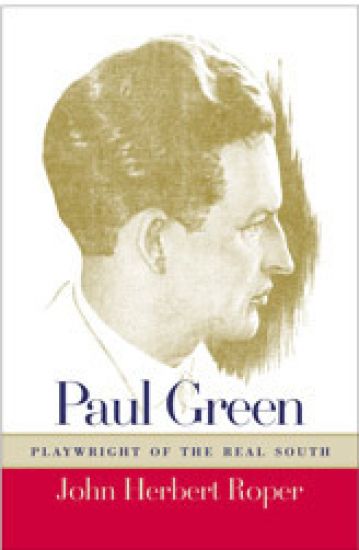
Paul Green, Playwright of the Real South

Paul Green, Playwright of the Real South

John Herbert Roper

University of Georgia Press
2003
sidottu
This is the most thorough and comprehensive biography to date of writer and activist Paul Green (1894-1981). Winner of the Pulitzer Prize for his play In Abraham's Bosom and author of the pioneering symphonic drama The Lost Colony, Green was a literary figure of national prominence during the 1920s and 1930s. During this time of experimentation and boldness in American theater, Green was praised by directors and critics, had a play chosen three times for the collection Year's Best Plays, and gained the respect of African American actors longing for meaningful roles.Green's personal and political convictions fully complemented the social-realist leanings of his art, a literary output comprising plays in many forms, essays, folklore collections, novels, and film scripts. In places like his native North Carolina, Green stood apart even from other proponents of integration by claiming that sexual as well as social intermingling of the races was a natural occurrence in human society.Drawing on his complete access to Green's papers and on interviews with surviving family members, John Herbert Roper covers all the important aspects of Green's life and career—his childhood, military service, education, travels, and marriage, as well as his many literary undertakings and friendships.By word and deed, Paul Green spread the faith of liberalism across the New South, which he insistently called the "Real South." Long after literary fashion had left him behind, he wrote daily and remained at the forefront of causes concerning race relations, militarism, women's and workers' rights, and capital punishment. As an artist and an individual, Green set an early and enduring standard of courage and forthrightness.
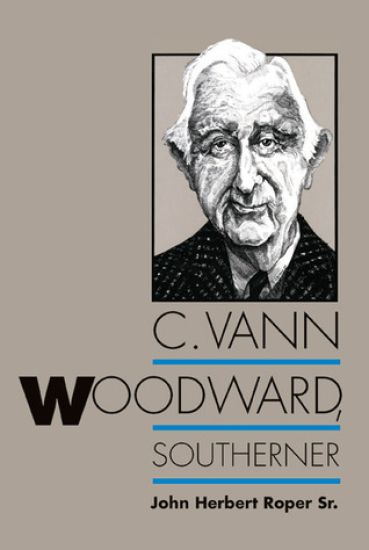
C. Vann Woodward, Southerner

C. Vann Woodward, Southerner

John Herbert Roper

University of Georgia Press
2012
pokkari
The most influential historian of our time, C. Vann Woodward has forged his place in American learning and culture from two sometimes opposing, sometimes complementary urges: to work for social justice and to reveal the past without bias. Underlying his career has been the knowledge that his native South, because of its traumatic experience of defeat and disgrace, holds within its past truths that could instruct the nation as a whole, perhaps ease it through the dilemmas and racial inequality and social strife, and guide it away from the mad pursuits of war and political repression.C. Vann Woodward, Southerner is a chronicle of Woodward’s life, of the tumultuous times that have engaged him and shaped his thought, and of the historical profession that has accorded him its highest honors of respect and unstinting criticism. Jack Roper begins with Woodward’s birth, in 1908, to an aristocratic family in eastern Arkansas and his youth in the Oachita valley. By the time Woodward left his home state to study at Emory University, he had already demonstrated the urge toward dissent that drove him, throughout the first decades of his career, to confront social and racial injustice, to press relentlessly outward from his own position of security and confront the civil strife that simmered outside the hedgerows of academia. In Chapel Hill and Atlanta, in New York and Baltimore, in his books and in his actions, Woodward spoke to the present even as he wrote of the past.By no means uncritical of Woodward’s works, Roper nonetheless shows that books such as Tom Watson: Agrarian Rebel, Origins of the New South, and The Strange Career of Jim Crow have effectively defined the terms of historical debate, often asking the “impertinent first question” that spurred other historians to seek fuller answers. Of those books, The Strange Career of Jim Crow is closest to Woodward’s ultimate concerns and has caused him his gravest doubts—for a time he almost disowned the book that Martin Luther King, Jr. called “the bible of the civil rights movement.” Those doubts came at a time in American history that Woodward found particularly ominous: the Vietnam years when it seemed that the lights of civil rights and social progress had lost their steady glow. In the mid-1970s, however, Woodward regained his political engagement, and today he continues his work of bringing—through numerous book reviews and essays—the insights of the historical profession to the intelligent, concerned reader.“What has the historian to do with hope?” These words of Woodward’s late colleague David Potter in response to The Strange Career of Jim Crow encapsulate the conflict that both inspired and occasionally beset that book’s author. For it is Woodward’s almost continual commitment to social change that made his books so powerful when they were published, so diminished in strength when examined in later decades. This tension between advocacy and scholarship, between experience and learning both marks the greatest challenge for Woodward and defines his greatness as a cultural figure, as a conscience for his profession and for our time.
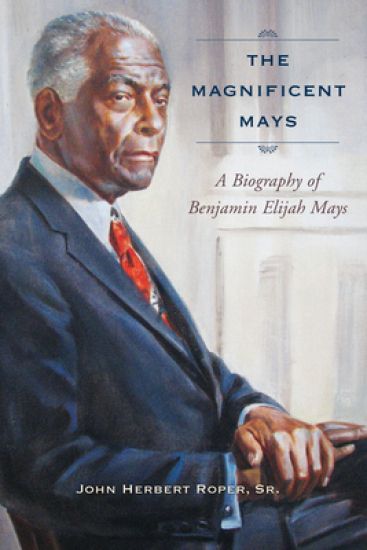
The Magnificent Mays

The Magnificent Mays

John Herbert Roper Sr.

University of South Carolina Press
2020
nidottu
Civil rights activist, writer, theologian, preacher, and educator, Benjamin Elijah Mays (1894-1984) was one of the most distinguished South Carolinians of the twentieth century. He influenced the lives of generations of students as a dean and professor of religion at Howard University and as longtime president of Morehouse College in Atlanta. In addition to his personal achievements, Mays was also a mentor and teacher to Julian Bond, founder of the Student Nonviolent Coordinating Committee; future Atlanta mayor Maynard Jackson; writer, preacher, and theologian Howard Washington Thurman; and the Reverend Martin Luther King, Jr. In this comprehensive biography of Mays, John Herbert Roper, Sr., chronicles the harsh realities of Mays's early life and career in the segregated South and crafts an inspirational, compelling portrait of one of the most influential African American intellectuals in modern history. Born at the turn of the century in rural Edgefield County, South Carolina, Mays was the youngest son of former slaves turned tenant farmers. At just four years of age, he experienced the brutal injustice of the Jim Crow era when he witnessed the bloody 1898 Phoenix Riot, sparked by black citizens' attempts to exercise their voting rights. In the early 1930s Mays discovered the teachings of Mohandas Gandhi and traveled to India in 1938 to confer with him about his methods of nonviolent protest. An honoree of the South Carolina Hall of Fame and recipient of forty-nine honorary degrees, Mays strived tirelessly against racial prejudices and social injustices throughout his career. In addition to his contributions to education and theology, Mays also worked with the National Urban League to improve housing, employment, and health conditions for African Americans, and he played a major role in the integration of the Young Men's Christian Association (YMCA). With honest appreciation and fervent admiration for Mays's many accomplishments and lasting legacy, Roper deftly captures the heart and passion of his subject, his lifelong quest for social equality, and his unwavering faith in the potential for good in the American people.
The Lives of John Donne, Sir Henry Wotton, Richard Hooker, George Herbert and Robert Sanderson
This work has been selected by scholars as being culturally important and is part of the knowledge base of civilization as we know it.This work is in the public domain in the United States of America, and possibly other nations. Within the United States, you may freely copy and distribute this work, as no entity (individual or corporate) has a copyright on the body of the work.Scholars believe, and we concur, that this work is important enough to be preserved, reproduced, and made generally available to the public. To ensure a quality reading experience, this work has been proofread and republished using a format that seamlessly blends the original graphical elements with text in an easy-to-read typeface.We appreciate your support of the preservation process, and thank you for being an important part of keeping this knowledge alive and relevant.
Nineteenth Century Studies

Nineteenth Century Studies

Herbert John Davis; William Clyde Devane; Robert Cecil Bald

Literary Licensing, LLC
2012
sidottu
Nineteenth Century Studies is a book written by Herbert John Davis that explores various aspects of the 19th century. The book is divided into different chapters, each of which focuses on a particular topic related to the period. Some of the topics covered in the book include literature, art, politics, society, and culture.The book provides a comprehensive overview of the 19th century, drawing on a range of sources including primary documents, historical accounts, and literary works. It examines the major events and trends of the period, including the Industrial Revolution, the rise of nationalism, and the growth of imperialism.Throughout the book, Davis offers insightful analysis and commentary on the various topics he covers. He provides historical context and explores the impact of different events and ideas on society and culture. The book also includes illustrations and photographs that help to bring the period to life.Overall, Nineteenth Century Studies is a valuable resource for anyone interested in the history of the 19th century. It provides a detailed and engaging account of the period, and offers a wealth of information for students, scholars, and general readers alike.Contributing Authors Leslie N. Broughton, Harold S. L. Wiener, Carlisle Moore And Many Others.This scarce antiquarian book is a facsimile reprint of the old original and may contain some imperfections such as library marks and notations. Because we believe this work is culturally important, we have made it available as part of our commitment for protecting, preserving, and promoting the world's literature in affordable, high quality, modern editions, that are true to their original work.
The Lives of Dr. John Donne; Sir Henry Wotton; Mr. Richard Hooker; Mr. George Herbert; and Dr. Robert Sanderson. By Isaac Walton. With Notes, and the Life of the Author. By Thomas Zouch, M.A
The 18th century was a wealth of knowledge, exploration and rapidly growing technology and expanding record-keeping made possible by advances in the printing press. In its determination to preserve the century of revolution, Gale initiated a revolution of its own: digitization of epic proportions to preserve these invaluable works in the largest archive of its kind. Now for the first time these high-quality digital copies of original 18th century manuscripts are available in print, making them highly accessible to libraries, undergraduate students, and independent scholars.Rich in titles on English life and social history, this collection spans the world as it was known to eighteenth-century historians and explorers. Titles include a wealth of travel accounts and diaries, histories of nations from throughout the world, and maps and charts of a world that was still being discovered. Students of the War of American Independence will find fascinating accounts from the British side of conflict. ++++The below data was compiled from various identification fields in the bibliographic record of this title. This data is provided as an additional tool in helping to insure edition identification: ++++British LibraryT084935With a final leaf of directions for placing the plates. The first pp. 313-314 have pagination in brackets.York: printed by Wilson, Spence, and Mawman. Sold by J. Robson, B. White, T. Payne, and T. Egerton, London; J. Cooke, Oxford; J. Deighton, Cambridge; and Wilson, Spence, and Mawman, J. Todd, and H. Sotheran, York. Anno, 1796. liv, 2],314, 3],314-518, 2]p., plates: ports.; 4