Kirjahaku
Etsi kirjoja tekijän nimen, kirjan nimen tai ISBN:n perusteella.
1000 tulosta hakusanalla John Howard Yoder; Michael J Gorman


John Howard Yoder
Earl Zimmerman; Zachary J Walton; Gerald J Mast; Ted Grimsrud
Cascade Books
2014
sidottu
John Howard Yoder
Earl Zimmerman; Zachary J Walton; Gerald J Mast; Ted Grimsrud
Cascade Books
2014
pokkari
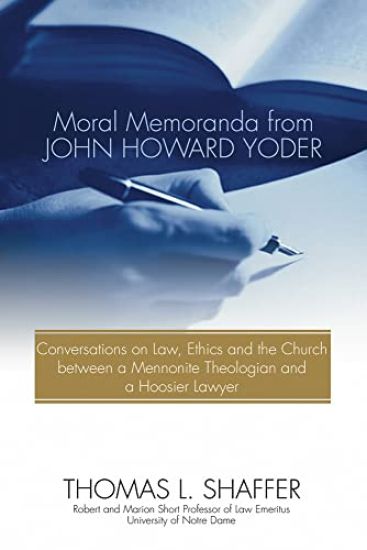
'Moral Memoranda from John Howard Yoder: Conversations on Law, Ethics and the Church between a Mennonite Theologian and a Hoosier Lawyer' compiles fifteen years of advice and comment on law and government in the United States from a leading theologian who was as prominent for the wisdom he offered to mainline Christians as he was a resource and teacher within his own Mennonite Church. This volume of letters, notes, and essays combines deep understanding of Professor Yoder's Anabaptist tradition with insightful, sometimes wry, observation on modern American Catholicism, and an occasionally caustic but more often open, inquiring interest in law, lawyers, and legal education.
'Moral Memoranda from John Howard Yoder: Conversations on Law, Ethics and the Church between a Mennonite Theologian and a Hoosier Lawyer' compiles fifteen years of advice and comment on law and government in the United States from a leading theologian who was as prominent for the wisdom he offered to mainline Christians as he was a resource and teacher within his own Mennonite Church. This volume of letters, notes, and essays combines deep understanding of Professor Yoder's Anabaptist tradition with insightful, sometimes wry, observation on modern American Catholicism, and an occasionally caustic but more often open, inquiring interest in law, lawyers, and legal education.

Er Ist Unser Friede: Karl Barths Christologische Grundlegung Der Friedensethik Im Gesprach Mit John Howard Yoder
Marco Hofheinz
Vandenhoeck Ruprecht
2014
sidottu
English summary: The ethics of peace developed by Karl Barth (1886-1968) and his Mennonite pupil John H. Yoder (1927-1997) provides orientation for today's churchly and ecumenical debates about Christian Pacifism and Christian Just War Tradition. Hofheinz' study reconstructs and reassesses the christological basis of Barth's and Yoder's endeavor. It asks for the relevance of central theological themes like the meaning of Christ's name, communitarian freedom, prayer, and salvation in Christ. Furthermore, it compares Barth's and Yoder's concept of following Jesus. Hofheinz illustrates Barth's and Yoder's respective understandings of just war theory and its application to the debate over nuclear war and the so-called borderline case. The study develops important ethical impulses for a Christian agenda in a warring world. German description: Die vorliegende Arbeit stellt eine sorgfaltige und umfassende Untersuchung der Grundlegung theologischer Ethik im Hauptwerk und weiteren Schriften Karl Barths (1886-1968) dar. Sie ist ausgerichtet auf die exemplarische Analyse von dessen Friedensethik und die Auseinandersetzung mit deren wichtigsten Kritikern, namentlich dem mennonitischen Theologen John Howard Yoder (1927-1997). In eingehenden Interpretationen werden Schlusseltexte Barths und Yoders prazise analysiert, in exemplarischen Konfrontationen auf ihre argumentative Stringenz hin uberpruft und im Blick auf ihre aktuelle Orientierungsleistung befragt. Anhand ihres Gebrauchs des Grenzfallbegriffs und ihrer Rezeption der Lehre vom sog. gerechten Krieg beschreibt das Buch Barths und Yoders konzeptionellen Konkretionen. Nicht nur hierin benennt die Untersuchung wichtige Impulse fur die aktuelle friedensethische Debatte.
In this volume of essays John Howard Yoder projects a vision of Christian social ethics rooted in historical community and illuminated by scripture. Drawing upon scriptural accounts of the early church, he demonstrates the Christian community's constant need for reform and change. Yoder first examines the scriptural and theoretical foundations of Christian social ethics. While personally committed to the "radical reformation" tradition, he eschews "denominational" categorization and addresses Christians in general. The status of Christian community, he argues, cannot be separated from the doctrinal content of beliefs and the moral understanding of discipleship. As a result, the Christian's voluntary commitment to a particular community, as distinct from secular society, offers him valuable resources for practical moral reasoning. From a historical perspective, Yoder reviews the efforts of sixteenth-century radical (or Anabaptist) reformers to return to the fundamental ethical standards of the New Testament, and to disengage the community, as a biblically rooted call to faith that does not imply withdrawal from the pluralistic world. Rather, radical commitment to Christianity strengthens and renews the authentic human interests and values of the whole society. His analyses of democracy and of civil religion illustrate how Christianity must challenge and embrace the wider world.
In this volume of essays John Howard Yoder projects a vision of Christian social ethics rooted in historical community and illuminated by scripture. Drawing upon scriptural accounts of the early church, he demonstrates the Christian community's constant need for reform and change. Yoder first examines the scriptural and theoretical foundations of Christian social ethics. While personally committed to the "radical reformation" tradition, he eschews "denominational" categorization and addresses Christians in general. The status of Christian community, he argues, cannot be separated from the doctrinal content of beliefs and the moral understanding of discipleship. As a result, the Christian's voluntary commitment to a particular community, as distinct from secular society, offers him valuable resources for practical moral reasoning. From a historical perspective, Yoder reviews the efforts of sixteenth-century radical (or Anabaptist) reformers to return to the fundamental ethical standards of the New Testament, and to disengage the community, as a biblically rooted call to faith that does not imply withdrawal from the pluralistic world. Rather, radical commitment to Christianity strengthens and renews the authentic human interests and values of the whole society. His analyses of democracy and of civil religion illustrate how Christianity must challenge and embrace the wider world.
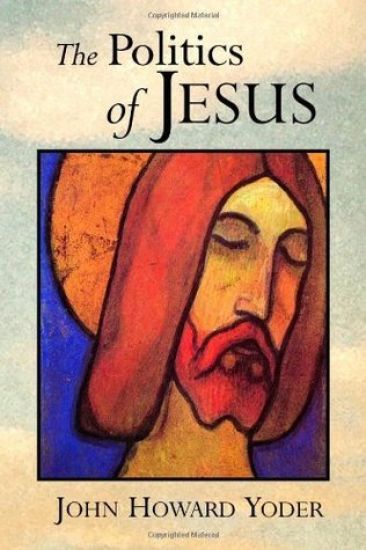
Tradition has painted a portrait of a Savior who stands aloof from governmental concerns and who calls his disciples to an apolitical life. But such a picture of Jesus is far from accurate, according to John Howard Yoder. This watershed work in New Testament ethics leads us to a Savior who was deeply concerned with the agenda of politics and the related issues of power, status, and right relations. By canvassing Luke's Gospel, Yoder argues convincingly that the true impact of Jesus' life and ministry on his disciples' social behavior points to a specific kind of Christian pacifism in which "the cross of Christ is the model of Christian social efficacy." This second edition of The Politics of Jesus provides up-to-date interaction with recent publications that touch on Yoder's timely topic. Following most of the chapters are new "epilogues" summarizing research conducted during the last two decades - research that continues to support the outstanding insights set forth in Yoder's original work.

These essays in Christian social ethics, some previously published but most appearing in print here for the first time, are all about the way in which the church, in the midst of the world, is called to think and act on behalf of the world. As the title indicates, this affirmative stance is the opposite of the way John Howard Yoder has often been interpreted under the label of "sectarian." The church is called to serve as a prophetic model and discerning pioneer, addressing the surrounding society's concerns about power and righteousness. The examples chosen for interpretation range from the ancient Jewish experience of dispersion as mission to modern examples like Martin Luther King, Jr.
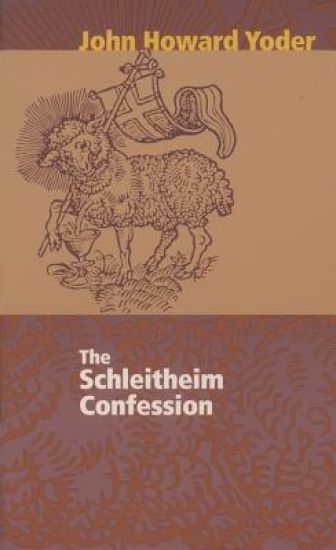
In the historic meeting held in 1527 at Schleitheim, Switzerland, an ad hoc group of Anabaptists worked through fundamental disagreements and emerged with a consensus on seven points of faith that became known as the Schleitheim Confession. Also known as the Brotherly Union, this text constitutes one chapter from The Legacy of Michael Sattler. 36 Pages.

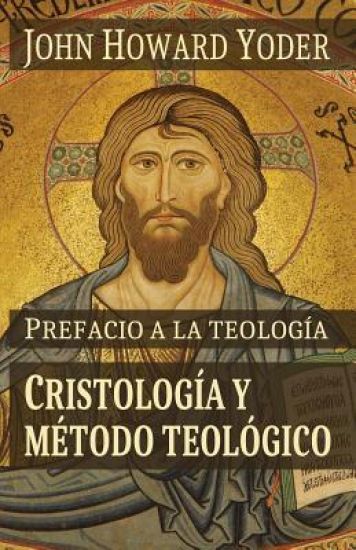
Prefacio a la teología: Cristología y método teológico
John Howard Yoder
Createspace Independent Publishing Platform
2017
nidottu
Stanley Hauerwas y Alex Sider, en su Introducci n, dicen: A veces, bromeando entre nosotros, hemos imaginado a Yoder como una especie de panfletista revolucionario. Los revolucionarios sol an empezar el intento de formar su cuadrilla de simpatizantes mediante la creaci n de una literatura que fuera dif cil de hallar, a la vez que peligrosa -por lo menos si te pillaban ley ndola-. El panfleto o la grabaci n en audio bien pod a ser parte de la tecnolog a asociada al r gimen que intentaban derrocar, pero el propio medio de comunicaci n sufr a una transformaci n por las condiciones necesarias para su producci n y consumo. Yoder, cuyo radicalismo hasta supera lo que pudiera imaginar ning n revolucionario, a veces pareci esmerarse por hacer dif cil de conseguir su obra. Sus ensayos parecen tener una existencia -como el panfleto revolucionario- solamente en copias pirateadas que hacen que quien lo lea pareciera merecer aparecer en una lista de enemigos del Estado. Pens acaso que el reaprendizaje a que obliga su obra hab a de empezar con la propia dificultad de hacerse con lo que escribi ? El caso es que dudamos que ni siquiera Yoder fuera tan listo, por mucho que el car cter dif cil de conseguir de gran parte de su obra le confiera un efecto Jomeini.
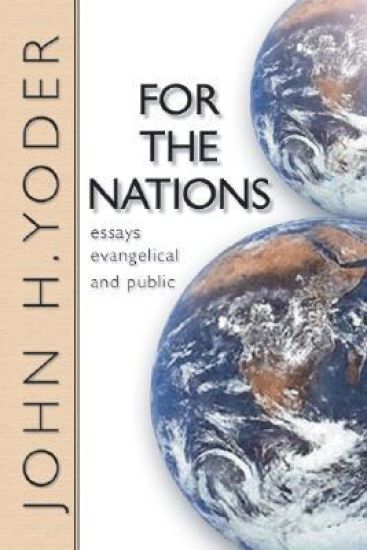
This book is a masterwork from a master theological craftsman. John Howard Yoder is perhaps the best worker in Christian theology in America today, though his modesty (and others' presumption) still hides his accomplishment from some. Here, answering the question raised by The Politics of Jesus, Yoder addresses the major challenge facing American churches--the authentic mode of Christian existence in society today. In full command of his material, Yoder provides a powerfully stated, radically catholic answer. --James Wm. McClendon Jr. Fuller Theological Seminary It has been Yoder's vocation to proclaim a gospel of biblical realism that challenges both the biblicism of many other self-identified 'evangelicals' and the pretenses of 'political realism' of many of his theological and secular contemporaries. He has insisted on a coherent witness that is at once 'sectarian' and 'catholic, ' even while it celebrates both the diaspora of Judaism-become-Christianity and the radical New Testament theology of the cross. These essays from several decades all testify to 'the politics of Jesus' that transforms conventional assumptions about both power and weakness. They combine to offer what Yoder calls 'one holistic, Christological, paradigmatic proclamation: servanthood, enemy love, forgiveness. --Alan Geyer Wesley Theological Seminar