Kirjojen hintavertailu. Mukana 11 244 527 kirjaa ja 12 kauppaa.

Kirjahaku

Etsi kirjoja tekijän nimen, kirjan nimen tai ISBN:n perusteella.

1000 tulosta hakusanalla John Hyland

Will Will and Me

Will Will and Me

John Hyland

Workbook Press
2021
pokkari
Will Will and Me Contains eight fictional stories about the amusing actions of grade-school boys in the 1950's and 60's. The first story tells how Will Will, the main character, gets his peculiar name. The next three describe Will Will's mischief, which gets him and his pal, Johnny, into ridiculous predicaments. Story two, for example, shows Will Will using a butterfly net to snag a farmer's pet goose. In the sixth story, Will Will convinces a lady who dislikes him that he's not a "scamp". He himself is a victim of mischief in the last story, when he and Johnny get "bamboozled" into buying an awful rabbit-raising business.
Will Will & Me

Will Will & Me

John Hyland

Workbook Press
2021
pokkari
Will Will and Me Contains eight fictional stories about the amusing actions of grade-school boys in the 1950's and 60's. The first story tells how Will Will, the main character, gets his peculiar name. The next three describe Will Will's mischief, which gets him and his pal, Johnny, into ridiculous predicaments. Story two, for example, shows Will Will using a butterfly net to snag a farmer's pet goose. In the sixth story, Will Will convinces a lady who dislikes him that he's not a "scamp". He himself is a victim of mischief in the last story, when he and Johnny get "bamboozled" into buying an awful rabbit-raising business.
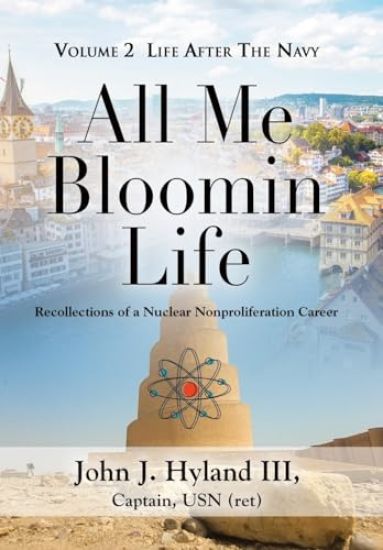
All Me Bloomin Life

All Me Bloomin Life

John J Hyland

Booklocker.com
2024
pokkari
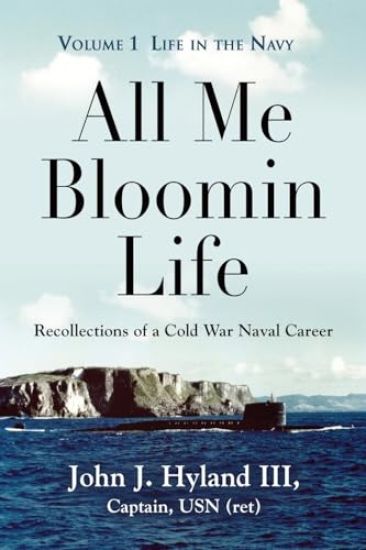
Volume 1 of All Me Blooming Life is an autobiographical account of a Cold War Naval Career. Captain Hyland, a third generation graduate of the Naval Academy, grew up in a Navy family and spent his active duty career as a nuclear submariner. He served six sea tours, three in SSBNs and three in SSNs. He commanded USS Abraham Lincoln (SSBN-602) from 1978 to 1981 and USS Sam Houston (SSN-609) from 1981 to 1983. Ashore his assignments included tours as an Olmsted Scholar, on the Navy and DOD staffs, and as Naval Attach in Paris.Volume 2 follows Captain Hyland's 15-year career in nuclear nonproliferation after he retired from the Navy. In these years he worked in the Office of Energy Intelligence in the Department of Energy, the DCI Center for Weapons Intelligence, Nonproliferation, and Arms Control, and the International Atomic Energy Agency as a member of the Action Team doing nuclear inspections in Iraq after the Gulf War.
All Me Bloomin Life

All Me Bloomin Life

John J Hyland

Booklocker.com
2024
sidottu
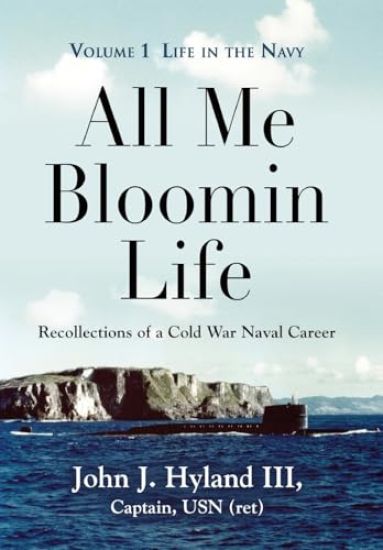
Volume 1 of All Me Blooming Life is an autobiographical account of a Cold War Naval Career. Captain Hyland, a third generation graduate of the Naval Academy, grew up in a Navy family and spent his active duty career as a nuclear submariner. He served six sea tours, three in SSBNs and three in SSNs. He commanded USS Abraham Lincoln (SSBN-602) from 1978 to 1981 and USS Sam Houston (SSN-609) from 1981 to 1983. Ashore his assignments included tours as an Olmsted Scholar, on the Navy and DOD staffs, and as Naval Attach in Paris.Volume 2 follows Captain Hyland's 15-year career in nuclear nonproliferation after he retired from the Navy. In these years he worked in the Office of Energy Intelligence in the Department of Energy, the DCI Center for Weapons Intelligence, Nonproliferation, and Arms Control, and the International Atomic Energy Agency as a member of the Action Team doing nuclear inspections in Iraq after the Gulf War.
All Me Bloomin Life

All Me Bloomin Life

John J Hyland

Booklocker.com
2024
pokkari
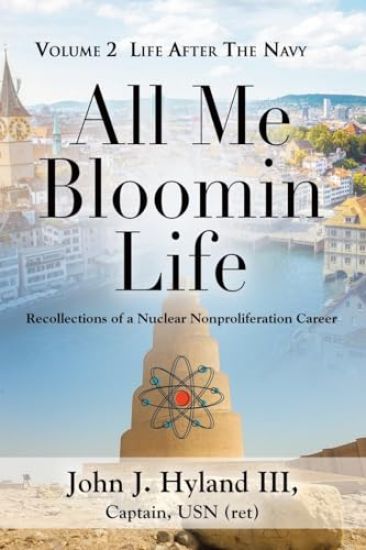
Volume 2 of Captain Hyland's autobiography deals with his career in the field of nuclear nonproliferation after he retired from the Navy. Over a period of 15 years he worked in the Office of Energy Intelligence, Defense Intelligence Agency, DCI Center for Weapons Intelligence, Nonproliferation and Arms Control (WINPAC), and the International Atomic Energy Agency (IAEA).In the first of two tours at WINPAC he spearheaded the search for improved technical tools to detect nuclear proliferation activities. In his second tour he worked on implementation of nuclear test monitoring system for the Comprehensive Test Ban Treaty.At the IAEA Captain Hyland was a Deputy Director and Chief Inspector on the Action Team, the small group conducting nuclear-related inspections in Iraq after the Gulf War.In retirement Captain Hyland resides in Alexandria, Virginia.
All Me Bloomin Life

All Me Bloomin Life

John J Hyland

Booklocker.com
2024
sidottu
Volume 2 of Captain Hyland's autobiography deals with his career in the field of nuclear nonproliferation after he retired from the Navy. Over a period of 15 years he worked in the Office of Energy Intelligence, Defense Intelligence Agency, DCI Center for Weapons Intelligence, Nonproliferation and Arms Control (WINPAC), and the International Atomic Energy Agency (IAEA).In the first of two tours at WINPAC he spearheaded the search for improved technical tools to detect nuclear proliferation activities. In his second tour he worked on implementation of nuclear test monitoring system for the Comprehensive Test Ban Treaty.At the IAEA Captain Hyland was a Deputy Director and Chief Inspector on the Action Team, the small group conducting nuclear-related inspections in Iraq after the Gulf War.In retirement Captain Hyland resides in Alexandria, Virginia.
The Reminiscences of Adm. John J. Hyland Jr., USN (Ret.), vol. I
Hyland was designated a naval aviator three years after his graduation with the Naval Academy class of 1934. He was with Patrol Squadron 102 at the outbreak of World War II, and participated in the defense of the Philippines, engagements in the Netherlands East Indies, and in the final retreat to Australia. From 1942-44 he was the assistant operations officer at the Naval Air Station, Anacostia, D.C., and in this position served as the private pilot to CNO Admiral Ernest J. King. He finished out the war as Commander Air Group Ten. He had two tours at the Naval Air Test Center Patuxent River, first as assistant director of flight test (1946-49), then as director of the tactical test division (1951-53). During a 1948 flight demonstration before a crowd of dignitaries, his plane collided with an osprey and he was forced to bail out. He commanded the attack aircraft carrier USS Saratoga (CVA-60) in 1958-59 and Carrier Division Four in 1962-63. In this concluding volume Hyland recalls his tours as Commander Seventh Fleet from 1965-67 and Commander in Chief U.S. Pacific Fleet from 1967-70, both during the peak intensity of the Vietnam War. Among many topics covered are the Market Time Operation, conduct of the air war in North Vietnam, control of the war from Washington, Admiral Elmo Zumwalt and his Z-grams, Admiral Hyman Rickover, and Secretary of the Navy John Chafee. Of special interest is his involvement in the 1968 Pueblo incident. A letter he wrote to the Secretary of the Navy endorsing the outcome of the court of inquiry into the capture of this ship is included as an appendix.
The Reminiscences of Adm. John J. Hyland Jr., USN (Ret.), vol. II
Hyland was designated a naval aviator three years after his graduation with the Naval Academy class of 1934. He was with Patrol Squadron 102 at the outbreak of World War II, and participated in the defense of the Philippines, engagements in the Netherlands East Indies, and in the final retreat to Australia. From 1942-44 he was the assistant operations officer at the Naval Air Station, Anacostia, D.C., and in this position served as the private pilot to CNO Admiral Ernest J. King. He finished out the war as Commander Air Group Ten. He had two tours at the Naval Air Test Center Patuxent River, first as assistant director of flight test (1946-49), then as director of the tactical test division (1951-53). During a 1948 flight demonstration before a crowd of dignitaries, his plane collided with an osprey and he was forced to bail out. He commanded the attack aircraft carrier USS Saratoga (CVA-60) in 1958-59 and Carrier Division Four in 1962-63. In this concluding volume Hyland recalls his tours as Commander Seventh Fleet from 1965-67 and Commander in Chief U.S. Pacific Fleet from 1967-70, both during the peak intensity of the Vietnam War. Among many topics covered are the Market Time Operation, conduct of the air war in North Vietnam, control of the war from Washington, Admiral Elmo Zumwalt and his Z-grams, Admiral Hyman Rickover, and Secretary of the Navy John Chafee. Of special interest is his involvement in the 1968 Pueblo incident. A letter he wrote to the Secretary of the Navy endorsing the outcome of the court of inquiry into the capture of this ship is included as an appendix.
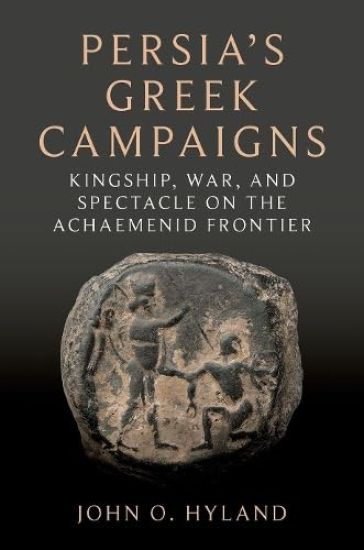
Persia's Greek Campaigns

Persia's Greek Campaigns

John O. Hyland

OXFORD UNIVERSITY PRESS INC
2026
sidottu
The wars between the Achaemenid Persian kings and the Greek city-states (c. 499-449 BCE)--especially Xerxes' invasion of Greece (480-479 BCE)--are often remembered as foundational events in Greek history, and therefore, we often hear about them through Greek accounts. While the Persians left no campaign narratives to compare with Herodotus and Aeschylus, their documents, artwork, and artifacts offer the foundations for an illuminating reassessment of these pivotal conflicts. Using seals and documents from Achaemenid Persepolis, as well as comparative evidence from Persia's Mesopotamian imperial predecessors, this book shows that these conflicts did not emerge from policies of infinite expansion or iterations of "East vs. West" struggle. Instead, the Persians drew on a long tradition of Near Eastern royal campaigns, in which kings traveled to distant frontiers to advertise their heroism, divine favor, and universal power. Xerxes' journey from Iran to Athens marked the pinnacle of this tradition, combining ideological spectacles with masterful logistical preparation. It achieved its principal goals through the seizure and burning of Athens but then stumbled into embarrassing defeats at Salamis and Plataia, which posed new ideological challenges by undermining the Persian image of royal invincibility. The resulting transition to an era of diplomatic consolidation marked a vital step in the evolution of history's first "world empire."
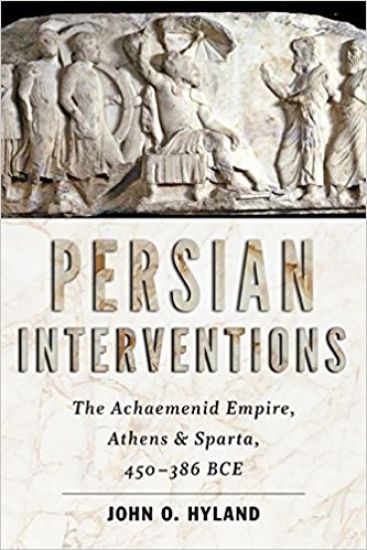
Persian Interventions

Persian Interventions

John O. Hyland

Johns Hopkins University Press
2018
sidottu
Thirty years after Xerxes invaded Greece, the Achaemenid Persian Empire ended its long war with Athens. For the next four decades, the Persians tolerated Athenian control of their former tributaries, the Ionian Greek cities of western Anatolia. But during the Peloponnesian War, Persia reclaimed Ionia and funded a Spartan fleet to overthrow Athenian power. It took eight long years for Persia to triumph, and Sparta then turned on its benefactors, prompting Persia to transfer aid to Athens in the Corinthian War. The peace of 386 reiterated imperial control of Ionia and compelled both Sparta and Athens to endorse a Persian promise of autonomy for Greeks outside Asia. In Persian Interventions, John O. Hyland challenges earlier studies that assume Persia played Athens against Sparta in a defensive balancing act. He argues instead for a new interpretation of Persian imperialism, one involving long-term efforts to extend diplomatic and economic patronage over Greek clients beyond the northwestern frontier. Achaemenid kings, he asserts, were less interested in Ionia for its own sake than in the accumulation of influence over Athens, Sparta, or both, which allowed them to advertise Persia's claim to universal power while limiting the necessity of direct military commitment. The slow pace of intervention resulted from logistical constraints and occasional diplomatic blunders, rather than long-term plans to balance and undermine dangerous allies. Persian Interventions examines this critical period in unprecedented depth, providing valuable new insights for the study of Achaemenid Persia and classical Greece. Its conclusions will interest not only specialists in both fields but also students of ancient and modern comparative historical imperialism.
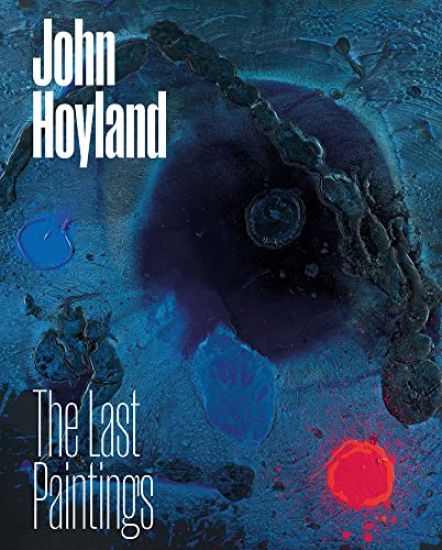
John Hoyland: The Last Paintings
In the decade before his death in 2011, John Hoyland began to reckon with mortality. Confronting his own demise, he painted elegies to departed artist friends and tributes to illustrious artistic forebears. Imagery of the void looms large, but it is a void faced with defiance and vitality, less a rumination on the end than a celebration of life. This publication explores the paintings Hoyland made in this decade, including his final series, the Mysteries. Essays by Natalie Adamson, David Anfam, Matthew Collings and Mel Gooding offer a rich and multifaceted account of a complex body of work. Hoyland’s veneration of Vincent van Gogh, his connections to J.M.W. Turner, the use of black as a colour, his deployment of risk and attempts to subvert his own taste, and his development of the cosmic visual language of the Abstract Expressionists are all discussed. Richly illustrated, the book extends our understanding of Hoyland’s late work within the story of modern painting as a whole.
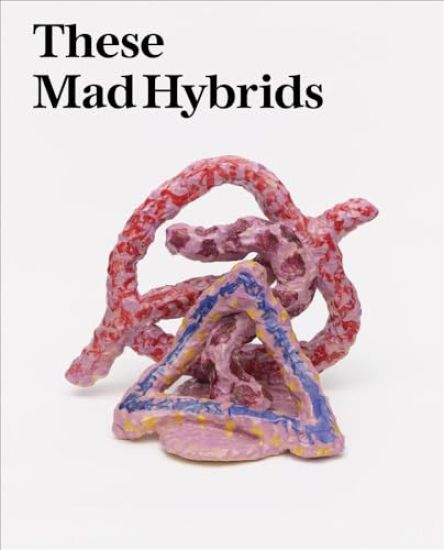
These Mad Hybrids: John Hoyland and Contemporary Sculpture
Diminutive, anthropomorphic and polka-dotted, Hoyland's ceramic experiments convene with other contemporary sculpturesIn 1994, painter John Hoyland (1934-2011) made an unruly group of ceramic sculptures, dubbing them "these mad little hybrids." This volume presents these ceramics in dialogue with sculptures by Caroline Achaintre, Phyllida Barlow, Hew Locke, Andrew Sabin, John Summers and Chiffon Thomas.