
Kirjahaku
Etsi kirjoja tekijän nimen, kirjan nimen tai ISBN:n perusteella.
1000 tulosta hakusanalla John J. Cornell
Autobiography of John J. Cornell: Containing an Account of His Religious Experiences and Travels in the Ministry
John J. Cornell
Literary Licensing, LLC
2014
nidottu

The History of Music in Twelve Lectures
Wilhelm Langhans; J H (John Henry) Cornell
Hansebooks
2017
pokkari
The History of Music in Twelve Lectures is an unchanged, high-quality reprint of the original edition of 1886. Hansebooks is editor of the literature on different topic areas such as research and science, travel and expeditions, cooking and nutrition, medicine, and other genres. As a publisher we focus on the preservation of historical literature. Many works of historical writers and scientists are available today as antiques only. Hansebooks newly publishes these books and contributes to the preservation of literature which has become rare and historical knowledge for the future.

Ancestry and Descendants of Cornelius and John J. Van Deusen
Elena J. 1872- Darling
Hassell Street Press
2021
nidottu
This work has been selected by scholars as being culturally important and is part of the knowledge base of civilization as we know it.This work is in the public domain in the United States of America, and possibly other nations. Within the United States, you may freely copy and distribute this work, as no entity (individual or corporate) has a copyright on the body of the work.Scholars believe, and we concur, that this work is important enough to be preserved, reproduced, and made generally available to the public. To ensure a quality reading experience, this work has been proofread and republished using a format that seamlessly blends the original graphical elements with text in an easy-to-read typeface.We appreciate your support of the preservation process, and thank you for being an important part of keeping this knowledge alive and relevant.



Development of In-Plane Surface Deformation Sensing for Thin Film PVDF Actuated Membrane Mirrors
John J Cornelius
Hutson Street Press
2025
sidottu

Development of In-Plane Surface Deformation Sensing for Thin Film PVDF Actuated Membrane Mirrors
John J Cornelius
Hutson Street Press
2025
pokkari

Quinault Tribe of Indians V. Gallagher (A.M.) U.S. Supreme Court Transcript of Record with Supporting Pleadings
John J O'Connell; James J McArdle
Gale, U.S. Supreme Court Records
2011
pokkari

Development of In-Plane Surface Deformation Sensing for Thin Film PVDF Actuated Membrane Mirrors
John J Cornelius
Biblioscholar
2012
pokkari
A Mountain Trail: To the Schoolroom, the Editor's Chair, the Lawyer's Office and the Governorship of West Virginia
Cornwell John J.
Literary Licensing, LLC
2013
sidottu
""A Mountain Trail: To The Schoolroom, The Editor�������s Chair, The Lawyer�������s Office And The Governorship Of West Virginia"" is a memoir written by Cornwell John J. The book chronicles Cornwell's journey from his humble beginnings in rural West Virginia to becoming the governor of the state. Cornwell shares his experiences of growing up in poverty, attending school in a one-room schoolhouse, and working odd jobs to support himself and his family. He also talks about his early career as a teacher, a newspaper editor, and a lawyer. The book provides insight into the challenges and opportunities that faced West Virginia during the early 20th century, including the impact of coal mining on the state's economy and the struggle for civil rights. Overall, ""A Mountain Trail"" is a compelling and inspiring story of one man's determination to succeed against all odds.This is a new release of the original 1941 edition.This scarce antiquarian book is a facsimile reprint of the old original and may contain some imperfections such as library marks and notations. Because we believe this work is culturally important, we have made it available as part of our commitment for protecting, preserving, and promoting the world's literature in affordable, high quality, modern editions, that are true to their original work.

A Mountain Trail: To the Schoolroom, the Editor's Chair, the Lawyer's Office and the Governorship of West Virginia
Cornwell John J.
Literary Licensing, LLC
2013
nidottu
Jehovah's Witnesses in State of Washington V. King County Hospital Unit No. 1 (Harborview) U.S. Supreme Court Transcript of Record with Supporting Pleadings
W Glen How; John J O'Connell
Gale Ecco, U.S. Supreme Court Records
2011
pokkari

Until 1994, Republicans had not held a majority of seats in the U.S. House since 1954, more than twice the time that either party has dwelt in the minority throughout congressional history. This is the first book-length comprehensive analysis since 1970 of the causes and consequences, and possible cures for the House Republicans' "permanent minority" status. Written in a nontechnical style, Congress' Permanent Minority? will be of great interest to scholars, students, and the political community.

Powers of the President During Crises
J Malcolm (John Malcolm) Smith; Cornelius P Cotter
Anson Street Press
2025
pokkari

Powers of the President During Crises
J Malcolm (John Malcolm) Smith; Cornelius P Cotter
Anson Street Press
2025
sidottu
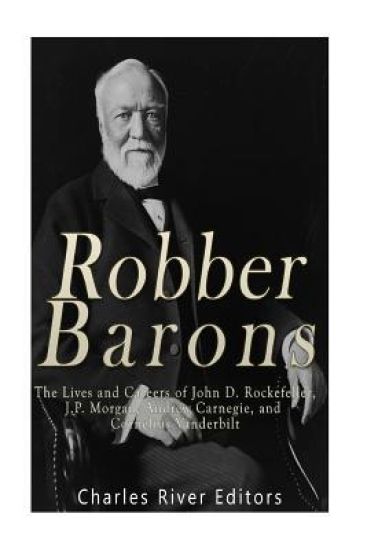
Robber Barons: The Lives and Careers of John D. Rockefeller, J.P. Morgan, Andrew Carnegie, and Cornelius Vanderbilt
Charles River
Createspace Independent Publishing Platform
2016
nidottu
*Includes pictures *Includes the business magnates' quotes about life and work *Includes online resources and a bibliography for further reading The Gilded Age and the dawn of the 20th century are often remembered as an era full of monopolies, trusts, and economic giants in heavy industries like oil and steel. Men like Andrew Carnegie built empires like Carnegie Steel, and financiers like J.P. Morgan merged and consolidated them. The era also made names like Astor, Cooke, and Vanderbilt instantly recognizable across the globe. Over time, the unfathomable wealth generated by the businesses made the individuals on top incredibly rich, and that in turn led to immense criticism and an infamous epithet used to rail against them: robber barons. Dozens of men were called "robber barons", but few of them were as notorious as Cornelius Vanderbilt, who also happened to be one of the nation's first business titans. Vanderbilt was a railroad and shipping magnate at a time that the industry was almost brand new, but he rode his success to become one of the richest and most powerful men in American history. When historians are asked to name the richest man in history, a name that often pops up is that of John D. Rockefeller, who co-founded Standard Oil and turned it into the first real trust in the United States. Rockefeller had been groomed ambitiously by a huckster father nicknamed "Devil Bill", who was just as willing to cheat his son as an unsuspecting public, and John certainly chased his dreams of living long and large. Rockefeller forged his empire in the first few decades of his life and nearly worked himself to death by the time he was 50, which helped compel him to retire for the last several decades of his life. At one point, Rockefeller's wealth was worth more than 1.5% of the entire country's gross domestic product, and by adjusting for inflation, he is arguably the richest man in American history if not world history. When robber barons across America took the reins of vast industries, they needed financing, and many of them turned to the most famous banker of all: John Pierpont Morgan. It was J.P. Morgan who bankrolled the consolidation of behemoth corporations across various industries, including the merging of Edison General Electric and Thomson-Houston Electric Company, which subsequently became General Electric, still known simply as GE across the world today. Similarly, he financed Federal Steel Company and consolidated various other steel businesses to help form the United States Steel Corporation. While critics complained about the outsized influence that these gigantic businesses had, Morgan's massive wealth also gave him unprecedented power in the financial sector and the ability to deal with politicians. In fact, Morgan played an important part in the Panic of 1907 and the subsequent decision to create the Federal Reserve as a monetary oversight. Ironically, one of America's most famous robber barons, Andrew Carnegie, epitomized the American Dream, migrating with his poor family to America in the mid-19th century and rising to the top of the business world in his adopted country. A prodigious writer in addition to his keen sense of business, Carnegie was one of the most outspoken champions of capitalism at a time when there was pushback among lower social classes who witnessed the great disparities in wealth; as he once put it, "Upon the sacredness of property civilization itself depends-the right of the laborer to his hundred dollars in the savings bank, and equally the legal right of the millionaire to his millions." In a similar vein, he said, "Those who would administer wisely must, indeed, be wise, for one of the serious obstacles to the improvement of our race is indiscriminate charity."
Robber Barons: The Lives and Careers of John D. Rockefeller, J.P. Morgan, Andrew Carnegie, and Cornelius Vanderbilt
Charles River
Createspace Independent Publishing Platform
2017
nidottu
*Includes pictures *Includes the business magnates' quotes about life and work *Includes online resources and a bibliography for further reading The Gilded Age and the dawn of the 20th century are often remembered as an era full of monopolies, trusts, and economic giants in heavy industries like oil and steel. Men like Andrew Carnegie built empires like Carnegie Steel, and financiers like J.P. Morgan merged and consolidated them. The era also made names like Astor, Cooke, and Vanderbilt instantly recognizable across the globe. Over time, the unfathomable wealth generated by the businesses made the individuals on top incredibly rich, and that in turn led to immense criticism and an infamous epithet used to rail against them: robber barons. Dozens of men were called "robber barons", but few of them were as notorious as Cornelius Vanderbilt, who also happened to be one of the nation's first business titans. Vanderbilt was a railroad and shipping magnate at a time that the industry was almost brand new, but he rode his success to become one of the richest and most powerful men in American history. When historians are asked to name the richest man in history, a name that often pops up is that of John D. Rockefeller, who co-founded Standard Oil and turned it into the first real trust in the United States. Rockefeller had been groomed ambitiously by a huckster father nicknamed "Devil Bill", who was just as willing to cheat his son as an unsuspecting public, and John certainly chased his dreams of living long and large. Rockefeller forged his empire in the first few decades of his life and nearly worked himself to death by the time he was 50, which helped compel him to retire for the last several decades of his life. At one point, Rockefeller's wealth was worth more than 1.5% of the entire country's gross domestic product, and by adjusting for inflation, he is arguably the richest man in American history if not world history. When robber barons across America took the reins of vast industries, they needed financing, and many of them turned to the most famous banker of all: John Pierpont Morgan. It was J.P. Morgan who bankrolled the consolidation of behemoth corporations across various industries, including the merging of Edison General Electric and Thomson-Houston Electric Company, which subsequently became General Electric, still known simply as GE across the world today. Similarly, he financed Federal Steel Company and consolidated various other steel businesses to help form the United States Steel Corporation. While critics complained about the outsized influence that these gigantic businesses had, Morgan's massive wealth also gave him unprecedented power in the financial sector and the ability to deal with politicians. In fact, Morgan played an important part in the Panic of 1907 and the subsequent decision to create the Federal Reserve as a monetary oversight. Ironically, one of America's most famous robber barons, Andrew Carnegie, epitomized the American Dream, migrating with his poor family to America in the mid-19th century and rising to the top of the business world in his adopted country. A prodigious writer in addition to his keen sense of business, Carnegie was one of the most outspoken champions of capitalism at a time when there was pushback among lower social classes who witnessed the great disparities in wealth; as he once put it, "Upon the sacredness of property civilization itself depends-the right of the laborer to his hundred dollars in the savings bank, and equally the legal right of the millionaire to his millions." In a similar vein, he said, "Those who would administer wisely must, indeed, be wise, for one of the serious obstacles to the improvement of our race is indiscriminate charity."

Correspondence of Daniel O'Connell, the Liberator / EEd. With Notices of His Life and Times by W.J. Fitzpatrick
William John 1830-1895 Fitzpatrick
Hutson Street Press
2025
sidottu