

Kirjahaku
Etsi kirjoja tekijän nimen, kirjan nimen tai ISBN:n perusteella.
1000 tulosta hakusanalla John J. Duffy


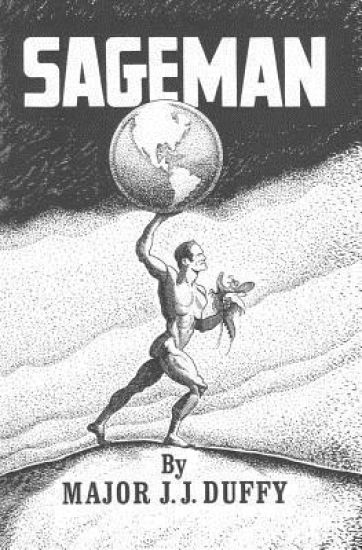



Since 1969, Ethan Allen has been the subject of three biographical studies, all of which indulge in sustaining and revitalizing the image of Allen as a physically imposing Vermont yeoman, a defender of the rights of Americans, an eloquent military hero, and a master of many guises, from rough frontiersman to gentleman philosopher. Seeking the authentic Ethan Allen, the authors of this volume ask: How did that Ethan Allen secure his place in popular culture? As they observe, this spectacular persona leaves little room for a more accurate assessment of Allen as a self-interested land speculator, rebellious mob leader, inexperienced militia officer, and truth-challenged man who would steer Vermont into the British Empire.Drawing extensively from the correspondence in Ethan Allen and his Kin and a wide range of historical, political, and cultural sources, Duffy and Muller analyze the factors that led to Ethan Allen's two-hundred-year-old status as the most famous figure in Vermont's past. Placing facts against myths, the authors reveal how Allen acquired and retained his iconic image, how the much-repeated legends composed after his death coincide with his life, why recollections of him are synonymous with the story of Vermont, and why some Vermonters still assign to Allen their own cherished and idealized values.

The Ghosts of Duffy's Cut
William E. Watson; J. Francis Watson; John H. Ahtes; Earl H. Schandelmeier III
Praeger Publishers Inc
2006
sidottu
In 1832, 57 Irish Catholic workers were brought to the United States to lay one of the most difficult miles of American railway, Duffy's Cut of the Pennsylvania Railroad. These men were chosen because, in the eyes of the railroad company that hired them, they were expendable. Deaths were common during the building of the railway but this stretch was worse than most. When cholera swept the camp basic medical attention and community support was denied to them. In the end all 57 men—the entire work crew—died and were buried in a mass unmarked grave. Their families in Ireland were never notified about what happened to them. The company did its best to cover up the incident, which was certainly one of the worst labor tragedies in U.S. history. Set against the backdrop of a rapidly industrializing America, this book tells the story of these men, the sacrifices they made, and the mistreatment that claimed their lives. The saga of Duffy's Cut focuses particularly on the Irish laborers who built the railroads. Who were these men? Who hired them? Why did they come? Perhaps most important, why did they die? Based on archaeological digs at the site and meticulous historical research, the authors argue that the annihilation of the work crew came about because of the extreme conditions of their employment, the prejudice of the surrounding community, and the vigilante violence that kept them isolated. In shedding light on this tragic chapter in American labor history, The Ghosts of Duffy's Cut also illuminates a dark side of America's rise to greatness.

Psychiatry Specialty Board Review For The DSM-IV
John Duffy; J. Bryce McLaulin
Brunner-Mazel Inc
1996
nidottu
This volume has been updated and revised to reflect all applicable diagnostic categories of the DSM-IV, as well as recent advances in psychopharmacology. Over 600 challenging questions covering material most likely to be found on the board examination are included, reflecting current theory and practice in child and adolescent psychiatry, psychopathology, psychopharmacology, and other selected topics. Software includes randomized question sequence, immediate viewing of score results, instant searches on specific topics, and more.
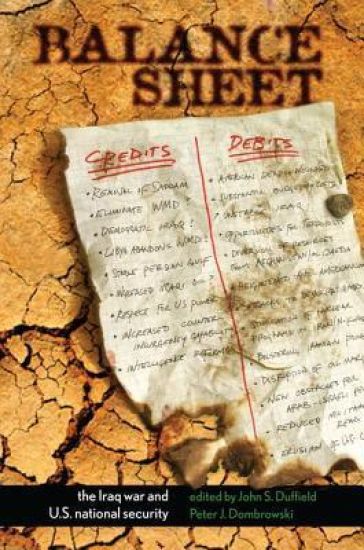
The last six years have witnessed a virtually unending debate over U.S. policy toward Iraq, a debate that is likely to continue well into the new administration and perhaps the next, notwithstanding recent improvements on the ground. Too often, however, the debate has been narrowly framed in terms of the situation in Iraq and what steps the United States should take there next, leaving the broader impact of the war on American interests largely overlooked. Ultimately, though, the success and failure of the war will have to be judged in terms of its overall contribution to U.S. national security, including those repercussions that extend far beyond the borders of Iraq. This book addresses this gap by providing a comprehensive evaluation of the consequences of the Iraq war for the national security of the United States. It is aimed at both those who have not yet made up their minds about the merits of the war and those who wish to ground their opinions in a clearer understanding of what effects the war has actually had. Balance Sheet examines both how the war has advanced or retarded the achievement of other important goals of U.S. national security policy and its impact on the ability of the United States to pursue its security interests now and in the future. Individual chapters by expert authors address such key issues as the war on terror, nuclear non-proliferation, stability in the Middle East, the health of the U.S. military, America's standing in the world, and U.S. public opinion. By doing justice to the full range of stakes involved, this book not only reframes the debate over the Iraq war but provides a necessary foundation for future U.S. policymaking toward Iraq and beyond.

A Contingent Valuation Assessment of Montana Waterfowl Hunting
John Duffield; Christopher J Neher
Sagwan Press
2018
pokkari
This work has been selected by scholars as being culturally important, and is part of the knowledge base of civilization as we know it. This work was reproduced from the original artifact, and remains as true to the original work as possible. Therefore, you will see the original copyright references, library stamps (as most of these works have been housed in our most important libraries around the world), and other notations in the work.This work is in the public domain in the United States of America, and possibly other nations. Within the United States, you may freely copy and distribute this work, as no entity (individual or corporate) has a copyright on the body of the work.As a reproduction of a historical artifact, this work may contain missing or blurred pages, poor pictures, errant marks, etc. Scholars believe, and we concur, that this work is important enough to be preserved, reproduced, and made generally available to the public. We appreciate your support of the preservation process, and thank you for being an important part of keeping this knowledge alive and relevant.

The Squam Lake Report
Kenneth R. French; Martin N. Baily; John Y. Campbell; John H. Cochrane; Douglas W. Diamond; Darrell Duffie; Anil K. Kashyap; Frederic S. Mishkin; Raghuram G. Rajan; David S. Scharfstein; Robert J. Shiller; Hyun Song Shin; Matthew J. Slaughter; Jeremy C. Stein; René M. Stulz
Princeton University Press
2010
sidottu
In the fall of 2008, fifteen of the world's leading economists--representing the broadest spectrum of economic opinion--gathered at New Hampshire's Squam Lake. Their goal: the mapping of a long-term plan for financial regulation reform. The Squam Lake Report distills the wealth of insights from the ongoing collaboration that began at these meetings and provides a revelatory, unified, and coherent voice for fixing our troubled and damaged financial markets. As an alternative to the patchwork solutions and ideologically charged proposals that have dominated other discussions, the Squam Lake group sets forth a clear nonpartisan plan of action to transform the regulation of financial markets--not just for the current climate--but for generations to come. Arguing that there has been a conflict between financial institutions and society, these diverse experts present sound and transparent prescriptions to reduce this divide. They look at the critical holes in the existing regulatory framework for handling complex financial institutions, retirement savings, and credit default swaps. They offer ideas for new financial instruments designed to recapitalize banks without burdening taxpayers. To lower the risk that large banks will fail, the authors call for higher capital requirements as well as a systemic regulator who is part of the central bank. They collectively analyze where the financial system has failed, and how these weak points should be overhauled. Combining an immense depth of academic, private sector, and public policy experience, The Squam Lake Report contains urgent recommendations that will positively influence everyone's financial well-being--all who care about the world's economic health need to pay attention.

Life Of John J. Crittenden
John J. Crittenden; Chapman (EDT) Coleman
Kessinger Publishing
2007
sidottu

Life Of John J. Crittenden
John J. Crittenden; Chapman (EDT) Coleman
Kessinger Publishing
2007
sidottu

John J. Pershing and the American Expeditionary Forces in World War I, 1917-1919
THE UNIVERSITY PRESS OF KENTUCKY
2022
sidottu
General of the Armies John J. Pershing (1860-1948) had a long and distinguished military career, but he is most famous for leading the American Expeditionary Forces in World War I. He published a memoir, My Experiences in the World War, and has been the subject of numerous biographies, but the literature regarding this towering figure and his enormous role in the First World War deserves to be expanded to include a collection of his wartime correspondence. Meticulously edited by John T. Greenwood, volume 2 of John J. Pershing and the American Expeditionary Forces in World War I, 1917-1919 covers the period of October 1 through December 31, 1917. During this time, Pershing focused his efforts on working with the French Ministry of War, the General Staff, and the field Army on training and equipping the AEF's few available combat divisions for frontline service. Russia's defection from the coalition and the surprising Italian defeat at Caporetto in October rocked the Allied ranks, and this volume addresses the creation of the Supreme War Council and the House's American War Mission - bodies that reexamined the Entente's military and diplomatic strategy and ultimately cemented the alliance. The correspondence also reveals how the House Mission revived the divisive issue of amalgamating arriving American troops into existing British and French combat divisions - something that Pershing utterly opposed and saw as a threat to the AEF. The dispute never resolved and irritated British prime minister Lloyd George and French premier Georges Clemenceau so much that both would try to engineer Pershing's removal in the following year. Extracts from the large volume of rarely referenced cablegrams represent an important contribution to Pershing's wartime story.

John J. Pershing and the American Expeditionary Forces in World War I, 1917-1919
THE UNIVERSITY PRESS OF KENTUCKY
2024
sidottu
General of the Armies John J. Pershing (1860–1948) had a long and decorated military career but is most famous for leading the American Expeditionary Forces in World War I. He published a memoir, My Experiences in the World War, and has been the subject of numerous biographies, but the literature regarding this towering figure and his enormous role in the First World War deserves to be expanded to include a collection of his wartime correspondence. Carefully edited by John T. Greenwood, volume 3 of John J. Pershing and the American Expeditionary Forces in World War I, 1917–1919 covers the period of January 1 through March 20, 1918, as General Pershing encounters logistical and organizational challenges that originated in the last months of 1917\. With the collapse of the Eastern Front and Allied defeats in Italy, British and French commanders were preparing for a renewed German offensive and proposed that American troops be put under their control for training and frontline combat in order to replenish losses. Pershing's diary entries indicate that he rejected these proposals and yet offered four segregated African American regiments to be placed under French control. The conclusion of the AEF autonomy debate allowed Pershing to focus on reorganizing the General Headquarters of the AEF, establishing effective communication lines, and contracting Allied European governments to produce armaments for the AEF with American raw materials. In March 1918, Maj. Gen. Peyton C. March replaced Gen. Tasker H. Bliss as chief of staff. The sources included in this edition show the origin of Pershing and March's personal feud, which persisted well after the war. Pershing's letters during this time period convey a long and arduous struggle to build an American army at the front. Together, these volumes of wartime correspondence provide new insight into the work of a legendary soldier and the historic events in which he participated.

John J. Ford, Jr. Correspondence, 1956
Eric P Newman; Jr. John J. Ford
Hassell Street Press
2021
nidottu
This work has been selected by scholars as being culturally important and is part of the knowledge base of civilization as we know it.This work is in the public domain in the United States of America, and possibly other nations. Within the United States, you may freely copy and distribute this work, as no entity (individual or corporate) has a copyright on the body of the work.Scholars believe, and we concur, that this work is important enough to be preserved, reproduced, and made generally available to the public. To ensure a quality reading experience, this work has been proofread and republished using a format that seamlessly blends the original graphical elements with text in an easy-to-read typeface.We appreciate your support of the preservation process, and thank you for being an important part of keeping this knowledge alive and relevant.
John J. Ford, Jr. Correspondence, 1953
Eric P Newman; Jr. John J. Ford
Hassell Street Press
2021
nidottu
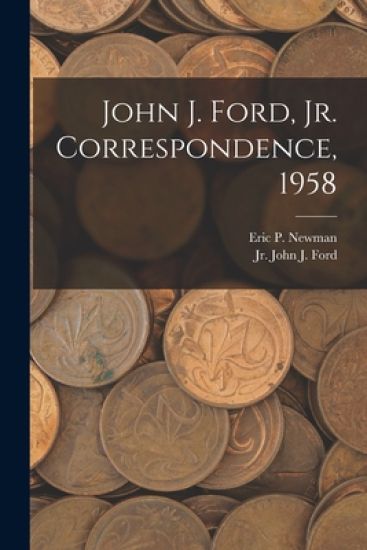
John J. Ford, Jr. Correspondence, 1958
Eric P Newman; Jr. John J. Ford
Hassell Street Press
2021
nidottu
This work has been selected by scholars as being culturally important and is part of the knowledge base of civilization as we know it.This work is in the public domain in the United States of America, and possibly other nations. Within the United States, you may freely copy and distribute this work, as no entity (individual or corporate) has a copyright on the body of the work.Scholars believe, and we concur, that this work is important enough to be preserved, reproduced, and made generally available to the public. To ensure a quality reading experience, this work has been proofread and republished using a format that seamlessly blends the original graphical elements with text in an easy-to-read typeface.We appreciate your support of the preservation process, and thank you for being an important part of keeping this knowledge alive and relevant.