Kirjojen hintavertailu. Mukana 11 244 527 kirjaa ja 12 kauppaa.

Kirjahaku

Etsi kirjoja tekijän nimen, kirjan nimen tai ISBN:n perusteella.

1000 tulosta hakusanalla John J. McCarthy

A Thematic Guide to Optimality Theory

A Thematic Guide to Optimality Theory

John J. McCarthy

Cambridge University Press
2001
sidottu
This book describes Optimality Theory from the top down, explaining and exploring the central premises of OT and the results of their praxis. Examples are drawn from phonology, morphology, and syntax, but the emphasis throughout is on the theory rather than the examples, on understanding what is special about OT and on equipping readers to apply it, extend it, and critique it in their own areas of interest. To enhance the book's usefulness for researchers in allied disciplines, the topdown view of OT extends to work on first- and second-language acquisition, phonetics and functional phonology, computational linguistics, historical linguistics, and sociolinguistics. Furthermore, to situate OT for those coming from other traditions, this book also contains much discussion of OT's intellectual origins, its predecessors, and its contemporary competitors. Each chapter concludes with extensive suggestions for further reading, classified by topics, and supplemented by a massive bibliography (over 800 items). The book ends with a list of frequently asked questions about Optimality Theory, with brief answers and pointers to a fuller treatment in the text.
A Thematic Guide to Optimality Theory

A Thematic Guide to Optimality Theory

John J. McCarthy

Cambridge University Press
2001
pokkari
This book describes Optimality Theory from the top down, explaining and exploring the central premises of OT and the results of their praxis. Examples are drawn from phonology, morphology, and syntax, but the emphasis throughout is on the theory rather than the examples, on understanding what is special about OT and on equipping readers to apply it, extend it, and critique it in their own areas of interest. To enhance the book’s usefulness for researchers in allied disciplines, the topdown view of OT extends to work on first- and second-language acquisition, phonetics and functional phonology, computational linguistics, historical linguistics, and sociolinguistics. Furthermore, to situate OT for those coming from other traditions, this book also contains much discussion of OT’s intellectual origins, its predecessors, and its contemporary competitors. Each chapter concludes with extensive suggestions for further reading, classified by topics, and supplemented by a massive bibliography (over 800 items). The book ends with a list of frequently asked questions about Optimality Theory, with brief answers and pointers to a fuller treatment in the text.
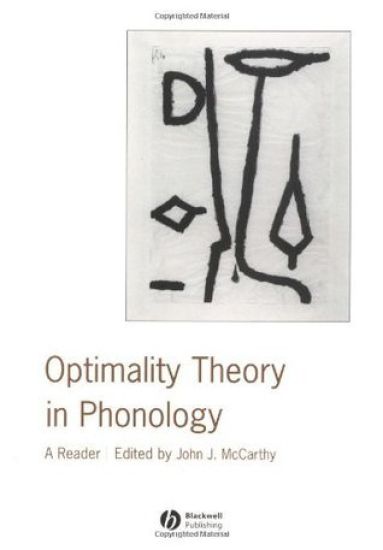
Optimality Theory in Phonology

Optimality Theory in Phonology

John J. McCarthy

Blackwell Publishing Ltd
2003
sidottu
Optimality Theory in Phonology: A Reader is a collection of readings on this important new theory by leading figures in the field, including a lengthy excerpt from Prince and Smolensky's never-before-published Optimality Theory: Constraint Interaction in Generative Grammar. Compiles the most important readings about Optimality Theory in phonology from some of the most prominent researchers in the field.Contains 33 excerpts spanning a range of topics in phonology and including many never-before-published papers.Includes a lengthy excerpt from Prince and Smolensky’s foundational 1993 manuscript Optimality Theory: Constraint Interaction in Generative Grammar.Includes introductory notes and study/research questions for each chapter.
Optimality Theory in Phonology

Optimality Theory in Phonology

John J. McCarthy

JOHN WILEY AND SONS LTD
2003
nidottu
Optimality Theory in Phonology: A Reader is a collection of readings on this important new theory by leading figures in the field, including a lengthy excerpt from Prince and Smolensky's never-before-published Optimality Theory: Constraint Interaction in Generative Grammar. Compiles the most important readings about Optimality Theory in phonology from some of the most prominent researchers in the field.Contains 33 excerpts spanning a range of topics in phonology and including many never-before-published papers.Includes a lengthy excerpt from Prince and Smolensky’s foundational 1993 manuscript Optimality Theory: Constraint Interaction in Generative Grammar.Includes introductory notes and study/research questions for each chapter.
Formal Problems in Semitic Phonology and Morphology
First published in 1985. Two basic issues figure in this study. The first concerns the representation of syllabic and accentual structure, and the effects of those structures on the formulation of phonological rules. In the second section of this title, a solution to the traditional problem of the root and pattern morphological system of Semitic is proposed and illustrated by an extensive treatment of Classical Arabic. This title will be of particular interest to students of linguistics.
Formal Problems in Semitic Phonology and Morphology
First published in 1985. Two basic issues figure in this study. The first concerns the representation of syllabic and accentual structure, and the effects of those structures on the formulation of phonological rules. In the second section of this title, a solution to the traditional problem of the root and pattern morphological system of Semitic is proposed and illustrated by an extensive treatment of Classical Arabic. This title will be of particular interest to students of linguistics.
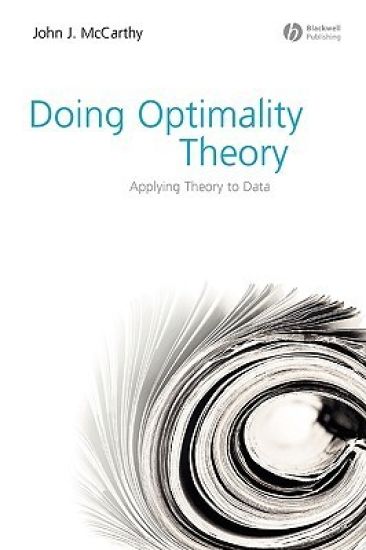
Doing Optimality Theory

Doing Optimality Theory

John J. McCarthy

Wiley-Blackwell (an imprint of John Wiley Sons Ltd)
2008
nidottu
Doing Optimality Theory brings together examples and practical, detailed advice for undergraduates and graduate students working in linguistics. Given that the basic premises of Optimality Theory are markedly different from other linguistic theories, this book presents the analytic techniques and new ways of thinking and theorizing that are required. Explains how to do analysis and research using Optimality Theory (OT) - a branch of phonology that has revolutionized the field since its conception in 1993Offers practical, in-depth advice for students and researchers in the field, presented in an engaging wayFeatures numerous examples, questions, and exercises throughout, all helping to illustrate the theory and summarize the core concepts of OTWritten by John J. McCarthy, one of the theory’s leading proponents and an instrumental figure in the dissemination and use of OT todayAn ideal guide through the intricacies of linguistic analysis and research for beginning researchers, and, by example, one which will lead the way to future developments in the field.
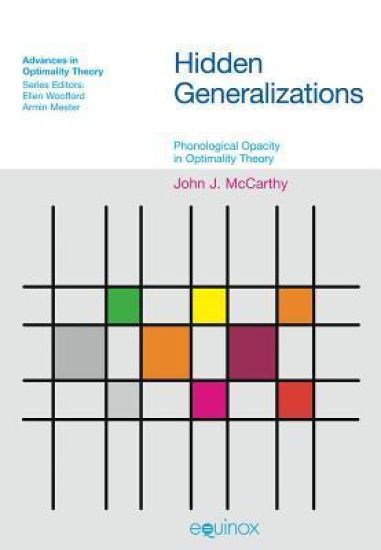
Hidden Generalizations

Hidden Generalizations

John J. McCarthy

Equinox Publishing Ltd
2007
sidottu
"Hidden Generalizations" is the first monograph devoted exclusively to the problem of phonological opacity. Opacity arises when the conditions for or results of an active phonological process are not evident in the speech signal. Opacity is particularly important in Optimality Theory, which lacks the standard means of analyzing opacity, rule ordering. This book is a thorough reexamination of phonological opacity. It finds insights in the extensive literature on rule interaction of the 1970's. It describes and critiques the oft-voiced opinion that there are no authentic cases of opacity. It evaluates representational approaches to opacity that emerged in the 1980's. Primarily, though, it discusses various ideas about opacity in OT and offers a new proposal, candidate chain theory. This proposal is illustrated and tested with analyses of the phonology of several Semitic languages.
Hidden Generalizations

Hidden Generalizations

John J. McCarthy

Equinox Publishing Ltd
2007
pokkari
"Hidden Generalizations" is the first monograph devoted exclusively to the problem of phonological opacity. Opacity arises when the conditions for or results of an active phonological process are not evident in the speech signal. Opacity is particularly important in Optimality Theory, which lacks the standard means of analyzing opacity, rule ordering. This book is a thorough reexamination of phonological opacity. It finds insights in the extensive literature on rule interaction of the 1970's. It describes and critiques the oft-voiced opinion that there are no authentic cases of opacity. It evaluates representational approaches to opacity that emerged in the 1980's. Primarily, though, it discusses various ideas about opacity in OT and offers a new proposal, candidate chain theory. This proposal is illustrated and tested with analyses of the phonology of several Semitic languages.
Betrayal At Bethesda: The Intertwined Fates of James Forrestal, Joseph McCarthy, and John F. Kennedy
On May 22, 1949, former secretary of defense James Forrestal fell from the sixteenth floor of a building in Bethesda, Maryland. His death was investigated by the US Navy, but the official report listed no definitive cause. On May 2, 1957, US senator and staunch anti-Communist advocate Joseph McCarthy died of acute hepatitis. No cause was given and no autopsy was ever conducted. On November 22, 1963, President John F. Kennedy was assassinated while visiting Dallas, Texas. The ensuing investigation would inspire a controversy that would last well into the twenty-first century. Three of the most important men in the fight against global communism all died in sinister circumstances. In the span of fourteen years, Forrestal, McCarthy, and Kennedy, three men who were great friends during their lives, were all effectively removed from international politics. J. C. Hawkins refuses to believe this is a coincidence. His new expos , Betrayal at Bethesda, presents an alternate theory to all three deaths. The men were too closely connected in their policies and political careers for their deaths to be written off as unrelated. Hawkins not only challenges the historical record but also shows how each man died for the ideals they collectively held in such high esteem.
Be Your Own Bartender

Be Your Own Bartender

Carey Jones; John McCarthy; J. Kenji López-Alt

Countryman Press Inc.
2019
nidottu
It's a quandary shared by adventurous and indecisive drinkers alike: What should I drink tonight? Here to answer that question is Be Your Own Bartender. Through more than a dozen flowcharts, the book poses a series of questions designed to lead readers to their ideal drink. With more than 151 original recipes, there's a cocktail for every mood, taste and occasion. Are you after something tequila-based or gin-based? Do you like gin or really like gin? Are you ready to break out the muddler? And is your night winding down or just getting started? Whatever the answers, Be Your Own Bartender leads you to your destination—a cocktail effectively designed just for you. With some drinks that are truly adventurous and others that are friendlier to the cocktail novice, every recipe is created with the home bartender in mind. Divided into chapters by spirit—with bonus flowcharts for brunch drinks, holiday parties and true cocktail nerds—Be Your Own Bartender is the best way to discover the perfect cocktail for you, in a journey as user-friendly as it is fun.
John J. Pershing and the American Expeditionary Forces in World War I, 1917-1919
General of the Armies John J. Pershing (1860-1948) had a long and distinguished military career, but he is most famous for leading the American Expeditionary Forces in World War I. He published a memoir, My Experiences in the World War, and has been the subject of numerous biographies, but the literature regarding this towering figure and his enormous role in the First World War deserves to be expanded to include a collection of his wartime correspondence. Meticulously edited by John T. Greenwood, volume 2 of John J. Pershing and the American Expeditionary Forces in World War I, 1917-1919 covers the period of October 1 through December 31, 1917. During this time, Pershing focused his efforts on working with the French Ministry of War, the General Staff, and the field Army on training and equipping the AEF's few available combat divisions for frontline service. Russia's defection from the coalition and the surprising Italian defeat at Caporetto in October rocked the Allied ranks, and this volume addresses the creation of the Supreme War Council and the House's American War Mission - bodies that reexamined the Entente's military and diplomatic strategy and ultimately cemented the alliance. The correspondence also reveals how the House Mission revived the divisive issue of amalgamating arriving American troops into existing British and French combat divisions - something that Pershing utterly opposed and saw as a threat to the AEF. The dispute never resolved and irritated British prime minister Lloyd George and French premier Georges Clemenceau so much that both would try to engineer Pershing's removal in the following year. Extracts from the large volume of rarely referenced cablegrams represent an important contribution to Pershing's wartime story.
John J. Pershing and the American Expeditionary Forces in World War I, 1917-1919
General of the Armies John J. Pershing (1860–1948) had a long and decorated military career but is most famous for leading the American Expeditionary Forces in World War I. He published a memoir, My Experiences in the World War, and has been the subject of numerous biographies, but the literature regarding this towering figure and his enormous role in the First World War deserves to be expanded to include a collection of his wartime correspondence. Carefully edited by John T. Greenwood, volume 3 of John J. Pershing and the American Expeditionary Forces in World War I, 1917–1919 covers the period of January 1 through March 20, 1918, as General Pershing encounters logistical and organizational challenges that originated in the last months of 1917\. With the collapse of the Eastern Front and Allied defeats in Italy, British and French commanders were preparing for a renewed German offensive and proposed that American troops be put under their control for training and frontline combat in order to replenish losses. Pershing's diary entries indicate that he rejected these proposals and yet offered four segregated African American regiments to be placed under French control. The conclusion of the AEF autonomy debate allowed Pershing to focus on reorganizing the General Headquarters of the AEF, establishing effective communication lines, and contracting Allied European governments to produce armaments for the AEF with American raw materials. In March 1918, Maj. Gen. Peyton C. March replaced Gen. Tasker H. Bliss as chief of staff. The sources included in this edition show the origin of Pershing and March's personal feud, which persisted well after the war. Pershing's letters during this time period convey a long and arduous struggle to build an American army at the front. Together, these volumes of wartime correspondence provide new insight into the work of a legendary soldier and the historic events in which he participated.
John J. Ford, Jr. Correspondence, 1956

John J. Ford, Jr. Correspondence, 1956

Eric P Newman; Jr. John J. Ford

Hassell Street Press
2021
nidottu
This work has been selected by scholars as being culturally important and is part of the knowledge base of civilization as we know it.This work is in the public domain in the United States of America, and possibly other nations. Within the United States, you may freely copy and distribute this work, as no entity (individual or corporate) has a copyright on the body of the work.Scholars believe, and we concur, that this work is important enough to be preserved, reproduced, and made generally available to the public. To ensure a quality reading experience, this work has been proofread and republished using a format that seamlessly blends the original graphical elements with text in an easy-to-read typeface.We appreciate your support of the preservation process, and thank you for being an important part of keeping this knowledge alive and relevant.