
Kirjahaku
Etsi kirjoja tekijän nimen, kirjan nimen tai ISBN:n perusteella.
1000 tulosta hakusanalla John Kinsella
Australian John Kinsella is one of the most highly regarded poets currently writing in English. Taking Edmund Burke’s 250-year old masterpiece A Philosophical Enquiry into the Origin of Our Ideas of the Sublime and Beautiful as his template, Kinsella has produced his most accomplished and broadly representative work to date. Shades of the Sublime & Beautiful is a warm, human, anecdotally rich book, concentrating many of the themes that have obsessed its author over the last twenty years: language, love, the invocation of place, the mysteries of the Australian wilderness, and our mediations between the human and natural realms. Together, these lyric meditations build towards a profound thesis on the ecology of the imagination, and are always conducted in concrete, vivid and exuberant language that is unmistakably Kinsella’s own. ‘Kinsella’s poems are a very rare feat: they are narratives of feeling. Vivid sight – of landscapes, of animals, of human forms in distant light – becomes insight. There is, often, the shock of the new. But somehow awaited, even familiar. Which is the homecoming of a true poet’ George Steiner ‘John Kinsella is an Orphic fountain, a prodigy of the imagination . . . he frequently makes me think of John Ashbery: improbable fecundity, eclecticism, and a stand that fuses populism and elitism in poetic audience’ Harold Bloom
With Armour, the great Australian poet John Kinsella has written his most spiritual work to date – and his most politically engaged. The world in which these poems unfold is strangely poised between the material and the immaterial, and everything which enters it – kestrel and fox, moth and almond – does so illuminated by its own vivid presence: the impression is less a poet honouring his subjects than uncannily inhabiting them. Elsewhere we find a poetry of lyric protest, as Kinsella scrutinizes the equivocal place of the human within this natural landscape, both as tenant and self-appointed steward. Armour is a beautifully various work, one of sharp ecological and social critique – but also one of meticulous invocation and quiet astonishment, whose atmosphere will haunt the reader long after they close the book. Praise for John Kinsella: ‘Kinsella’s poems are a very rare feat: they are narratives of feeling. Vivid sight – of landscapes, of animals, of human forms in distant light – becomes insight. There is, often, the shock of the new. But somehow awaited, even familiar. Which is the homecoming of a true poet’ George Steiner
Consisting of Purgatorio: Up Close, Paradiso: Rupture, and Inferno: Leisure Centre, John Kinsella's "distractions" on Dante's Divine Comedy journey through time and space. Set in a wheat-belt Western Australia, these poems are a phantasmagoria of the real and imagined, depicting nature in its full regalia, resisting forces of environmental damage and human indifference.
“Astonishingly fecund and inventive. The New Arcadia revitalizes pastoral traditions, but more in the mode of lamentation than celebration. Like Frost’s New Hampshire and Vermont, Kinsella’s Western Australia is eroded, a last act salted with the ruins of our age, and yet yielding permanent poems.”—Harold Bloom
A three-part, epic work challenging our notions about the environment by Australia’s preeminent poet of the natural world. Consisting of Purgatorio: Up Close, Paradiso: Rupture, and Inferno: Leisure Centre, John Kinsella's "distractions" on Dante's Divine Comedy journey through time and space. Set in a wheat-belt Western Australia, these poems are a phantasmagoria of the real and imagined, depicting nature in its full regalia, resisting forces of environmental damage and human indifference.
In this daring new collection, Australia's preeminent environmental poet confronts the legacy of Thoreau's Walden. With Walden as his inspiration, John Kinsella moved with his family back to rural Australia, where he wrote the poems in this original collection exploring the nature of our responsibility and connection to the land. from "We Spend Days in This House" We spend days in this house but not nights. We have seen the early morning sunlight infiltrate the eucalypts, sunset deflected by acacias. We have sweltered at midday. We have walked every acre intimately. The kangaroos recognise us and linger. We spend days in this house but not nights.
Known for a poetry both experimental, “activist” and lyrical that reinvents the pastoral, John Kinsella considers his and his family’s life at Jam Tree Gully, in the Western Australian wheatbelt and his deeply felt ecological concerns in this new cycle of poems about place, landscape, home and absence. Part One, “Internal Exile”, explores issues of departure and return as well as alienation in Jam Tree Gully. Part Two, “Inside Out”, reevaluates how Kinsella and his family deal with ideas of “space” and proximity while also looking out into the wider world. How do we read an ecology as refuge? What lines of communication with the outside world need to be kept open? As Paul Kane observed in World Literature Today, “In Kinsella’s poetry . . . are lands marked by isolation and mundane violence and by a terrible transcendent beauty".
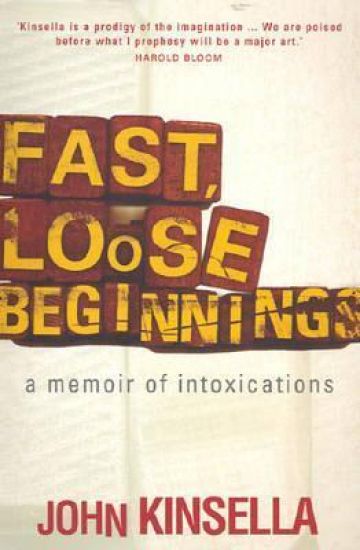
Fast, Loose Beginnings is a racy anecdotal account of John Kinsella's meetings with the great and shambolic men and women of poetry. Since his late teens, Kinsella has been rubbing shoulders and working with a host of acclaimed poets. He weaves his impressions of them personally, with a lively and incisive commentary on their place within the broader literary culture. As both a highly respected poet and critic, he brings clarity and biting irreverence to his subject, making this encounter with literature vividly alive. Here, in good company, are Harold Bloom, John Ashbery, Peter Porter, Frieda Hughes, Les Murray, Wole Soyinka and Jacques Derrida.
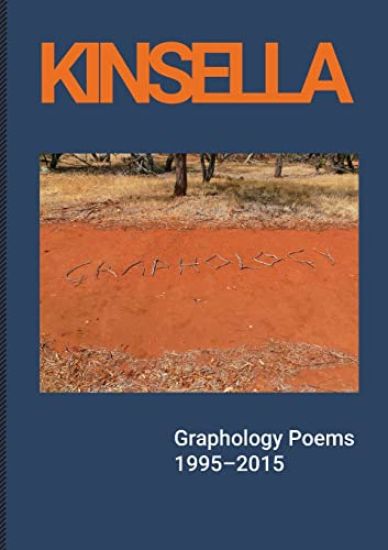
The Graphology Poems are a 'life-long' poetry cycle of semiotics begun over a quarter of a century ago. This multiplicious and diverging cycle and sub-cycles of poems uses handwriting, textuality, orthography, and considerations of prosody, to consider issues of human rights, justice, ethics, politics, environment, animal rights, questions around the purpose of art, music, writing and creativity, forms of activism and the nature of knowledge. This is the second, expanded edition of Graphology Poems 1995-2015, and includes all the poems in the original Five Islands Press three-volume edition, plus some of the uncollected Graphology poems of the same period, a reproduction of the holograph Runes notebook, and a lengthy updated foreword by the author, an introduction by Nicholas Birns and 'outroduction' and interview with the author by Jonathan Dunk, edited into a single volume by Gareth Jenkins.
A stunning new collection by one of Australia's most celebrated poets. Inspired by the natural world, Kinsella's poems consider the protection and valuing of human and animal life, and the environment itself. Reflecting the constant flux of the global and the local, these poems consider the plight of refugees, the degradation of the environment, militarisation and violence. Contemplating the failure of public memory to memorialise, Kinsella reflects on the unresolved issues of history such as Nazism and colonisation. Influenced by William Blake's poetry and art, in particular his uncompleted series of illustrations to Dante's Divine Comedy, Kinsella evokes a strong relationship between the visual and textual. On the Outskirts is a work of strangeness and alienation, and one in which a light of redemption is sought - a rehabilitation in the human character and the healing power of nature.
John Kinsella explores a contemporary poetics and pedagogy as it emerges from his reflections on his own writing and teaching, and on the work of other poets, particularly contemporary writers with which he feels some affinity. At the heart of the book is Kinsella's attempt to elaborate his vision of a species of pastoral that is adequate to a globalised world (Kinsella himself writes and teaches in the USA, the UK and his native Australia), and an environmentally and politically just poetry. The book has an important autobiographical element, as Kinsella explores the pulse of his poetic imagination through significant moments and passages of his life. Whilst theoretically informed, the book is accessibly written and highly engaging.
In the Shade of the Shady Tree is a collection of stories set in the Western Australian wheatbelt, a vast grain-growing area that ranges across the southwestern end of the immense Australian interior. Kinsella's stories offer glimpses into the lives of the people who call this area home, as the reader journeys from just north of the town of Geraldton to the far eastern and southern shires of the region. Cast against a backdrop of indigenous dispossession, settler migration, and the destructive impact of land-clearing and monocultural farming methods, the stories offer moments of connection with the inhabitants, ranging from the matter-of-fact to the bizarre and inexplicable. Something about the nature of the place wrestles with all human interactions and affects their outcomes. The land itself is a dominant character, with dust, gnarled scrubland, and the need for rain underpinning human endeavor. Inflected with both contemporary ideas of short fiction and the "everyman" tradition of Australian storytelling, this collection will introduce many readers to a new landscape and unforgettable characters.
In this forceful call to action, acclaimed poet John Kinsella explores deeply felt and ever more insistent ecological concerns in his signature lyrical and experimental activist poetry. Here Kinsella turns his restless, unblinking gaze to a world where art, music, and philosophy--the highest creations of the human imagination and empathy--suddenly find themselves in a time and place that not only deny their importance, but can seem to have no use for them at all. In answer, Insomnia offers poems of self-accusation and angry protest, meditations on the nature of loss and trauma, and full-throated celebrations of the natural world.Kinsella attempts to find a still point from which we might reconfigure our perspective and examine the paradoxes of our contemporary experience. Ranging sleeplessly from Jam Tree Gully, Western Australia, to the coast of West Cork, Ireland, and haunted by historical and literary figures from Dante to Emily Bront , Insomnia may be Kinsella's most varied, concentrated, and powerful collection to date.
Drowning in Wheat collects the best of three decades of John Kinsella's astonishing poetry in one volume. Kinsella is universally acknowledged as one of the greatest living Australian poets, and arguably the most important 'eco-poet' of the age; however, this collection also reveals a writer of unexpected and remarkable versatility, and one fluent in an almost bewildering range of forms, registers and voices. Despite its great thematic range, Kinsella's overarching project emerges all the more clearly: Drowning in Wheat is a clarion call and a call to order, a plea to listen to the earth - and to understand our own place within it while we still can. It is also an ideal introduction to one of the essential poets of the age.
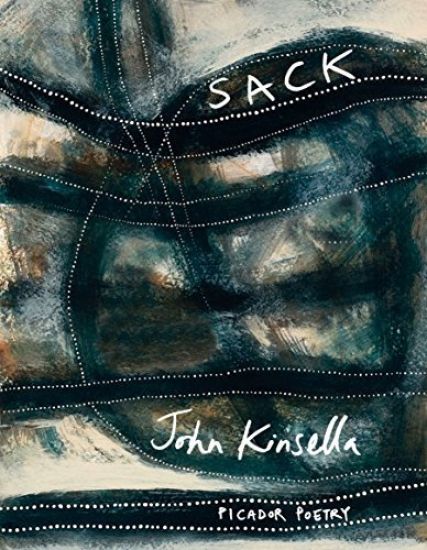
In John Kinsella's new collection, 'Sack' not only refers not only to the shocking title poem, where a tied, writhing sack is seen flung from a car into gully - but also to the sacking and exploitation of the landscape and those who labour on it. Kinsella draws vividly on 'childhood memories' - but reveals them for the hard truths they are, by subtracting the cushioning effects of nostalgia. Kinsella shows how childhood prefigures our adult experience, and how its residues (here, those also take the literal form of asbestos and radiation) influence and shape our futures. Elsewhere, Kinsella resurrects an old form to do new work: the 'penillion' is an old Welsh stanza whose concision and insistent musicality provide the ideal means to encapsulate and concentrate Kinsella's vision of the land, animal life, and our sometimes fraught relationship with both. These short poems reveal astonishing and unsuspected correlations between music and form, place and language - and will come as a delightful surprise to those who know Kinsella primarily as a freewheeling long-form poet. But throughout Sack, the articulate urgency of Kinsella's lyric builds to nothing so much as a call to action, and underlines John Kinsella's reputation as one of the greatest Australian poets of the last fifty years.
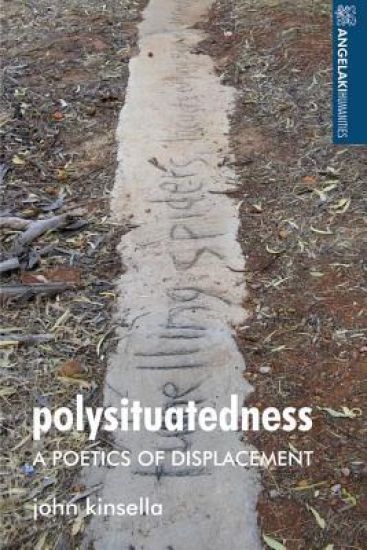
This book is concerned with the complexities of defining 'place', of observing and 'seeing' place, and how we might write a poetics of place. From Kathy Acker to indigenous Australian poet Jack Davis, the book touches on other writers and theorists, but in essence is a hands-on 'praxis' book of poetic practice. The work extends John Kinsella's theory of 'international regionalism' and posits new ways of reading the relationship between place and individual, between individual and the natural environment, and how place occupies the person as much as the person occupies place. It provides alternative readings of writers through place and space, especially Australian writers, but also non-Australian. Further, close consideration is given to being of 'famine-migrant' Irish heritage and the complexities of 'returning'. A close-up examination of 'belonging' and exclusion is made on a day-to-day basis. The book offers an approach to creating poems and literary texts constituted by experiencing multiple places, developing a model of polyvalent belonging known as 'polysituatedness'. It works as a companion volume to Kinsella's earlier Manchester University Press critical work, Disclosed Poetics: Beyond Landscape to Lyricism.
This book is concerned with the complexities of defining 'place', of observing and 'seeing' place, and how we might write a poetics of place. From Kathy Acker to indigenous Australian poet Jack Davis, the book touches on other writers and theorists, but in essence is a hands-on 'praxis' book of poetic practice. The work extends John Kinsella's theory of 'international regionalism' and posits new ways of reading the relationship between place and individual, between individual and the natural environment, and how place occupies the person as much as the person occupies place. It provides alternative readings of writers through place and space, especially Australian writers, but also non-Australian. Further, close consideration is given to being of 'famine-migrant' Irish heritage and the complexities of 'returning'. A close-up examination of 'belonging' and exclusion is made on a day-to-day basis. The book offers an approach to creating poems and literary texts constituted by experiencing multiple places, developing a model of polyvalent belonging known as 'polysituatedness'. It works as a companion volume to Kinsella's earlier Manchester University Press critical work, Disclosed Poetics: Beyond Landscape to Lyricism.
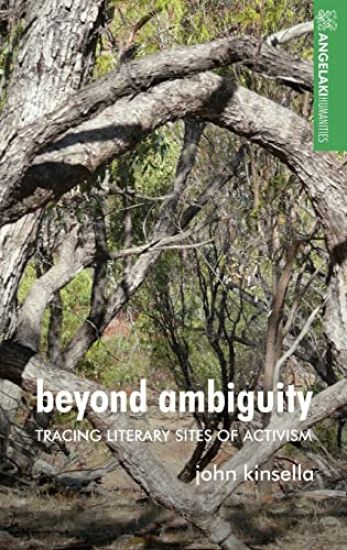
This volume completes John Kinsella’s trilogy of critical activist poetics, begun two decades ago. It challenges familiar topoi and normatives of poetic activity as it pertains to environmental, humanitarian and textual activism in ‘the world-at-large’: it shows how ambiguity can be a generative force when it works from a basis of non-ambiguity of purpose. The book shows how there is a clear unambiguous position to have regarding issues of justice, but that from that confirmed point ambiguity can be an intense and useful activist tool. The book is an essential resource for those wishing to study Kinsella, and for those with an interest in twentieth and twenty-first-century poetry and poetics, and it will stand as an inspiring proclamation of the author's faith in the transformative power of poetry and literary activity as a force for good in the world.