Kirjahaku
Etsi kirjoja tekijän nimen, kirjan nimen tai ISBN:n perusteella.
1000 tulosta hakusanalla John L. Casti
The modern industrialized world is a complex system on a scale never before witnessed in the history of humankind. Technologically dependent, globally interconnected, it offers seemingly limitless conveniences, choices, and opportunities. Yet this same modern civilization is as unstable as a house of cards, fear complexity scientists like John L. Casti. All it would take to downsize our way of life-to send us crashing back to the 19th century way of life-is a nudge from what Casti calls an X-Event, an unpredictable occurrence that with extreme, even dire, consequences. When an X-Event strikes - and scientists believe it will-finance, communication, defense, and travel will stop dead in their tracks. The flow of food, electricity, medicine, and clean water will be disrupted for months, if not years. What will you do? A renowned systems theorist, Casti shows how our world has become impossibly complicated, relying on ever more advanced technology that is developing at an exponential rate. Yet it is a fact of mathematical life that higher and higher levels of complexity lead to a system that's ever more fragile and susceptible to sudden, spectacular collapse. Fascinating and chilling, "X-Events" provides a provocative tour of the catastrophic outlier scenarios that could quickly send us crashing back to the pre-industrial age: global financial black swans; a world-wide crash of the Internet that would halt all communication; the end of oil; nuclear winter; nano-plagues; robot uprisings; electromagnetic-pulse bombs; pandemic viruses; and more. You won't look at the world the same way again after reading this book.
By the author of The Cambridge Quintet, John L. Casti's new book continues the tradition of combining science fact with just the right dose of fiction. Part novel, part science — wholly informative and entertaining. In the fall of 1933 the newly founded Institute for Advanced Study in Princeton, New Jersey, welcomed its first faculty member, Albert Einstein. With this superstar on the roster, the Institute was able to attract many more of the greatest scholars, scientists, and poets from around the world. It was to be an intellectual haven, a place where the most brilliant minds on the planet, sheltered from the outside world's cares and calamities, could study and collaborate and devote their time to the pure and exclusive pursuit of knowledge. For many of them, it was the "one, true, platonic heaven." Over the years, key figures at the Institute began to question the limits to what science could tell us about the world, pondering the universal secrets it might unlock. Could science be the ultimate source of truth; or are there intrinsic limits, built into the very fabric of the universe, to what we can learn? In the late 1940's and early 1950's, this important question was being asked and pondered upon by some of the Institute's deepest thinkers. Enter the dramatis personae to illuminate the science and the philosophy of the time. Mathematical logician Kurt Godel was the unacknowledged Grant Exalted Ruler of this platonic estate — but he was a ruler without a scepter as he awaited the inexplicably indefinite postponement of his promotion to full, tenured professor. Also in residence was his colleague, the Hungarian-American polymath, John van Neumann, developer of game theory, the axiomatic foundations of quantum mechanics, and the digital computer — stymied by the Institute's refusal to sanction his bold proposal to actually build a computer. One of Godel's closest friends figures large in this story: Albert Einstein, by common consensus the greatest physicist the 20th century had ever known. And, of course, the director the Institute, J. Robert Oppenheimer, the father of the atomic bomb, must by necessity be key to any story that focuses in on this time and place. Author Casti elegantly sets the stage and then masterfully directs this impressive cast of characters—with able assists by many "minor-character" icons like T. S. Eliot, Wolfgang Pauli, Freeman Dyson, and David Bohm, to tell a story of science, history, and ideas. As we watch events unfold (some of which are documented fact while others are creatively imagined fiction), we are witness to the discussions and deliberations of this august group… privy to wide-ranging conversations on thinking machines, quantum logic, biology as physics, weather forecasting, the structure of economic systems, the distinction between mathematics and natural science, the structure of the universe, and the powers of the human mind — all centered around the question of the limits to scientific knowledge. Imaginatively conceived and artfully executed, The One True Platonic Heaven is an accessible and intriguing presentation of some of the deepest scientific and philosophical ideas of the 20th century.Table of ContentsFront MatterPrologueChapter One: A Walk Down Mercer StreetChapter Two: Teatime at the IASChapter Three: Goodtime JohnnyChapter Four: Gödel at the BlackboardChapter Five: The BoardroomChapter Six: Late-Night Thoughts of the Greatest PhysicistChapter Seven: An Evening at Olden ManorChapter Eight: The VerdictsEpilogue
In this narrative tour de force, gifted scientist and author John L. Casti contemplates an imaginary evening of intellectual inquiry--a sort of "My Dinner with" not Andre, but five of the most brilliant thinkers of the twentieth century.Imagine, if you will, one stormy summer evening in 1949, as novelist and scientist C. P. Snow, Britain's distinguished wartime science advisor and author of The Two Cultures, invites four singular guests to a sumptuous seven-course dinner at his alma mater, Christ's College, Cambridge, to discuss one of the emerging scientific issues of the day: Can we build a machine that could duplicate human cognitive processes? The distinguished guest list for Snow's dinner consists of physicist Erwin Schrodinger, inventor of wave mechanics; Ludwig Wittgenstein, the famous twentieth-century philosopher of language, who posited two completely contradictory theories of human thought in his lifetime; population geneticist/science popularizer J.B.S. Haldane; and Alan Turing, the mathematician/codebreaker who formulated the computing scheme that foreshadowed the logical structure of all modern computers.Capturing not only their unique personalities but also their particular stands on this fascinating issue, Casti dramatically shows what each of these great men might have argued about artificial intelligence, had they actually gathered for dinner that midsummer evening.With Snow acting as referee, a lively intellectual debate unfolds. Philosopher Wittgenstein argues that in order to become conscious, a machine would have to have life experiences similar to those of human beings--such as pain, joy, grief, or pleasure. Biologist Haldane offers the idea that mind is a separate entity from matter, so that regardless of how sophisticated the machine, only flesh can bond with that mysterious force called intelligence. Both physicist Schrodinger and, of course, computer pioneer Turing maintain that it is not the substance, but rather the organization of that substance, that makes a mind conscious.With great verve and skill, Casti recreates a unique and thrilling moment of time in the grand history of scientific ideas. Even readers who have already formed an opinion on artificial intelligence will be forced to reopen their minds on the subject upon reading this absorbing narrative.After almost four decades, the solutions to the epic scientific and philosophical problems posed over this meal in C. P. Snow's old rooms at Christ's College remains tantalizingly just out of reach, making this adventure into scientific speculation as valid today as it was in 1949.
How can we predict and explain the phenomena of nature? What are the limits to this knowledge process? The central issues of prediction, explanation, and mathematical modeling, which underlie all scientific activity, were the focus of a conference organized by the Swedish Council for the Planning and Coordination of Research, held at the Abisko Research Station in May of 1989. At this forum, a select group of internationally known scientists in physics, chemistry, biology, economics, sociology and mathematics discussed and debated the ways in which prediction and explanation interact with mathematical modeling in their respective areas of expertise. Beyond Belief is the result of this forum, consisting of 11 chapters written specifically for this volume. The multiple themes of randomness, uncertainty, prediction and explanation are presented using (as vehicles) several topical areas from modern science, such as morphogenetic fields, Boscovich covariance, and atmospheric variability. This multidisciplinary examination of the foundational issues of modern scientific thought and methodology will offer stimulating reading for a very broad scientific audience.
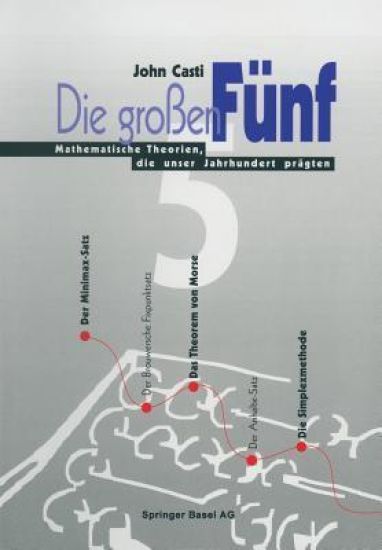
Der Lebensnerv aller intellektuellen und wissenschaftlichen Bestrebungen ist der ständige Zustrom wichtiger, ungelöster, aber im Prinzip lösbarer Probleme. Die projektive Geometrie zum Beispiel war früher eine blühende Ecke im mathemati schen Garten. Heute jedoch ist sie nicht mehr modern - einfach weil die Quelle wichtiger Probleme vor etwa hundert Jahren versiegte. Für die heute so populäre Chaostheorie dagegen interessierte sich vor einigen Jahrzehnten nur eine Handvoll weitsichtiger Abenteurer und Kenner des mathematisch Geheimnisvollen, bevor in jüngerer Zeit die Arbeiten von Lorenz, Smale, Feigenbaum, Yorke, May, Rössler und vielen anderen eine Fülle von Problemen aufwarfen, mit denen sich heutzutage die Chaologen, ihre Studenten und ihre Mitläufer beschäftigen. Diese Beispiele illustrieren deutlich George P6lyas wohlbekannte These, die Mathematik sei die Kunst des Problemlösens. Aber im Gegensatz zu Wissenschaftlern aus anderen Disziplinen benutzen die Mathematiker einen speziellen Ausdruck für die Lösung ihrer Probleme: Bei ihnen heißt er Theorem. Die Mathematik handelt von Theoremen: wie man auf sie kommt, wie man sie beweist, wie man sie verallgemeinert, wie man sie anwendet und wie man sie versteht. Die großen Fünfmöchte dem Leser die Mathematik näherbringen, indem es fünf der wichtigsten Errungenschaften der Mathematik unseres Jahrhunderts vorstellt. In diesem Buch werden Sie einige der größten Probleme, die die Mathe matik gelöst hat, kennenlernen. Ich möchte Ihnen zeigen, wie sie gelöst wurden, und vor allem, warum die Lösungen von Bedeutung sind - und dies nicht nur für Mathematiker. Die großen Fünfwilllehrreich und unterhaltsam sein; das Buch will Mathematik anhand von Beispielen und nicht von Lehrbuchsätzen vermitteln.
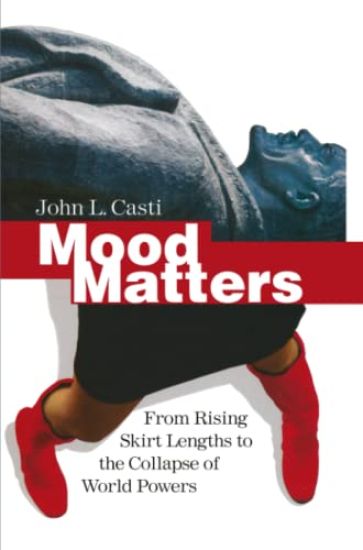
"Mood Matters" makes the radical assertion that all social events ranging from fashions in music and art to the rise and fall of civilizations are biased by the attitudes a society holds toward the future. When the "social mood" is positive and people look forward to the future, events of an entirely different character tend to occur than when society is pessimistic. The book presents many examples from every walk of life in support of this argument. In addition, methods are given to actually measure the social mood and to project it into the future in order to forecast what’s likely or not over varying periods of time. Casti's writing is a pleasure to read and its contents an eye-opener."They [the chapters] tell an engrossing story, and the mystery heightens as it goes. . . . it's chatty and knowing." Greg Benford, Physicist and science-fiction writer, author of "Timescape" and "Deep Time""I am struck by how thought-provoking it all is. I am sure that your book will draw a lot of attention" Tor Norretranders, Science writer, author of "The Generous Man" and "The User Illusion".
Der Lebensnerv aller intellektuellen und wissenschaftlichen Bestrebungen ist der ständige Zustrom wichtiger, ungelöster, aber im Prinzip lösbarer Probleme. Die projektive Geometrie zum Beispiel war früher eine blühende Ecke im mathemati schen Garten. Heute jedoch ist sie nicht mehr modern - einfach weil die Quelle wichtiger Probleme vor etwa hundert Jahren versiegte. Für die heute so populäre Chaostheorie dagegen interessierte sich vor einigen Jahrzehnten nur eine Handvoll weitsichtiger Abenteurer und Kenner des mathematisch Geheimnisvollen, bevor in jüngerer Zeit die Arbeiten von Lorenz, Smale, Feigenbaum, Yorke, May, Rössler und vielen anderen eine Fülle von Problemen aufwarfen, mit denen sich heutzutage die Chaologen, ihre Studenten und ihre Mitläufer beschäftigen. Diese Beispiele illustrieren deutlich George P6lyas wohlbekannte These, die Mathematik sei die Kunst des Problemlösens. Aber im Gegensatz zu Wissenschaftlern aus anderen Disziplinen benutzen die Mathematiker einen speziellen Ausdruck für die Lösung ihrer Probleme: Bei ihnen heißt er Theorem. Die Mathematik handelt von Theoremen: wie man auf sie kommt, wie man sie beweist, wie man sie verallgemeinert, wie man sie anwendet und wie man sie versteht. Die großen Fünfmöchte dem Leser die Mathematik näherbringen, indem es fünf der wichtigsten Errungenschaften der Mathematik unseres Jahrhunderts vorstellt. In diesem Buch werden Sie einige der größten Probleme, die die Mathe matik gelöst hat, kennenlernen. Ich möchte Ihnen zeigen, wie sie gelöst wurden, und vor allem, warum die Lösungen von Bedeutung sind - und dies nicht nur für Mathematiker. Die großen Fünfwilllehrreich und unterhaltsam sein; das Buch will Mathematik anhand von Beispielen und nicht von Lehrbuchsätzen vermitteln.
L'exploitation minière à l'époque des coronavirus :
John Alexander León Castillo
Editions Notre Savoir
2022
nidottu
Endemic Goiter
John Bruton Stanbury; Gordon L Brownell; Douglas S Riggs; Juan Itioz; Hector Perinetti; Enrique B Del Castillo
Harvard University Press
1954
sidottu
With Great Power
Ron Athey; Paul Castiglia; Michael Ciccolini; Kelly Edwards; John A. Gleckler; Joshua T. Hall; Dan Johnson; Brian K. Morris; Zac Pensol; Brian Reaves; Tyrone Tony Reed Jr.; Christopher Brockow; Fred A. Hartley III; Rick L. Phillips
Lulu.com
2014
sidottu
This book has a series of fictional short stories as it follows one particular issue of Amazing Fantasy #15, that has the very first story to star the Amazing Spider-Man, from the time it is purchased in 1962 to the present. It shows how the story influenced the people that come in contact with it and the adventures they have because of its influence. A group of celebrated writers and up and coming authors have joined together to share those stories in this book. Now follow this classic comic book on its journey from one person to another as it makes its trip through time.
John L. Lewis (1880-1969), who ruled the United Mine Workers for four decades beginning in 1919, defied presidents, challenged Congress, and kept American political life in an uproar. Drawing upon previously untapped resources in the UMW archives and upon oral histories by major figures of the 1930s and 1940s, the authors have created a remarkable portrait of this 'self-made man' and his times.
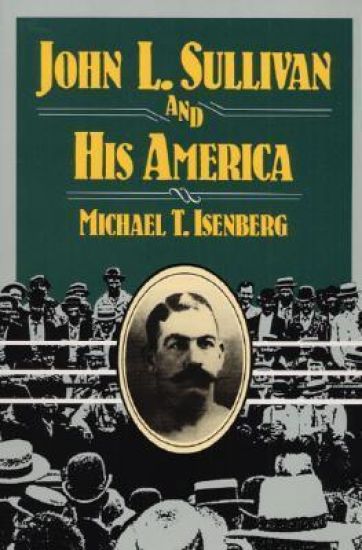
The "Great John L." reigned supreme as world heavyweight champion from his victory over Paddy Ryan in 1882 until James J. Corbett knocked him out in 1892. A drunkard, a wastrel, an adulterer, a wife beater, and a bully, Sullivan still became American's first national sports hero and represented the hopes and aspirations of millions of people. Michael Isenberg traces Sullivan's eventful life from his humble beginnings in Boston to the height of his immense popularity. The boxer moved as easily in the world of reputable workingmen as he did in the shadowlands on the margins of the sport while his success played a major role in transforming boxing into a profitable and ultimately legitimate business. Tapping previously unexplored archival material--including the notorious National Police Gazette and the other sporting papers of the day--Isenberg tells us why presidents, princes, and turn-of-the-century Americans accepted Sullivan as a hero, even as others vilified him for his drunken and belligerent behavior.
The Journal Of Lieut. John L. Hardenbergh Of The Second New York Continental Regiment, In General Sullivan's Campaign Against The Western Indians
John L. Hardenbergh; John S. Clark; Charles Hawley
Kessinger Pub
2007
pokkari
""Detailed"--Press-Citizen (Iowa City). From his first match in the late 1870s through his final fight in 1905, this biography contains a thoroughly researched, detailed accounting of John L. Sullivan's boxing career. With special attention to the 1880s it follows Sullivan's skill development and discusses his opponents in detail, providing various viewpoints of a single event"--Provided by publisher.