Kirjojen hintavertailu. Mukana 11 238 995 kirjaa ja 12 kauppaa.

Kirjahaku

Etsi kirjoja tekijän nimen, kirjan nimen tai ISBN:n perusteella.

1000 tulosta hakusanalla John Lane

Lane's Library.

Lane's Library.

John Lane

British Library, Historical Print Editions
2011
pokkari
Title: Lane's Library.Publisher: British Library, Historical Print EditionsThe British Library is the national library of the United Kingdom. It is one of the world's largest research libraries holding over 150 million items in all known languages and formats: books, journals, newspapers, sound recordings, patents, maps, stamps, prints and much more. Its collections include around 14 million books, along with substantial additional collections of manuscripts and historical items dating back as far as 300 BC.The FICTION & PROSE LITERATURE collection includes books from the British Library digitised by Microsoft. The collection provides readers with a perspective of the world from some of the 18th and 19th century's most talented writers. Written for a range of audiences, these works are a treasure for any curious reader looking to see the world through the eyes of ages past. Beyond the main body of works the collection also includes song-books, comedy, and works of satire. ++++The below data was compiled from various identification fields in the bibliographic record of this title. This data is provided as an additional tool in helping to insure edition identification: ++++ British Library Lane, John; 1896, etc. 8 . 012627.i.
Waist Deep in Black Water

Waist Deep in Black Water

John Lane

University of Georgia Press
2004
pokkari
John Lane has scaled a granite dome in the Suriname rain forest and waded past cottonmouths in the heart of a Florida cypress swamp. He has shadowed crocodiles in a Yucatán mangrove thicket and paddled the rapids of North Carolina's Tuckaseegee River in search of a drowned kayaker. Waist Deep in Black Water offers a collection of Lane's own writings that range from wilderness exploration, to conservation issues, to explorations of family history in Spartanburg, South Carolina.Lane's trek to the Medicine Wheel National Historic Landmark in Wyoming becomes an occasion to draw connections between religion, sexuality, and mountain lore. A hike into Kentucky's Red River Gorge prompts a meditation on the words and spirit of Wendell Berry, who helped prevent the gorge from being dammed. Some of Lane's writings are set closer to home, where the South Carolina hills meet the Blue Ridge. In "Something Rare as a Dwarf-Flowered Heartleaf," Lane recounts his campaign to stop the development of a woodland area within Spartanburg's city limits. Family issues also surface, as in "Confluence: Pacolet River." Here Lane kayaks through country where his family has lived for generations as he reckons the distances between himself and his farming, millworking forebears.Something is always at stake wherever Lane takes us: a stand of old-growth trees, a primate population, a friendship, a soul. Lane bestows loving attention on the places and people he visits in this collection and, in the process, goes beyond the traditional concerns of nature and travel writing.
Chattooga

Chattooga

John Lane

University of Georgia Press
2005
pokkari
Before the novel and the film Deliverance appeared in the early 1970s, any outsiders one met along the Chattooga River were likely serious canoeists or anglers. In later years, untold numbers and kinds of people have felt the draw of the river’s torrents, which pour down the Appalachians along the Georgia-South Carolina border. Because of Deliverance the Chattooga looms enigmatically in our shared imagination, as iconic as Twain’s Mississippi—or maybe Conrad’s Congo.This is John Lane’s search for the real Chattooga—for the truths that reside somewhere in the river’s rapids, along its shores, or in its travelers’ hearts. Lane balances the dark, indifferent mythical river of Deliverance against the Chattooga known to locals and to the outdoors enthusiasts who first mastered its treacherous vortices and hydraulics. Starting at its headwaters, Lane leads us down the river and through its complex history to its current status as a National Wild and Scenic River. Along the way he stops for talks with conservation activists, seventh-generation residents, locals who played parts in the movie, day visitors, and others. Lane weaves into each encounter an abundance of details drawn from his perceptive readings and viewings of Deliverance and his wide-ranging knowledge of the Chattooga watershed. At the end of his run, Lane leaves us still fully possessed by the Chattooga’s mystery, yet better informed about its place in his world and ours.
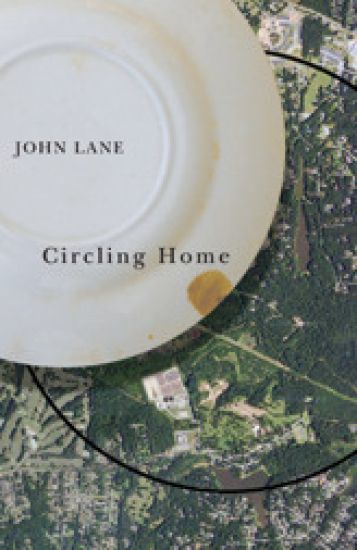
Circling Home

Circling Home

John Lane

University of Georgia Press
2009
pokkari
After many years of limited commitments to people or places, writer and naturalist John Lane married in his late forties and settled down in his hometown of Spartanburg, in the South Carolina piedmont. He, his wife, and two stepsons built a sustainable home in the woods near Lawson’s Fork Creek. Soon after settling in, Lane pinpointed his location on a topographical map. Centering an old, chipped saucer over his home, he traced a circle one mile in radius and set out to explore the area.What follows from that simple act is a chronicle of Lane’s deepening knowledge of the place where he’ll likely finish out his life. An accomplished hiker and paddler, Lane discovers, within a mile of his home, a variety of coexistent landscapes—ancient and modern, natural and manmade. There is, of course, the creek with its granite shoals, floodplain, and surrounding woods. The circle also encompasses an eight-thousand-year-old cache of Native American artifacts, graves of a dozen British soldiers killed in 1780, an eighteenth-century ironworks site, remnants of two cotton plantations, a hundred-year-old country club, a sewer plant, and a smattering of mid- to late twentieth-century subdivisions.Lane’s explorations intensify his bonds to family, friends, and colleagues as they sharpen his sense of place. By looking more deeply at what lies close to home, both the ordinary and the remarkable, Lane shows us how whole new worlds can open up.
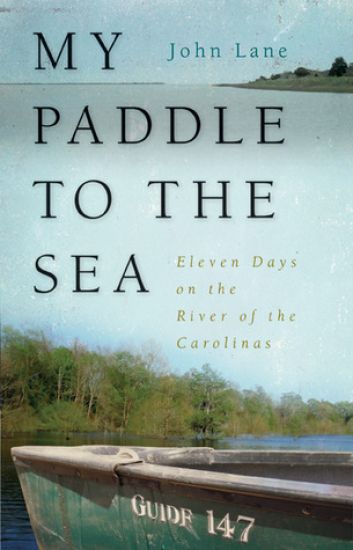
My Paddle to the Sea

My Paddle to the Sea

John Lane

University of Georgia Press
2012
pokkari
Three months after a family vacation in Costa Rica ends in tragedy when two fellow rafters die on the flooded Rio Reventazón, John Lane sets out with friends from his own backyard in upcountry South Carolina to calm his nerves and to paddle to the sea.Like Huck Finn, Lane sees a river journey as a portal to change, but unlike Twain’s character, Lane isn’t escaping. He’s getting intimate with the river that flows right past his home in the Spartanburg suburbs. Lane’s three­hundred-mile float trip takes him down the Broad River and into Lake Marion before continuing down the Santee River. Along the way Lane recounts local history and spars with streamside literary presences such as Mind of the South author W. J. Cash; Henry Savage, author of the Rivers of America Series volume on the Santee; novelist and Pulitzer Prize–winner Julia Peterkin; early explorer John Lawson; and poet and outdoor writer Archibald Rutledge. Lane ponders the sites of old cotton mills; abandoned locks, canals, and bridges; ghost towns fallen into decay a century before; Indian mounds; American Revolutionary and Civil War battle sites; nuclear power plants; and boat landings. Along the way he encounters a cast of characters Twain himself would envy—perplexed fishermen, catfish clean­ers, river rats, and a trio of drug-addled drifters on a lonely boat dock a day’s paddle from the sea.By the time Lane and his companions finally approach the ocean about forty miles north of Charleston they have to fight the tide and set a furious pace. Through it all, paddle stroke by paddle stroke, Lane is reminded why life and rivers have always been wedded together.
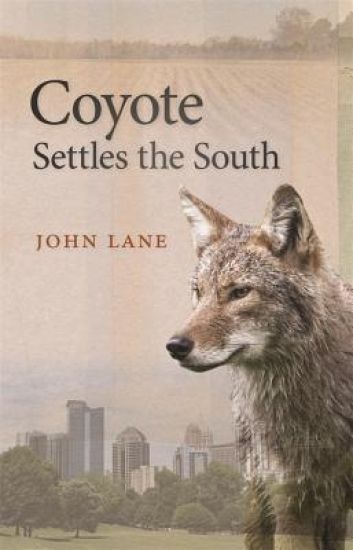
Coyote Settles the South

Coyote Settles the South

John Lane

University of Georgia Press
2016
sidottu
One night, poet and environmental writer John Lane tuned in to a sound from behind his house that he had never heard before: the nearby eerie and captivating howls of coyotes. Since this was Spartanburg, South Carolina, and not Missoula, Montana, Lane set out to discover all he could about his new and unexpected neighbors.Coyote Settles the South is the story of his journey through the Southeast, as he visits coyote territories: swamps, nature preserves, old farm fields, suburbs, a tannery, and even city streets. On his travels he meets, interrogates, and observes those who interact with the animals—trappers, wildlife researchers, hunters, rattled pet owners, and even one devoted coyote hugger. Along the way, he encounters sensible, yet sometimes perplexing, insight concerning the migration into the Southeast of the American coyote, an animal that, in the end, surprises him with its intelligence, resilience, and amazing adaptability.
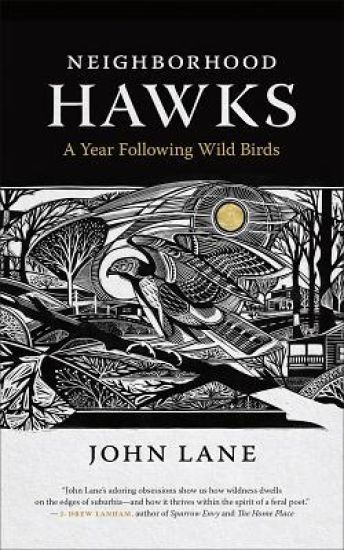
Neighborhood Hawks

Neighborhood Hawks

John Lane

University of Georgia Press
2019
pokkari
After reading J. A. Baker’s fifty-year-old British nature classic The Peregrine, John Lane found himself an ocean away, stalking resident red-shouldered hawks in his neighborhood in Spartanburg, South Carolina. What he observed was very different from what Baker deduced from a decade of chronicling the lives of those brooding migratory raptors. Baker imagined a species on the brink of extinction because of the use of agricultural chemicals on European farms. A half century later in America, Lane found the red-shouldered hawks to be a stable Anthropocene species adapted to life along the waterways of a suburban nation.Lane watched the hawks for a full year and along the way made a pledge to himself: Anytime he heard or saw the noisy, nonmigratory hawks in his neighborhood, he would drop whatever he was doing and follow them on foot, on bike, or in his truck. The almanac that results from this discipline considers many questions any practiced amateur naturalist would ask, such as where and when will the hawks nest, what do they eat, what are their greatest threats, and what exactly are they communicating through those constant multinoted cries? Lane’s year following the hawks also led him to try to answer what would become the most complex question of all: why his heart, like Baker’s, goes out so fully to wild things.
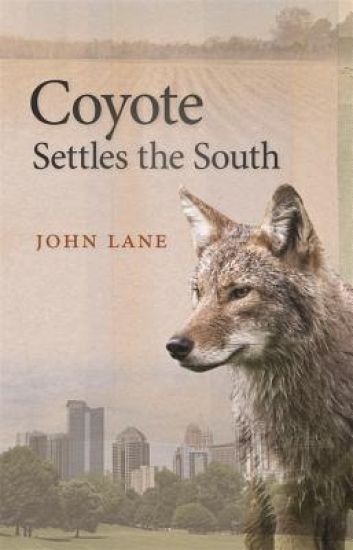
Coyote Settles the South

Coyote Settles the South

John Lane

University of Georgia Press
2019
pokkari
One night, poet and environmental writer John Lane tuned in to a sound from behind his house that he had never heard before: the nearby eerie and captivating howls of coyotes. Since this was Spartanburg, South Carolina, and not Missoula, Montana, Lane set out to discover all he could about his new and unexpected neighbors.Coyote Settles the South is the story of his journey through the Southeast, as he visits coyote territories: swamps, nature preserves, old farm fields, suburbs, a tannery, and even city streets. On his travels he meets, interrogates, and observes those who interact with the animals—trappers, wildlife researchers, hunters, rattled pet owners, and even one devoted coyote hugger. Along the way, he encounters sensible, yet sometimes perplexing, insight concerning the migration into the Southeast of the American coyote, an animal that, in the end, surprises him with its intelligence, resilience, and amazing adaptability.
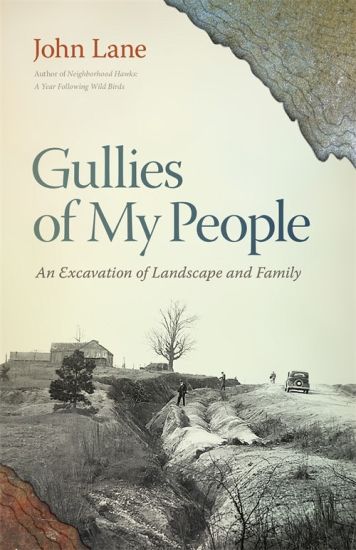
Gullies of My People

Gullies of My People

John Lane

UNIVERSITY OF GEORGIA PRESS
2023
pokkari
While scouting sites for geology field trips, poet and naturalist John Lane encountered deep gullies created between the Civil War and the 1930s contributed to by his mother’s tenant farming family and their rural neighbors in Piedmont South Carolina. This brush with the poor farming practices of the past leads Lane into an exploration of his own family’s complicated history and of the larger environmental forces that have shaped the region where he chooses to live. With his sister as guide, Lane descends into the gully of his own childhood to uncover memories of a loving but alcoholic mother and a suicidal father. Back and forth, the narrative progresses from depictions of the land—particularly the overgrown and neglected places that hold stories and mysteries of the region—to Lane’s ever-deepening search.He wonders how he, a college professor and husband settled into middle-class life, has emerged from the chaos of his family’s past. Along the way, we meet heroic Depression-era geologists, fascinating colleagues, and troubled ancestors. Lane’s extraordinary ability to weave personal history together with explorations of the natural world will remind readers of the works of Loren Eiseley and Terry Tempest Williams.
Anthropocene Blues

Anthropocene Blues

John Lane

Mercer University Press
2017
nidottu
In the story of the earth, geologists tell us that around 12,000 years ago the planet shifted from the Pleistocene to the Holocene. There probably were poets to sing about that change, but of what they sang, we have no records. Even earlier, paintings on cave walls point toward an artistic response from our upstart species. These early artists painted the Pleistocene’s last great ice age herds thundering past. Now John Lane’s traveling geologist sings a dawning epoch’s blues. The Anthropocene is upon us, and his poems show how humans believe they have become “the planet’s boss, the big chief, the emperor of air, diesel fuel,/bow thrusters, and tax shelters…” And if you don’t believe the times are changing, consider these poems-full of dead-on-the-road groundhogs and radial tires, carbon-spewing adventure travel, masturbating parrots, and mounds and mounds of garbage-as twenty-first-century objective correlatives John Keats might recognize. But all is not collapse out there. The puny human voice William Faulkner praised in his Nobel acceptance speech sings amidst the 6th Great Extinction. These lyrics and narratives deposit the pleasures of contemporary poetry in the carbon record.
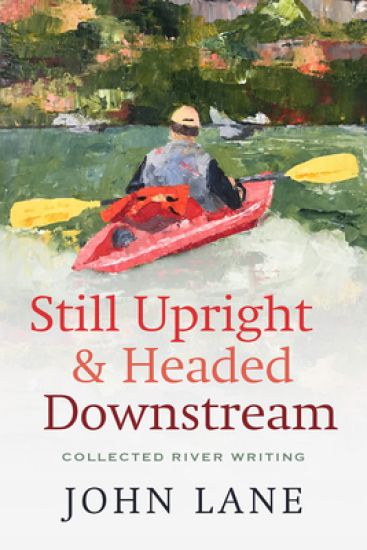
Still Upright & Headed Downstream

Still Upright & Headed Downstream

John Lane

MERCER UNIVERSITY PRESS
2022
nidottu
When John Lane was a young poet, a magazine editor asked him to leave the comfortable eddy of verse and contemplate in paragraphs why he was a kayaker. The resulting essay, ""Why I Love Falling Water,"" began what would become a thirty-five-year stream of published poetry and prose about rivers and river people. Gathered here after decades, scattered individually throughout a dozen published books and many magazines, newspapers, and journals, are essays and poems about paddling and floating rivers all over the Southeast and beyond. Settings range from the Nantahala in North Carolina to the Tiburon in Mexico. This collection encompasses all John Lane's river writing outside his two book-length narratives Chattooga: Descending into the Deliverance River and My Paddle to the Sea: Eleven Days in the River of the Carolinas. Put in anywhere among this wealth of literary reflection and insight and you won't be disappointed.
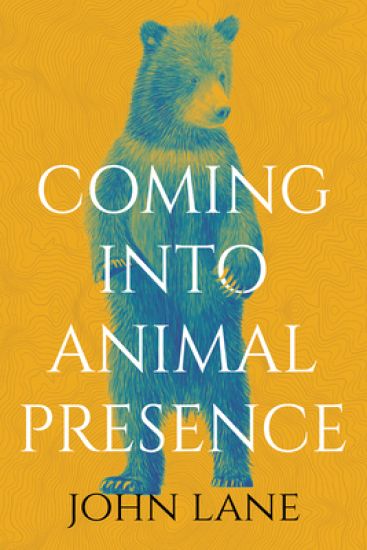
Coming into Animal Presence

Coming into Animal Presence

John Lane

MERCER UNIVERSITY PRESS
2023
nidottu
John Lane continues his exploration of the intersection of the human imagination with the world of other animals in a companion volume to Coyote Settles the South (2016) and Neighbourhood Hawks (2019). Each of these fifteen pieces--some more formal essays, some journalism, and some stories of Lane's encounters with wild animals in wild places--explores the diversity and the mystery of what's often been called ""the more than human world."" In each piece there is always animal presence, sometimes central and sometimes peripheral. In one piece the Columbian mammoth comes back to trouble the contemporary political landscape of South Carolina. In another, he ponders the fate of a wing-shot goose finding a last refuge in the Lane family's tiny frog pond. In another, Lane ventures into an abandoned Zimbabwean gold mine alone to check on the status of a common genet, a shy carnivore.
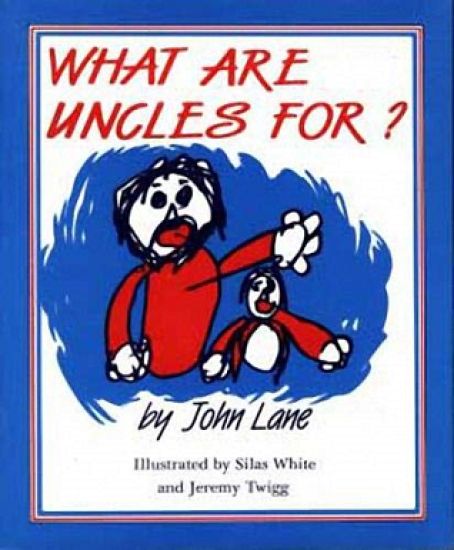
What Are Uncles For?

What Are Uncles For?

John Lane

Harbour Publishing
1984
nidottu
Through Michael's eyes he could see the familiar world reflected as a fantastic, often hilariously distorted place, and fortunately he had the time and sensitivity to capture the magic of these childhood perceptions in a heartwarming series of poems. Illustrated in kindred spirit by two small boys, What Are Uncles For? will prove equally entertaining for uncles, aunts, parents - and children.