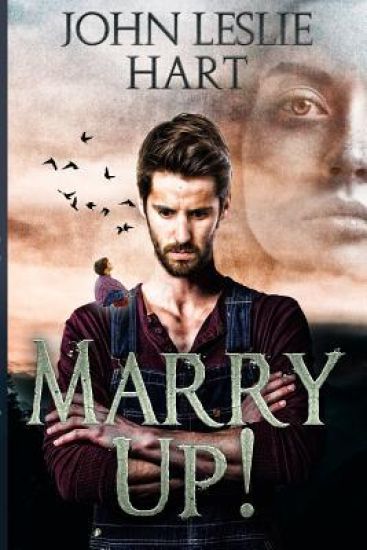
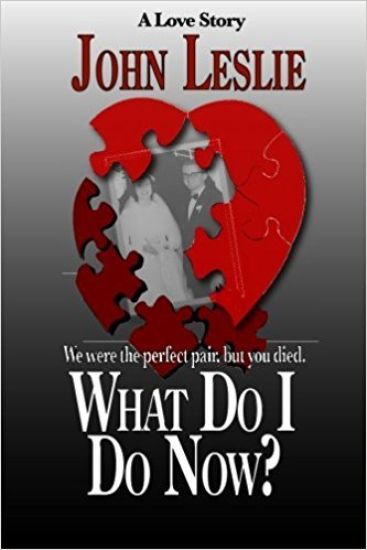
All Og wants is to marry the woman he loves, before she sells her house and leaves forever. Deathly afraid of intimate relationships, Og cannot figure out how to court her. What's worse, he fears he is teetering between sanity and insanity when he starts seeing things. Amid this battle within himself, Og's small-town community is plying him with plenty of advice. When a passing psychiatrist is informed Og saw an elf, the psychiatrist tells him it is his inner child trying to help him get married. "Listen to it," he says and writes a list of behaviorisms to look out for. After the psychiatrist leaves, the townspeople post the list at the store, and try to help Og make his way through it, resulting in a hilarious take on therapy. Can Og's sincerity at wanting to change, project him through misadventures until he prevails?
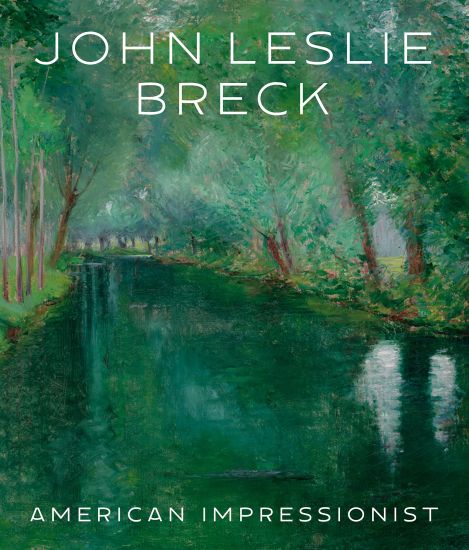
John Leslie Breck (1860-1899) was one of the founders of the American art colony at Giverny and was among the earliest American artists to embrace the Impressionist style. He was also one of the first to exhibit his Impressionist paintings in America and helped to popularize the style during his years working in the Boston area in the 1890s. Between 1887 and 1888 he and a handful of his American colleagues began visiting the French village of Giverny, where they met Claude Monet and subsequently explored the new approach to painting that Monet had helped to pioneer. Breck's canvases from this period, loosely brushed and filled with light and color, are a marked departure from his earlier works that are characterized by darker tonalities and tighter brushwork that typified the preferred style of the era. When Breck returned to America in 1892, he applied what he had learned to paintings of the New England landscape and frequently exhibited his work. Inspired by The Mint Museum's 2016 acquisition of John Leslie Breck's canvas Suzanne Hoschede-Monet Sewing, this volume includes approximately 70 of Breck's finest works, drawn from public and private collections. Along with his scenes of Giverny and America, this volume features a selection of paintings from his sojourn in Venice in 1897. Always interested exploring in new ways of seeing the world, Breck had begun to explore aspects of post-Impressionism and Asian aesthetics in the years before his early death, at the age of 39, in 1899. This volume also features up to 36 additional comparative images, including details, photographs, and paintings by Monet and other leading American impressionists including Willard Metcalf, Theodore Robinson, Lila Cabot Perry, Childe Hassam, and Arthur Wesley Dow, presented throughout the main essays and chronology and appendices.
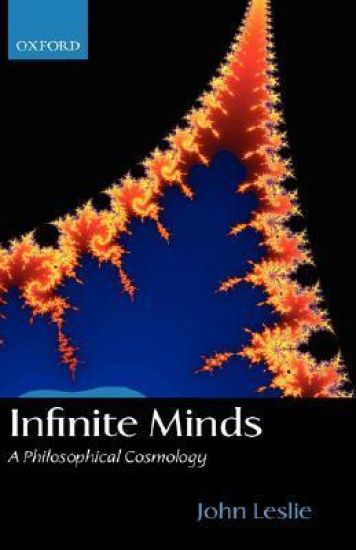
Infinite Minds develops a Platonic creation story. The cosmos exists just because of the ethical need for it. We, and all the intricate structures of our universe, exist as intricately structured thoughts in a divine mind that knows everything worth knowing. There could also be infinitely many other universes in this mind, and after death we might explore the wonders of its knowledge. Minds of the same kind could exist in infinite number. In this original and thought-provoking book John Leslie unfolds his view of the nature of the universe, inspired by Spinoza, perhaps the greatest of the philosophical rationalists. Over the last three decades Leslie has been developing his theory in a series of path-breaking publications; now at last he gives it its definitive exposition. It may be hard to believe that the universe is as he says it is --but it is hard also to resist his compelling ideas and arguments.
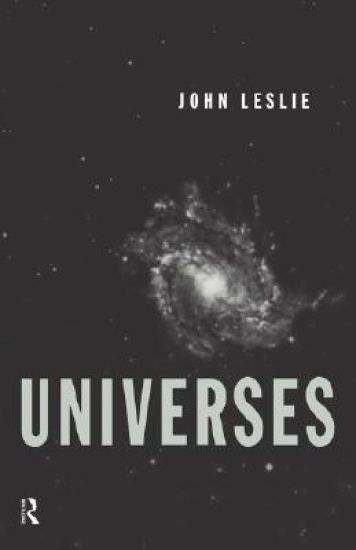
Universes discusses the alleged evidence of fine tuning; mechanisms by which a varied set of Universes might be generated, and whether belief in God could be preferable to accepting universes in vast numbers.
Universes discusses the alleged evidence of fine tuning; mechanisms by which a varied set of Universes might be generated, and whether belief in God could be preferable to accepting universes in vast numbers.
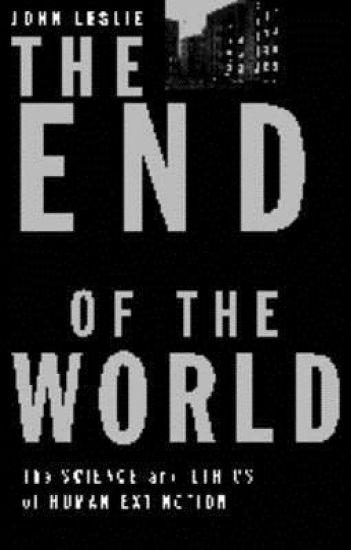
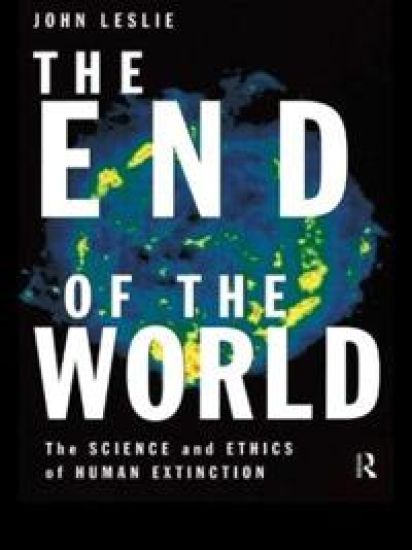
Are we in imminent danger of extinction? Yes, we probably are, argues John Leslie in his chilling account of the dangers facing the human race as we approach the second millenium.The End of the World is a sobering assessment of the many disasters that scientists have predicted and speculated on as leading to apocalypse. In the first comprehensive survey, potential catastrophes - ranging from deadly diseases to high-energy physics experiments - are explored to help us understand the risks. One of the greatest threats facing humankind, however, is the insurmountable fact that we are a relatively young species, a risk which is at the heart of the 'Doomsday Argument'. This argument, if correct, makes the dangers we face more serious than we could have ever imagined. This more than anything makes the arrogance and ignorance of politicians, and indeed philosophers, so disturbing as they continue to ignore the manifest dangers facing future generations.
Are we in imminent danger of extinction? Yes, we probably are, argues John Leslie in his chilling account of the dangers facing the human race as we approach the second millenium.The End of the World is a sobering assessment of the many disasters that scientists have predicted and speculated on as leading to apocalypse. In the first comprehensive survey, potential catastrophes - ranging from deadly diseases to high-energy physics experiments - are explored to help us understand the risks. One of the greatest threats facing humankind, however, is the insurmountable fact that we are a relatively young species, a risk which is at the heart of the 'Doomsday Argument'. This argument, if correct, makes the dangers we face more serious than we could have ever imagined. This more than anything makes the arrogance and ignorance of politicians, and indeed philosophers, so disturbing as they continue to ignore the manifest dangers facing future generations.
Memory Loss Techniques for remembering How to improve memory Seniors and memory loss Easy ways to remember "How to" memory techniques Aging doesn't mean memory loss Shortcuts to remembering