Kirjojen hintavertailu. Mukana 11 627 373 kirjaa ja 12 kauppaa.

Kirjahaku

Etsi kirjoja tekijän nimen, kirjan nimen tai ISBN:n perusteella.

1000 tulosta hakusanalla John Lewis Roget; John Pye

A history of the 'Old water-colour' society, now the Royal society of painters in water colours
A history of the 'Old water-colour' society, now the Royal society of painters in water colours - With biographical notices is an unchanged, high-quality reprint of the original edition of 1891. Hansebooks is editor of the literature on different topic areas such as research and science, travel and expeditions, cooking and nutrition, medicine, and other genres. As a publisher we focus on the preservation of historical literature. Many works of historical writers and scientists are available today as antiques only. Hansebooks newly publishes these books and contributes to the preservation of literature which has become rare and historical knowledge for the future.
Personal Capitalism and Corporate Governance

Personal Capitalism and Corporate Governance

Myrddin John Lewis; Roger Lloyd-Jones; Mark David Matthews

Ashgate Publishing Limited
2011
sidottu
This book is specifically aimed at addressing a gap in the study of the evolution of corporate governance in Britain. In particular its key theme, the relationship between corporate governance and personal capitalism in British manufacturing in the first half of the twentieth century, provides the means for a systematic and critical examination of the dominant Chandlerian paradigm that the long-running persistence of personal capitalism shaped the governance of British manufacturing firms well into the twentieth century and acted to erode their competitive performance. The book helps to identify those aspects of corporate governance that have undergone change, with some critical observations on the magnitude of change and those aspects which have displayed characteristics of continuity. The empirical spine of this book is set out in a series of case studies which provide the basis for the examination of corporate governance in Britain during the period c. 1900 to 1950. By focusing particularly on the responses of a range of businesses to the turbulent environment of the inter-war years, this volume offers an insight into a much neglected, yet vital, area of business and economic history.
Personal Capitalism and Corporate Governance

Personal Capitalism and Corporate Governance

Myrddin John Lewis; Roger Lloyd-Jones; Mark David Matthews

Routledge
2016
nidottu
This book is specifically aimed at addressing a gap in the study of the evolution of corporate governance in Britain. In particular its key theme, the relationship between corporate governance and personal capitalism in British manufacturing in the first half of the twentieth century, provides the means for a systematic and critical examination of the dominant Chandlerian paradigm that the long-running persistence of personal capitalism shaped the governance of British manufacturing firms well into the twentieth century and acted to erode their competitive performance. The book helps to identify those aspects of corporate governance that have undergone change, with some critical observations on the magnitude of change and those aspects which have displayed characteristics of continuity. The empirical spine of this book is set out in a series of case studies which provide the basis for the examination of corporate governance in Britain during the period c. 1900 to 1950. By focusing particularly on the responses of a range of businesses to the turbulent environment of the inter-war years, this volume offers an insight into a much neglected, yet vital, area of business and economic history.
Archipelago

Archipelago

Andrew McNellie; Norman Ackroyd; John Brannigan; Moya Cannon; Mark Cocker; Peter Davidson; Roger Deakin; Tim Dee; David Douglas; Douglas Dunn; Terry Eagleton; John Eifion Jones; John Elder; Rose Ferraby; Barbara Greg; Ivor Gurney; Alexandra Harris; Seamus Heaney; Geoffrey Hill; Sally Huband; Roger Hutchinson; Mick Imlah; Kathleen Jamie; John Kerrigan; Philip Lancaster; David Lea; Angela Leighton; Gwyneth Lewis; Michael Longley; James Macdonald Lockhart; Robert Macfarlane; Angus Macmillan; Derek Mahon; Gail McNeillie

The Lilliput Press Ltd
2021
nidottu
Archipelago is one of the most important and influential literary magazines of the last twenty years. Running to twelve editions, it was edited by Andrew McNeillie, with the assistance later of James McDonald Lockhart, and began as an attempt to reimagine the relationships between the islands of Ireland and Britain. Archipelago has brought together established and emerging artists in creative conversations that have transformed the study of islands, coasts and waterways. It journeys from the Shetlands to Cornwall, from the Aran Islands to the coast of Yorkshire, tracing the cultures of diverse zones through some of the best in contemporary writing about place and people. This collection gathers poetry, prose and visual art in clusters grouped around the Irish and British archipelago, with contributions from an array of significant artists. It includes newly commissioned work as well as an interview between Andrew McNeillie and Robert Macfarlane on the development of Archipelago across the years.
New South African Review 1

New South African Review 1

Atkinson Doreen; David Bruce; Butler Anthony; Scarlett Cornelisson; John Daniel; Graham Gibbon; Gordin Jeremy; Colin Hoag; Kariuki Samuel; Zosa de Sas Kropiwnicki; Loren Landau; Lizle Loots; Kezia Lewins; Makgetla Neva; Marais Hein; Seeraj Mohamed; Mike Muller; Kammila Naidoo; Naidoo Prishani; Pillay Devan; Tara Polzer; Schoeman Maxi; Aurelia Wa Kabwe-Segatti; Selikow Terry-Ann; Louis Reynolds; Southall Roger; Swilling Mark; Vale Peter

Wits University Press
2010
nidottu
Reviving the tradition of critical, analytical scholarship developed by the 1970s and 1980s editions of the South African review, this first volume of the New South African review offers a collection of original surveys of key issues and problems confronting post-apartheid South Africa. Written by a team of engaged social scientists and based often on new research, the volume ranges widely across the implications of the international crisis for the economy, the threats to our fragile ecology of present economic strategies, through to the state of the ANC and the public service, issues around service delivery, migration, HIV/AIDS, land reform, crime, the sexual behavior of our youth, and much more. Posing the provocative question of whether South Africa is embarking upon a long-term decline, the volume simultaneously argues the potential for a society premised upon social equality, social coherence and sustainability. This collection will appeal to a wide audience, national and international, interested in engaging with the multiple dilemmas and challenges facing contemporary South Africa.
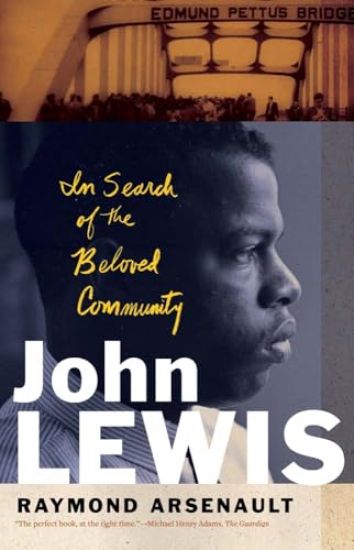
John Lewis

John Lewis

Raymond Arsenault

YALE UNIVERSITY PRESS
2024
sidottu
The first full-length biography of civil rights hero and congressman John Lewis A New Yorker “Best Book of 2024” Selection “The perfect book, at the right time.”—Michael Henry Adams, The Guardian For six decades John Robert Lewis (1940–2020) was a towering figure in the U.S. struggle for civil rights. As an activist and progressive congressman, he was renowned for his unshakable integrity, indomitable courage, and determination to get into “good trouble.” In this first book-length biography of Lewis, Raymond Arsenault traces Lewis’s upbringing in rural Alabama, his activism as a Freedom Rider and leader of the Student Nonviolent Coordinating Committee, his championing of voting rights and anti-poverty initiatives, and his decades of service as the “conscience of Congress.” Both in the streets and in Congress, Lewis promoted a philosophy of nonviolence to bring about change. He helped the Reverend Martin Luther King Jr. and other civil rights leaders plan the 1963 March on Washington, where he spoke at the Lincoln Memorial. Lewis’s activism led to repeated arrests and beatings, most notably when he suffered a skull fracture in Selma, Alabama, during the 1965 police attack later known as Bloody Sunday. He was instrumental in the passage of the Voting Rights Act of 1965, and in Congress he advocated for racial and economic justice, immigration reform, LGBTQ rights, and national health care. Arsenault recounts Lewis’s lifetime of work toward one overarching goal: realizing the “beloved community,” an ideal society based in equity and inclusion. Lewis never wavered in this pursuit, and even in death his influence endures, inspiring mobilization and resistance in the fight for social justice.
John Lewis

John Lewis

Raymond Arsenault

YALE UNIVERSITY PRESS
2025
pokkari
The first full-length biography of civil rights hero and congressman John Lewis A New Yorker “Best Book of 2024” Selection “The perfect book, at the right time.”—Michael Henry Adams, The Guardian For six decades John Robert Lewis (1940–2020) was a towering figure in the U.S. struggle for civil rights. As an activist and progressive congressman, he was renowned for his unshakable integrity, indomitable courage, and determination to get into “good trouble.” In this first book-length biography of Lewis, Raymond Arsenault traces Lewis’s upbringing in rural Alabama, his activism as a Freedom Rider and leader of the Student Nonviolent Coordinating Committee, his championing of voting rights and anti-poverty initiatives, and his decades of service as the “conscience of Congress.” Both in the streets and in Congress, Lewis promoted a philosophy of nonviolence to bring about change. He helped the Reverend Martin Luther King Jr. and other civil rights leaders plan the 1963 March on Washington, where he spoke at the Lincoln Memorial. Lewis’s activism led to repeated arrests and beatings, most notably when he suffered a skull fracture in Selma, Alabama, during the 1965 police attack later known as Bloody Sunday. He was instrumental in the passage of the Voting Rights Act of 1965, and in Congress he advocated for racial and economic justice, immigration reform, LGBTQ rights, and national health care. Arsenault recounts Lewis’s lifetime of work toward one overarching goal: realizing the “beloved community,” an ideal society based in equity and inclusion. Lewis never wavered in this pursuit, and even in death his influence endures, inspiring mobilization and resistance in the fight for social justice.