Kirjojen hintavertailu. Mukana 11 244 527 kirjaa ja 12 kauppaa.

Kirjahaku

Etsi kirjoja tekijän nimen, kirjan nimen tai ISBN:n perusteella.

1000 tulosta hakusanalla John Lynch

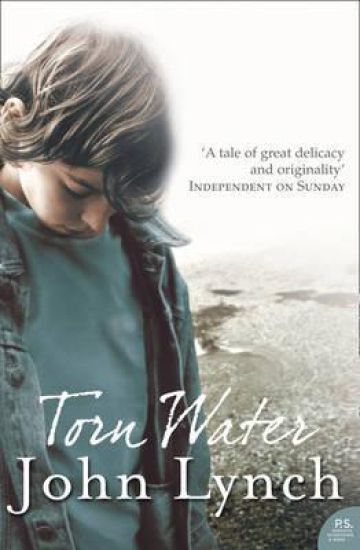
Torn Water

Torn Water

John Lynch

HarperPerennial
2007
nidottu
Set in his native Northern Ireland, John Lynch's debut novel is a lyrically told and exquisitely tender story of innocence and loss. ‘He remembers when he was very young standing by water…How he had got there or where the pond was he couldn’t remember, but he can vaguely recall a larger hand on his and being led through the high rooms of a large building, to a large garden, where bees wove dozy patterns in the air. At the bottom of this garden lay the large pond, and he remembers a face bending to meet his and whispering that he would be back in a little while. So he stood where he had been left, his small feet pointing at the stonework of the pond’s rim. He remembers a wind brewing in the tops of the trees and tearing at the water of the pond for a moment, before subsiding, his face blurring into focus like a TV channel being tuned.’ When James Lavery's father is blown to bits by a bomb he intended to maim and kill others with, the boy keeps him alive in his imagination as a superhero, escaping the daily grind of school, his mother's drinking and his own acute loneliness by inventing extraordinary adventures for them both. But, gradually, through the agonies of adolescence James begins to understand the real cost of his father's weak and deluded heroism. It is only when he falls in love himself, during a summer away from his tortured home life, that James finally begins to understand the true complexities of love, life and death…
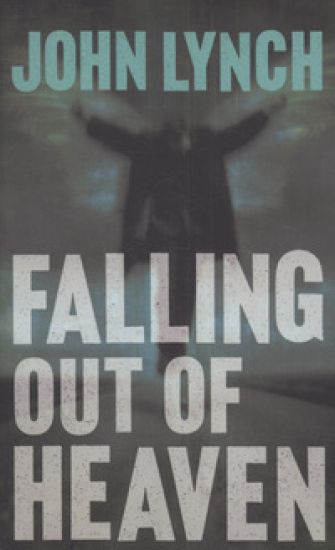
Falling out of Heaven

Falling out of Heaven

John Lynch

HARPERCOLLINS PUBLISHERS
2010
nidottu
Hauntingly told and emotionally charged, this is an immense story of consuming addiction and the betrayal of trust. Gabriel O'Rourke seemingly has everything: a loving wife, an adoring young son, a worthwhile job. He is rooted in a community, is part of a family, has a home. Yet, gradually, his world slowly pulls apart, until Gabriel finds himself homeless and destitute, living out of rubbish skips on the street. In a psychotic haze he is admitted into a secure unit, his body addled by alcohol, his mind broken. Here, by confronting the blighting reality of his own alcoholism, Gabriel is forced finally to unearth the muddled spectre of the past: the black betrayals by those around him, his traumatic relationship with his father, and the true darkness of some obsessions. Learning to navigate a landscape pockmarked with trauma to undergo a journey of painstaking absolution and halting reconstruction, Gabriel understands that only by untangling the mistakes of the past can he hope to reclaim his future.
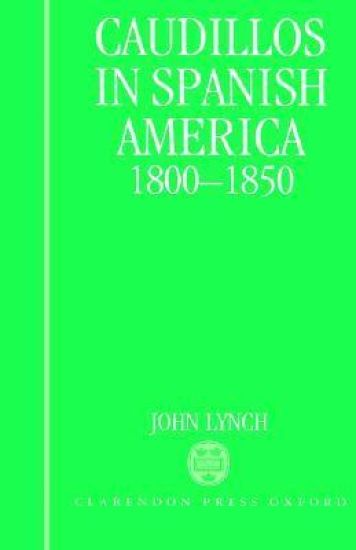
Caudillos in Spanish America 1800-1850

Caudillos in Spanish America 1800-1850

John Lynch

Clarendon Press
1992
sidottu
The caudillo of Spanish America was both regional chieftain and, in the turbulent years of the early nineteenth century, national leader. His power base rested on ownership of land and control of armed bands. He was the rival of constitutional rulers and the precursor of modern dictators. His is a dominant figure in Latin American history. John Lynch explores the changing perception of the caudillo - bandit chief, guerrilla leader, republican hero - and examines his multi-faceted role as regional strongman, war leader, landowner, distributor of patronage, and the `necessary gendarme' who maintained social order. Professor Lynch traces the origins and development of the caudillo tradition, and sets it in its contemporary context. His scholarly analysis of this central theme in the history of Spanish America is underpinned by detailed case-studies of four major caudillos: Juan Manuel de Rosas (Argentina), José Antonio Páez (Venezuela), Antonio López de Santa Anna (Mexico), and Rafael Carrera (Guatemala). This is an important contribution to our understanding of political and social structures during the formative period of the nation-state in Spanish America.
Sim¿n Bol¿var (Simon Bolivar)

Sim¿n Bol¿var (Simon Bolivar)

John Lynch

Yale University Press
2007
nidottu
Simón Bolívar was a revolutionary who freed six countries, an intellectual who argued the principles of national liberation, and a general who fought a cruel colonial war. His life, passions, battles, and great victories became embedded in Spanish American culture almost as soon as they happened. This is the first major English-language biography of “The Liberator” in half a century. John Lynch draws on extensive research on the man and his era to tell Bolívar’s story, to understand his life in the context of his own society and times, and to explore his remarkable and enduring legacy.The book illuminates the inner world of Bolívar, the dynamics of his leadership, his power to command, and his modes of ruling the diverse peoples of Spanish America. The key to his greatness, Lynch concludes, was supreme will power and an ability to inspire people to follow him beyond their immediate interests, in some cases through years of unremitting struggle. Encompassing Bolívar’s entire life and his many accomplishments, this is the definitive account of a towering figure in the history of the Western hemisphere.
San Martin

San Martin

John Lynch

Yale University Press
2009
sidottu
A vivid exploration of the life and times of José de San Martín, legendary liberator of Chile and Peru José de San Martín (1778–1850) was an enigmatic figure—a revolutionary and a conservative, a professional soldier and an intellectual, a taciturn man who nevertheless was able to inspire the peoples of South America to follow his armies and accept his battle strategies. One of the great leaders in the wars for independence, he was a pivotal force in the liberation of Chile and Peru from Spanish rule.In the first full English-language biography of San Martín in more than half a century, John Lynch shines new light on San Martín and on the story of Spanish America’s revolutionary wars. Lynch offers a series of dramatic set pieces: the Peninsular War, in which San Martín fought the French and learned his military skills; the crossing of the Andes, when his army battled the forces of nature as well as enemy fire; the confrontation with imperial Spain in Peru; and the standoff with Bolívar which led to San Martín’s resignation and exile in Europe. Based on the latest documentation, San Martín enhances our understanding of the modern history of Latin America and one of its most brilliant leaders.
A Tale of Three Cities

A Tale of Three Cities

John Lynch

Palgrave Macmillan
1998
sidottu
The city of Belfast tends to be discussed in terms of its distinctiveness from the rest of Ireland, an industrial city in an agricultural country. However, when compared with another 'British' industrial port such as Bristol it is the similarities rather than the differences that are surprising. When these cities are compared with Dublin, the contrasts become even more painfully evident. This book seeks to explore these contrasting urban centres at the start of the twentieth century.
Between Habit and Thought in New TV Serial Drama
Between Habit and Thought in New TV Serial Drama: Serial Connections is a consideration of some of the key examples of serial television drama available via transnational streaming platforms in recent times. Through the individual works examined, the book exemplifies the ways in which aesthetics, technology, and capitalism weave a complex social fabric around the production of the respective television series, thus presenting this type of serial drama as a finely engineered cultural production. Taking Bernard Stiegler’s notion of an "image warfare" as its starting point, the author critically investigates the strategies deployed by the shows’ producers to navigate this dynamic, shaped by the "new spirit of capitalism". With creativity intrinsic to the process, on the one hand, and a highly efficient drive for capturing and fixing attention driven by algorithm and economic logic, on the other, the author maps the processes at work in the production of high-value serial drama and considers how, despite this tension, they manage to present meaningful insights into the experience of being in this world: A world shaped by trauma, a desire for justice, and a search for systems of belief that can offer a way through the vicissitudes of contemporary life. Framed by a detailed analysis of the multiple processes that shape these works is a sustained analysis of the serials Mr Robot, Billions, The Leftovers, Rectify, and Westworld, and the dynamics of despair and hope that ripple through them. As such, it will appeal to readers of film and television studies, cultural theory, and those interested in furthering a critical aesthetics for our time.
The Spanish American Revolutions 1808-1826
John Lynch provides a brilliant survey of the men and the movements during these critical years. He views the revolutionary outbreak as the culmination of a long process of alienation from Spain during which Spanish Americans became aware of their own identity, conscious of their own culture, and jealous of their own resources. He traces the forces of independence as they gathered momentum and spread across the subcontinent in two great waves converging on Peru. He also explains why the heroic liberators, among them San Martín, Bolívar, and O'Higgins, were unable to prevent the revolutions from ultimately turning into counterrevolutions that frustrated their efforts to create new societies. In the second edition, Lynch adds a section on Central America and incorporates the latest work being done on the origins and aftermaths of these revolutions.
The Hispanic World in Crisis and Change

The Hispanic World in Crisis and Change

John Lynch

Blackwell Publishers
1994
nidottu
The seventeenth century has gained enormously from the resurgence of historical studies in Spain and from the contributions of historians outside the penninsula. In this book, John Lynch has taken account of this research to substantially revise and expand his Spain Under the Hapsburgs, Volume II . It retains its previous framework, and provides a penetrating account of Spanish society, economy, government and politics during this period.
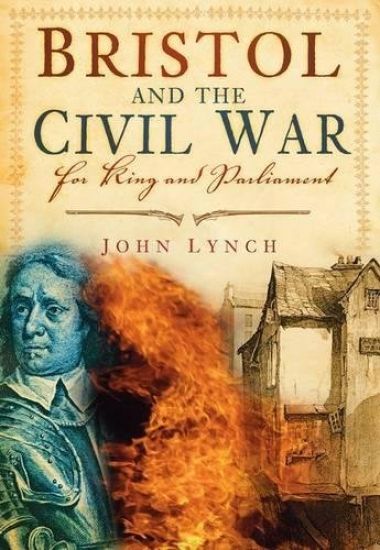
Bristol and the Civil War

Bristol and the Civil War

John Lynch

The History Press Ltd
2009
nidottu
In the seventeenth century Bristol was the second city of England. It was the main west coast port, an internationally important entrepot and rich trading centre. Industry flourished, too, with manufacturing and processing industries like soap making and gunpowder production responsible for Bristol's considerable wealth. In consequence, control of the town became one of the chief objectives of both armies during the civil war which raged in England in the 1640s. Beginning the war under Parliamentarian control, the city changed hands twice, with each transfer having a major effect of the war effort of both sides.This new study argues that when the Royalists captured Bristol in July 1643 they gained not only the city, but also the materials and facilities that literally allowed them to remain in the war. Under Royalist rule Bristol became a vital centre for military and government activities, as well as a centre for importing arms from Europe and becoming almost the alternative Royalist capital. The loss of Bristol in 1645 was therefore a huge blow to the Royalist cause. This book is surely one of the most important written on the civil wars in recent times. Its radical reinterpretation of the pivotal role of England's second city will ensure it a place on bookshelves of anyone interested in the most turbulent years of the seventeenth century.
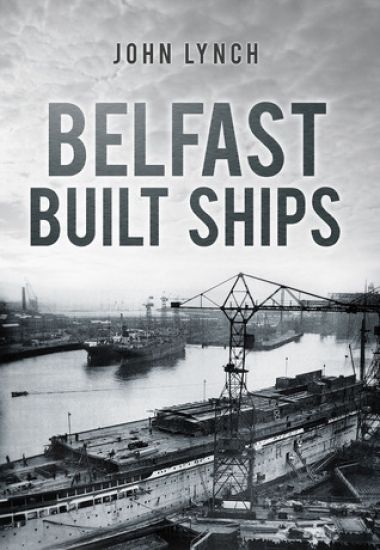
Belfast Built Ships

Belfast Built Ships

John Lynch

The History Press Ltd
2012
nidottu
Belfast has a long and proud shipbuilding heritage, this industry holding a strong place in Belfast’s identity and popular culture. There were three main shipbuilders, Harland & Wolff, Workman Clark and the little-known McIllwain & Co., all of whom had fascinating and often turbulent histories. Despite this, little is known about the vessels they produced, beyond the world-famous story of Titanic. In this impeccably researched book, Dr John Lynch endeavours to change this, revealing the fascinating stories of the many ships to be built and launched from Belfast over 140 years, from the late 1850s to the twenty-first century. Including an alphabetical ship index, building lists, details on vessel name changes and many illustrations of the ships, this book also details the yards themselves and key characters in shaping their journeys from hey-day to decline.
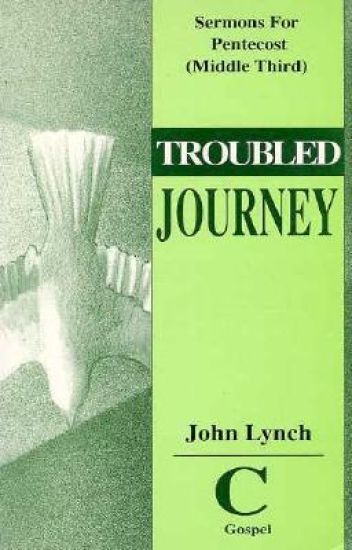
Troubled Journey: Sermons for Pentecost (Middle Third) Cycle C Gospel Texts
Many times in life we find ourselves in the midst of a troubled journey. Often the trouble is intensely personal, even spiritual, in nature. At such points, we need a guide, someone rooted in the solid reality of God's word. As the meditations show, John G. Lynch is such a guide. Dr. Michael J. Kurtz President, Lutheran Historical Society Gettysburg, Pennsylvania The mediations in this book center in Jesus' troubled journey to Jerusalem as told in Luke's gospel. John Lynch writes that in God's undying faithfulness to us, God goes out to the highways and byways where we live. God goes inside of our hearts, beyond the fences we put up when we hold our peace. There, at the core of our hearts, God says, "Come to my banquet." "God has a cross for us, but a resurrection too. God invites us to Come and be nourished at God's banquet," says Lynch. The twelve sermons in this book are based on Gospel texts primarily from Luke. Sermons follow the Revised Common Episcopal, Lutheran and Roman Catholic lectionaries. John Lynch is a Lutheran theologian and pastor. After achieving his doctorate in Paris, France, he served more than twenty years as a Roman Catholic priest. In 1982, after a long period of thought and prayer, he became a Lutheran pastor. He serves Magothy-Chelsea Community Lutheran Church, Pasadena, Maryland; Holy Trinity Lutheran, Laurel, Maryland; and the Maryland Institute of Pastoral Counseling, Annapolis.
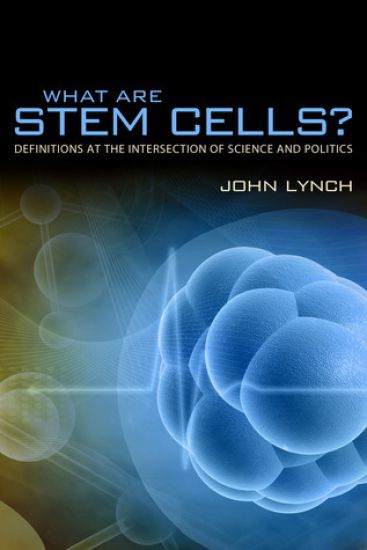
What Are Stem Cells?

What Are Stem Cells?

John Lynch

The University of Alabama Press
2011
sidottu
In recent years political, religious, and scientific communities have engaged in an ethical debate regarding the development of and research on embryonic stem cells. Does the manipulation of embryonic stem cells destroy human life? Or do limitations imposed on stem cell research harm patients who might otherwise benefit?John Lynch’s What Are Stem Cells? identifies the moral stalemate between the rights of the embryo and the rights of the patient and uses it as the framework for a larger discussion about the role of definitions as a key rhetorical strategy in the debate. In the case of stem cells, the controversy arises from the manner in which stem cells are defined--in particular, whether they are defined with an appeal to their original source or to their future application. Definitions such as these, Lynch argues, are far more than convenient expository references; they determine the realities of any given social discourse.Lynch addresses definitions conceptually--their stability in the face of continual technological innovation, their versatility at the crossroads of scientific and public forums, and their translations and retranslations through politics. Most importantly, his work recognizes definitions as central to issues, not only within the topic of stem cell research, but also in all argumentation.
Pacific Languages

Pacific Languages

John Lynch

University of Hawai'i Press
1998
nidottu
Almost one-quarter of the world's languages are (or were) spoken in the Pacific, making it linguistically the most complex region in the world. Although numerous technical books on groups of Pacifric or Australian languages have been published, and descriptions of individual languages are available, until now there has been no single book that attempts a wide regional coverage for a general audience. Pacific Languages introduces readers to the grammatical features of Oceanic, Papuan, and Australian languages as well as to the semantic structures of these languages. For readers without a formal linguistic background, a brief introduction to descriptive linguistics is provided.
Pacific Languages

Pacific Languages

John Lynch

University of Hawai'i Press
2016
sidottu
Almost one-quarter of the world's languages are (or were) spoken in the Pacific, making it linguistically the most complex region in the world. Although numerous technical books on groups of Pacific or Australian languages have been published, and descriptions of individual languages are available, until now there has been no single book that attempts a wide regional coverage for a general audience. Pacific Languages introduces readers to the grammatical features of Oceanic, Papuan, and Australian languages as well as to the semantic structures of these languages. For readers without a formal linguistic background, a brief introduction to descriptive linguistics is provided. In addition to describing the structure of Pacific languages, this volume places them in their historical and geographical context, discusses the linguistic evidence for the settlement of the Pacific, and speculates on the reason for the region's many languages. It devotes considerable attention to the effects of contact between speakers of different languages and to the development of pidgin and creole languages in the Pacific. Throughout, technical language is kept to a minimum without oversimplifying the concepts or the issues involved. A glossary of technical terms, maps, and diagrams help identify a language geographically or genetically; reading lists and a language index guide the researcher interested in a particular language or group to other sources of information. Here at last is a clear and straightforward overview of Pacific languages for linguists and anyone interested in the history of sociology of the Pacific.
Argentine Caudillo

Argentine Caudillo

John Lynch

Rowman Littlefield
2001
nidottu
Argentine Caudillo: Juan Manuel de Rosas, is John Lynch's new edition of his 1981 book, which is now out of print. The original has been shortened, making it well-suited for classroom use. The figure of Juan Manual de Rosas dominates the history of Argentina in the first half of the nineteenth century. Charles Darwin, who met him on campaign against the Indians, described him as "a man of extraordinary character," the lord of vast estates and, for over twenty years, absolute ruler of Buenos Aires and its province. The present book studies the forces which made and sustained Rosas, and examines through him the roots of the caudillo tradition in Argentina. It reconstructs the world of great estates and the rise to power of their proprietors, establishing the relation of patron and client, of master and peon, the basis of political allegiance at that time. Argentine Caudillo follows the career of Rosas as a classical caudillo, who rescued his people from fear and anarchy and delivered them into the hands of a great dictatorship. Leader of the gauchos, yet representative too of the powerful landed proprietors and cattle exporters, Rosas established an early prototype of a totalitarian state and employed systematic terror to defend his rule. The book helps to elucidate the concept and practice of caudillismo, or personal dictatorship, in the Hispanic world, and the use of violence to seize and defend power. It does this against a backdrop of transition from colony to independence, and then from anarchy to absolutism. Argentine Caudillo provides a detailed study of the use of state terror as an instrument of policy, one of the few such studies for any period of Latin American history. There is no book which duplicates this work either inside Argentina or outside. In Argentina, Rosas has become a subject of fierce controversy, partly because of his nationalism, partly because of his reign of terror. Consequently, while there is a vast bibliography on Rosas, much of it is polemical and