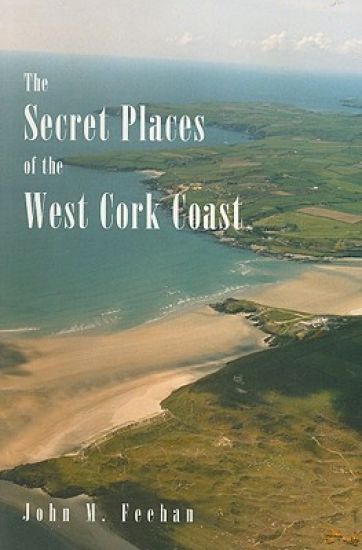
This is a sequel to the best-selling The Wind That Round the Fastnet Sweeps. In it John M. Feehan continues his odyssey from Crookhaven up the coast of Kerry to the Skelling Rocks and the Blasket Islands. It follows the same pattern - a little sailing, a little thinking, a little laughing, a little drinking and once again we meet a marvellous collection of those strange and unusual characters who always seem to run across the author's path and which he describes with such understanding and humanity. John M. Feehan was born near Cashel, Co. Tipperary, and was educated at Thurles C.B.S., Colaiste Eanna, Rockwell College and University College, Galway. After a number of years in the army, where he attained the rank of Captain, he founded The Mercier Press and took up publishing as a full-time career. He is the author of Tomorrow To Be Brave, and An Irish Publisher and His World.
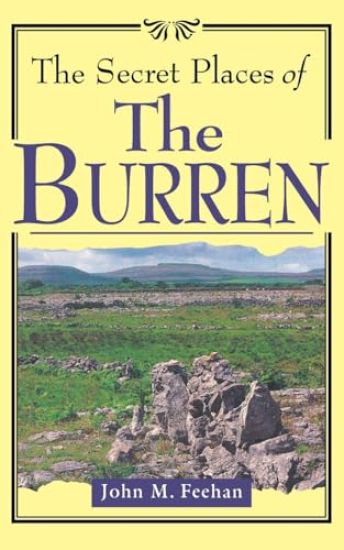
John M Feehan searches out the hidden corners of the Burren, those secluded places where time stands still and where nature speaks its secret language to the human spirit. Although at times controversial, cutting through sham and pretence wherever he meets it, he writes with great charm, skill and sympathy, and with a deep love of the countryside and its people. He sees the mystery, the beauty and the sense of wonder in ordinary things and brings each situation to life so that the reader feels almost physically present. This is a most delightful travel book of memorable beauty that can be read again and again.
John M Feehan searches out the hidden corners of Donegal, those secluded places where time stands still and where nature speaks its secret language to the human spirit. Although at times controversial, cutting through sham and pretence wherever he meets it, he writes with great charm, skill and sympathy, and with a deep love of the countryside and its people. He sees the mystery, the beauty and the sense of wonder in ordinary things and brings each situation to life so that the reader feels almost physically present. This is a most delightful travel book of memorable beauty that can be read again and again.
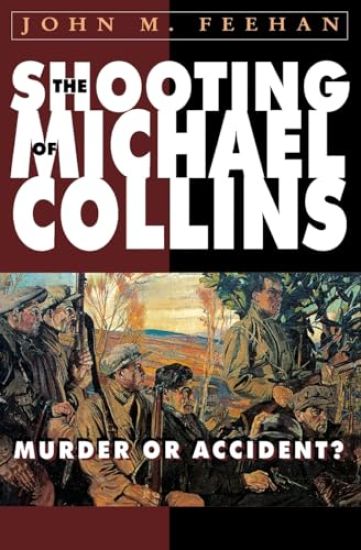
Was Michael Collins killed by an accident of war or was he ruthlessly murdered? Both of these possibilities are calmly and carefully examined by the author, who has rejected the traditional theory that he was killed as a result of a ricochet rifle bullet and leans towards the possibility that he was shot by a Mauser pistol.In The Shooting of Michael Collins the author calmly examines the controversial circumstances surrounding the death of this brilliant leader, putting all the evidence before the discerning reader.For this edition the author rewrote large sections of the book, incorporating new information that came his way. It has aroused exceptional and absorbing interest in this baffling and bewildering mystery.
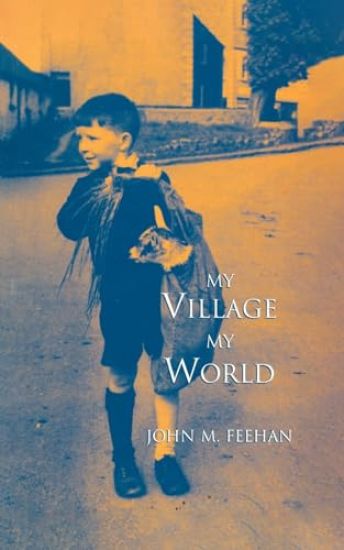
'This is a book that never palls or drags. It is boisterous and ribald and I am tempted to say that it is by far the funniest book I have ever read. It is also an accurate and revealing history of rural Ireland half a century ago and more. John M. Feehan writes beautifully throughout. I love this book.'From the Foreward by John B. KeaneMy Village - My World is a fascinating account of the lives of ordinary people in the countryside of half a century ago. It depicts a way of life that took thousands of years to evolve and mature and was destroyed in a single generation. Although the people of John M. Feehan's village were never famous and might now be described as 'unskilled', this would be a false description. They were all highly skilled, whether in making coffins, droving cattle or tending horses.The world described with such vivacity in this lively memoir was not idyllic. There were sinners as well as saints, all ordinary mortals.The village of John M. Feehan was unique and lives on in these pages.
Bobby Sands captured the imagination of the world when, despite predictions, he was elected a Member of Parliament to the British House of Commons while still on hunger-strike in the Northern Ireland concentration camp of Long Kesh. When he later died after sixty-six gruelling days of hunger he commanded more television, radio and newspaper coverage than the papal visits or royal weddings. What was the secret of this young man who set himself against the might of an empire and who became a microcosm of the whole Northern question and a moral catalyst for the Southern Irish conscience? In calm restrained language John M. Feehan records the life of Bobby Sands with whom he had little sympathy in the beginning - though this was to change. At the same time, he gives us an illumination and crystal-clear account of the terrifying statelet of Northern Ireland today and of the fierce guerilla warfare that is rapidly turning Northern Ireland into Britain's Vietnam.
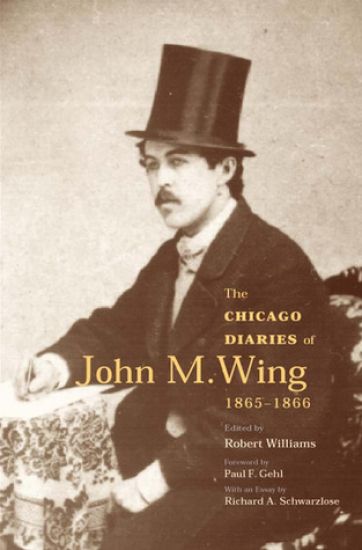
The personal - and often intimate - diaries of fledgling journalist and entrepreneur John Mansir Wing create a unique portrait of a rough-and-tumble Chicago in the first few years following the Civil War. Wing writes of a city filled with new immigrants, exsoldiers, and the thriving merchant class making its fortune from both before the great fire of 1871 left much of the city in ashes. Transcribed and edited by noted Chicago bibliophile and historian Robert Williams, and published in cooperation with the Caxton Club, this volume also details the early adventures of a rural Eastern who came to the ""Metropolis of the West"" in his early twenties and worked for some of the most influential journalists of his day. Wing shared cigars and conversation with notable politicians, businessmen, and war heroes including Sherman and Grant, all the while conducting an active romantic life with members of his own sex in boarding houses and barrooms. Wing's greatest passion was for book collecting. Following a successful career in trade journal publishing, he provided an endowment to create the John M. Wing Foundation at Chicago's famed Newberry Library. The Wing Foundation became the first American public collection devoted to the history of printing; it remains today among the nation's best resources for the study of the bibliographic arts. Despite his lasting importance in publishing and philanthropy, and the fact that no serious history of Chicago can be written without reference to many of his publications, John M. Wing has been largely absent from most histories of the city's movers and shakers. Complete with historical annotations and a bibliography of Wing's writings for the press, this fascinating personal account reclaims his deserved place in Chicago life and lore.