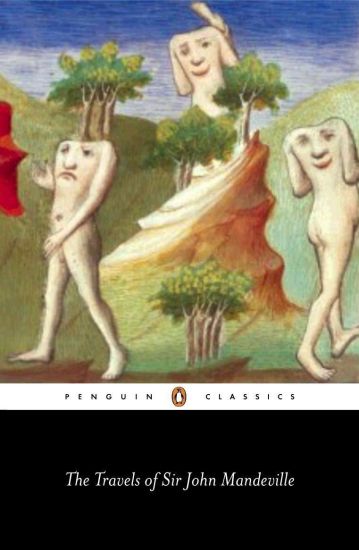
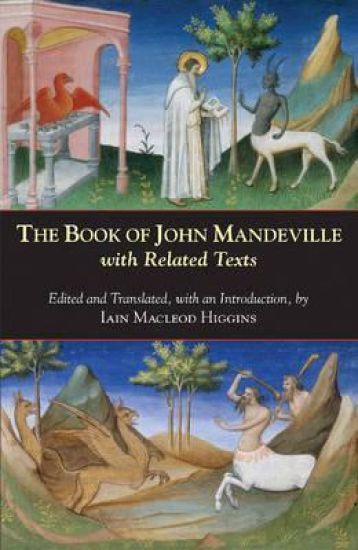
Ostensibly written by an English knight, the Travels purport to relate his experiences in the Holy Land, Egypt, India and China. Mandeville claims to have served in the Great Khan's army, and to have travelled in 'the lands beyond' - countries populated by dog-headed men, cannibals, Amazons and Pygmies. Although Marco Polo's slightly earlier narrative ultimately proved more factually accurate, Mandeville's was widely known, used by Columbus, Leonardo da Vinci and Martin Frobisher, and inspiring writers as diverse as Swift, Defoe and Coleridge. This intriguing blend of fact, exaggeration and absurdity offers both fascinating insight into and subtle criticism of fourteenth-century conceptions of the world.
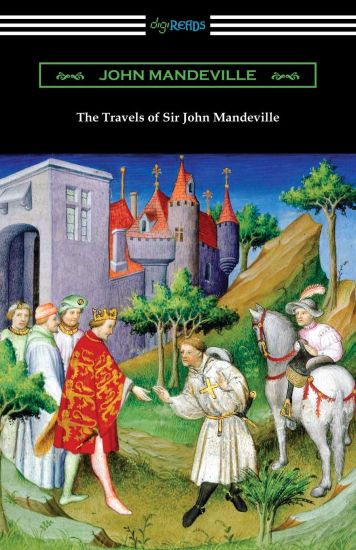
"The Travels of Sir John Mandeville" which was written in Anglo-Norman French is believed to have first appeared sometime in the mid to late 14th century. It soon would be translated into many other languages and would subsequently be very popular in its time. While the identity of Sir John Mandeville is thought to possibly be based on a real historical figure the work seems to be largely one of fiction. "The Travels of Sir John Mandeville" depicts the wandering journey of an English knight to the holy land, the Middle East, the Far East, and lands beyond. While not as historically accurate as the earlier Marco Polo's "Travels", the work gained wide notoriety and is said to have influenced the explorer Christopher Columbus. A wildly fantastical tale of a medieval journeyman, "The Travels of Sir John Mandeville" is a read sure to bring out the explorer in all of us. This edition is printed on premium acid-free paper.
"Jehan de Mandeville", translated as "Sir John Mandeville", is the name claimed by the compiler of The Travels of Sir John Mandeville, a book account of his supposed travels, which probably first appeared in Anglo-Norman French, and first circulated between 1357 and 1371. Translated into many other languages it acquired extraordinary popularity. Despite the extremely unreliable and often fantastical nature of the travels it describes, it was used as a work of reference - Christopher Columbus, for example, was heavily influenced by both this work and Marco Polo's earlier Il Milione. The most recent theory suggests that The Travels of Sir John Mandeville was "the work of Jan de Langhe, a Fleming who wrote in Latin under the name Johannes Longus and in French as Jean le Long." Jan de Langhe was born in Ypres early in the 1300s and by 1334 had become a Benedictine monk at the abbey of Saint-Bertin in Saint-Omer which was about 20 miles from Calais. After studying law at the University of Paris, de Langhe returned to the abbey and was elected abbot in 1365. He was a prolific writer and avid collector of travelogues, right up to his death in 1383.
"Jehan de Mandeville", translated as "Sir John Mandeville", is the name claimed by the compiler of a singular book of supposed travels, written in Anglo-Norman French, and published between 1357 and 1371.By aid of translations into many other languages it acquired extraordinary popularity. Despite the extremely unreliable and often fantastical nature of the travels it describes, it was used as a work of reference - Christopher Columbus, for example, was heavily influenced by both this work and Marco Polo's earlier Il Milione
For as much as the land beyond the sea, that is to say the Holy Land, that men call the Land of Promission or of Behest, passing all other lands, is the most worthy land, most excellent, and lady and sovereign of all other lands, and is blessed and hallowed of the precious body and blood of our Lord Jesu Christ; in the which land it liked him to take flesh and blood of the Virgin Mary, to environ that holy land with his blessed feet; and there he would of his blessedness enombre him in the said blessed and glorious Virgin Mary, and become man, and work many miracles, and preach and teach the faith and the law of Christian men unto his children; and there it liked him to suffer many reprovings and scorns for us; and he that was king of heaven, of air, of earth, of sea and of all things that be contained in them, would all only be clept king of that land, when he said, Rex sum Judeorum, that is to say, 'I am King of Jews'; and that land he chose before all other lands, as the best and most worthy land, and the most virtuous land of all the world: for it is the heart and the midst of all the world, witnessing the philosopher, that saith thus, Virtus rerum in medio consistit, that is to say, 'The virtue of things is in the midst'; and in that land he would lead his life, and suffer passion and death of Jews, for us, to buy and to deliver us from pains of hell, and from death without end; the which was ordained for us, for the sin of our forme-father Adam, and for our own sins also; for as for himself, he had no evil deserved: for he thought never evil ne did evil: and he that was king of glory and of joy, might best in that place suffer death; because he chose in that land rather than in any other, there to suffer his passion and his death. For he that will publish anything to make it openly known, he will make it to be cried and pronounced in the middle place of a town; so that the thing that is proclaimed and pronounced, may evenly stretch to all parts: right so, he that was former of all the world, would suffer for us at Jerusalem, that is the midst of the world; to that end and intent, that his passion and his death, that was published there, might be known evenly to all parts of the world.
This book has been considered by academicians and scholars of great significance and value to literature. This forms a part of the knowledge base for future generations. So that the book is never forgotten we have represented this book in a print format as the same form as it was originally first published. Hence any marks or annotations seen are left intentionally to preserve its true nature.
"Jehan de Mandeville," translated as "Sir John Mandeville," is the name claimed by the compiler of a singular book of supposed travels, written in Anglo-Norman French, and published between 1357 and 1371.
"Jehan de Mandeville", translated as "Sir John Mandeville", is the name claimed by the compiler of a singular book of supposed travels, written in Anglo-Norman French, and published between 1357 and 1371. By aid of translations into many other languages it acquired extraordinary popularity. Despite the extremely unreliable and often fantastical nature of the travels it describes, it was used as a work of reference - Christopher Columbus, for example, was heavily... We are delighted to publish this classic book as part of our extensive Classic Library collection. Many of the books in our collection have been out of print for decades, and therefore have not been accessible to the general public. The aim of our publishing program is to facilitate rapid access to this vast reservoir of literature, and our view is that this is a significant literary work, which deserves to be brought back into print after many decades. The contents of the vast majority of titles in the Classic Library have been scanned from the original works. To ensure a high quality product, each title has been meticulously hand curated by our staff. Our philosophy has been guided by a desire to provide the reader with a book that is as close as possible to ownership of the original work. We hope that you will enjoy this wonderful classic work, and that for you it becomes an enriching experience
"Jehan de Mandeville", translated as "Sir John Mandeville", is the name claimed by the compiler of a singular book of supposed travels, written in Anglo-Norman French, and published between 1357 and 1371. By aid of translations into many other languages it acquired extraordinary popularity. Despite the extremely unreliable and often fantastical nature of the travels it describes, it was used as a work of reference - Christopher Columbus, for example, was heavily influenced by both this work and Marco Polo's earlier Il Milione (Adams 53).
A fictive traveler's guide to the East, both Near and Far, The Book of John Mandeville was a late--medieval best seller, more popular in its day than Marco Polo's Travels. In addition to a fresh, vibrant translation--the first from the Middle French original since the fifteenth century—this edition of The Book of John Mandeville offers a succinct, broad-ranging Introduction to the work that touches on the question of authorship, the sources on which the text drew, and the transformation and reception of the work down to the present day.