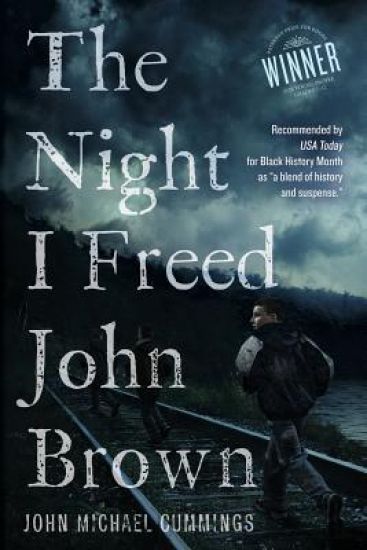
In this novel for young adults, Josh knows there is something about the tall Victorian House on the Harpers Ferry Hill, the one his father grew up in, that he can’t quite put his finger on. And his impossible father won’t give him any clues. He’s hiding something.And then there’s the famous John Brown. The one who all the tourists come to hear about. The one whose statue looms over Josh’s house. Why does he seem to haunt Josh and his whole family? When the fancy Richmonds come to town and move right next door, their presence forces Josh to find the answers and stand up to the secrets of the House, to his father—and to John Brown, too.The historic village of Harpers Ferry comes alive in this young boy’s brave search for answers and a place of his own in this brilliant first novel by John Michael Cummings.
Stunned by the death of his mentally ill brother, forty-two-year-old Mark Barr returns to his hometown in West Virginia for his brother’s funeral only to find out that his estranged family has no such plans. Once back home, he discovers that his family’s memory, as well as his own, of his brother as a broken, hopeless schizophrenic is belied by mounting evidence that Steve Barr had lived a much fuller and more complicated life.Armed with this new knowledge, Mark tears off on a mission to honor his brother’s memory with justice and compassion. As he fights to change the hearts of his father, mother, and middle brother, all of whom are fractured by anger, blame, and dysfunction, his own stability is rocked apart.In tough, spare, beautiful language that pulls the reader into the peeling, gothic world of southern West Virginia, Don’t Forget Me, Bro shows us that at the heart of every human existence is the ultimate fear of being forgotten, of simply being gone.
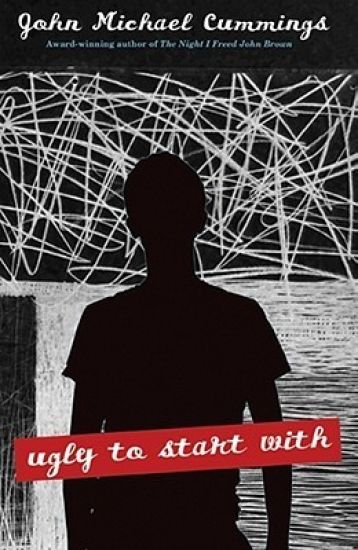
Jason Stevens is growing up in picturesque, historic Harpers Ferry, West Virginia in the 1970s. Back when the roads are smaller, the cars slower, the people more colorful, and Washington, D.C. is way across the mountains - a winding sixty-five miles away.Jason dreams of going to art school in the city, but he must first survive his teenage years. He witnesses a street artist from Italy charm his mother from the backseat of the family car. He stands up to an abusive husband - and then feels sorry for the jerk. He puts up with his father's hard-skulled backwoods ways, his grandfather's showy younger wife, and the fist-throwing schoolmates and eccentric mountain characters that make up Harpers Ferry - all topped off by a basement art project with a girl from the poor side of town. Ugly to Start With punctuates the exuberant highs, bewildering midpoints, and painful lows of growing up, and affirms that adolescent dreams and desires are often fulfilled in surprising ways.
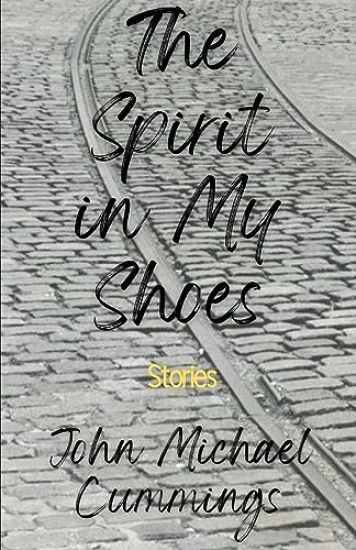
Featuring twenty-three stories, John Michael Cummings's debut story collection brims with the vitality and complexity of our shared humanity. In tales that conjure comparisons to John Updike, Raymond Carver, and William Gay, Cummings tells the truth about loneliness, relationships, and the common struggles we all face with prose both precise and vibrant. Cummings's voice, assured yet questioning, will stay with you long after you've finished The Spirit in My Shoes.
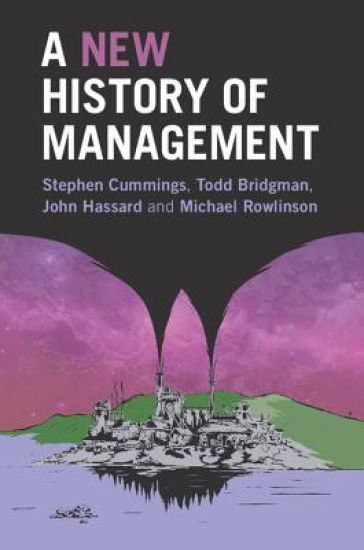
Existing narratives about how we should organize are built upon, and reinforce, a concept of 'good management' derived from what is assumed to be a fundamental need to increase efficiency. But this assumption is based on a presentist, monocultural, and generally limited view of management's past. A New History of Management disputes these foundations. By reassessing conventional perspectives on past management theories and providing a new critical outline of present-day management, it highlights alternative conceptions of 'good management' focused on ethical aims, sustainability, and alternative views of good practice. From this new historical perspective, existing assumptions can be countered and simplistic views disputed, offering a platform from which graduate students, researchers, and reflective practitioners can develop alternative approaches for managing and organizing in the twenty-first century.
Existing narratives about how we should organize are built upon, and reinforce, a concept of 'good management' derived from what is assumed to be a fundamental need to increase efficiency. But this assumption is based on a presentist, monocultural, and generally limited view of management's past. A New History of Management disputes these foundations. By reassessing conventional perspectives on past management theories and providing a new critical outline of present-day management, it highlights alternative conceptions of 'good management' focused on ethical aims, sustainability, and alternative views of good practice. From this new historical perspective, existing assumptions can be countered and simplistic views disputed, offering a platform from which graduate students, researchers, and reflective practitioners can develop alternative approaches for managing and organizing in the twenty-first century.
Did you ever wonder what it would be like to move from a typical job, place, and life to a small farm with daily routines that are anything but typical? This two-and-a-half-month journal of John Michael's new routine after becoming a framer will shed some light on that question. It might also help you imagine what a new normal might look like if you decide to pull the plug on the tried-and-true and find your own changed place in the world. As John Michael would say, "Why not?"
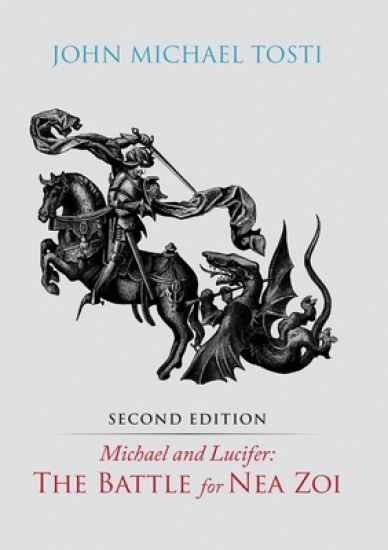
Angels, Demons, Nephilim and Mankind all struggle to survive in an evil world, a world where the Lord saw how great man's wickedness on the earth had become. The Lord was grieved to the point of considering to "wipe mankind from the face of the earth." Lucifer, sensing an opening to sow misery proposes a test, a challenge to find out if there is any goodness left on earth. Calling out his ancient nemesis, Michael the Archangel, Lucifer hopes his plan will result in convincing God that man is not worth the grief and in the process humiliating Michael and spoiling the Son's hoped for Bride. Accompany Michael and Lucifer on a hundred year journey and observe from the safety of 6,000 years their battle for a world in chaos. Should God destroy His Creation? Is there any goodness in Mankind? The outcome of Michael and Lucifer's war will determine the answer to those questions and if indeed life on God's creation should even be allowed to continue.
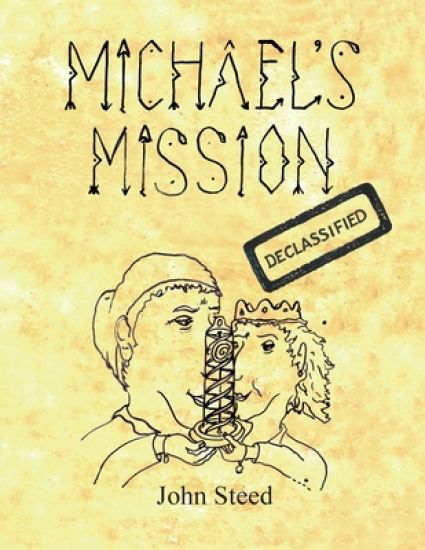
Michael's Mission by John Steed Synopsis of a fact/fiction book produced from original research by John Steed. The front cover depicts an actual tracing from Afghanistan, the earliest discovered. The Part 1 numbering 76,800 words is a fictional account by the archangel Michael of his life and travels based solely on the terrestrial pictures left to us on our landscape. 370 of those pictures have been traced, processed and recorded from every continent giving us 'snap shots' leading to his missionary work round the world. A calculated guesstimate puts Michael in the frame just prior to 49,600 years ago until his death at Machu Picchu sometime before Christ. Michael describes his wedding to Eve and the bringing up of his only son John. My introduction goes into his background, reincarnation being one of the options for his comings and goings over so long a period. Michael's unselfish zest to civilize existing humanoids is paramount in his story, clearly not always successful. With his wife and teenage son he embarks on a eugenics programme following the Garden of Eden scenario when he persuades his wife to mate with a tame ape, namely, Adam. Caine and for a time Abel are added to his core with Ron the handy man and Hermes on security. Michael tells of his ship construction before ending up in India the Far East, Australia and America from their base at Cheddar. Along with his Karacoram (core) he sets up kingdoms in Egypt, Nubia and Europe. A start was made with terrestrial pictures like Bats, Zodiacs and Mandelbrots followed by a vivid description of his civil engineering feats from Stanton Drew to Salisbury Plain, and his pioneering pyramids in Egypt. Michael describes in detail the shaping of the Sphinx and later his masterpiece of organization, the Great Pyramid at Giza. Returning to S. America Michael then describes, not only his travels but with the Incas, reconstructing massive buildings already abandoned by Atlanteans whose many traditions he incorporates. Finally as an old man he is murdered at Machu Picchu with a massive terrestrial scene to prove it. Appendices follow, noting that over 170 registered archaeological sites worldwide were mentioned by him. In part 2 of the book are the illustrations of actual tracings together with the authors comments. Clear portrayals of the D.N.A. double helix, telescopes in use as well as geometrical figures are to be seen. Fundamental to further proof of these pictures are the relative old place names which when translated from the Celtic gives us an insight into the views of those ancient surveyors or planners. So, 100 pictures each with 2 or 3 pages of text together with a partly traced scene as an encouragement to continue in the footsteps of Messrs. Watkins, Maltwood, Lord, Caine, Pennick and many in France. Finally a potent tracing as an example of a further 100 to found in the sequel, Michael's Legacy already in the pipeline. In Part 1 text 76,800 words In Part 2 text 51,600 words Total 128,400 approx In Part 2 illustrations on 108 full pages.
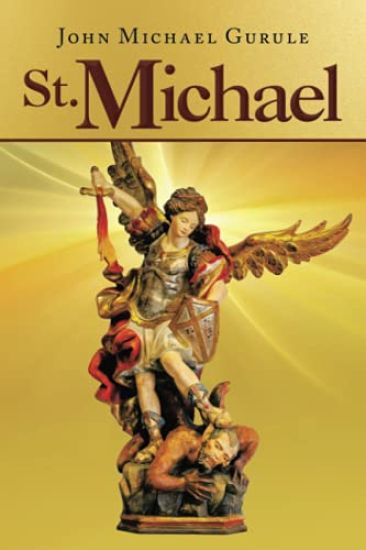
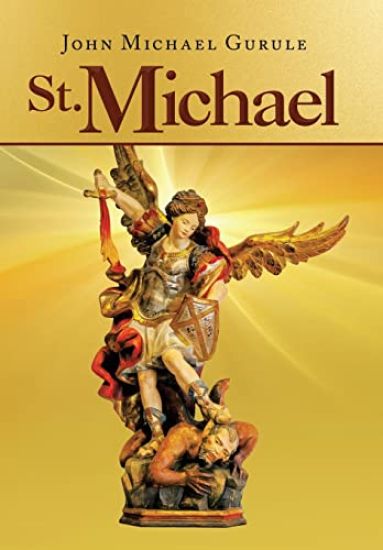
In John Michael Gurule's second book, St. Michael, you'll read about a helper. A warrior. AN ANGEL among angels, and God's protector of the church's armies against the attacks of the Devil. Michael the Archangel. John's latest work shares numerous powerful and life-changing Bible verses that can turn away your loneliness, pain, regrets, guilt and shame. You can experience the miracles that God has for all of us if we will seek guidance, not from the world but from God Almighty.
In John Michael Gurule's second book, St. Michael, you'll read about a helper. A warrior. AN ANGEL among angels, and God's protector of the church's armies against the attacks of the Devil. Michael the Archangel. John's latest work shares numerous powerful and life-changing Bible verses that can turn away your loneliness, pain, regrets, guilt and shame. You can experience the miracles that God has for all of us if we will seek guidance, not from the world but from God Almighty.
John Michael was a typical 17 year old boy with hopes and dreams of what was to come. A senior in high school and having just signed his National Letter of Intent to play D1 lacrosse, life was good. Then one December morning it all changed.A massive brain stem stroke left John Michael locked-in, unable to speak or move anything but his eyes. With the worst possible prognosis, John Michael has defied the odds and continues to fight to get his life back. Walk alongside the Night family as they experience the unthinkable. Told through the voices of the family, including John Michael himself, this is a heartfelt story of love, inspiration and miracles.