Kirjahaku
Etsi kirjoja tekijän nimen, kirjan nimen tai ISBN:n perusteella.
1000 tulosta hakusanalla John Morley

John Morley and the Uses of History in Victorian Liberal Culture
Marco de Waard
Ashgate Publishing Limited
2026
sidottu
In his ambitious study of John Morley (1838-1923), Marco de Waard retrieves the literary critic and intellectual historian's status as a prolific and versatile man of letters whose influence reshaped the nineteenth century's liberal culture of the past from the 1860s onwards. At the same time, by situating Morley's work in its many contexts, from the religious to the professional, de Waard uses Morley to explore the ways in which a distinctly nineteenth-century vision and practice of history helped transform Britain into a modern liberal culture and refashioned its identity as a liberal nation-state. Based on extensive archival research, de Waard's study combines a biographical framework with a close and historically informed analysis of John Morley's work and ideas. He pays strategic attention to Morley's relations with leading philosophers of the period like Auguste Comte, John Stuart Mill, and Herbert Spencer; to his friendships with Leslie Stephen, Mark Pattison, George Meredith, and T. H. Huxley, and to his vigorous polemics with contemporaries such as Thomas Carlyle, Matthew Arnold, A. C. Swinburne, and Hippolyte Taine. Chapters focus on Morley's activities as critic and editor of the influential Fortnightly Review; on his ambitious studies of French Enlightenment philosophers; on his use of popular, didactic biographies to promote a progressive and democratic understanding of Britain's national past; and on his work as an historian of contemporary politics who cast a peaceable solution to the 'Irish question' as the test case of a modern liberal polity. Significantly, de Waard locates Morley's work squarely in the British utilitarian tradition and challenges the pervasive idea that from c. 1860, the narrative histories of the early-Victorian period were replaced by more specialised and academic forms of historical writing.
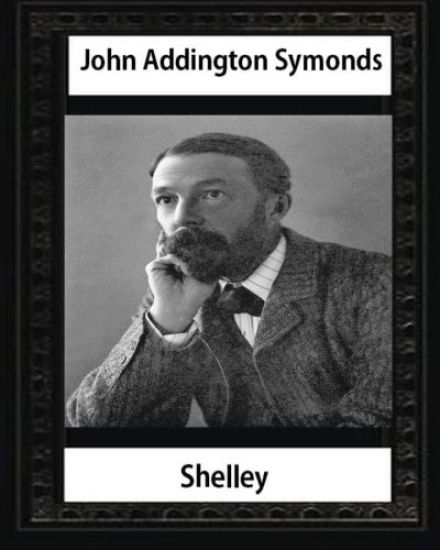
Shelley (1878), by John Addington Symonds and John Morley: John Morley, 1st Viscount Morley of Blackburn OM PC (24 December 1838 - 23 September 1923)
John Morley; John Addington Symonds
Createspace Independent Publishing Platform
2016
nidottu
John Addington Symonds ( 5 October 1840 - 19 April 1893) was an English poet and literary critic. A cultural historian, he was known for his work on the Renaissance, as well as numerous biographies about writers and artists. Although he married and had a family, he was an early advocate of male love (homosexuality), which he believed could include pederastic as well as egalitarian relationships, referring to it as l'amour de l'impossible (love of the impossible) He also wrote much poetry inspired by his homosexual affairs. John Morley, 1st Viscount Morley of Blackburn OM PC (24 December 1838 - 23 September 1923) was a British Liberal statesman, writer and newspaper editor. Initially a journalist, he was elected a Member of Parliament in 1883. He was Chief Secretary for Ireland in 1886 and between 1892 and 1895, Secretary of State for India between 1905 and 1910 and again in 1911 and Lord President of the Council between 1910 and 1914. Morley was a distinguished political commentator, and biographer of his hero, William Gladstone. Morley is best known for his writings and for his "reputation as the last of the great nineteenth-century Liberals". He opposed imperialism and the Boer War. His opposition to British entry into the First World War as an ally of Russia led him to leave government in August 1914.
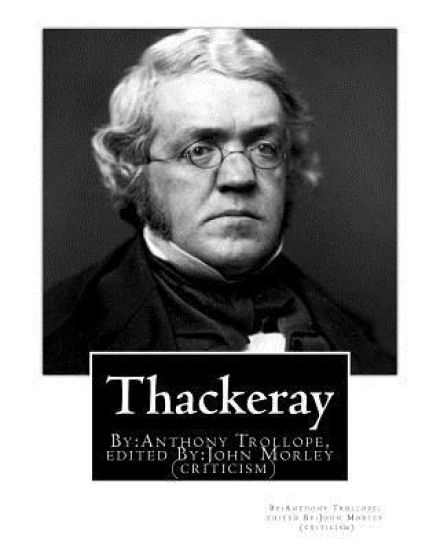
Thackeray. By: Anthony Trollope. edited By: John Morley(24 December 1838 - 23 September 1923): William Makepeace Thackeray (1811-1863) (criticism)
John Morley; Anthony Trollope
Createspace Independent Publishing Platform
2016
nidottu
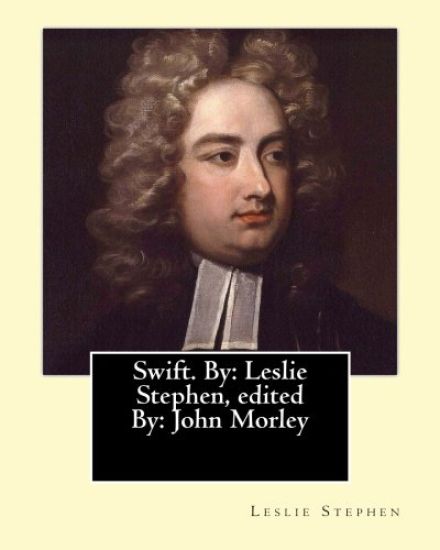
Swift. By: Leslie Stephen, edited By: John Morley, 1st Viscount Morley of Blackburn (24 December 1838 - 23 September 1923) was a
John Morley; Leslie Stephen
Createspace Independent Publishing Platform
2017
nidottu
Jonathan Swift (30 November 1667 - 19 October 1745) was an Anglo-Irish satirist, essayist, political pamphleteer (first for the Whigs, then for the Tories), poet and cleric who became Dean of St Patrick's Cathedral, Dublin. Swift is remembered for works such as A Tale of a Tub (1704), An Argument Against Abolishing Christianity (1712), Gulliver's Travels (1726), and A Modest Proposal (1729). He is regarded by the Encyclop dia Britannica as the foremost prose satirist in the English language, and is less well known for his poetry. He originally published all of his works under pseudonyms - such as Lemuel Gulliver, Isaac Bickerstaff, Drapier's Letters as MB Drapier - or anonymously. He is also known for being a master of two styles of satire, the Horatian and Juvenalian styles.His deadpan, ironic writing style, particularly in A Modest Proposal, has led to such satire being subsequently termed "Swiftian"......... John Morley, 1st Viscount Morley of Blackburn OM PC (24 December 1838 - 23 September 1923) was a British Liberal statesman, writer and newspaper editor. Initially a journalist, he was elected a Member of Parliament in 1883. He was Chief Secretary for Ireland in 1886 and between 1892 and 1895, Secretary of State for India between 1905 and 1910 and again in 1911 and Lord President of the Council between 1910 and 1914. Morley was a distinguished political commentator, and biographer of his hero, William Gladstone. Morley is best known for his writings and for his "reputation as the last of the great nineteenth-century Liberals".He opposed imperialism and the Boer War. His opposition to British entry into the First World War as an ally of Russia led him to leave government in August 1914...... Sir Leslie Stephen KCB (28 November 1832 - 22 February 1904) was an English author, critic, historian, biographer, and mountaineer, and father of Virginia Woolf and Vanessa Bell.Stephen was born at Kensington Gore in London, and son of Sir James Stephen and Lady Jane Catherine (n e Venn) Stephen. His father was Colonial Undersecretary of State and a noted abolitionist. He was the fourth of five children, his siblings including James Fitzjames Stephen (1829-1894) and Caroline Emilia Stephen (1834-1909). His family had belonged to the Clapham Sect, the early 19th century group of mainly evangelical Christian social reformers. At his father's house he saw a good deal of the Macaulays, James Spedding, Sir Henry Taylor and Nassau Senior. After studying at Eton College, King's College London and Trinity Hall, Cambridge, where he graduated B.A. (20th wrangler) in 1854 and M.A. in 1857, Stephen remained for several years a fellow and tutor of his college. He recounted some of his experiences in a chapter in his Life of Fawcett as well as in some less formal Sketches from Cambridge: By a Don (1865). These sketches were reprinted from the Pall Mall Gazette, to the proprietor of which, George Murray Smith, he had been introduced by his brother. MARRIAGE: The family connections included that of William Makepeace Thackeray. His brother, Fitzjames had been a friend of Thackeray's and assisted in the disposition of his estate when he died in 1863. His sister Caroline met Thackeray's daughters, Anny (1837-1919) and Minny (Harriet Marian Thackeray 1840-1875) when they were mutual guests of Julia Margaret Cameron (of whom, see later). This led to an invitation to visit from Leslie Stephen's mother, Lady Stephen, where the sisters met him. They also met at George Murray Smith's house at Hampstead. Minny and Leslie became engaged on December 4, 1866 and married on June 19, 1867......
The leading modern study of the varied social and political roles of the major Gladstonian politician. John Morley, 1st Viscount Morley of Blackburn OM PC (1838-1923) was Chief Secretary for Ireland in 1886 and 1892-95, Secretary of State for India 1905-1910 and again in 1911. He was Lord President of the Council 1910-14. He had previously been a leading commentator as editor of the Fortnightly Review and the Pall Mall Gazette, and became the biographer of Gladstone. He opposed imperialism and the Boer War. His opposition to British entry into the First World War as an ally of Russia led him to leave government in August 1914.
The leading modern study of the varied social and political roles of the major Gladstonian politician. John Morley, 1st Viscount Morley of Blackburn OM PC (1838-1923) was Chief Secretary for Ireland in 1886 and 1892-95, Secretary of State for India 1905-1910 and again in 1911.He was Lord President of the Council 1910-14. He had previously been a leading commentator as editor of the Fortnightly Review and the Pall Mall Gazette, and became the biographer of Gladstone.He opposed imperialism and the Boer War. His opposition to British entry into the First World War as an ally of Russia led him to leave government in August 1914.
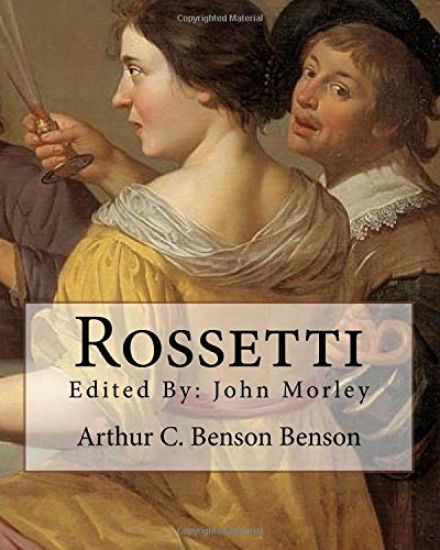
Rossetti . By: Arthur C. Benson, edited By: John Morley: John Morley, 1st Viscount Morley of Blackburn, OM, PC, FRS (24 December 1838
John Morley; Arthur C. Benson Benson
Createspace Independent Publishing Platform
2018
nidottu
John Morley, 1st Viscount Morley of Blackburn, OM, PC, FRS (24 December 1838 - 23 September 1923) was a British Liberal statesman, writer and newspaper editor. Initially a journalist, he was elected a Member of Parliament in 1883. He was Chief Secretary for Ireland in 1886 and between 1892 and 1895, Secretary of State for India between 1905 and 1910 and again in 1911 and Lord President of the Council between 1910 and 1914. Morley was a distinguished political commentator, and biographer of his hero, William Gladstone. Morley is best known for his writings and for his "reputation as the last of the great nineteenth-century Liberals".He opposed imperialism and the Boer War. His opposition to British entry into the First World War as an ally of Russia led him to leave government in August 1914................ Arthur Christopher Benson (24 April 1862 - 17 June 1925) was an English essayist, poet, author and academic and the 28th Master of Magdalene College, Cambridge. He is noted for writing the words of the song "Land of Hope and Glory". Early life and family: Benson was born on 24 April 1862 at Wellington College, Berkshire, the son of Edward White Benson (1829-1896), first headmaster of the college. He was one of six children of Edward White Benson (Archbishop of Canterbury, 1882-96) and his wife Mary Sidgwick Benson, sister of the philosopher Henry Sidgwick. Benson was born into a literary family; his brothers included Edward Frederic Benson, best remembered for his Mapp and Lucia novels, and Robert Hugh Benson, a priest of the Church of England before converting to Roman Catholicism, who wrote many popular novels. Their sister, Margaret Benson, was an artist, author, and amateur Egyptologist. The Benson family was exceptionally accomplished, but their history was somewhat tragic; a son and daughter died young; and another daughter, as well as Arthur himself, suffered from a mental condition that was possibly bipolar disorder or manic-depressive psychosis, which they had inherited from their father. None of the children married.Despite his illness, Arthur was a distinguished academic and a prolific author. From the ages of 10 to 21, he lived in cathedral closes, first at Lincoln where his father was Chancellor of Lincoln Cathedral, and then at Truro where his father was the first Bishop of Truro. He retained a love of church music and ceremony. During 1874 he won a scholarship to Eton from Temple Grove School, a preparatory school in East Sheen. He became a student of King's College, Cambridge during 1881, where he was a scholar and scored first for the Classical tripos during 1884. Career: From 1885 to 1903 he taught at Eton, returning to Cambridge in 1904 as a Fellow of Magdalene College to lecture in English Literature. He became president of the college in 1912 and Master of Magdalene in December 1915, a post he held until his death in 1925. From 1906, he was a governor of Gresham's School. The modern development of Magdalene was shaped by Benson. He was a generous benefactor to the college with a significant impact on the modern appearance of the college grounds; at least twenty inscriptions around the college refer to him. In 1930, Benson Court was constructed and named after him.........................
An unusual study of a distinguished Victorian, approached through the ideas which occupied and actuated his career. By examining John Morley's intellectual interests and the development of his personal philosophy, Mr. Staebler arrives at the essential Morley and the essential Liberal of the late nineteenth century. Originally published in 1943. The Princeton Legacy Library uses the latest print-on-demand technology to again make available previously out-of-print books from the distinguished backlist of Princeton University Press. These editions preserve the original texts of these important books while presenting them in durable paperback and hardcover editions. The goal of the Princeton Legacy Library is to vastly increase access to the rich scholarly heritage found in the thousands of books published by Princeton University Press since its founding in 1905.
An unusual study of a distinguished Victorian, approached through the ideas which occupied and actuated his career. By examining John Morley's intellectual interests and the development of his personal philosophy, Mr. Staebler arrives at the essential Morley and the essential Liberal of the late nineteenth century. Originally published in 1943. The Princeton Legacy Library uses the latest print-on-demand technology to again make available previously out-of-print books from the distinguished backlist of Princeton University Press. These editions preserve the original texts of these important books while presenting them in durable paperback and hardcover editions. The goal of the Princeton Legacy Library is to vastly increase access to the rich scholarly heritage found in the thousands of books published by Princeton University Press since its founding in 1905.