Kirjojen hintavertailu. Mukana 11 213 693 kirjaa ja 12 kauppaa.

Kirjahaku

Etsi kirjoja tekijän nimen, kirjan nimen tai ISBN:n perusteella.

1000 tulosta hakusanalla John Nash

John Nash

John Nash

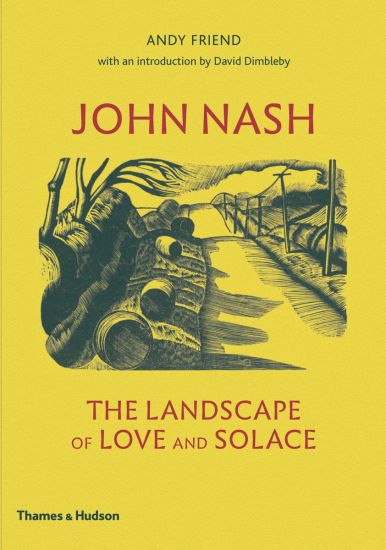
Andy Friend; David Dimbleby

Thames Hudson Ltd
2020
sidottu
A long-overdue biography and rediscovery of 20th-century British artist John Nash ‘Andy Friend deftly carries the reader into a much-peopled narrative, opening up many insights into the art world at the same time that he gets inside the personal life of John Nash and his wife Christine Kühlenthal.’ Frances Spalding John Nash was a highly versatile artist who responded to the British landscape with a unique vision that still resonates today. He also created some of the most memorable paintings of the First World War. Over a sixty-year career he produced paintings in oil and watercolour and was also an illustrator, cartoonist, wood-engraver and arguably the finest botanical draughtsman of his era. Unlike his older brother Paul, John received no formal art training, but emerged almost fully fledged into the London art world of 1913. Held in high regard by his contemporaries, Nash was part of a wide network of artist friends, including Walter Sickert, Harold Gilman, Charles Ginner, Mark Gertler, Dora Carrington, Cedric Morris and of course his brother Paul, and he in turn influenced Eric Ravilious and Edward Bawden. John Nash: The Landscape of Love and Solace examines these personal and working relationships, and in particular that with his wife Christine Kuhlenthal. An extraordinary voice in her own right, revealed here for the first time through her letters and journals, Christine’s influence was critical to Nash’s career during a long marriage which also encompassed both partners having many other relationships. Their life story is an extraordinary one, which as this book shows was touched by many hitherto untold events. Drawing on original research and including a foreword by David Dimbleby, this fascinating and long-overdue biography provides a much fuller picture of John Nash and his work than previously and is at the same time an intimate and compelling narrative, embracing love, tragedy and the pursuit of solace.
The Essential John Nash

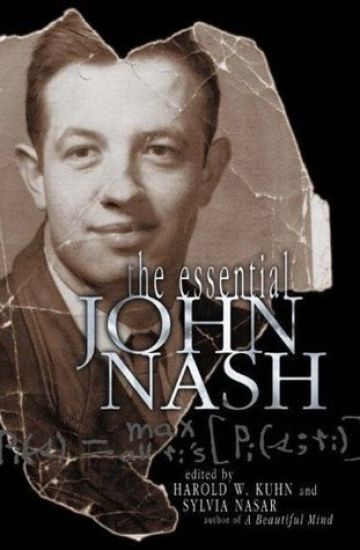
The Essential John Nash

John Nash

Princeton University Press
2007
pokkari
When John Nash won the Nobel prize in economics in 1994, many people were surprised to learn that he was alive and well. Since then, Sylvia Nasar's celebrated biography A Beautiful Mind, the basis of a new major motion picture, has revealed the man. The Essential John Nash reveals his work--in his own words. This book presents, for the first time, the full range of Nash's diverse contributions not only to game theory, for which he received the Nobel, but to pure mathematics--from Riemannian geometry and partial differential equations--in which he commands even greater acclaim among academics. Included are nine of Nash's most influential papers, most of them written over the decade beginning in 1949. From 1959 until his astonishing remission three decades later, the man behind the concepts "Nash equilibrium" and "Nash bargaining"--concepts that today pervade not only economics but nuclear strategy and contract talks in major league sports--had lived in the shadow of a condition diagnosed as paranoid schizophrenia. In the introduction to this book, Nasar recounts how Nash had, by the age of thirty, gone from being a wunderkind at Princeton and a rising mathematical star at MIT to the depths of mental illness. In his preface, Harold Kuhn offers personal insights on his longtime friend and colleague; and in introductions to several of Nash's papers, he provides scholarly context. In an afterword, Nash describes his current work, and he discusses an error in one of his papers. A photo essay chronicles Nash's career from his student days in Princeton to the present. Also included are Nash's Nobel citation and autobiography. The Essential John Nash makes it plain why one of Nash's colleagues termed his style of intellectual inquiry as "like lightning striking." All those inspired by Nash's dazzling ideas will welcome this unprecedented opportunity to trace these ideas back to the exceptional mind they came from.
John Nash

John Nash

Andrew Lambirth

Unicorn Press Ltd
2021
nidottu
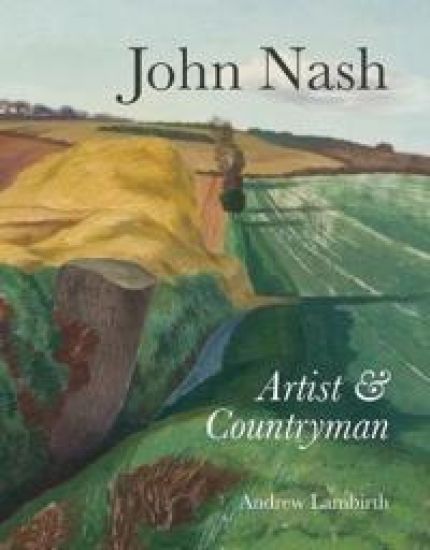
John Nash (1893–1977) is the quintessential twentieth-century painter of the English countryside. Nash began as a watercolour painter, and the medium remained his mainstay throughout a long career. He also worked regularly in oil paint and was an immensely skilled draughtsman and wood engraver. A dedicated gardener and plantsman, his botanical studies are of real quality. This is the first full-length monograph to deal with all aspects of his career.
John Nash

John Nash

Historic England
2013
sidottu
John Nash is universally recognised as one of the most important architects of late eighteenth- and early nineteenth-century Britain. As the man responsible for the creation of Regent Street and Regent’s Park, he left an indelible mark on the West End of London, and his two most famous buildings – the Brighton Pavilion and Buckingham Palace – are crucial to any understanding of the monarchy in the age of the Prince Regent (later George IV). Yet, even before he became involved in these ambitious projects, he made a major contribution to domestic architecture through the design of a series of stylistically varied villas, country houses and cottages in which he applied the doctrines of the Picturesque with an inventiveness and panache that has rarely been surpassed. No complete study of Nash’s work has been published since Sir John Summerson’s, The Life and Work of John Nash, Architect in 1980. Since then, new scholarship has revised some of Summerson’s conclusions and cast new light on several important aspects of Nash’s work. The aim of this book – which originated in a symposium held by the Georgian Group in September 2009 – is to bring together this recent scholarship in a single volume, and so bring this most engaging of architects to a new generation of readers.
John Nash, Jr.: The Life and Legacy of One of America's Most Influential Mathematicians
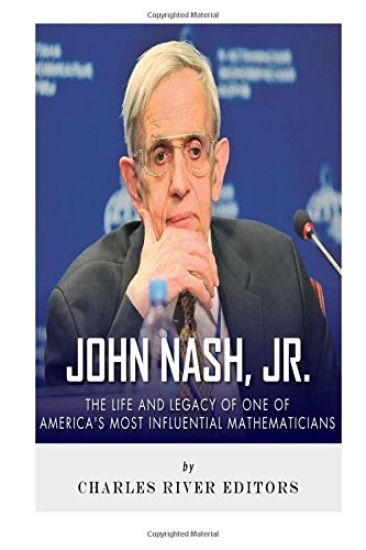
*Includes pictures *Includes Nash's quotes about his own life and career *Includes online resources and a bibliography for further reading *Includes a table of contents "In madness, I thought I was the most important person in the world." - John Nash, Jr. In 2001, the critically acclaimed film A Beautiful Mind introduced millions to John Nash, Jr., one of America's most important 20th century mathematicians, nearly 50 years after he had won a Nobel prize for his work. Naturally, most viewers of the movie will remember a prodigy suffering from paranoid schizophrenia while overlooking how the man's innovative studies and works had a major influence on everything from economics to biology, cryptography, artificial intelligence, and political philosophy. The "Nash equilibrium," a theory he developed when he was still a student in his 20s, has also affected games, military doctrine, and computing. Nash was still doing groundbreaking work and was in the prime of his life when he began demonstrating all kinds of odd behavior, initially alarming his wife Alicia and then stunning the academic world with an incoherent lecture in 1959. As it turned out, he was suffering from paranoid schizophrenia, which made him see things and believe in wild conspiracies like a national communist takeover by men wearing red ties. For nearly a decade after the diagnosis, Nash was treated in hospitals with various kinds of medication, including shock therapy, and Nash himself termed his mental health issues as making him go "from scientific rationality of thinking into the delusional thinking characteristic of persons who are psychiatrically diagnosed as 'schizophrenic' or 'paranoid schizophrenic'". Over time, with a better understanding of the problem and treatment, Nash began to recover his mental faculties and get back to work in the last few decades of the 20th century. Fittingly, some of that work included coming up with hypotheses and theories about mental health issues, thereby having an impact on evolutionary psychology, and he was subsequently recognized with a countless number of awards for both his past and present work. Indeed, when he died in a car accident in May 2015 at the age of 86, he was returning from Norway, where he had been given the Abel Prize, awarded by the Norwegian government to outstanding mathematicians. John Nash, Jr.: The Life and Legacy of One of America's Most Influential Mathematicians chronicles the life and work of Nash and the impact he had on math and economics. Along with pictures of important people, places, and events, you will learn about Nash like never before.
John Nash, Jr.: The Life and Legacy of One of America's Most Influential Mathematicians
*Includes pictures *Includes Nash's quotes about his own life and career *Includes online resources and a bibliography for further reading *Includes a table of contents "In madness, I thought I was the most important person in the world." - John Nash, Jr. In 2001, the critically acclaimed film A Beautiful Mind introduced millions to John Nash, Jr., one of America's most important 20th century mathematicians, nearly 50 years after he had won a Nobel prize for his work. Naturally, most viewers of the movie will remember a prodigy suffering from paranoid schizophrenia while overlooking how the man's innovative studies and works had a major influence on everything from economics to biology, cryptography, artificial intelligence, and political philosophy. The "Nash equilibrium," a theory he developed when he was still a student in his 20s, has also affected games, military doctrine, and computing. Nash was still doing groundbreaking work and was in the prime of his life when he began demonstrating all kinds of odd behavior, initially alarming his wife Alicia and then stunning the academic world with an incoherent lecture in 1959. As it turned out, he was suffering from paranoid schizophrenia, which made him see things and believe in wild conspiracies like a national communist takeover by men wearing red ties. For nearly a decade after the diagnosis, Nash was treated in hospitals with various kinds of medication, including shock therapy, and Nash himself termed his mental health issues as making him go "from scientific rationality of thinking into the delusional thinking characteristic of persons who are psychiatrically diagnosed as 'schizophrenic' or 'paranoid schizophrenic'". Over time, with a better understanding of the problem and treatment, Nash began to recover his mental faculties and get back to work in the last few decades of the 20th century. Fittingly, some of that work included coming up with hypotheses and theories about mental health issues, thereby having an impact on evolutionary psychology, and he was subsequently recognized with a countless number of awards for both his past and present work. Indeed, when he died in a car accident in May 2015 at the age of 86, he was returning from Norway, where he had been given the Abel Prize, awarded by the Norwegian government to outstanding mathematicians. John Nash, Jr.: The Life and Legacy of One of America's Most Influential Mathematicians chronicles the life and work of Nash and the impact he had on math and economics. Along with pictures of important people, places, and events, you will learn about Nash like never before.
John Nash - Kopf oder Zahl

John Nash - Kopf oder Zahl

Dieter K Christmann

Books on Demand
2023
pokkari
Entt uscht ber den Film A beautiful mind beschlie t Rainer B lldorff, selbst in der Lebensgeschichte des schizophrenen Mathematikers und Nobelpreistr gers John Nash nach den Ursachen f r dessen Wahnerkrankung zu suchen. Die unbekannte, aber verbl ffend einleuchtende Schizophrenietheorie, die er in einer alten Diplomarbeit eines Psychologie-Studenten entdeckt hat, soll ihm dabei helfen. Beim Studium der Biografie von Nash entsteht pl tzlich f r ihn ein ganz anderer Film, der mit den Hollywood-Bildern kaum noch etwas gemein hat. Begeistert von seinen Entdeckungen ber die Entstehungsgeschichte einer schizophrenen Erkrankung geht er daran, sie in einem spannenden H rspiel niederzuschreiben.
Paul Nash and John Nash

Paul Nash and John Nash

Brian Webb; Peyton Skipwith

ACC Art Books
2008
sidottu
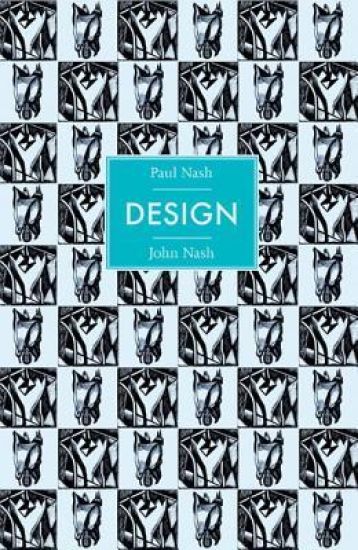
The brothers Paul and John Nash, in their very different ways, were a major influence on twentieth century British design. Paul Nash (1889-1946) is now recognised as the most significant war artist of the last century; John Nash (1893-1977) as a plantsman artist. Both worked as designers and as tutors at the Royal College of Art, Paul encouraging a generation of designer artists that included Eric Ravilious, Edward Bawden and Enid Marx. As a committee member of the Design and Industries Association and President of the newly formed Society of Industrial Artists (now the Chartered Society of Designers) Paul promoted design as no less an art form than the fine arts of painting and sculpture. His clients included London Transport, Shell and Curwen Press and publishers the Nonesuch and Golden Cockerel Presses. John became well known for his Edward Lear influenced humorous illustrations and his superb plant drawings and wood engravings that illustrate innumerable books and publications. Paul Nash and John Nash, Design features over 150 illustrations, including graphic design, textile design, ceramics and glass, many not reproduced before. With descriptions by Brian Webb and an introductory essay by Peyton Skipwith. The Design series is the winner of the Brand/Series Identity Category at the British Book Design and Production Awards 2009, judges said: "A series of books about design, they had to be good and these are. The branding is consistent, there is a good use of typography and the covers are superb." Also available: Claud Lovat Fraser ISBN: 9781851496631 GPO ISBN: 9781851495962 Peter Blake ISBN: 9781851496181 FHK Henrion ISBN: 9781851496327 David Gentleman ISBN: 9781851495955 David Mellor ISBN: 9781851496037 E.McKnight Kauffer ISBN: 9781851495207 Edward Bawden and Eric Ravilious ISBN: 9781851495009 El Lissitzky ISBN: 9781851496198 Festival of Britain 1951 ISBN: 9781851495337 Harold Curwen & Oliver Simon: Curwen Press ISBN: 9781851495719 Jan Le Witt and George Him ISBN: 9781851495665 Rodchenko ISBN: 9781851495917 Abram Games ISBN: 9781851496778
Bargaining and the Theory of Cooperative Games: John Nash and Beyond
Building on the pioneering work by the Nobel Memorial Laureate, John Nash, Professor Thomson has brought together a broad selection of seminal articles which analyse and discuss bargaining and the theory of cooperative games. Beginning with a distinguished collection of papers discussing the origins of game theory, this volume systematically explores its development as a tool to illuminate economic behaviour. It includes the work of highly accomplished academics whose discoveries over the years have shaped the direction of this subject. With his insightful introduction, the editor has ensured that this indispensable book is suitable for anyone with an interest in cooperative gaming.
A Beautiful Mind: The Life of Mathematical Genius and Novel Laureate John Nash
**Also an Academy Award-winning film starring Russell Crowe and Jennifer Connelly--directed by Ron Howard** The powerful, dramatic biography of math genius John Nash, who overcame serious mental illness and schizophrenia to win the Nobel Prize."How could you, a mathematician, believe that extraterrestrials were sending you messages?" the visitor from Harvard asked the West Virginian with the movie-star looks and Olympian manner. "Because the ideas I had about supernatural beings came to me the same way my mathematical ideas did," came the answer. "So I took them seriously." Thus begins the true story of John Nash, the mathematical genius who was a legend by age thirty when he slipped into madness, and who--thanks to the selflessness of a beautiful woman and the loyalty of the mathematics community--emerged after decades of ghostlike existence to win a Nobel Prize for triggering the game theory revolution. The inspiration for an Academy Award-winning movie, Sylvia Nasar's now-classic biography is a drama about the mystery of the human mind, triumph over adversity, and the healing power of love.
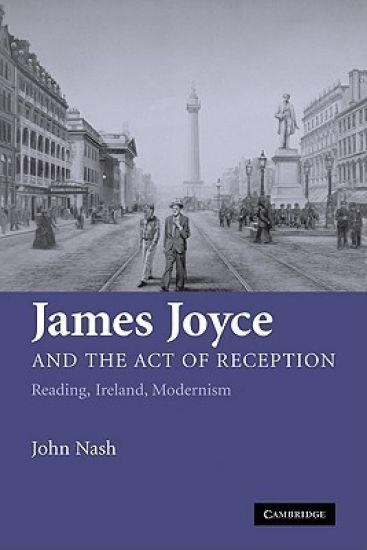
James Joyce and the Act of Reception

James Joyce and the Act of Reception

John Nash

Cambridge University Press
2010
pokkari
James Joyce and the Act of Reception is a detailed account of Joyce's own engagement with the reception of his work. It shows how Joyce's writing, from the earliest fiction to Finnegans Wake, addresses the social conditions of reading (particularly in Ireland). Most notably, it echoes and transforms the responses of some of Joyce's actual readers, from family and friends to key figures such as Eglinton and Yeats. This study argues that the famous 'unreadable' quality of Joyce's writing is a crucial feature of its historical significance. Not only does Joyce engage with the cultural contexts in which he was read but, by inscribing versions of his own contemporary reception within his writing, he determines that his later readers read through the responses of earlier ones. In its focus on the local and contemporary act of reception, Joyce's work is seen to challenge critical accounts of both modernism and deconstruction.
James Joyce and the Act of Reception

James Joyce and the Act of Reception

John Nash

Cambridge University Press
2006
sidottu
James Joyce and the Act of Reception is a detailed account of Joyce's own engagement with the reception of his work. It shows how Joyce's writing, from the earliest fiction to Finnegans Wake, addresses the social conditions of reading (particularly in Ireland). Most notably, it echoes and transforms the responses of some of Joyce's actual readers, from family and friends to key figures such as Eglinton and Yeats. This study argues that the famous 'unreadable' quality of Joyce's writing is a crucial feature of its historical significance. Not only does Joyce engage with the cultural contexts in which he was read but, by inscribing versions of his own contemporary reception within his writing, he determines that his later readers read through the responses of earlier ones. In its focus on the local and contemporary act of reception, Joyce's work is seen to challenge critical accounts of both modernism and deconstruction.
To Find A Crooked Line

To Find A Crooked Line

John Nash

AuthorHouse
2005
pokkari
Brilliant physicist Alex Moor has created a device that will revolutionise the world - technology that can observe and study any point in space and time. This is a machine that can look into history and the future. Man can now explore the universe without leaving the earth. It is the greatest tool of learning man has ever known. Alex Moor is a humanitarian and pacifist. He isn't prepared for the treachery and greed that his brainchild causes. When politicians and the military become involved the stakes are high. An act of betrayal changes the course of history and plunges civilisation towards oblivion. Alex Moor must survive an incredible journey and conquer his own demons if humankind is to survive.